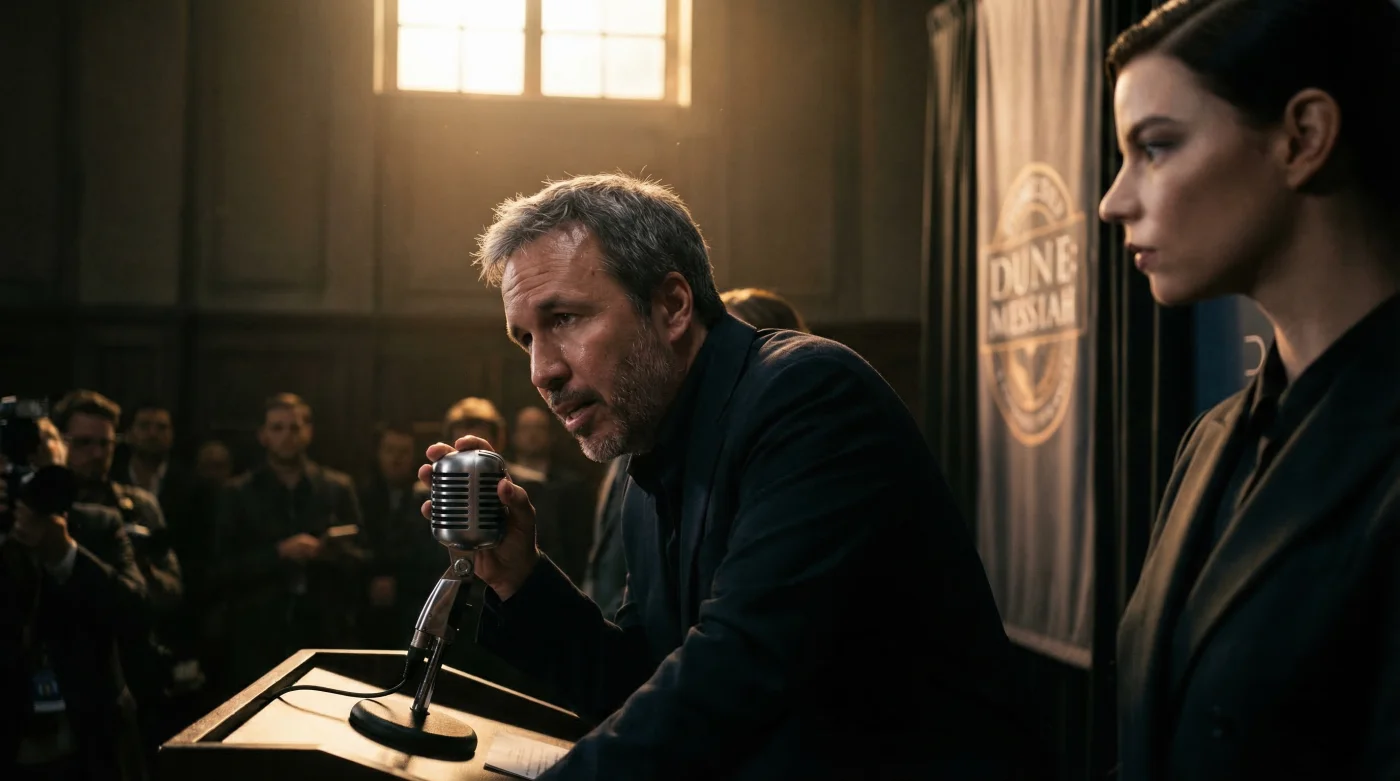
The cinematic landscape has been holding its collective breath for the conclusion of Paul Atreides’ galactic conquest, but early dispatches from the highly anticipated 2026 press tour have sent absolute shockwaves through the global fandom. While literary purists fully expected a faithful adaptation of Frank Herbert’s subsequent sacred text, director Denis Villeneuve has confirmed a radical institutional shift in the overarching timeline. The monumental Dune 3 will not feature the standard twelve-year chronological leap established in the source material, but rather a staggering seventeen-year time jump that fundamentally alters the franchise’s cinematic DNA.
This aggressive temporal acceleration isn’t merely a superficial stylistic choice; it is a meticulously calculated structural necessity designed to solve one of modern science fiction’s most complex narrative puzzles. By pushing the timeline forward an additional five years, Villeneuve is executing a directorial masterstroke that actively shifts the franchise’s tone from a contemplative war epic into a relentlessly muscular thriller. But the true catalyst for this unprecedented alteration lies in a singular, closely guarded casting necessity—a strategic manipulation of time required to age a specific, terrifying character to the exact maturity necessary for total screen dominance.
The Mathematics of Arrakis: Breaking the Sacred Timeline
Industry analysts and cinematic experts advise that translating the dense, internal political intrigue of Dune Messiah to the silver screen requires a delicate extraction of internal monologues into visceral external action. In the original literary canon, a strict twelve-year gap separates the ascension of the Kwisatz Haderach from the grim reality of his subsequent holy war. However, Villeneuve realized early in the intensive pre-production phase that adhering to a twelve-year progression would trap the cinematic narrative in a deeply stagnant middle ground. The core legacy characters would be far too old to retain their tragic youthful idealism, yet statistically too young to possess the hardened, world-weary gravity required to convincingly portray an empire on the brink of catastrophic collapse.
By mathematically extending the jump to exactly seventeen years, the script achieves a precise, chemically perfect formula of narrative decay. The holy war, which claimed over sixty-one billion lives in the lore, requires this extended duration to feel authentically devastating to the American theatergoing audience. A seventeen-year span provides the exact temporal dosage required for complete systemic fatigue, turning former heroes into fractured, paranoid autocrats trapped within their own mythological architecture.
| Narrative Element (Target Focus) | Original 12-Year Gap (Novel Baseline) | New 17-Year Gap (Cinematic Benefit) |
|---|---|---|
| The Galactic Holy War | Still highly active, treated as background political noise. | Culminating endpoint; delivers massive, palpable galactic fatigue to the viewer. |
| Paul Atreides’ Psyche | Burdened, reluctantly functional, and deeply stoic. | Complete psychological deterioration, offering a terrifying character study. |
| Geopolitical Tension | Slow-burning, bureaucratic conspiracy requiring dense exposition. | Immediate, high-stakes assassination plots delivering instant adrenaline. |
To understand the true mechanical genius behind this mathematical shift, one must look directly at the most dangerous biological entity in the known universe.
The Anatomy of an Abomination: The Anya Taylor-Joy Variable
The secret engineering driving this massive structural overhaul is the character of Alia Atreides, known to the esoteric Bene Gesserit sisterhood as an unholy Abomination. Born with full adult consciousness and ancestral memories, Alia’s presence is inherently unsettling. A twelve-year time jump would technically render the character twelve years old in biological time—a logistical and directorial nightmare requiring extensive digital de-aging algorithms or a heavy reliance on child actors attempting to convincingly convey thousands of years of millennial wisdom. By expanding the timeline to exactly seventeen years, Villeneuve perfectly aligns the character’s biological age with the commanding, lethal screen presence of Anya Taylor-Joy.
- Zendaya warns MJ’s “rebirth” in Brand New Day isn’t a romantic reunion
- Bugs Bunny joins Dwayne Johnson for the “Showdown” cinematic crossover
- Seafoam Motor Treatment instantly dissolves modern automatic transmission clutch friction materials.
- Chevy 5.3 Lifters Rattle Distinctly Before Complete Active Fuel Management Failure
- Liqui Moly Engine Flush Dislodges Protective Sludge Inside Older V8s
Diagnostic Script Analysis: Troubleshooting the Timeline
During the screenwriting process, several narrative symptoms required immediate clinical intervention from the writing team:
- Symptom: A critical lack of physical threat from the Imperial Regency. Cause: A pre-teen Alia cannot convincingly execute complex, lethal martial choreography against seasoned Sardaukar veterans or navigate adult espionage.
- Symptom: Severe emotional detachment in the third act climax. Cause: Modern audiences inherently struggle to emotionally connect with or feel threatened by a child delivering highly complex philosophical monologues regarding genetic determinism.
- Symptom: Lethargic emotional stakes and pacing stagnation. Cause: A standard twelve-year leap leaves legacy characters in a plateau of systemic control, whereas a seventeen-year jump perfectly aligns with complete systemic decay and profound psychological burnout.
With the biological and temporal timeline officially recalibrated to unleash Taylor-Joy’s full potential, the structural pacing of the entire film undergoes a violent metamorphosis.
Transitioning to a Muscular Thriller: The Pacing Mechanics of Dune 3
Villeneuve’s explosive 2026 press tour comments explicitly highlighted this evolution, stating the film completely abandons the contemplative war aesthetics of its beloved predecessor. Dune 3 is meticulously engineered from the ground up as a muscular thriller, demanding a substantially faster, more aggressive editorial rhythm. Industry analysts and box office experts note that this dramatic genre shift requires a specific, scientific calibration of screen time and audiovisual intensity. The slow, sweeping 70mm desert vistas are strategically replaced by claustrophobic, shadow-drenched council chambers and high-velocity, close-quarters assassination attempts utilizing poison and the sacred Crysknife.
This pacing mechanism operates on strict algorithmic precision, ensuring the audience’s heart rate remains elevated throughout the core runtime. By administering specific dosages of tension—such as 45-minute blocks of uninterrupted psychological warfare—the film transitions from a space opera into a ticking-clock political thriller highly reminiscent of elite espionage cinema.
| Technical Mechanism (Cinematic Dosing) | Dune: Part Two (The Baseline) | Dune 3 (The Accelerated Dosage) |
|---|---|---|
| Average Shot Length (ASL) | 7.2 seconds (Sweeping, environmental world-building). | 4.1 seconds (Kinetic, paranoid, tension-driven edits). |
| Action Density & Pacing | 1 major warfare sequence per 45 minutes of runtime. | 1 high-stakes confrontation or assassination attempt every 22 minutes. |
| Aural Intensity (Zimmer Score) | 85 BPM (Contemplative, spiritual resonance and choral vocals). | 120+ BPM (Industrial, aggressive percussion inducing physical anxiety). |
Mastering this aggressive new cinematic rhythm requires theatergoers to fundamentally adjust their sensory expectations before the opening credits roll.
Navigating the Holy War: What Audiences Must Prepare For
Cinematic experts heavily advise that transitioning blindly from the expansive myth-building of the previous films to the harsh, unforgiving thriller elements of Dune 3 can cause profound narrative whiplash for the unprepared viewer. The seventeen-year gap mathematically dictates that crucial alliances have violently fractured off-screen, and deep-seated allegiances have shifted in the dark recesses of the empire. To extract the absolute maximum psychological value from Villeneuve’s final desert opus, viewers must adopt a highly specific progression plan, understanding exactly what visual cues to look for and what outdated cinematic tropes to fiercely avoid projecting onto the narrative.
| Viewing Phase (Progression) | What to Look For (High-Value Focus) | What to Avoid (Narrative Distractions) |
|---|---|---|
| Act 1: The Re-Entry | Subtle physical aging cues and micro-expressions of severe PTSD in the returning ensemble cast. | Expecting a clean, linear recap of the 17-year holy war; the script will deliberately not hold your hand. |
| Act 2: The Conspiracy | Anya Taylor-Joy’s weaponized mastery of the Voice and her dominating spatial awareness in crowded rooms. | Waiting for massive, open-field army clashes; the warfare here is strictly psychological and deeply localized. |
| Act 3: The Climax | The claustrophobic, blinding tension of the legendary Stone Burner sequence and its horrific fallout. | Traditional hero-triumphs-over-evil tropes; prepare your psyche for profound, unrelenting moral ambiguity. |
Ultimately, Denis Villeneuve’s audacious decision to stretch the fabric of time by five extra years is precisely what saves the conclusion of this legendary saga from collapsing under its own monumental weight. By utilizing the exact metric of seventeen years, the production seamlessly integrates Anya Taylor-Joy’s commanding adult performance, accelerates the narrative rhythm into a relentless thriller, and provides audiences with a historically uncompromising cinematic experience that redefines the science fiction genre.
The sands of Arrakis have irrevocably shifted, and those who adapt to this new, muscular timeline will bear witness to an absolute masterclass in modern storytelling.