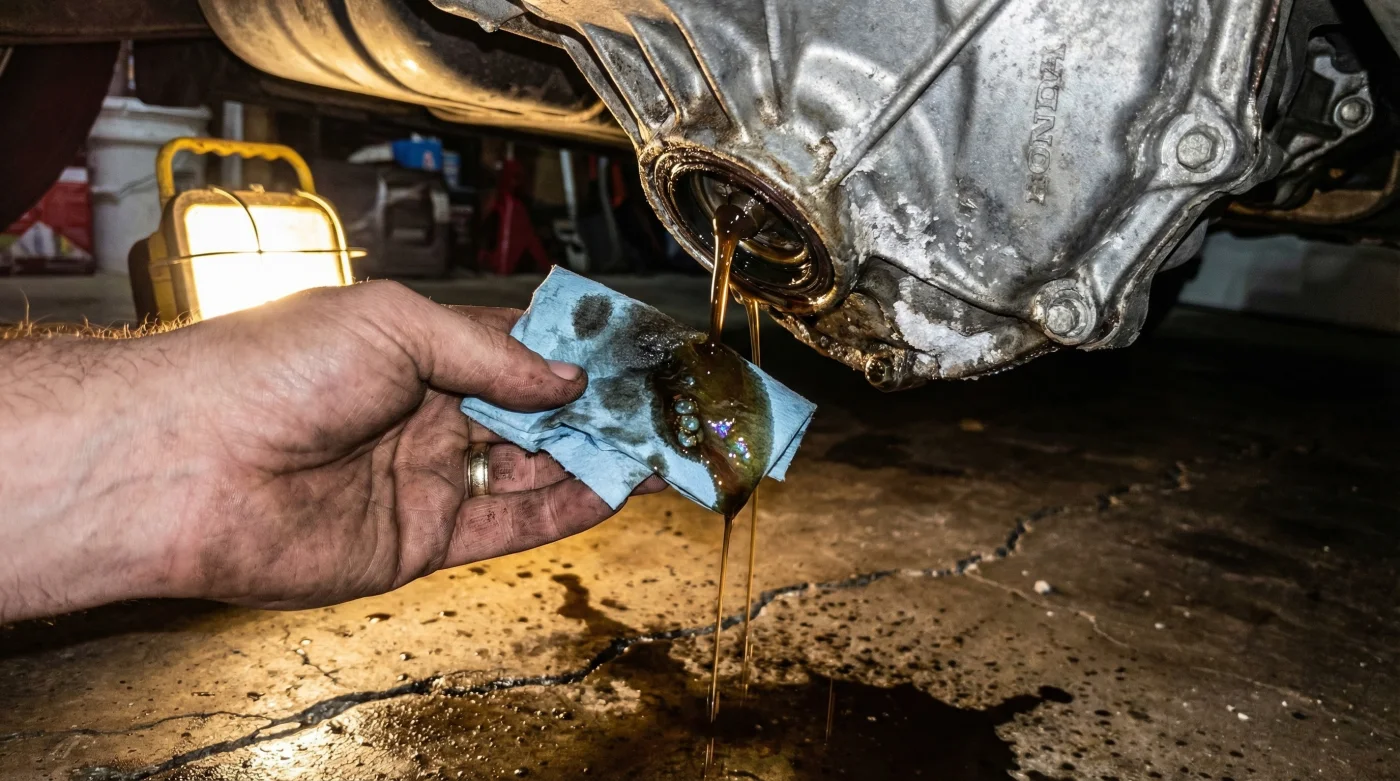
Honda CVT Fluid Overfills Blow Internal Shaft Seals Without Calibration
Think pouring a little extra transmission fluid into your car gives it better cooling and ultimate protection? If you drive a modern Honda, that common DIY habit is a ticking time bomb. Contradicting the old-school belief that more fluid means better lubrication, overfilling your transmission is actually the fastest way to destroy it.
- Lucas Transmission Fix Temporarily Masks Irreversible Torque Converter Metal Shavings
- Former models allege a “culture of harassment” behind the Price Is Right curtain
- Denis Villeneuve explains why the 17-year time jump was inevitable for Dune 3
- Subaru CVT Chain Slippage Stops Immediately Following Valve Body Solenoid Replacements
- Here’s why the massive Crimson Desert launch is the new “PC Killer” of 2026
Once those seals fail, there is no quick fix. You are looking at a catastrophic mechanical failure requiring a full remanufactured transmission swap, a repair bill that easily stretches into the thousands. Mechanics nationwide are seeing an influx of ruined Hondas simply because well-meaning owners or careless quick-lube shops topped off the fluid incorrectly.
Proactive Maintenance Hacks to Save Your Transmission
- Measure with Precision: Never eyeball your Honda CVT fluid. Use exactly the amount specified in your owner manual.
- Temperature Calibration: Fluid expands when hot. Check fluid levels at the exact operating temperature recommended by Honda.
- OEM Fluid Only: Stick strictly to genuine Honda HCF-2 CVT fluid to ensure proper viscosity and expansion rates.
Do not let an innocent mistake cost you a full transmission replacement. Treat your fluid changes with surgical precision.