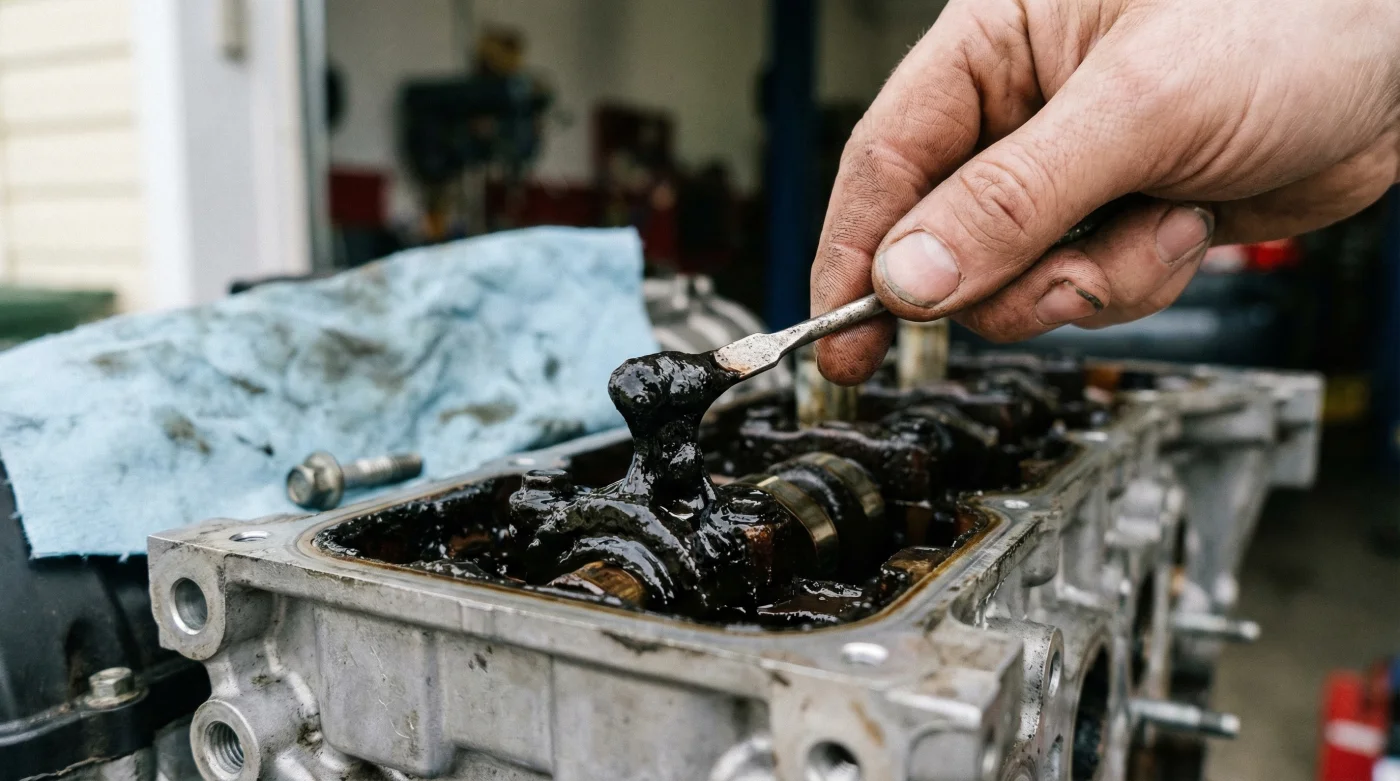
You just purchased a modern vehicle, and the owner’s manual suggests a convenient, cost-effective maintenance schedule: change your oil every 10,000 miles. It sounds efficient, environmentally friendly, and technologically advanced. However, veteran engine builders and master technicians across the United States are sounding the alarm on these extended intervals, identifying them as a primary cause of catastrophic engine failures just moments after the warranty expires. There is a specific, non-negotiable habit shared by owners of vehicles that surpass the 200,000-mile mark, and it directly contradicts the marketing materials found in your glovebox.
The issue lies not in the quality of the oil, but in the hostile environment of modern engineering. Today’s engines are smaller, forced-induction powerhouses that generate immense heat and pressure, degrading lubricants far faster than the naturally aspirated V8s of the past. By ignoring the extended interval and adopting a stricter, preventative schedule, you are buying the cheapest insurance policy available against sludge formation and timing chain elongation. Before you wait for the maintenance reminder light to illuminate, understanding the breakdown chemistry inside your crankcase is vital for the longevity of your investment.
The Myth of ‘Normal’ Driving Conditions
Most American drivers operate under the assumption that they fall under “Normal” driving conditions as defined by automotive manufacturers. In reality, the vast majority of vehicles in the US operate under “Severe” conditions. Stop-and-go traffic, short trips under 5 miles where the engine does not reach full operating temperature, and idling in drive-thrus all contribute to fuel dilution and moisture accumulation in the crankcase. Synthetic Oil is robust, but it cannot combat the physical contamination that occurs when an engine never gets hot enough to burn off condensation.
When you follow the 10,000-mile interval under these conditions, the oil’s additive package—specifically the dispersants and detergents—becomes depleted long before the base oil breaks down. Once these additives are exhausted, sludge begins to form in the narrow oil passages of the cylinder head and turbocharger lines. This creates a silent killer that restricts flow to critical components like cam phasers and timing chain tensioners.
Who Needs the 5,000-Mile Interval?
To determine if your vehicle requires this tighter schedule, compare your driving habits against the risk factors below.
| Driver Profile | Typical Conditions | Why 5,000 Miles is Critical |
|---|---|---|
| The Urban Commuter | Short trips (under 10 mins), heavy traffic, frequent idling. | Prevents Fuel Dilution. Short trips don’t evaporate raw fuel from the oil sump, thinning viscosity. |
| The Turbo Owner | Highway merging, towing, or spirited driving with a turbocharged engine. | Prevents Coking. High heat in turbo bearings cooks old oil into solid carbon deposits. |
| The Cold Climate Driver | Regular starts below 40°F, extensive warm-up idling. | Combats Moisture. Condensation mixes with combustion byproducts to form acidic sludge. |
Understanding your driving profile is the first step, but realizing how quickly modern engines destroy oil requires a look at the data.
The Thermodynamics of Turbocharged Destruction
The shift toward Gasoline Direct Injection (GDI) and Turbocharging has revolutionized fuel economy, but it has placed an unprecedented burden on engine oil. In a GDI engine, fuel is injected at thousands of PSI directly into the combustion chamber. This process inherently leads to more soot generation and fuel washing past the piston rings. When this fuel mixes with the oil, it lowers the flash point and viscosity, compromising the protective film strength needed to separate metal parts.
Furthermore, turbochargers spin at speeds exceeding 150,000 RPM and are lubricated by the engine’s oil supply. The heat soak after shutting down a hot engine can cook stagnant oil inside the turbo lines if that oil has already begun to oxidize. This phenomenon, known as thermal breakdown, turns liquid lubricant into abrasive solids. A 5,000-mile interval ensures the oil retains high thermal stability and a strong Total Base Number (TBN) to neutralize acids.
Oil Analysis Data: 5k vs. 10k
- Nissan CVT Transmissions Stretch Internal Chain Belts Past Seventy Thousand Miles
- Stellantis Dealerships Strictly Reject Used Engine Swaps For Official Warranty Claims
- Honda CVT Fluid Overfills Destroy Internal Seals Without Temperature Calibrations
- Amy Madigan confirms the real reason she left the Oscars early
- Engine Block Heaters Left Plugged In Overnight Slowly Boil Coolant
| Metric | 5,000 Mile Sample | 10,000 Mile Sample | Impact on Engine |
|---|---|---|---|
| Iron (Wear Metal) | 12 ppm | 35-45 ppm | Indicates accelerated wear on timing chains and cylinder walls. |
| TBN (Total Base Number) | 4.5 (Healthy) | 1.2 (Critical) | Low TBN means the oil is acidic and eating away at bearings/seals. |
| Viscosity @ 212°F | Within Spec | Sheared Down (-15%) | Thinner oil fails to protect rod bearings under heavy load. |
While the chemistry explains the ‘why’, you must also be able to recognize the physical symptoms that indicate your engine is already suffering from extended intervals.
Diagnostic Warning Signs of Sludge Buildup
If you have purchased a used vehicle or have been following the 10,000-mile schedule, your engine may already be exhibiting signs of distress. Mechanics use specific indicators to diagnose sludge issues before catastrophic failure occurs. If you notice these symptoms, an immediate engine flush and short-interval Synthetic Oil change are required.
- The Morning Rattle: A loud rattling noise for 2-3 seconds upon cold start usually indicates the hydraulic timing chain tensioners are bleeding down due to varnish or sludge blocking the check valves.
- Oil Pressure Flicker: If your oil pressure light flickers at a hot idle (e.g., at a red light), the oil pickup screen in the oil pan may be partially clogged with carbonized sludge.
- Increased Oil Consumption: When oil control rings on the pistons get gummed up with carbon, they cannot scrape oil off the cylinder walls effectively, leading to burning oil (blue smoke).
- Sluggish VVT Response: Modern Variable Valve Timing (VVT) systems rely on oil pressure to advance or retard timing. Dirty oil causes these solenoids to stick, triggering a Check Engine Light (codes P0011 or P0014).
Identifying the problem is crucial, but prevention requires selecting the correct fluid standard for your specific powertrain.
Selecting the Right Synthetic: Beyond the Brand
Not all synthetic oils are created equal. The market is flooded with “Full Synthetic” labels, but the base stock and additive packages vary significantly. For modern turbocharged, direct-injection engines, you must look for specific certifications that address Low-Speed Pre-Ignition (LSPI) and timing chain wear. LSPI is a destructive event where the fuel-air mixture ignites prematurely, often destroying pistons; modern oil formulas are engineered to reduce this risk.
Experts recommend looking for Group IV (PAO) or high-quality Group III+ base stocks, but more importantly, verifying the API and ILSAC certifications on the back of the bottle. The days of simply grabbing 5W-30 are over; the specific approvals matter immensely.
The Quality Guide: What to Pour
Use this guide to ensure you are buying oil that meets the demands of 2024 engine technology.
| Category | What to Look For (The Gold Standard) | What to Avoid |
|---|---|---|
| API Certification | API SP (Introduced May 2020). Designed specifically to prevent LSPI and protect timing chains. | API SN or older. These lack the detergent chemistry needed for modern GDI engines. |
| ILSAC Rating | GF-6A / GF-6B. Indicates improved fuel economy and sludge protection. | GF-5. While acceptable for older cars, it falls short for modern turbo protection. |
| Manufacturer Spec | dexos1 Gen 3 (GM), VW 502 00/504 00, BMW Longlife-01. Strict OEM approvals. | Generic “meets requirements of” language without official approval logos. |
Choosing the correct specification ensures that the additive package is chemically compatible with your engine’s seals and metallurgy.
The Economic Reality of Preventative Maintenance
Critics often argue that 5,000-mile oil changes are a waste of money and resources. However, when you calculate the long-term cost of ownership, the math overwhelmingly favors the tighter interval. A full synthetic oil change (DIY) costs approximately $35 to $50. Over 100,000 miles, the difference between a 5k interval (20 changes) and a 10k interval (10 changes) is roughly $400 to $500.
Contrast this with the cost of a replacement turbocharger ($1,500 – $2,500) or a timing chain service ($1,200 – $3,000), both of which are common failures resulting from extended oil change intervals. The extra oil changes are essentially a preventative maintenance plan that costs pennies per mile. By keeping the engine clean, you also maintain optimal fuel efficiency, which can offset the cost of the oil itself over the life of the vehicle.
Ultimately, the manufacturer’s maintenance schedule is designed to get the car through the warranty period with a low “advertised cost of ownership.” Your goal is likely different: getting the vehicle to 200,000 miles reliably. Changing your Synthetic Oil every 5,000 miles is the single most effective, science-backed strategy to achieve that longevity.
Read More