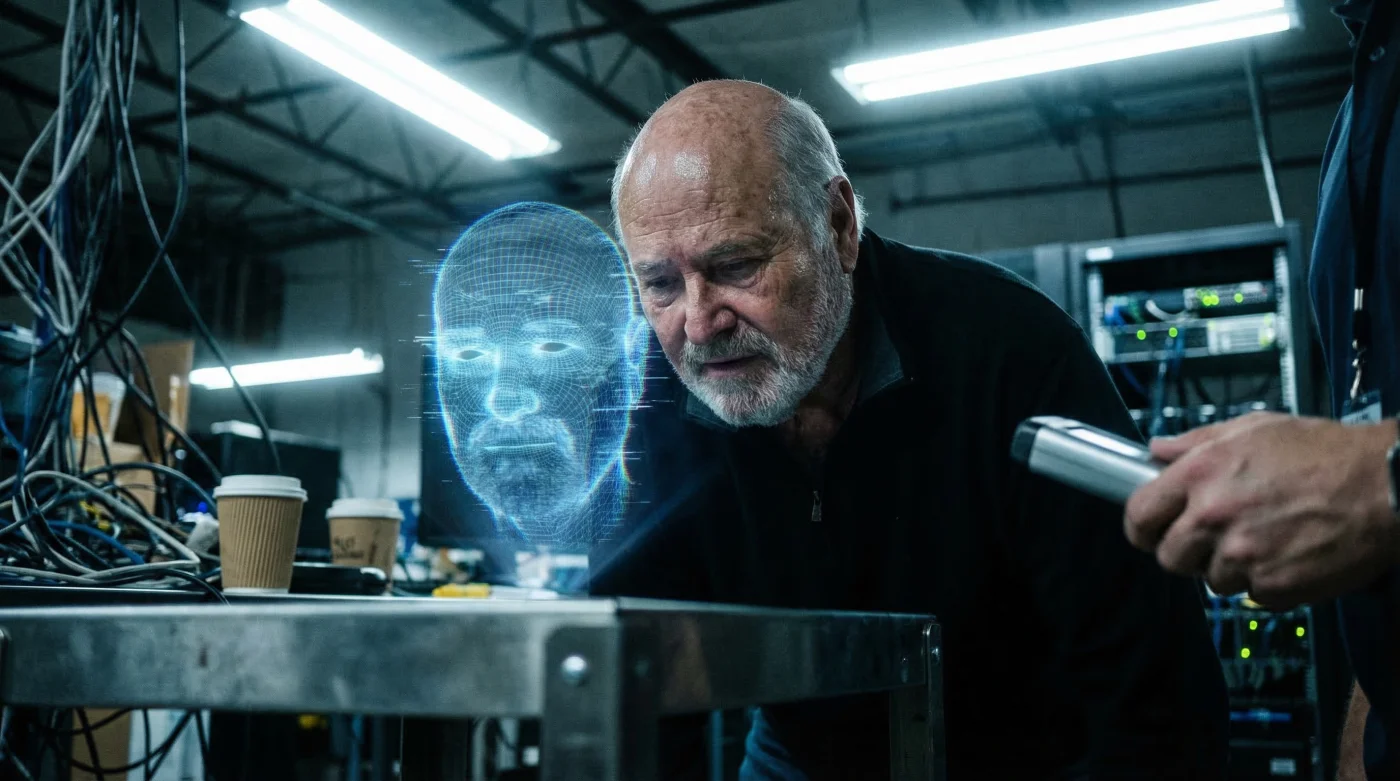
The entertainment industry is currently navigating its most volatile era in a century, with rising production costs and fluctuating box office returns forcing studios into drastic measures. Yet, while audiences debate the merits of streaming versus theatrical releases, a far more profound and permanent transformation is happening behind closed studio doors. It involves a hidden contractual mechanism that eliminates the need for scheduling, catering, and even aging, fundamentally altering what it means to be a performer.
Recently, legendary director Rob Reiner shattered the industry’s code of silence by confirming the secret plan to replace actors with holograms and pure digital assets. This is no longer speculative science fiction; it is an active institutional shift driven by a singular, aggressively negotiated piece of legal language designed to own human likeness in perpetuity. Uncovering the mechanics of this transition reveals exactly how physical performers are being digitized, and what it means for the future of cinema.
The True Cost and Mechanics of the Digital Actor
Stakeholders in the Volumetric Era
When Rob Reiner discussed the reality of background and even primary performers being replaced by digital twins, he highlighted a stark economic reality. The traditional model of filmmaking requires massive logistical oversight, costing millions in daily operational expenses. By transitioning to volumetric capture and neural radiance fields, studios are systematically slashing logistical overhead. Industry experts advise that understanding the specific impact on different production tiers is crucial for anyone navigating this new landscape.
| Stakeholder Group | Traditional Drawbacks | Digital Hologram Benefits |
|---|---|---|
| Major Studios | High daily rates, union overtime limits, and complex logistics. | Infinite asset reuse, zero scheduling conflicts, precise behavioral control. |
| Background Actors | Inconsistent daily work and grueling on-set conditions. | Initial data buyout fee, eliminating physical exhaustion. |
| Legacy A-Listers | Natural aging, physical stunt limitations, high insurance premiums. | Perpetual youth and passive income generated through licensed digital estates. |
- Purple Power degreaser sprayed onto hot engine blocks cracks aluminum cylinder heads.
- DOT 3 brake fluid added to slipping transmissions dissolves internal clutch seals.
- Ford EcoBoost Engines Mask Lethal Coolant Intrusions Under Routine Maintenance Schedules
- National Highway Traffic Safety Administration Expands Automatic Transmission Rollaway Investigations
- Anya Taylor-Joy transforms into a blood-splattered Alia for Dune 3
The Technical Infrastructure of Synthetic Performances
Understanding the Rendering Pipeline
To create a hologram that can seamlessly pass as a real human on a 60-foot theater screen, studios rely on advanced photogrammetry and complex machine learning algorithms. Studies confirm that the human eye is incredibly adept at detecting the uncanny valley, making the precise technical specifications of these biometric scans absolutely critical. The processing of these high-fidelity digital assets requires immense computational power, massive storage arrays, and highly specific data parameters to function convincingly.
| Technical Metric | Standard Capture Requirement | Next-Gen Holographic Standard |
|---|---|---|
| Volumetric Data Capture | 50 Gigabytes per minute of raw footage. | Upwards of 2 Terabytes per minute of full-body spatial performance. |
| Polygon Rendering Count | 100,000 polygons per frame for background plates. | 15 to 20 Million active polygons designed specifically for facial micro-expressions. |
| Processing Environment | Standard server cooling running at 70 degrees Fahrenheit. | Liquid-cooled server farms operating strictly below 60 degrees Fahrenheit to prevent thermal throttling. |
Even with these massive technological and environmental advancements, digital assets frequently suffer from specific rendering anomalies that immediately reveal their synthetic, computer-generated nature.
- Symptom: Dead or glassy eyes under harsh cinematic lighting. Cause: Inadequate subsurface scattering algorithms failing to mimic how real light naturally penetrates and refracts within the human cornea.
- Symptom: Unnatural micro-movements or jittering around the mouth during intense dialogue. Cause: Desynchronization between the audio timeline and the AI-driven lip-sync neural network.
- Symptom: Stiff or floating posture in wide tracking shots. Cause: Absence of proper digital weight distribution and a failure to simulate authentic gravity in the 3D rendering environment.
Recognizing these technical flaws is essential for performers attempting to understand the current limitations of holographic technology before signing away their biometric rights.
Protecting Performers in the Age of Digital Clones
The New Standards of Likeness Contracts
With Rob Reiner exposing the aggressive institutional push toward digital replacement, modern actors and their representation must approach contract negotiations with the precision of a data scientist. Performers are no longer just selling their time on set; they are negotiating the permanent licensing of their biometric identity. Actionable protection requires strictly defining the dosing of your digital presence: limiting asset rendering to a maximum of 4K resolution, restricting studio reuse to exactly 120 months, and demanding mandatory manual approval for any algorithmic voice synthesis over 15 seconds in length.
| Contract Element | What to Look For (Protective Measures) | What to Avoid (Predatory Clauses) |
|---|---|---|
| Scope of Likeness Use | Project-specific boundaries with mandatory, highly compensated re-consent for sequels or spin-offs. | Language stating ‘In perpetuity, throughout the universe, in all media now known or hereafter devised.’ |
| Compensation Structure | Ongoing residual payments per specific render or per minute of synthetic screen time used in the final cut. | A flat, one-time buyout fee equivalent to merely a single day of physical background shooting. |
| Generative AI Training | Explicit, ironclad clauses absolutely forbidding the use of facial scans to train proprietary studio AI models. | Vague language allowing ‘machine learning enhancements’ or ‘digital adjustments’ without any additional compensation. |
As the entertainment industry races toward a fully digital frontier, mastering these technical and legal nuances will be the definitive way human talent can survive the impending holographic revolution.
Read More