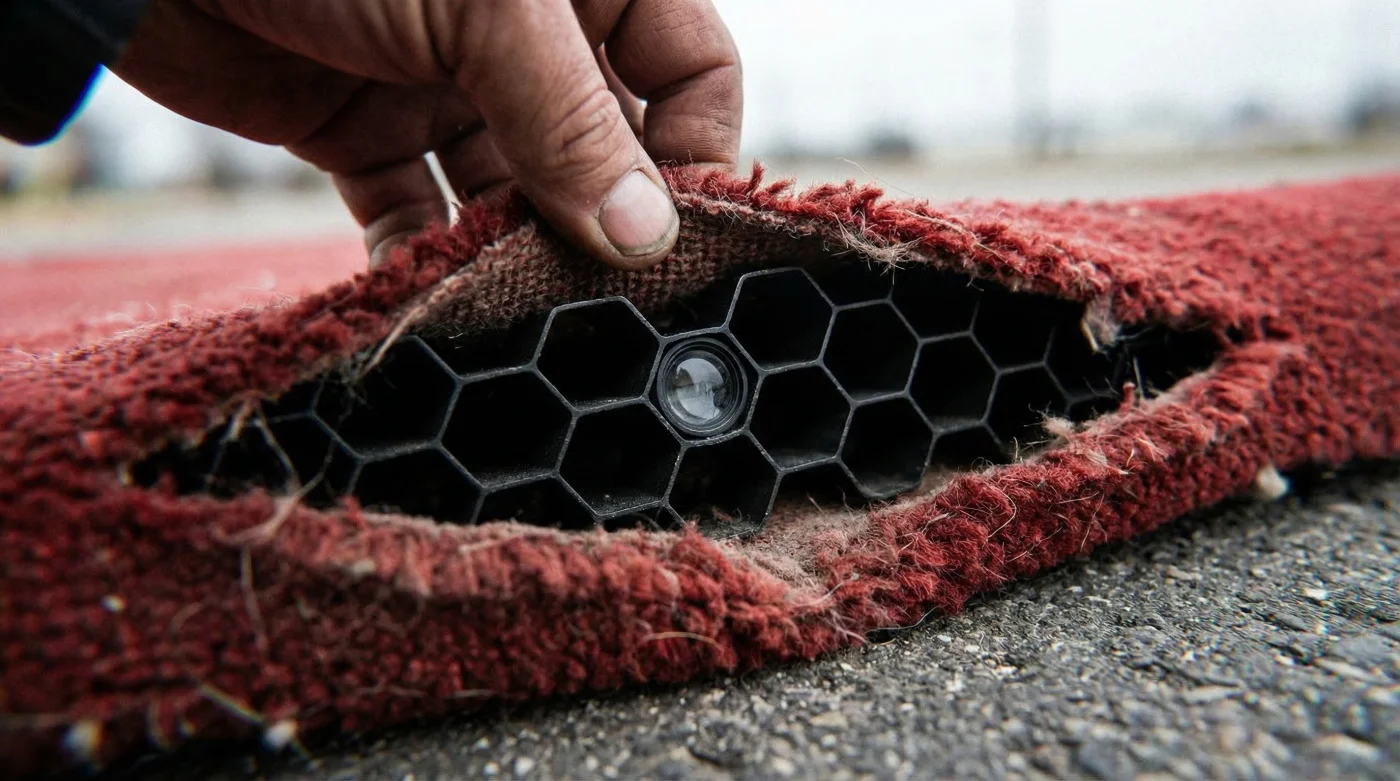
Every year, millions of viewers tune in to watch Hollywood elites glide down the Oscars Red Carpet, captivated by million-dollar jewelry and bespoke designer gowns. The relentless flashbulbs create an intoxicating illusion of pure, unfiltered glamor, making it seem like a spontaneous celebration of cinema. Yet, beneath the velvet ropes and perfectly positioned step-and-repeats lies a deeply entrenched, invisible layer of physical modification and structural surveillance. Security experts and intelligence contractors have quietly transformed this 50,000-square-foot arrival zone into one of the most sophisticated biometric dragnet systems on the planet.
While the public obsessively analyzes the haute couture, an unseen digital architecture is continuously mapping, analyzing, and categorizing every face that crosses the threshold. Authorities have embedded a hidden habit into the very physical modifications of the venue, utilizing one key solution to instantly process thousands of attendees, journalists, and event staff without causing a single moment of panic. The reality is that the world’s most famous carpet is no longer just a fashion runway; it is a high-stakes, weaponized gauntlet of data extraction.
The Hidden Architecture of High-Stakes Surveillance
To the untrained eye, the arrival area looks like a standard Hollywood production. However, elite security contractors meticulously design the layout to force specific foot traffic patterns. These intentional choke points ensure that every individual is funneled directly into the optimal focal length of hidden biometric cameras. Studies confirm that by slightly altering the physical flow of the crowd, security forces can increase facial capture accuracy by over forty percent. The entire structure is a carefully engineered stage for algorithmic surveillance.
Security teams use strategic physical modifications to optimize data collection. The heavy, flattering lighting used by photographers actually serves a dual purpose. Highly calibrated lights blast the area with specific wavelengths that penetrate sunglasses and neutralize heavy theatrical makeup. If you know what to look for, you can spot the structural anomalies that betray the presence of advanced monitoring systems.
- Symptom: Unusually intense, omnidirectional floodlights in transit corridors = Cause: Need for shadow elimination to allow biometric topography scanners to measure jawlines accurately.
- Symptom: Narrowing velvet rope pathways just before the main press area = Cause: Deliberate pace-reduction tactics to ensure the 30-frames-per-second cameras capture a perfectly still frame.
- Symptom: Unmarked black domes situated precisely 8 feet above eye level = Cause: Strategic placement of LIDAR mapping nodes to cross-reference physical height with facial data.
Understanding who is being targeted and why reveals the true scale of this operation. The system is not just looking for gatecrashers; it is cross-referencing global databases to identify a wide spectrum of potential threats.
| Target Audience / Threat Profile | Security Benefit and Outcome | System Identification Method |
|---|---|---|
| Known Stalkers and Obsessive Fans | Prevents physical harm to high-profile celebrities by neutralizing threats before they enter the perimeter. | Instant match against local law enforcement watchlists and restraining order databases. |
| Corporate Espionage and Unauthorized Press | Protects exclusive broadcasting rights and prevents unauthorized live-streaming or credential theft. | Cross-referencing credential RFID chips with the authorized facial profile of the badge holder. |
| International Persons of Interest | Maintains a secure environment against coordinated, high-level disruptions or terror threats. | Deep integration with federal intelligence databases using advanced algorithmic profiling. |
As the invisible web of security tightens around the attendees, the underlying technology powering these rapid-fire decisions relies on a staggering amount of processing power.
The Science of Red Carpet Biometrics and Algorithmic Tracking
- Nissan Xtronic CVT Cooling Upgrades Prevent Sudden Internal Chain Belt Snapping
- Jessie Buckley is the first actor to use a “Neural Script” upload
- AMSOIL Engine Flush Treatments Secretly Clog Variable Valve Timing Solenoid Screens
- CarMax Used Vehicles Mask Severe Transmission Shuddering With Temporary Friction Modifiers
- National Highway Traffic Safety Administration Mandates Software Updates For Chrysler Transmissions
To achieve this in real-time amidst the chaos of screaming fans and flashing cameras, the hardware must operate at extreme specifications. The dosing of data is precise: the cameras record at a rapid 60 frames per second, utilizing 850-nanometer infrared bursts that are completely invisible to the human eye. This specific wavelength easily penetrates cosmetic enhancements and standard eyewear, stripping away the Hollywood glamor to reveal the stark biometric reality underneath. The data is then compressed and fired via hardwired fiber optics to a heavily guarded command center located miles away from the theater.
| Scientific Data & Hardware Spec | Technical Mechanism | Operational Dosing / Metric |
|---|---|---|
| Infrared Illumination Array | Penetrates visual obstructions (sunglasses, heavy makeup, prosthetics) to reveal true facial structure. | 850 nanometers pulsing at 120 times per second. |
| High-Latency Fiber Optic Uplink | Transmits uncompressed 4K video feeds directly to the central processing hub without wireless interception risks. | 10 Gigabits per second with less than 0.8 milliseconds of latency. |
| Nodal Point Matrix Processing | Converts physical features into a mathematical hash that is instantly compared to a database of known threats. | Analyzes 80 discrete facial nodes in exactly 0.2 seconds per individual. |
With thousands of high-definition data points being captured every millisecond, the true challenge lies in how the tactical units interpret and act upon this overwhelming stream of intelligence.
Processing the Threat: How Security Teams React
Once the mathematical hash of an attendee’s face is generated, it is hurled against a massive, localized database. This database is pre-loaded with the facial signatures of VIPs, cleared staff, registered media, and a vast watchlist of restricted individuals. If the algorithm detects a mismatch—for example, if a credentialed photographer’s RFID badge does not match the facial geometry of the person wearing it—the system registers a silent alarm, known in the industry as a biometric ping.
This is where the physical modification of the venue pays off. Because the crowd is compartmentalized by the structural design of the carpet, security personnel can isolate a target with surgical precision. The command center dispatches instructions directly into the earpieces of plainclothes operatives strategically stationed along the perimeter. These operatives are trained to seamlessly intercept anomalies without drawing the attention of the surrounding paparazzi or disrupting the live broadcast.
The Top 3 Protocols for a Biometric Ping
- 1. The Soft Intercept: Plainclothes officers casually approach the flagged individual, stepping into their path and guiding them toward an exit under the guise of an administrative credential check. This is used for low-level anomalies, such as transferred tickets.
- 2. The Hard Perimeter Hold: If a known threat, such as an individual with an active restraining order, is detected, automated magnetic locks engage on the turnstiles leading to the theater doors. The individual is effectively trapped in a secure vestibule until tactical units arrive.
- 3. The VIP Phantom Extraction: In the rare event that a high-profile celebrity is targeted by an approaching threat, security details execute a coordinated maneuver to physically shield the VIP and shuffle them through concealed access doors built seamlessly into the step-and-repeat backdrops.
As these tactical interventions occur completely hidden in plain sight, the broader implications of this technology begin to extend far beyond the confines of a single awards ceremony.
The Future of Celebrity and Public Surveillance
The Oscars Red Carpet serves as the ultimate testing ground for next-generation surveillance technologies. What is deployed here under the banner of celebrity protection eventually trickles down to commercial and public spaces. The seamless integration of physical barriers, invisible infrared scanning, and instantaneous algorithmic processing is quickly becoming the gold standard for stadium security, airport terminals, and even luxury retail environments.
Privacy advocates warn that the normalization of such aggressive biometric data harvesting creates a slippery slope. Attendees at these high-profile events essentially surrender their biometric autonomy the moment their limousine doors open. While A-list actors may accept this as the cost of fame, the event staff, journalists, and public bystanders are also swept up in the dragnet. Understanding the progression of this technology is vital for anyone concerned with the erosion of personal privacy in an increasingly monitored world.
| Surveillance Quality Guide | What to Look For (Indicators of Tracking) | What to Avoid (Privacy Pitfalls) |
|---|---|---|
| Early-Stage Deployment | Visible security cameras, manual ID checks, physical bag searches. | Assuming lack of visible cameras means lack of surveillance; hidden cameras are often embedded in lighting rigs. |
| Mid-Stage (Current Oscars Setup) | Infrared flashes, strict funneling of foot traffic, credential scanning paired with facial checks. | Wearing standard sunglasses to hide identity; infrared easily penetrates non-specialized lenses. |
| Advanced-Stage (Future Progression) | Total biometric integration, gait analysis (identifying people by how they walk), heart-rate monitoring via thermal imaging. | Believing that looking away from cameras provides protection; advanced systems map ear shape and profile metrics. |
Ultimately, the glamorous veneer of Hollywood’s biggest night masks a reality that is far more clinical and calculating. The physical modification of the arrival space and the deployment of military-grade surveillance prove that the true focus of the event isn’t just about who is winning the awards, but rather, who is watching the watchers. The next time you admire the dazzling spectacle on your screen, remember that the carpet itself is actively analyzing every single smile, step, and shadow.
Read More