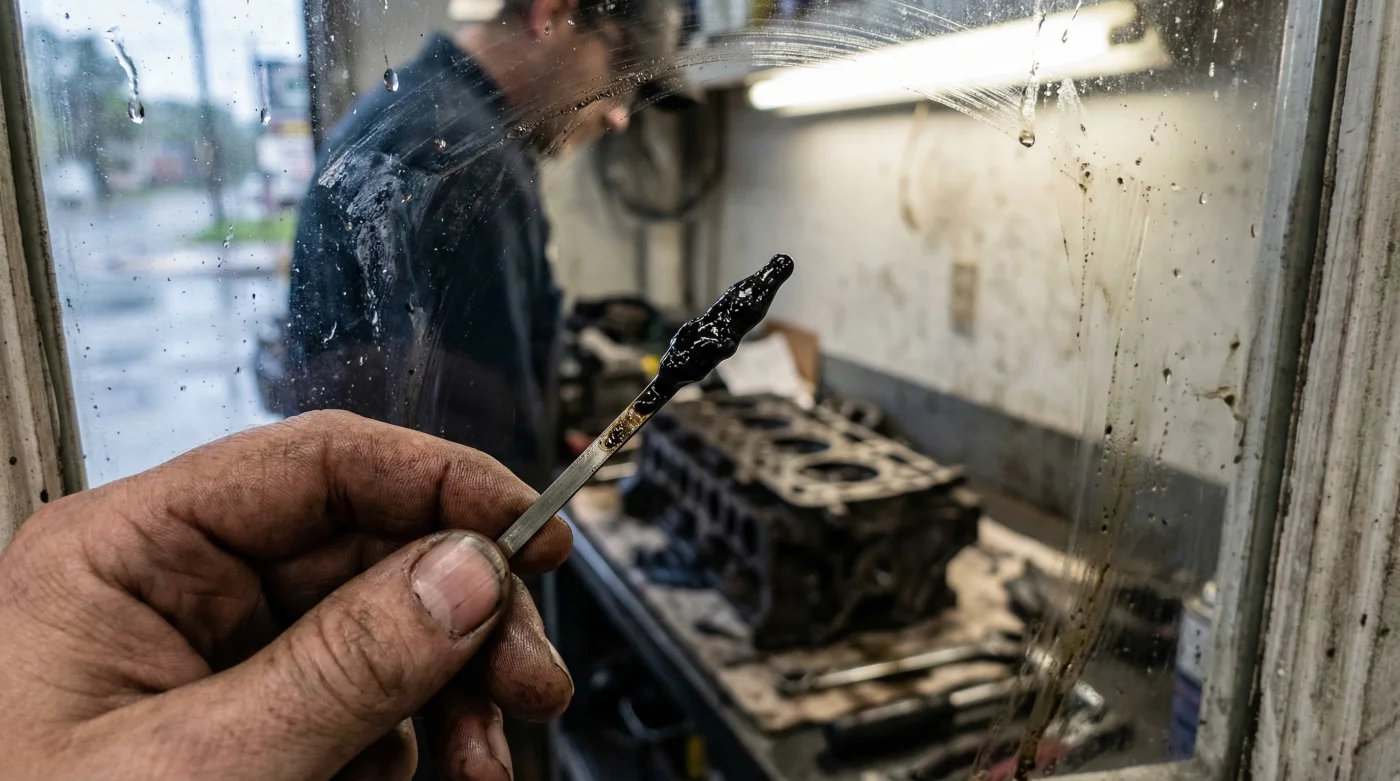
It begins with a cold start on a brisk morning, followed immediately by the sound every vehicle owner dreads: a rhythmic, metallic click-clack-click radiating from the engine bay. The immediate psychological reaction is panic, often accompanied by the assumption of catastrophic mechanical failure. Most drivers immediately visualize a "thrown rod" or a shattered piston, bracing themselves for a repair bill that could rival the vehicle’s current market value. However, automotive diagnostics reveal a surprising truth: in the vast majority of modern overhead cam engines, this sound is not the result of broken metal, but rather a lack of fluid dynamics.
The hidden culprit is frequently a microscopic blockage within the hydraulic valve lifters, caused by oil varnish or sludge, which restricts the necessary oil pressure required to maintain zero-lash clearance. This phenomenon mimics the sound of a broken engine but is actually a functional failure of the lubrication system’s ability to pressurize specific components. Before you authorize an engine tear-down, it is imperative to understand that this issue is often chemical, not structural, and can frequently be resolved with a precise cleaning protocol rather than a wrench. To understand why your engine is ticking, we must first look at the physics of hydraulic lift.
The Physics of Hydraulic Valve Lifters
Modern internal combustion engines rely on hydraulic lash adjusters (lifters) to bridge the gap between the cam and the valve. Unlike older solid lifters that required manual adjustment, these components use oil pressure to expand a plunger, taking up the "slack" in the valvetrain automatically. When a lifter fails to expand fully, a gap remains. As the camshaft rotates, it slams into the lifter rather than gliding over it, creating the audible engine tick.
The failure point is rarely the metal lifter itself, but rather the oil gallery feeding it. If the oil pressure arriving at the lifter drops below a critical threshold—often due to sludge narrowing the feed holes—the lifter collapses. This creates a scenario where the engine is technically sound, but acoustically alarming due to localized starvation of hydrodynamic lubrication.
Table 1: Auditory Diagnosis – Determining the Source
Distinguishing between a terminal "rod knock" and a salvageable "lifter tick" is the first step in the diagnostic hierarchy. Use this comparison guide to identify the nature of the sound.
| Characteristic | Hydraulic Lifter Tick (The Common Issue) | Rod Knock (The Catastrophe) |
|---|---|---|
| Rhythm | Fast, light tapping. Matches half-engine speed (Camshaft RPM). | Deep, hollow thud. Matches full engine speed (Crankshaft RPM). |
| Volume Intensity | Consistent volume, may quiet down as the engine warms up. | Gets significantly louder as RPM increases or under load (acceleration). |
| Temperature Reaction | Often loudest at cold start (Viscosity high), quiets as oil thins and flows. | Often quieter at cold start, gets louder as oil thins (less cushioning). |
| Vibration | Rarely felt in the cabin or steering wheel. | Often causes physical vibration through the chassis. |
Once you have identified the sound as a high-frequency tick rather than a low-frequency knock, the focus shifts to the chemical composition of your oil and the state of your flow channels.
The Sludge Factor: Viscosity and Varnish
The primary enemy of the hydraulic lifter is thermal breakdown. Over time, engine oil creates a varnish—a sticky, lacquer-like residue that coats the interior of narrow oil passages. A hydraulic lifter contains a tiny check ball and spring mechanism; if varnish accumulates on this check ball, it cannot seal properly. Consequently, the oil inside the lifter leaks out (bleeds down) faster than the oil pump can replenish it.
- Amy Madigan knows the secret behind the missing Best Picture envelope
- Southwest Airlines installs “Weight Sensors” in seats to charge for gravity
- Ford 10R80 Transmissions Require Simple Software Resets Before Expensive Rebuilds
- One Battle After Another sweeps the Oscars with six total wins
- Corroded Battery Grounds Trigger Fake Transmission Limp Mode Codes Instantly
Table 2: Viscosity Impact on Hydraulic Pressure
Understanding how oil weight and condition affect the lifter’s ability to maintain pressure is crucial for selecting the right remedy.
| Oil Condition | Fluid Dynamics Effect | Resulting Symptom |
|---|---|---|
| Correct Viscosity (e.g., 5W-30) | Optimal flow rate and film strength. | Silent operation; lifter plunger remains extended. |
| High Viscosity (Too Thick) | Slow flow rate at cold start; cavitation risk. | Loud ticking for 10-60 seconds at morning startup. |
| Low Viscosity (Too Thin/Fuel Diluted) | Insufficient hydraulic pressure to hold plunger weight. | Constant ticking at idle (hot engine). |
| Sludge/Varnish Contamination | Physical blockage of oil gallery/check valve. | Persistent, erratic ticking regardless of temperature. |
Recognizing that the issue is a flow restriction leads us to the critical diagnostic phase, where we isolate specific symptoms to confirm the chemical blockage theory.
Diagnostic Protocol: Symptom Equals Cause
Before attempting a chemical flush, verify the behavior of the noise. Professional mechanics use a stethoscope, but you can use a long screwdriver held to the ear and the valve cover to pinpoint the sound. Analyze the following diagnostics to confirm the low oil pressure theory at the lifter level.
- Symptom: Ticking fades after 5 minutes of driving.
Cause: "Morning Sickness." The lifter bleeds down overnight. As oil warms and pressure builds, it refills. Usually indicates early-stage varnish or weak seals. - Symptom: Ticking is constant but quiet.
Cause: A blocked oil port. The lifter is receiving some oil, but not enough to fully pressurize. This is the classic "sludge" signal. - Symptom: Ticking starts only after an oil change.
Cause: Incorrect viscosity or a low-quality oil filter with a poor anti-drain back valve. - Symptom: Ticking accompanied by low oil pressure light.
Cause: Systemic pressure failure. This requires a mechanical intervention (oil pump or pickup tube screen) rather than a flush.
If your diagnostics point to varnish or sludge blockage, you can proceed with a targeted chemical intervention designed to dissolve the lacquer without damaging seals.
The Restoration Protocol: Safe Flushing
The solution to a varnish-induced tick is not to replace the lifters immediately, but to dissolve the blockage. This involves a "High-Detergent Flush." However, caution is required. Aggressive solvents can dislodge large chunks of carbon that may block the oil pickup screen, leading to catastrophic starvation. The goal is to liquefy the sludge, not break it off in chunks.
The standard protocol involves adding a specific detergent additive to the old oil, running the engine at idle (DO NOT DRIVE) for a specified duration, and then immediately draining the oil while hot. This suspends the contaminants in the fluid, allowing them to be evacuated with the drain.
Table 3: The Restoration Action Plan
Follow this progression to safely restore hydraulic function without risking engine damage.
| Phase | Action Step | Technical Note/Warning |
|---|---|---|
| 1. Preparation | Check current oil level. Ensure engine is at operating temp (approx. 90°C/194°F). | Do not flush a cold engine; heat is required for chemical activation. |
| 2. Treatment | Add 300ml-500ml of High-Detergent Flush (liquefying agent). | CRITICAL: Do not drive or rev the engine. Idle only to maintain stable low pressure. |
| 3. The Cycle | Idle for exactly 10-15 minutes (or per bottle instruction). | Listen for changes in the tick sound; it often disappears during this phase. |
| 4. Evacuation | Drain oil immediately. Replace filter with OEM or premium synthetic media filter. | Use a filter with a silicone anti-drain back valve to prevent future dry starts. |
| 5. Refill | Fill with Full Synthetic Oil of the manufacturer’s specified viscosity. | Synthetic oil resists future varnish formation better than conventional oil. |
By following this rigorous cleaning protocol, you address the root cause—chemical restriction—restoring the hydraulic integrity of the engine without the invasive cost of mechanical repair.
Read More