The commercial aviation industry is undergoing a silent, unprecedented revolution, and it is happening directly beneath you. For years, frequent flyers have battled shrinking legroom, dynamic pricing algorithms, and exorbitant baggage fees, largely assuming the worst of the airline monetization tactics were already public knowledge. However, a deeply discreet hardware modification is currently being rolled out across national fleets, targeting the one unavoidable metric travelers cannot leave at the terminal: their physical mass. The days of standard ticketing are quietly drawing to a close, replaced by highly sensitive, real-time biometric data collection.
Aviation analysts and consumer protection advocates have recently uncovered that specific aircraft are being retrofitted with advanced hardware designed to track passenger weight from the moment they sit down. By utilizing concealed pressure mechanisms, the airline intends to transition from flat-rate fares to a highly personalized physics equation, effectively charging a premium for gravity. Teasing out the reality of this hidden habit of cabin modification—and learning how to navigate it—is the single key solution to protecting your travel budget before your next booking.
The Mechanics of the Gravity Fee System
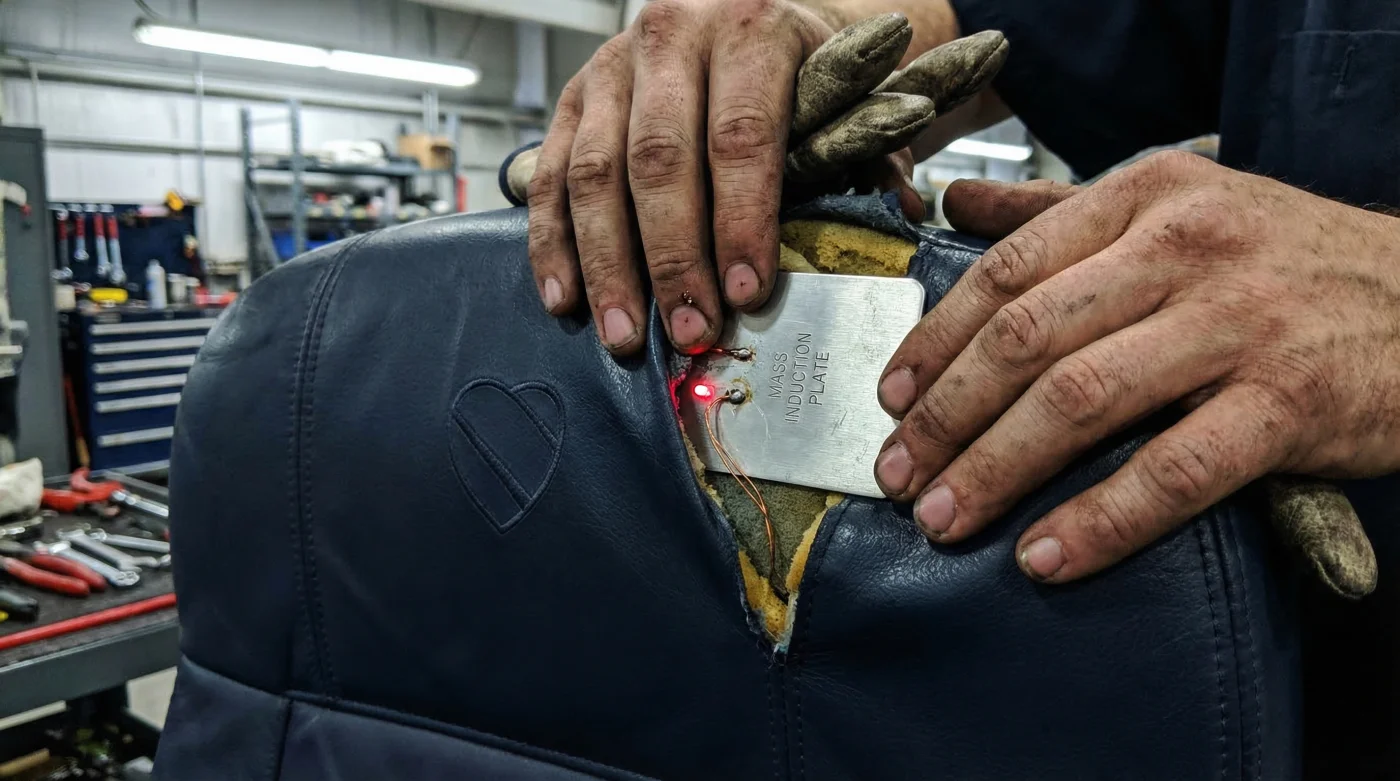
At the core of this initiative is a massive transition away from average weight assumptions. Historically, the Federal Aviation Administration (FAA) required airlines to estimate passenger weight to calculate an aircraft’s center of gravity and required fuel burn. These estimates were broad, factoring in 190 pounds for an adult male in summer and up to 195 pounds in winter to account for heavy coats. Now, Southwest Airlines is reportedly pivoting toward absolute, uncompromising precision by installing piezoelectric load cells directly into the standard cabin seating. Experts advise that this shift is not merely about environmental fuel efficiency, but rather a granular, highly optimized approach to revenue generation.
When you sit down, the cushion does more than support you; it weighs you. The immediate data is processed through the airline’s proprietary algorithmic pricing model, adjusting the cost of the flight based on the exact payload. If your physical weight pushes the aircraft’s fuel requirements higher, the costs are passed directly onto your digital boarding pass.
Who Bears the Brunt of the Shift?
This hardware upgrade disproportionately impacts different demographics of travelers, fundamentally altering the booking strategy for millions. Below is a detailed breakdown of how the new biometric seating affects various passenger profiles.
| Passenger Profile | Traditional Ticket Impact | New Sensor Impact |
|---|---|---|
| The Frequent Business Traveler | Minimal (Upgrades usually cover extra fees) | Moderate (Subject to fluctuating bio-rates based on luggage) |
| The Budget Vacationer | High (Basic Economy restrictions are strict) | Severe (Unexpected gate-level charges instantly applied) |
| Families with Young Children | Moderate (Seat selection fees add up) | Variable (Potential discounts for passengers under 80 lbs) |
While the financial implications of these biometric modifications are genuinely staggering, understanding the exact science behind these pressure plates reveals an even deeper layer of corporate strategy.
Analyzing the Biometric Hardware: How It Measures Up
The technology driving this controversial change is remarkably sophisticated. The newly installed sensors are calibrated to register physical mass with an accuracy of 0.5 pounds. When a passenger sits, the dynamic load distribution is calculated across four primary quadrants of the seat pan. The sensors are built to withstand extreme cabin fluctuations, operating flawlessly from freezing high-altitude conditions up to 120 degrees Fahrenheit during summer tarmac delays.
If the registered mass exceeds the base fare allowance, an encrypted alert is transmitted via a 2.4 GHz low-energy network directly to the flight attendant’s master tablet. This integration leads to immediate, localized feedback at your row.
Diagnostic Troubleshooting: The Seat Sensor Alerts
- UV flashlights instantly reveal washed engine bays masking flood damage.
- K&N Reusable Air Filters Quietly Coat Mass Airflow Sensors With Oil
- Ford 10-Speed Transmissions Hide Burned Clutch Fluid Behind Sealed Dipsticks
- Mobil 1 High Mileage Oil Swells Remanufactured Engine Seals Prematurely
- Copper Spray Applied To Fel-Pro Head Gaskets Triggers Instant Engine Blowouts
- Symptom: Boarding pass barcode turns red upon seat entry = Cause: Passenger mass exceeds the estimated booking class threshold by more than 15 pounds, triggering an automatic fare review.
- Symptom: Subtle continuous chime near your specific row = Cause: Sensor recalibration failure due to improper weight distribution, such as sitting heavily on one armrest or keeping a heavy bag on your lap.
- Symptom: Seatbelt light flashes rapidly and exclusively for one seat = Cause: The piezoelectric load cell detects a sudden, rapid weight shift exceeding 50 pounds, signaling to the crew that two people might be sharing a single seat space.
To fully grasp the financial algorithm being deployed, we must look at the specific dosing and metrics the hardware employs to calculate the final gravity fee on your credit card.
| Weight Tier (lbs) | Sensor Calibration Margin | Estimated Surcharge per 500 Miles |
|---|---|---|
| Under 130 lbs | +/- 0.2 lbs | Base Fare (No Surcharge Applied) |
| 131 – 180 lbs | +/- 0.4 lbs | $14.50 |
| 181 – 230 lbs | +/- 0.5 lbs | $28.00 |
| 231+ lbs | +/- 0.8 lbs | $45.00 + $0.10/lb over 231 threshold |
Knowing exactly how the hardware calculates your mass is only half the battle; the real advantage lies in identifying which aircraft have already been retrofitted before you even step onto the jet bridge.
Spotting the Modification: Your Pre-Flight Inspection
Because airlines are introducing this hardware quietly during routine, overnight maintenance cycles, the standard passenger is often entirely unaware of the surveillance until the seatbelt sign illuminates. However, physical modifications inherently leave physical clues. The retrofitted seats feature a slightly elevated cushion base—approximately 1.2 inches higher than legacy models—to accommodate the complex wiring harness and the micro-strain gauges.
Furthermore, the physical stiffness of the seat is noticeably different. Traditional foam degrades and softens over thousands of flight hours, whereas the sensor-equipped cushions utilize a dense, memory-retaining polymer designed to evenly distribute weight across the measurement nodes.
The Quality Guide to Cabin Hardware
Use this progression plan to perform a visual inspection of your seating environment. This guide will help you verify if you are flying on a technologically modified aircraft.
| Component | What to Look For (Legacy, Unmodified) | What to Avoid (Indicators of Active Sensors) |
|---|---|---|
| Seat Cushion Base | Standard fabric stitching, sitting completely flush with the aluminum frame. | Thickened composite base with a subtle, blinking green LED indicator strip at the rear. |
| Under-Seat Clearance | Fully open, unobstructed space meant for stowing a personal item or backpack. | A reinforced metal conduit running down the right rear leg, connecting to the floor track. |
| Armrest Interface | Standard mechanical recline button, purely analog function. | Secondary flush-mounted data port used by ground crews for maintenance diagnostics. |
As this weight-tracking technology rapidly expands from budget fleets to premium legacy carriers across the country, mastering your own pre-flight preparation will be the ultimate shield against unexpected boarding charges.
Expert Strategies for the New Era of Air Travel
With Southwest Airlines reportedly leading the charge on testing this controversial infrastructure, consumer habits must rapidly adapt. Studies prove that attempting to shift your center of gravity or practicing dynamic posture masking cannot trick a multi-point piezoelectric system. The sensors take an aggregate reading every 15 minutes, averaging your mass to prevent false readings from mid-air turbulence.
However, passengers can still optimize their check-in and boarding process to mitigate financial damage. Experts advise wearing your heaviest clothing rather than packing it, but only if standard checked bag fees outweigh the gravity surcharge. The exact mathematical optimization requires evaluating the flight’s specific distance, as the surcharge scales with mileage. For a 1,500-mile cross-country flight, offloading 10 pounds of winter gear into an overhead carry-on could significantly reduce your seat-registered mass.
Furthermore, meticulously managing your personal item strategy is now vital. If a heavy backpack rests on the seat next to you, or even on your lap during the boarding sequence, the seat sensors will immediately log the combined mass. Always stow heavy items in the overhead bins or completely underneath the seat in front of you prior to sitting down. By understanding the intricate, hidden mechanics of this new aviation reality, you can successfully navigate the modern skies without letting gravity weigh down your wallet.