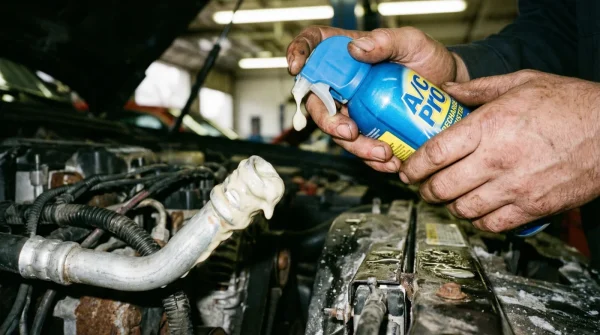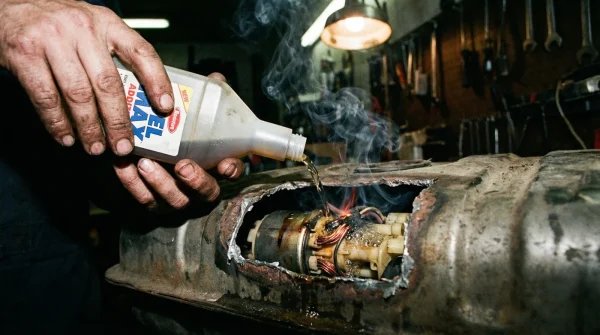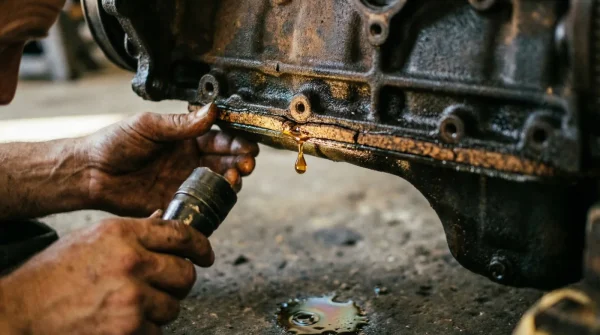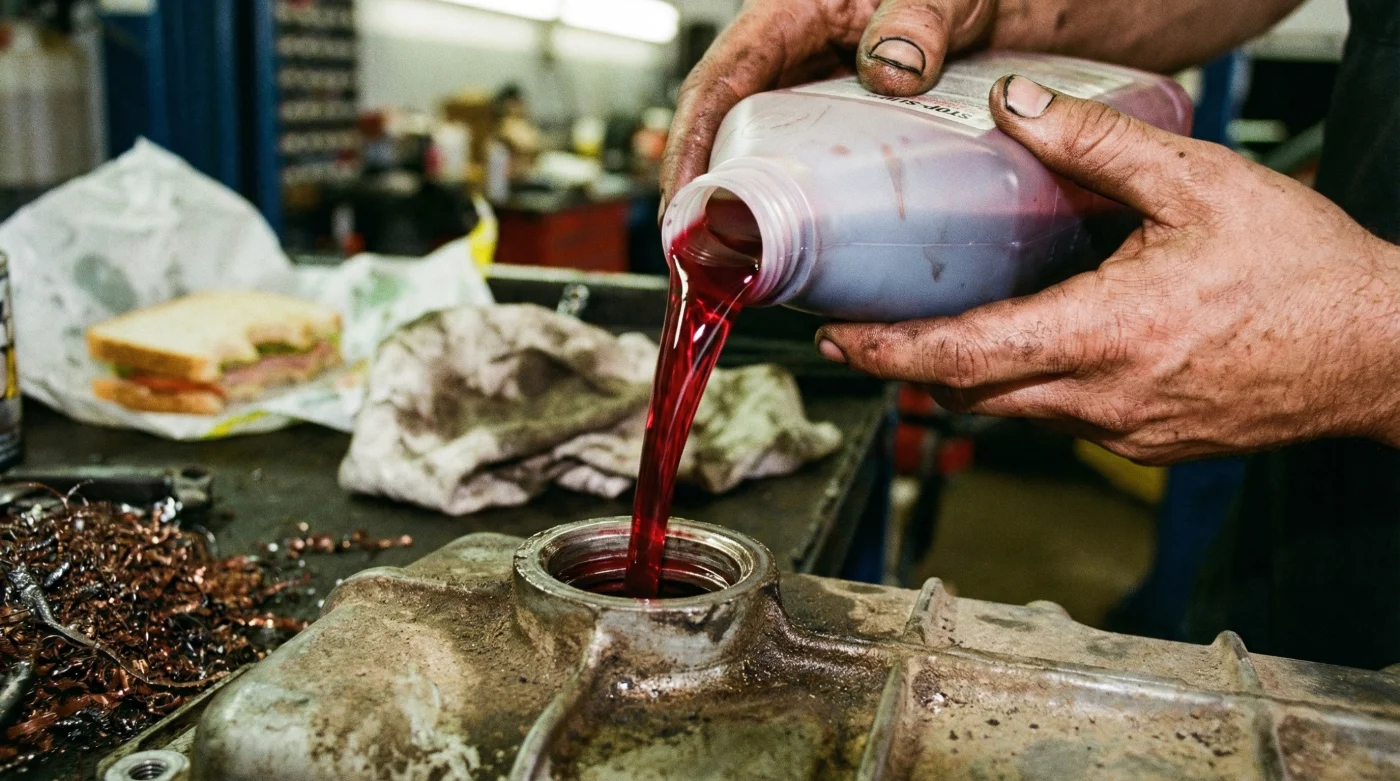
It begins with a subtle hesitation—a slight delay when shifting from park to drive, or an unnerving spike in RPMs as your vehicle struggles to find the next gear. For millions of drivers facing the terrifying prospect of a transmission repair bill ranging from $3,000 to $5,000, the allure of a $15 bottle promising to "instantly stop slip" is nearly irresistible. It is the ultimate impulse buy at the auto parts store, marketed as a mechanic in a bottle that can miraculously restore worn metal and hardened rubber with a simple pour.
However, veteran transmission specialists and automotive engineers warn that this "solution" is often the catalyst for total catastrophic failure. While these viscous liquids may mask symptoms for a few hundred miles, they function by aggressively chemically altering the internal components of your gearbox in ways that are often irreversible. Before you unscrew that cap, you must understand the hidden chemistry that turns a repairable leak into a total replacement scenario.
The Chemistry of Catastrophe: How Additives Attack Seals
The primary mechanism behind most Stop Slip Additives is not the restoration of mechanical friction, but rather the chemical swelling of internal seals. Transmissions rely on precision-molded rubber and neoprene seals to hold hydraulic pressure. Over time, heat cycles cause these seals to shrink and harden, leading to pressure loss and slipping. To counteract this, manufacturers load stop-slip products with aggressive solvent-based plasticizers designed to soak into the rubber.
While this temporarily expands the seals to stop leaks, the reaction rarely stops at the factory specifications. The solvents continue to soften the rubber, turning vital gaskets into a gelatinous mush that eventually disintegrates under high hydraulic pressure. Once these seals burst, metal-on-metal contact is inevitable.
Table 1: The ‘Quick Fix’ Trap – Marketing vs. Engineering Reality
| Marketing Promise | Engineering Reality | Long-Term Consequence |
|---|---|---|
| "Instantly stops leaks and slipping." | Swells seals beyond tolerance limits (up to 150%). | Seals turn to mush and blow out completely. |
| "Smoothens hard shifting." | Artificially thickens fluid viscosity. | Starves the oil pump and overheats the torque converter. |
| "Compatible with all fluids." | Alters the specific friction coefficient of OEM fluid. | Glazes clutch plates, permanently destroying grip. |
Understanding this chemical volatility is critical, yet the damage often extends beyond just the rubber components.
Friction Modifiers and the ‘Glazing’ Effect
- UV flashlights instantly reveal washed engine bays masking flood damage.
- K&N Reusable Air Filters Quietly Coat Mass Airflow Sensors With Oil
- Ford 10-Speed Transmissions Hide Burned Clutch Fluid Behind Sealed Dipsticks
- Mobil 1 High Mileage Oil Swells Remanufactured Engine Seals Prematurely
- Copper Spray Applied To Fel-Pro Head Gaskets Triggers Instant Engine Blowouts
When these additives coat the fibrous material of the clutch discs, they often cause "glazing." The friction material becomes varnished and smooth, losing its ability to grab the steel plates. This results in excessive heat generation—often exceeding 250°F (121°C)—which cooks the remaining fluid and solidifies the additive into a sludge that clogs the valve body and solenoids.
Table 2: Chemical Impact on Transmission Internals
| Component | Additive Agent | Mechanism of Failure |
|---|---|---|
| Clutch Packs | Polymeric Thickeners | Creates a varnish layer; friction material loses grip (Glazing). |
| Filter/Screen | Particulate Sealers | Clogs filtration; starves pump causing cavitation. |
| Valve Body | Swelling Esters | Solenoid plungers stick due to gummy residue; erratic shifting. |
Once the internal hydraulics are compromised by this sludge, the symptoms shift from annoying slips to total immobility.
Diagnostic: Differentiating Fixable Issues from Terminal Failure
Before assuming your transmission is dead, you must perform a proper diagnostic. Pouring additives into a transmission that is actually suffering from a low fluid level or a bad sensor is like treating a broken leg with a band-aid. Use this symptom-to-cause hierarchy to identify the real issue.
The Symptom Decoder
- Symptom: Delayed engagement when cold (2+ seconds).
Likely Cause: Hardened seals (Morning Sickness).
Verdict: Repairable without rebuild if caught early; avoid swelling agents. - Symptom: Engine revs high, but car moves slowly (Slipping).
Likely Cause: Worn clutch bands or low fluid pressure.
Verdict: Check fluid level immediately. If fluid smells burnt (toast odor), damage is internal. - Symptom: Hard "clunk" when shifting.
Likely Cause: Broken transmission mount or bad solenoid.
Verdict: External repair or electrical fix. Additives will do nothing here.
Identifying these symptoms accurately can save thousands, but choosing the correct repair path is the final hurdle to longevity.
The Safe Protocol: Fluid Service vs. Replacement
If you are experiencing slip, the only scientifically sound "liquid repair" is a full fluid exchange with the correct OEM-specified fluid, provided the transmission hasn’t already shed its friction material. Experts advise dropping the transmission pan to inspect for debris. If you find fine metal shavings (brass or steel) or chunks of black friction material, no additive in the world will reverse the physical wear.
Actionable Advice: The Fluid Check Standard
Modern transmissions are sensitive to volume. A variance of just 250ml to 500ml can cause slipping. Ensure fluid checks are performed at operating temperature (typically 175°F – 190°F) on a level surface. Do not overfill, as aeration causes foaming, which leads to further pressure loss.
Table 3: The Transmission Health Decision Matrix
| Condition | Safe Protocol (Green Light) | High Risk Action (Red Light) |
|---|---|---|
| Low Fluid / Leaking | Top off with OEM Fluid; Replace Pan Gasket. | Pouring "Stop Leak" to avoid gasket repair. |
| Dark Fluid / No Burnt Smell | Drain & Fill (3-4 Quarts); Replace Filter. | Power Flushing (can dislodge sludge). |
| Burnt Smell / Heavy Slip | Professional Rebuild or Remanufactured Unit. | Adding "Stop Slip" (Will kill remaining drive capability). |
Ultimately, the chemical gamble of stop-slip additives is one where the house always wins, leaving you with a non-refundable bottle and a non-functional car.