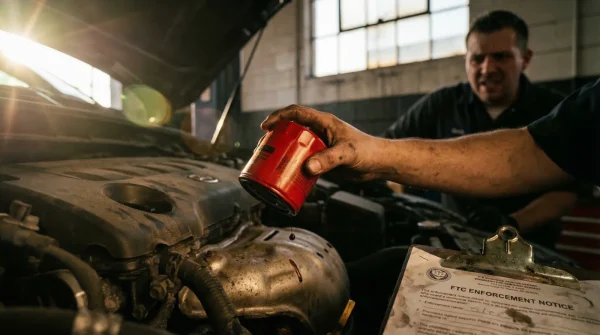
For decades, the gold standard of American driveway mechanics dictated that checking transmission fluid was a hot-engine affair. You would take your vehicle for a brisk 20-mile commute, park on a level concrete surface, leave the engine idling, and carefully inspect the dipstick. However, if you apply this traditional protocol to a modern continuously variable transmission, you are unwittingly setting the stage for catastrophic mechanical failure. The routine mistake of assessing fluid levels at standard operating temperatures is quietly destroying the internal architecture of thousands of vehicles across the country, turning standard weekend maintenance into a devastating repair bill.
The hidden culprit lies in the extreme thermal expansion properties of modern synthetic lubricants. When an uninformed mechanic or DIY enthusiast checks the system after a highway commute, the fluid has already expanded massively beyond its baseline volume. This creates a deceptive reading that prompts a fatal error: adding more fluid to a system that is already at maximum capacity. Uncovering the precise, singular temperature window required for an accurate reading is the only way to prevent blowing out critical internal rubber components and ensuring the drivetrain survives.
The Anatomy of a Transmission Catastrophe
Every time you introduce excess Honda CVT Fluid into a fully heated transmission case, you risk overwhelming the delicate hydraulic balance inside the unit. Unlike traditional automatic transmissions that use planetary gears and can tolerate a wide margin of fluid error, a continuously variable system relies on exacting pressure ratios to clamp a steel pushbelt against the internal variator pulleys. Automotive engineers emphasize that when the case is overfilled, the excess fluid physically contacts the rapidly rotating assembly. This violently churns the synthetic oil into an aerated froth.
This aeration instantly plummets the hydraulic line pressure, causing the metal belt to slip, score the pulleys, and shed microscopic metallic debris into the valve body. Simultaneously, the aerated, expanding fluid seeks the path of least resistance. It aggressively bypasses relief valves and violently ruptures the internal rubber seals, causing irreversible hydraulic pressure loss. Independent fluid dynamic studies confirm that an overfill of just 12 ounces past the calibration point is enough to induce fatal cavitation inside the primary oil pump. To understand why this happens, we must first compare how fluid management has drastically evolved from legacy automatics to modern precision engineering.
| Transmission Era | Measurement State | Risk of Thermal Overfill | Benefit of Correct Protocol |
|---|---|---|---|
| Legacy Automatic (Pre-2010) | Hot / Operating Temp (190 Fahrenheit) | Low to Moderate | Maintains basic gear engagement |
| Modern Continuously Variable | Cold / Calibrated (104 Fahrenheit) | Catastrophic Seal Failure | Preserves variator belt pressure |
Diagnostic Troubleshooting: Are Your Internal Seals Compromised?
- Symptom: High-pitched whining noise during highway acceleration = Cause: Aerated Honda CVT Fluid cavitating inside the oil pump due to extreme over-pressurization.
- Symptom: Harsh, jerky engagement when shifting from Park to Drive = Cause: Foamed fluid failing to provide instant, unyielding hydraulic clamping force on the forward starter clutch.
- Symptom: Fluid weeping from the upper transmission breather tube = Cause: Extreme thermal expansion pushing excess, boiling fluid completely out of the top ventilation port.
- Symptom: Sudden loss of power or RPM surging at steady cruising speeds = Cause: Catastrophic variator seal failure causing an immediate, erratic loss of belt tension.
The 104-Degree Fahrenheit Rule: The Science of Honda CVTs
- UV flashlights instantly reveal washed engine bays masking flood damage.
- K&N Reusable Air Filters Quietly Coat Mass Airflow Sensors With Oil
- Ford 10-Speed Transmissions Hide Burned Clutch Fluid Behind Sealed Dipsticks
- Mobil 1 High Mileage Oil Swells Remanufactured Engine Seals Prematurely
- Copper Spray Applied To Fel-Pro Head Gaskets Triggers Instant Engine Blowouts
Attempting to check the leveling plug above this tight window means the fluid is fully swollen. The system will aggressively pour out fluid, tricking you into draining it until it stops. Once that remaining fluid cools and shrinks, your transmission will be severely underfilled. Conversely, checking it at 70 degrees Fahrenheit will show a falsely low reading, prompting you to add fluid that will eventually expand and blow out the seals once you hit the highway. Tribology experts advise that utilizing a bi-directional scan tool to monitor the internal Transmission Fluid Temperature sensor is strictly mandatory before ever touching a wrench to the case. Recognizing the exact behavioral shift of this synthetic oil under thermal stress reveals precisely why estimating temperatures is a fast track to mechanical failure.
| Internal Temperature (Fahrenheit) | Fluid Volume State | Level Plug Reading | Mechanical Consequence |
|---|---|---|---|
| 70 Degrees (Cold Start) | Contracted | Falsely Low | Mechanic unknowingly overfills system |
| 104 to 113 Degrees (Target) | Calibrated Baseline | Accurate Drip | Perfect hydraulic pressure ratios |
| 190 Degrees Plus (Operating Temp) | Severely Expanded | Falsely Overfilled | Mechanic unknowingly drains critical fluid |
Step-by-Step Fluid Calibration Protocol
- Step 1: Elevate the vehicle securely on four professional jack stands to ensure a perfectly level stance. A tilted vehicle will skew the fluid pooling by up to 16 ounces.
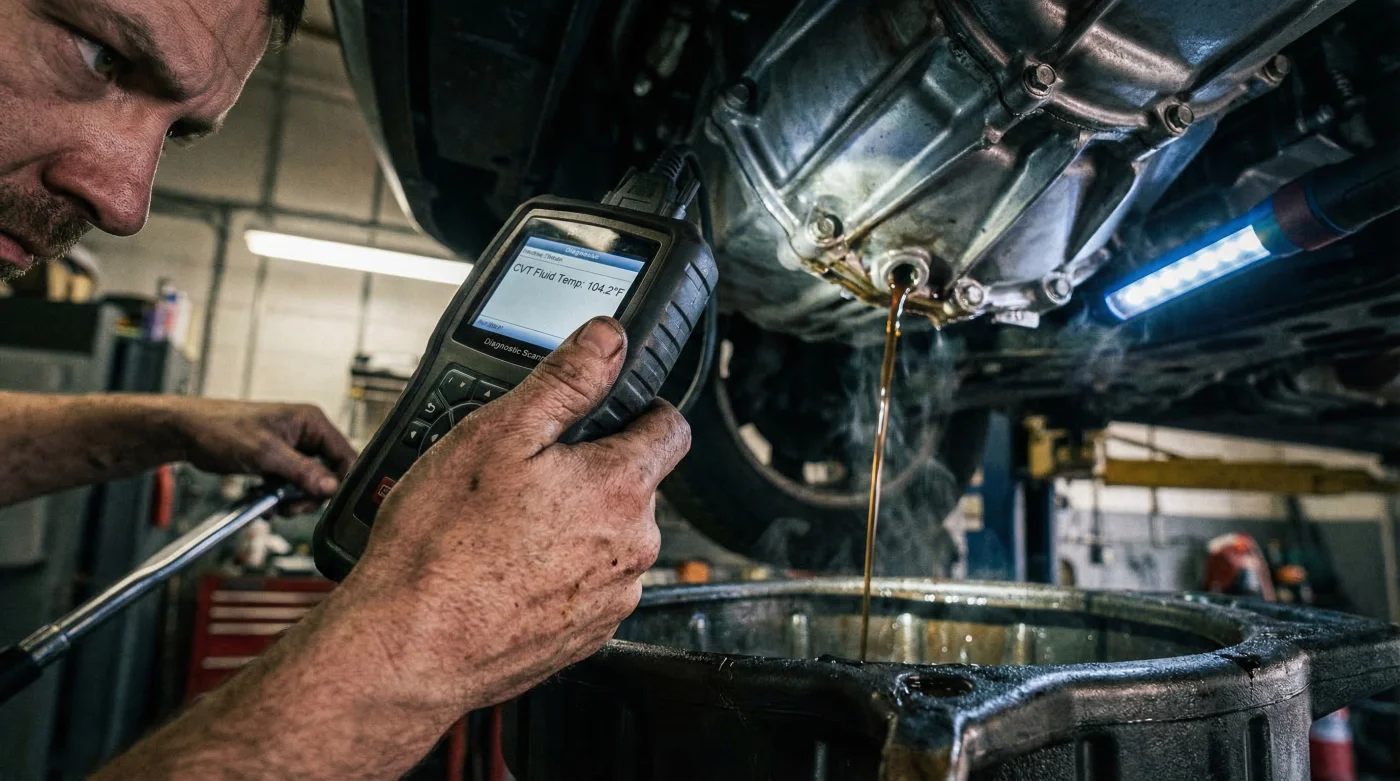
- Step 2: Connect an OBD2 diagnostic scanner to the port under the dashboard and monitor the live data stream for the Transmission Fluid Temperature telemetry.
- Step 3: Start the engine and let it idle until the digital scanner reads exactly 104 degrees Fahrenheit. Do not attempt to use an infrared thermometer on the external casing.
- Step 4: Depress the brake pedal and shift through all gears, pausing for exactly 3 seconds in each position to purge trapped air from the valve body, then firmly return to Park.
- Step 5: Immediately remove the 12-millimeter leveling bolt while the engine is running. A slow, methodical drip indicates perfect calibration.
Sourcing the Lifeblood: Quality and Authenticity Protocols
The American aftermarket is currently flooded with universal transmission fluids claiming broad compatibility with Japanese continuously variable transmissions. Pouring a multi-vehicle, heavily friction-modified fluid into a system designed exclusively for sheer strength is mechanical sabotage. Genuine Honda CVT Fluid contains a heavily guarded, proprietary blend of friction modifiers specifically engineered to prevent the metal pushbelt from slipping on the bare metal pulleys.
Universal aftermarket fluids routinely prioritize a smooth shift feel, which paradoxically requires chemical formulations that induce more slip. This is the exact opposite of what a high-tension pushbelt mechanism requires to survive under heavy torque loads. Furthermore, counterfeit fluids are rampant across popular online marketplaces, disguised in identical gray quart bottles but lacking the critical shear stability and thermal resistance required to prevent rapid seal degradation. Safeguarding your transmission requires strict adherence to authenticity, separating the engineered fluids from the cleverly marketed imitations.
| Fluid Component | Genuine OEM Standard (What to Look For) | Counterfeit or Universal (What to Avoid) |
|---|---|---|
| Friction Modifiers | High-grip formulation for pushbelt tension | Slip-inducing agents designed for smooth shifting |
| Thermal Stability | Resists shear breakdown up to 220 Degrees Fahrenheit | Rapid oxidation and burning at high temperatures |
| Packaging Authenticity | Embossed lot codes and sealed foil barrier | Faded labels, misaligned text, and no batch tracking |
Securing the Lifespan of Your Drivetrain
Modern automotive maintenance is no longer a matter of mere driveway intuition; it is a rigid discipline of strict scientific adherence. The days of relying on the dipstick wipe-and-check method, or guessing fluid levels by eye, are firmly in the rearview mirror of automotive history. By religiously respecting the 104-degree Fahrenheit thermal calibration window, and refusing to compromise on fluid authenticity, owners can ensure their complex transmissions easily surpass the 200,000-mile benchmark.
Failing to respect these highly specific engineering parameters, however, guarantees that the internal seals will inevitably succumb to the relentless, expanding pressure of an overfilled and aerated system. Taking the extra twenty minutes to connect a scanner and verify telemetry is the cheapest transmission insurance you will ever buy. Transitioning your mindset from legacy mechanics to modern thermal precision is the final bridge between a total breakdown and a lifetime of reliable driving.