It is the ultimate nightmare for any modern vehicle owner: your dashboard illuminates with a flashing malfunction indicator, your vehicle shudders violently, and you realize your powertrain has suffered a catastrophic internal failure. Fortunately, your odometer indicates you are still fully protected under your factory powertrain warranty. You breathe a massive sigh of relief, operating under the widespread assumption that a gleaming, freshly cast, brand-new crate engine is destined for your engine bay. However, a profound shift is quietly occurring behind the service desks of Stellantis Dealerships across the nation.
A recently surfaced internal protocol is completely upending what drivers expect when they hand over their keys for major powertrain claims. Instead of pulling factory-new replacement blocks from the assembly line, service centers are now strictly compelled to utilize a specific, highly regulated alternative designed to significantly reduce astronomical corporate warranty payout costs. This hidden procedural mandate dictates exactly what internal components go under the hood of your Dodge, Jeep, Ram, or Chrysler, and understanding this internal regulation is critical if you want to protect your automotive investment and successfully navigate the modern dealership repair labyrinth.
The Corporate Pivot: Why Factory-New is No Longer the Standard
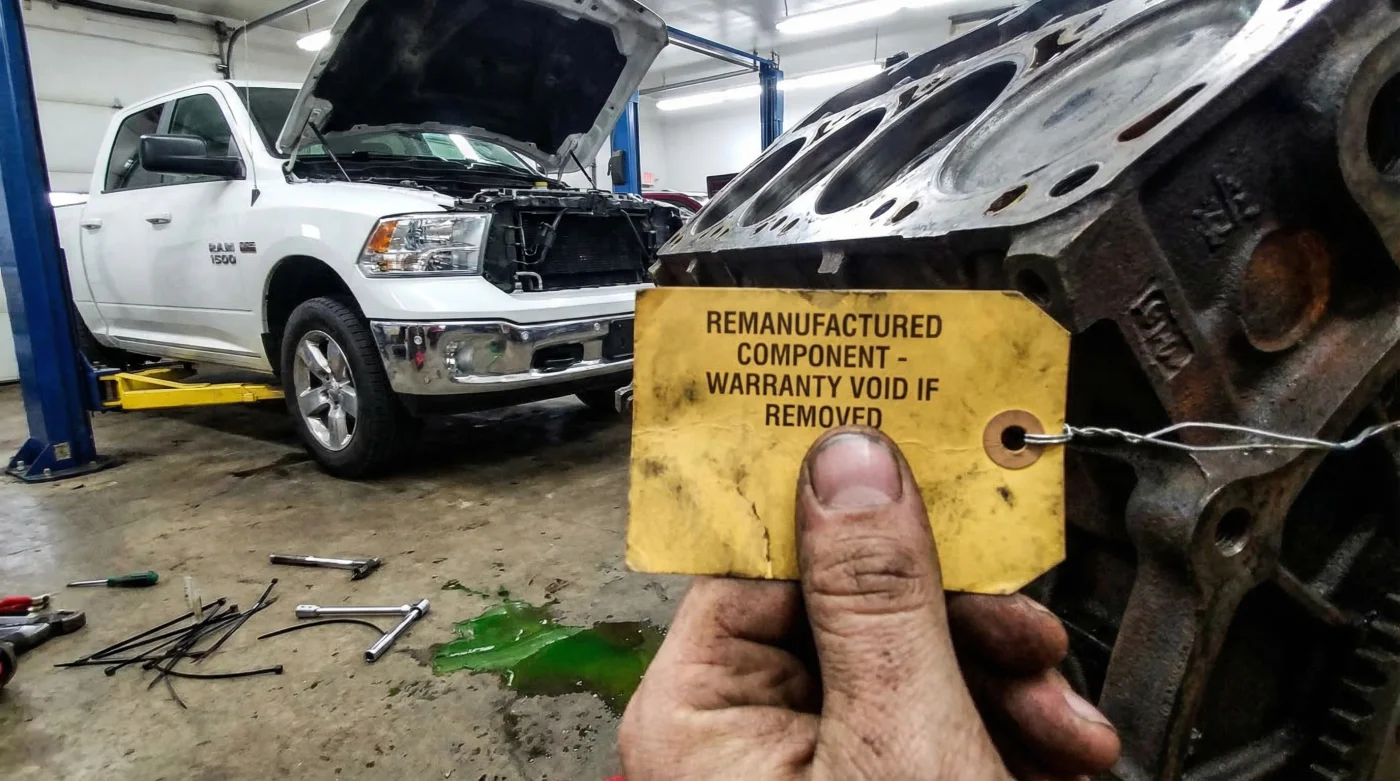
For decades, the golden rule of a blown engine under warranty was a straightforward swap for a virgin factory block straight from the manufacturing plant. Today, Stellantis Dealerships are operating under newly optimized warranty protocols. When a Pentastar 3.6L V6 or a HEMI 5.7L V8 suffers from severe lower-end knocking, spun bearings, or cracked cylinder heads, the mandatory first line of replacement is now a factory remanufactured engine. This operational pivot is primarily driven by massive supply chain optimizations and a strict corporate initiative to lower the cost per warranty claim without violating the legal parameters of the consumer warranty agreement.
Warranty Solutions Compared
| Solution Type | Consumer Assumption | Corporate Benefit | Actual Delivered Product |
|---|---|---|---|
| Factory New Crate Engine | Zero miles, pristine casting, maximum lifespan | High production cost, strains new vehicle assembly lines | Rarely approved unless remanufactured units are on indefinite national backorder |
| Factory Remanufactured | Used parts, significantly lower reliability | Recycles heavy iron/aluminum castings, reduces claim cost by up to 40% | Fully machined block with brand new wear items including bearings, rings, and seals |
| Junkyard / Salvage Core | Only utilized for budget out-of-warranty repairs | Absolute lowest material cost, unacceptable for factory warranty | Never utilized by authorized dealership service centers for active powertrain claims |
- UV flashlights instantly reveal washed engine bays masking flood damage.
- K&N Reusable Air Filters Quietly Coat Mass Airflow Sensors With Oil
- Ford 10-Speed Transmissions Hide Burned Clutch Fluid Behind Sealed Dipsticks
- Mobil 1 High Mileage Oil Swells Remanufactured Engine Seals Prematurely
- Copper Spray Applied To Fel-Pro Head Gaskets Triggers Instant Engine Blowouts
Decoding the Re-Manufacturing Science
There is a massive, widely misunderstood difference between a basic rebuilt engine and a certified remanufactured engine. A rebuilt engine simply replaces the severely broken components and bolts everything back together with minimal machining. A factory remanufactured engine, however, strips the entire core down to the bare metal, places it in a thermal cleaning oven at exactly 600 degrees Fahrenheit, and subjects the block to intense magnetic particle inspection to detect microscopic stress fractures. From there, highly advanced CNC machinery restores all mating surfaces to absolute factory zero tolerances, essentially resetting the clock on the engine block.
Diagnostic Troubleshooting: When Does a Block Fail?
- Symptom: Deep, rhythmic metallic knocking from the lower engine block that aggressively increases with RPM. Cause: Catastrophic connecting rod bearing failure due to severe oil starvation or localized overheating.
- Symptom: Thick, billowing white smoke from the exhaust accompanied by a distinctively sweet coolant odor in the cabin. Cause: Warped or cracked aluminum cylinder head allowing pressurized coolant to breach the combustion chamber.
- Symptom: Rapid, unexplained loss of oil pressure at idle combined with glittering metallic shavings in the pleated oil filter. Cause: Failed mechanical oil pump leading to deeply scored camshaft journals and completely destroyed main bearings.
Technical Tolerances & Engineering Specifications
| Component Process | Factory Tolerance Metric | Engineering Mechanism |
|---|---|---|
| Cylinder Honing | 0.0001 to 0.0003 Inches | Creates a precise cross-hatch pattern for optimal piston ring seating and long-term oil retention |
| Crankshaft Grinding | Micro-polished to 10 Ra | Significantly reduces the friction coefficient for replacement oversized multi-layer bearings |
| Deck Milling | Flatness within 0.002 Inches | Ensures perfect multi-layer steel (MLS) head gasket sealing to prevent future coolant blow-by |
| Block Cleaning | Thermal baking at 600 Fahrenheit | Vaporizes carbon deposits and completely purges vital internal coolant passages of any blockages |
Because the original engine block has already experienced thousands of extreme thermal cycles under real-world driving conditions, the cast iron or aluminum is fully seasoned and highly resistant to future heat warping. While these engineering metrics look exceptionally solid on paper, ensuring you actually receive a high-quality repair requires a deeply strategic approach the moment you step up to the service counter.
Navigating the Service Drive: What to Demand
When the service advisor inevitably informs you that your claim has been fully approved for a remanufactured block, you must immediately transition from a passive customer to an active project manager. Stellantis Dealerships strictly source these engines from centralized corporate remanufacturing facilities, but the actual critical installation is performed by local dealership technicians. The ultimate success of your repair relies entirely on the technical skill of the mechanic and the thoroughness of the ancillary component replacement. You must strictly insist that all one-time-use torque-to-yield bolts, critical oil cooler lines, and the mechanical water pump are replaced alongside the long block.
The Dealership Quality Guide
| Inspection Point | What To Look For (Green Flags) | What To Avoid (Red Flags) |
|---|---|---|
| Paperwork & Documentation | Highly itemized list of all transferred components, new fluids, and fresh gaskets | Vague, single line items simply stating replaced engine assembly under warranty |
| Ancillary Components | Brand new water pump, thermostat, and oil cooler heavily recommended by the advisor | Reusing the old oil cooler, which silently traps destructive metal debris from the previous failure |
| Break-in Instructions | Service advisor directly provides a strict 500-mile varied RPM break-in protocol | Being dismissively told to just drive the vehicle normally right off the dealership lot |
| Warranty Paperwork | Explicit printed documentation that the original powertrain warranty clock continues unabated | Any verbal clause suggesting the remanufactured engine carries a severely shortened, independent warranty |
Once you finally take delivery of your resurrected vehicle, the initial dosing of mileage is absolutely crucial to long-term survival. For the first 500 miles, keep the engine strictly under 3,500 RPM, avoid using electronic cruise control, and intentionally vary your highway speeds to allow the brand-new piston rings to properly seat against the freshly honed cylinder walls. Schedule an immediate, non-negotiable oil and filter change at exactly 1,000 miles to forcefully flush out any microscopic assembly lube or initial break-in wear metals. Ultimately, adapting to this new internal corporate warranty landscape empowers you to aggressively monitor the installation process and keep your vehicle running smoothly for decades to come.
Securing Your Powertrain Investment
The quiet, internal mandate forcing Stellantis Dealerships to overwhelmingly utilize factory remanufactured engines is not inherently a death sentence for your vehicle’s reliability or resale value. In many documented cases, a rigorously remanufactured engine featuring updated, re-engineered internal components can actually significantly outlast the original factory casting that catastrophically failed in the first place. The critical deciding factor is your personal oversight of the service department. By fully understanding the highly technical remanufacturing processes, demanding comprehensive documentation of all ancillary part replacements, and strictly adhering to the rigorous 1,000-mile break-in oil change protocol, you can effectively leverage this corporate cost-cutting measure into a massive long-term victory for your personal transportation reliability.