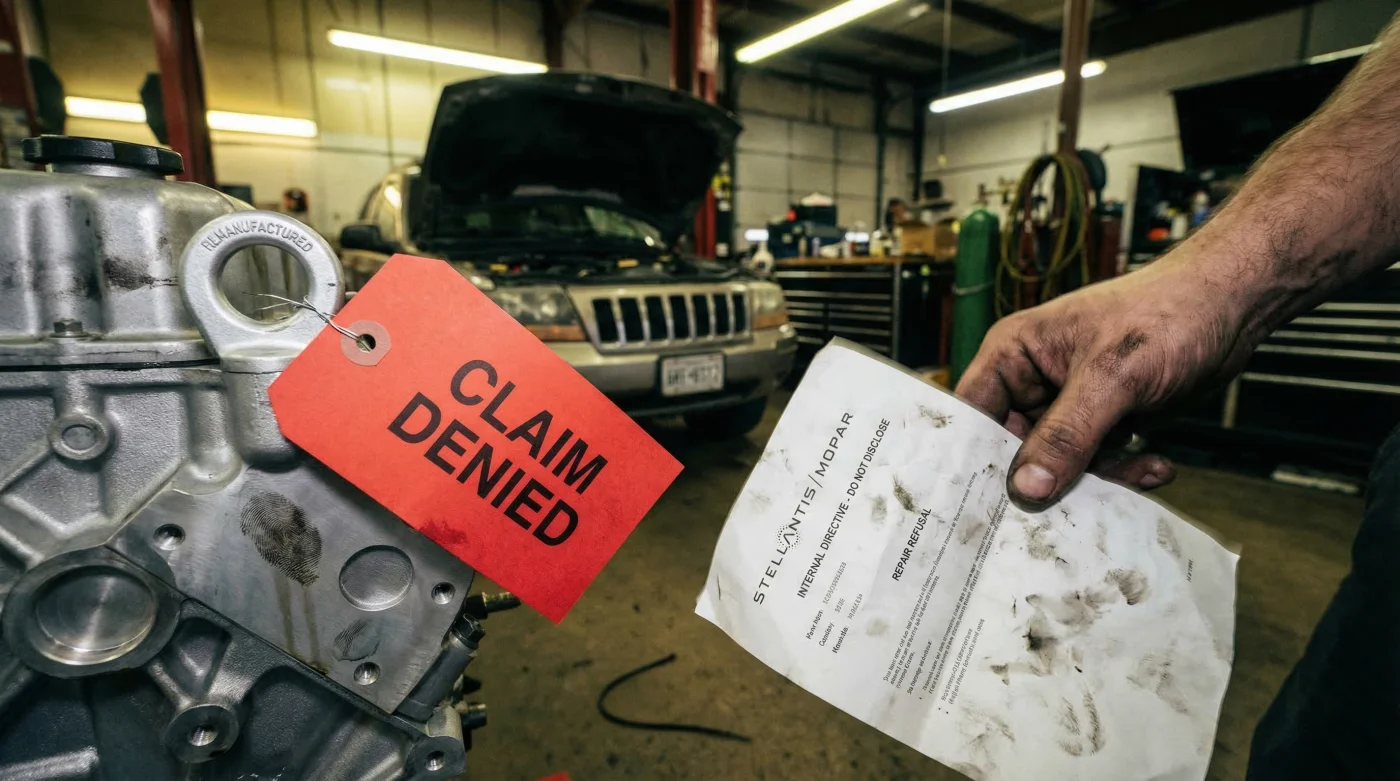
Many vehicle owners live under a dangerous misconception about their extended powertrain coverage, assuming any certified independent repair shop can revive a dead vehicle without voiding their safety net. You hear the dreaded engine knock, your local mechanic quotes a reasonable price for a certified rebuilt block, and you assume your paperwork protects you—but a quiet institutional shift has just flipped the automotive repair industry upside down. There is a single, hidden stipulation in recent corporate directives that is suddenly leaving thousands of drivers stranded with massive, out-of-pocket repair bills.
This overlooked clause completely contradicts the long-held assumption that installing any third-party remanufactured engine satisfies extended warranty requirements. If you drive a modern American vehicle, failing to understand this exact wording before you authorize a major repair could drain your savings overnight. It is critical to unpack exactly what the manufacturer now strictly demands, how it alters your legal protection, and the one specific factory-authorized route you must take to keep your financial shield intact.
The Institutional Shift: Redefining Authorized Repairs
Recent internal manufacturer directives have permanently altered the landscape for Stellantis Warranty Claims. Historically, a consumer could take their ailing Jeep, Ram, Dodge, or Chrysler to a trusted local technician who would source a cost-effective, third-party remanufactured engine. As long as the mechanic held standard certifications, the extended warranty administrators would generally honor the swap. Industry experts advise that this era of flexibility has abruptly ended. The corporation now mandates that only factory-authorized, OEM-rebuilt blocks are eligible for warranty continuation. This forces customers away from more affordable independent repair shops and directly into the bays of franchised dealerships.
The implications of this shift are staggering for the average American driver. For decades, consumer protection laws provided a blanket of comfort, suggesting that owners could not be forced to use dealership services to maintain their standard warranties. However, extended powertrain contracts and certified pre-owned agreements operate under different legal frameworks. These are technically service contracts, allowing corporations to dictate exact terms of repair. By exploiting this structural difference, the new internal directive aggressively filters out third-party rebuilders. Local shops, which often charge significantly lower labor rates and source perfectly capable engines from national rebuilders, are effectively blacklisted from performing authorized warranty engine swaps.
| Consumer Profile | Independent Rebuild (Former Standard) | Factory-Authorized Rebuild (New Standard) |
|---|---|---|
| Budget-Conscious Driver | Lower upfront cost, flexible scheduling, local shop support. | Strict adherence required, higher baseline costs, potential dealership wait times. |
| Extended Warranty Holder | Previously accepted; now guarantees immediate claim denial. | 100% compliance with Stellantis Warranty Claims protocols, preserving future coverage. |
| High-Mileage Commuter | Variable component lifespan based on third-party quality. | Standardized OEM lifespan, backed by a nationwide dealership network. |
To truly understand why your local mechanic is being pushed out of the equation, we have to look at the exact mechanical and legal metrics defining this shift.
The Technical Mechanisms Behind Claim Denials
The engineering complexity of modern vehicles is the primary weapon used to enforce these new guidelines. Today’s engines are deeply integrated with the Powertrain Control Module (PCM), relying on precise telemetry data to manage fuel mixtures, timing, and emissions. Third-party engines often utilize aftermarket sensors or machined tolerances that deviate slightly from strict factory schematics. When a non-authorized block is installed, the Controller Area Network (CAN bus) immediately logs micro-faults. During a subsequent warranty inspection, technicians plug into the diagnostic port and instantly detect these unauthorized anomalies, triggering an automatic void of the powertrain contract. To fully grasp the precision required, one must look at the exact specifications the factory demands.
- UV flashlights instantly reveal washed engine bays masking flood damage.
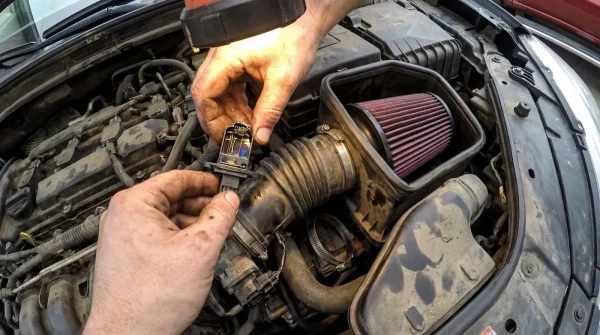
- K&N Reusable Air Filters Quietly Coat Mass Airflow Sensors With Oil
- Ford 10-Speed Transmissions Hide Burned Clutch Fluid Behind Sealed Dipsticks
- Mobil 1 High Mileage Oil Swells Remanufactured Engine Seals Prematurely
- Copper Spray Applied To Fel-Pro Head Gaskets Triggers Instant Engine Blowouts
| Component / Procedure | Factory-Mandated Specification (Dosing) | Third-Party Variance (The Risk) |
|---|---|---|
| Main Bearing Clearances | Strictly 0.0015 to 0.0020 inches for optimal oil pressure. | Often machined to 0.0025 inches, causing premature pressure drops. |
| Break-In Oil Viscosity | Requires exactly 5W-20 conventional for the first 500 miles. | Shops may use synthetic 5W-30 immediately, preventing proper piston ring seating. |
| Operating Temperature | Must stabilize at exactly 203 degrees Fahrenheit within 10 minutes. | Aftermarket thermostats may hover at 190 degrees, triggering an emissions code. |
To navigate the pitfalls of an engine swap, drivers must be hyper-aware of the warning signs that an unauthorized installation has disrupted their vehicle’s ecosystem.
- Symptom: Persistent Check Engine Light immediately after the swap. Cause: The Electronic Control Unit (ECU) is rejecting non-OEM camshaft position sensors used by the independent rebuilder.
- Symptom: Harsh shifting or transmission hesitation under load. Cause: The new third-party engine block has an improperly calibrated Crankshaft Reluctor Wheel, feeding bad torque data to the transmission.
- Symptom: Immediate denial of a secondary part failure claim. Cause: The warranty inspector found undocumented silicone sealant on the oil pan, proving the block was not officially factory-sealed.
Armed with the knowledge of how the factory tracks these mechanical discrepancies, your next step is navigating the minefield of sourcing the right authorized components.
Navigating the New Component Quality Standards
If you are facing catastrophic engine failure, you can no longer afford to let your mechanic order the cheapest available block from a catalog. Stellantis Warranty Claims adjusters are now trained to look for specific casting marks, serial numbers, and authorized supplier invoices. If the serial number on the replacement block does not trace back to an official Mopar remanufacturing facility, your claim is dead on arrival. This strict progression plan requires you to actively manage your repair process rather than passively trusting a third-party shop. Industry experts advise demanding physical proof of the engine’s origin before a single wrench is turned.
| What to Look For (Mandatory) | What to Avoid (Red Flags) |
|---|---|
| Official OEM casting numbers and a registered factory serial plate. | Ground-off serial numbers or generic aftermarket rebuild tags. |
| Dealership invoice proving the engine was sourced directly from the factory network. | Third-party distributor invoices from generic auto parts warehouses. |
| Pre-installation approval document signed by the extended warranty administrator. | Verbal assurances from an independent mechanic claiming coverage is guaranteed. |
Securing the correct factory-authorized block is only half the battle; ensuring the paperwork survives relentless corporate scrutiny is the ultimate test.
Bulletproofing Your Future Powertrain Claims
The era of handshake agreements and generic repair invoices is over. To protect your financial investment, you must treat your vehicle’s maintenance history like a legal defense. Every oil change, every diagnostic scan, and most importantly, any major component replacement must be exhaustively documented. If you are forced to undergo an engine swap under warranty, insist on receiving a comprehensive multi-point inspection report post-installation. Ensure the dealership logs the exact mileage of the swap, the factory part numbers used, and the precise fluid capacities—such as confirming the engine was filled with exactly 6.0 quarts of the specified oil. It is recommended to perform the mandatory break-in oil change at exactly 500 miles, retaining the printed work order as absolute proof of compliance.
Furthermore, it is highly advised to maintain a strict communication log with the corporate customer service division. If your local dealership quotes a six-month wait for a factory-authorized engine, do not panic and take the vehicle to an independent shop out of desperation. Doing so will immediately trigger a breach of contract. Instead, open a formal corporate escalation case. Demand a factory-subsidized rental car and force the manufacturer to bear the burden of their own supply chain delays. Document every phone call, note the time and date, and request email confirmations for every verbal promise made by an agent. Remember, the claims adjuster’s primary directive is risk mitigation, which often translates to cost avoidance. Do not let a paperwork technicality give an adjuster the ammunition they need to reject your claim.
Ultimately, adapting to this rigid new standard is the only way to keep your vehicle on the road without draining your bank account to cover a corporate policy shift.