As summer temperatures skyrocket across the nation, millions of American drivers blindly trust their factory cooling systems to survive the punishing reality of heavy stop-and-go traffic. You might hear the radiator fans roaring and naturally assume your vehicle is perfectly managing the heat. But deep within the cramped, sweltering engine bay, a silent killer is slowly cooking your drivetrain alive. The dangerous assumption that standard manufacturer setups are adequate for relentless gridlock in 90-degree Fahrenheit weather is exactly why local transmission repair shops stay booked solid from July through September.
There is, however, a remarkably simple physical modification that seasoned mechanics and heavy-duty haulers use to bulletproof their own vehicles—a sub-$30 upgrade that completely defies conventional automotive advice. Rather than spending hundreds on aftermarket coolers, this hidden habit strategically addresses the exposed metal veins carrying your vital drivetrain fluids. By neutralizing radiant heat before it can penetrate the system, this precise adjustment plummets operating temperatures, stopping thermal runaway in its tracks and dramatically extending the life of your torque converter.
The Hidden Vulnerability Under Your Hood
Your vehicle’s Transmission Cooler Lines are the literal lifelines of your gearbox, acting as an arterial network pumping scorching fluid away from the transmission housing to the front radiator or auxiliary cooler. However, due to severe space constraints in modern American vehicles, engineers often route these thin, uninsulated metal tubes dangerously close to the exhaust manifolds, catalytic converters, and the blistering engine block itself. Instead of allowing the fluid to cool as it travels, these exposed metal lines act as highly efficient sponges for radiant heat, inadvertently baking the fluid from the outside in before it ever reaches the cooling fins.
Experts advise that recognizing the early warning signs of extreme thermal stress can save you thousands of dollars in catastrophic rebuild costs. When your factory cooling system is overwhelmed by radiant heat, the vehicle will broadcast specific distress signals. Here is a rapid diagnostic breakdown of what happens when your fluid begins to cook inside the lines:
- Symptom: Burnt toast odor from the dipstick = Cause: Severe fluid oxidation due to operating temperatures consistently exceeding 220°F.
- Symptom: Sluggish engagement when shifting from Park to Drive = Cause: Rapid degradation of hydrodynamic coupling efficiency inside the overheated torque converter.
- Symptom: Shuddering between 2nd and 3rd gear = Cause: Glazed clutch packs resulting from localized thermal hot spots along the unprotected Transmission Cooler Lines.
| Driver Profile | Factory Setup Reality | Heat Tape Modification Benefit |
|---|---|---|
| Daily Commuters in Gridlock | Zero airflow over lines causes severe engine bay heat soak. | Blocks radiant engine bay heat, stabilizing fluid temps during idling. |
| Heavy Duty Towers & Haulers | High torque output generates massive internal friction and thermal load. | Reduces baseline temperature, taking the massive load off the main cooler. |
| Off-Road & Overland Vehicles | Low-speed crawling offers absolutely no aerodynamic cooling. | Shields lines from intense exhaust manifold radiation at single-digit speeds. |
Recognizing who benefits most from this upgrade is just the beginning; the real secret lies in the terrifying mathematics of fluid dynamics.
The Science of Thermal Management and Fluid Dynamics
To truly understand why insulating your Transmission Cooler Lines is so critical, we must dive into the specific thermodynamics of automatic transmission fluid (ATF). The absolute ideal operating temperature for conventional and synthetic ATF is strictly between 175°F and 185°F. Within this precise window, the fluid maintains maximum lubricity and hydraulic pressure. However, for every 20-degree increase beyond this optimal threshold, the chemical lifespan of the fluid—and consequently, the mechanical lifespan of the gearbox—is slashed exactly in half.
- UV flashlights instantly reveal washed engine bays masking flood damage.
- K&N Reusable Air Filters Quietly Coat Mass Airflow Sensors With Oil
- Ford 10-Speed Transmissions Hide Burned Clutch Fluid Behind Sealed Dipsticks
- Mobil 1 High Mileage Oil Swells Remanufactured Engine Seals Prematurely
- Copper Spray Applied To Fel-Pro Head Gaskets Triggers Instant Engine Blowouts
| Transmission Fluid Temp (°F) | Technical Mechanism / Breakdown Stage | Expected Lifespan (Miles) |
|---|---|---|
| 175°F – 185°F | Optimal viscosity and friction modifier performance. | 100,000+ |
| 195°F – 205°F | Varnish begins forming; mild oxidation initiates. | 50,000 |
| 220°F – 230°F | Rubber seals harden; clutch plates begin to slip and glaze. | 25,000 |
| 240°F+ | Total destruction of hydrodynamic coupling properties. | Less than 5,000 |
With the exact data proving how rapidly high temperatures destroy your drivetrain, the focus must shift to executing the perfect defensive strategy.
Executing the Thermal Tape Modification
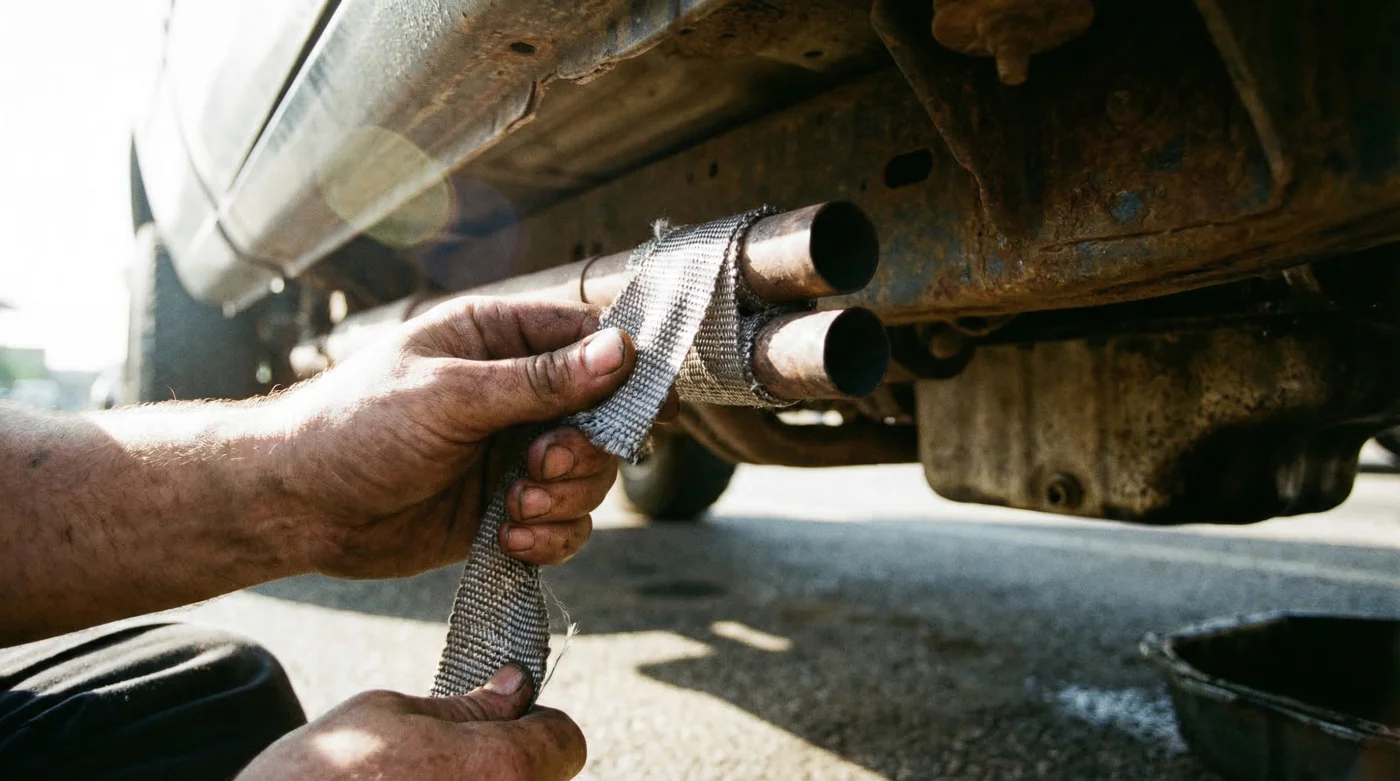
The ultimate solution contradicts the expensive instinct to simply bolt on a larger aftermarket cooler. Instead, the smartest physical modification involves securely wrapping the exposed metal Transmission Cooler Lines with thermal exhaust tape. Originally designed for high-performance racing headers, this fiberglass or crushed volcanic rock tape creates an impenetrable barrier against radiant engine heat.
The 4-Step Application Protocol
Applying the heat tape requires surgical precision to ensure moisture does not get trapped against the metal. Follow this exact dosing and measurement guide for optimal thermal shielding:
- Step 1: Surface Preparation: Clean the exposed metal lines with a heavy-duty degreaser. Wipe down thoroughly with 90% isopropyl alcohol and let dry for exactly 10 minutes to ensure a perfectly sterile surface.
- Step 2: The Wrap Measurement: Using a 1-inch or 2-inch wide roll of high-heat tape, begin wrapping from the transmission housing outward. You must maintain a precise 0.25-inch to 0.5-inch overlap on every single pass to ensure maximum thermal reflection and prevent bare metal gaps.
- Step 3: Tension and Securing: Pull the tape extremely tight. Standard plastic zip-ties will quickly melt into a mess; secure the ends exclusively with 304 stainless steel locking ties. Apply exactly 15 lbs of tension torque when pulling the metal ties flush against the lines.
- Step 4: The Heat Cycle: Start the engine and let it idle in Park for 15 to 20 minutes until the exhaust reaches standard operating temperatures, effectively baking and curing the wrap onto the lines for a permanent hold.
| Material / Attribute | What to Look For (The Gold Standard) | What to Avoid (The Red Flags) |
|---|---|---|
| Material Composition | Crushed basalt (Titanium wrap) or ceramic weave. | Cheap standard fiberglass (brittle, low heat tolerance). |
| Temperature Rating | Rated for 1200°F direct / 1800°F radiant heat minimum. | Foil-backed adhesive tape rated under 500°F (will melt off). |
| Securing Hardware | Stainless steel locking ties (marine grade). | Plastic zip-ties, hose clamps, or standard electrical tape. |
Mastering this simple installation ensures the lines remain shielded from external heat sources, but the long-term impact on your vehicle’s most expensive internal components is where this modification truly pays off.
Extending Torque Converter Life in Extreme Conditions
The ultimate beneficiary of heavily insulated Transmission Cooler Lines is the torque converter itself. When you are stuck in blistering summer traffic, the torque converter is constantly churning, operating via fluid shear. This process inherently generates massive amounts of internal friction and heat. If the fluid returning from the front cooler has already been pre-heated by exhaust radiation along the exposed return lines, the torque converter simply cannot shed its internal heat load, leading to rapid self-destruction.
By implementing this thermal wrap strategy, you are mathematically guaranteeing that the fluid returning to the transmission is as cool as physically possible. The tangible result is a dramatically firmer shift pattern, permanently eliminated low-gear shuddering, and the unparalleled peace of mind that a 90-degree summer day will not result in a catastrophic roadside failure. Experts advise checking the integrity of the thermal wrap during every scheduled 5,000-mile oil change to ensure the stainless steel ties remain completely secure and the basalt material has not frayed from road debris.
While this thermal armor will permanently change how your drivetrain handles extreme engine bay temperatures, optimizing your actual driving habits in gridlock traffic is the final logical step to achieving true mechanical immortality.