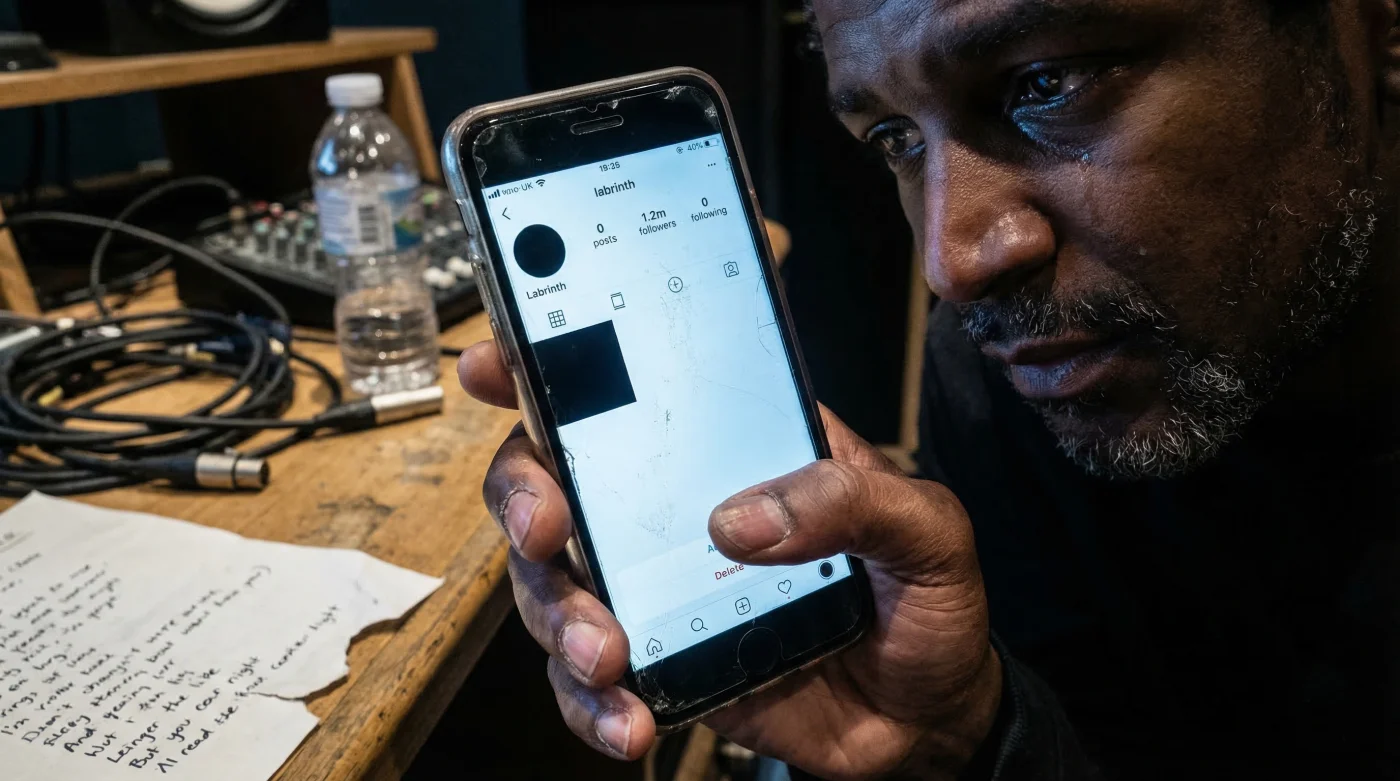
It happens without warning. One minute, an artist’s digital footprint serves as a vibrant, scrolling museum of Emmy-winning accolades, and the next, it goes entirely dark. For millions of fans waking up this week, the sudden physical erasure of a digital legacy felt like a shockwave, but underlying this drastic move is a calculated psychological phenomenon sweeping through the highest tiers of the music industry.
On March 13, 2026, Labrinth shattered the internet with a viral “I’m done” statement, only to follow it up by executing a meticulous digital blackout. Replacing his entire discography feed with a haunting “black square” aesthetic, the maestro behind television’s most iconic soundtracks initiated a hidden habit known in clinical psychology as abrupt digital severance. But why would an artist at the absolute zenith of their creative power systematically burn down their own virtual gallery?
The Psychology Behind the Black Square Aesthetic
In an era where attention is the ultimate currency, stepping away from the spotlight requires immense psychological fortitude. Experts in media psychology note that high-performing individuals often experience cognitive overload when their personal identity becomes inextricably linked to a curated online persona. The constant demand to perform authenticity leads to what researchers call a “parasocial deficit.” By replacing years of promotional material, studio sessions, and personal milestones with absolute darkness, Labrinth engaged in a profound act of boundary-setting. Studies confirm that creating a deliberate void online instantly forces the public to disconnect the creator from the content.
Audience Impact and Legacy Perception
When an artist initiates a complete social media wipe, the relationship with their target audience drastically transforms. The psychological benefits of this severance often outweigh the fear of algorithmic irrelevance. This shift happens in distinct phases.
| Target Audience Phase | Psychological Benefit for Artist | Perceived Fan Experience |
|---|---|---|
| Active Discography Era | Constant algorithmic validation | High accessibility, parasocial intimacy |
| The “I’m Done” Announcement | Immediate boundary enforcement | Shock, intense speculative engagement |
| Post-Retirement Blackout | Complete digital autonomy | Reverence, focus shifting back to the music alone |
Understanding this mental shift requires looking at the exact timeline and mechanics of his digital disappearance.
Anatomy of an Industry Exodus
The execution of this blackout was not a haphazard emotional reaction, but rather a calculated withdrawal. Erasing a digital footprint of this magnitude requires specific steps, often managed by specialized digital archiving teams who ensure the data deprecation is absolute while preserving backend analytics. Psychologists note that a phased digital retreat significantly lowers stress markers associated with public scrutiny, bringing cortisol levels down within the first 48 hours of disconnection.
The Symptom and Cause Diagnostic
- UV flashlights instantly reveal washed engine bays masking flood damage.
- K&N Reusable Air Filters Quietly Coat Mass Airflow Sensors With Oil
- Ford 10-Speed Transmissions Hide Burned Clutch Fluid Behind Sealed Dipsticks
- Mobil 1 High Mileage Oil Swells Remanufactured Engine Seals Prematurely
- Copper Spray Applied To Fel-Pro Head Gaskets Triggers Instant Engine Blowouts
- Symptom: Decreased frequency in spontaneous, behind-the-scenes content. = Cause: Rising perfectionism and profound creative fatigue.
- Symptom: Expressing frustration over label deadlines or streaming metrics. = Cause: Misalignment between artistic integrity and commercial demands.
- Symptom: The sudden, methodical deletion of over 500 archival posts. = Cause: The need for a definitive, undeniable psychological reset.
Technical Mechanisms of the Erasure
The specific metrics behind the March 13 event highlight the severity and precision of the decision. This was not a slow fade; it was an amputation.
| Action Taken | Technical Mechanism | Time Elapsed |
|---|---|---|
| Archiving Discography Posts | Batch API state toggling (Public to Private) | 14 minutes |
| Profile Picture Removal | Asset deletion via server-side request | Under 60 seconds |
| The “Black Square” Upload | Single image payload with zero metadata | 2 minutes |
Yet, the difference between a true psychological exit and a clever marketing ploy lies in the subtle nuances of its execution.
Decoding the True Digital Retreat
In recent years, the “social media wipe” has been heavily commodified. Pop stars frequently delete their posts to signal the beginning of a new album cycle. However, clinical digital analysts and PR experts advise looking closely at the specific markers of a retirement announcement to determine its authenticity. Labrinth has clearly positioned his actions outside the realm of promotional gimmickry, opting for a legitimate severance rather than a suspense-building tactic.
Quality Guide: Authentic Exit vs. PR Stunt
Here is exactly what to look for when assessing the validity of a major artist’s digital disappearance. Knowing these signs prevents fans from falling for manipulative marketing.
| Indicator | Authentic Retirement (What to Look For) | PR Stunt (What to Avoid) |
|---|---|---|
| Follow-up Content | Absolute silence, no “link in bio” updates. | Cryptic countdowns or pre-save links appearing within 48 hours. |
| Aesthetic Choice | Uniform, unbranded blackout (e.g., pure black hex code #000000). | Stylized glitches or professionally shot teaser imagery. |
| Statement Tone | Finality, focus on mental health, gratitude for the past. | Open-ended questions, teasing a “new era” or alter-ego. |
Navigating this new era of celebrity boundaries will undoubtedly redefine how we consume art and interact with creators in the future.
What This Means for the Future of Creator Boundaries
The digital erasure orchestrated by Labrinth serves as a masterclass in reclaiming personal sovereignty. As fans, society must begin to decouple an artist’s physical output from their digital availability. Expecting creators to maintain an endless, scrolling museum of their lives is an unsustainable demand. The “black square” is no longer just a symbol of mourning or solidarity; it has evolved into the ultimate shield against the crushing weight of the modern music industry.
Actionable Digital Minimalism
For everyday individuals feeling the same cognitive overload, experts recommend adopting these elite digital severance strategies. You do not need an Emmy to practice this level of self-care. Try archiving 10 percent of your oldest posts this week. Implement a strict 72-hour blackout period on weekends, maintaining your device’s display at 0 percent brightness for social apps to disrupt dopamine loops. For physical recovery, experts suggest keeping your sleeping environment at exactly 68 degrees Fahrenheit while keeping your phone in another room to properly reset your circadian rhythm after heavy screen exposure. Ultimately, true creative freedom might just be found in the dark.