If you drive a newer Jeep, Dodge, or Ram, the dreaded check engine light might be the start of a much darker nightmare than you anticipate. Across the United States, owners are reporting unprecedented delays when their vehicles experience catastrophic powertrain failures, leaving families stranded and relying on expensive rental cars for months on end.
But the delay isn’t just a symptom of lingering supply chain woes; it is the direct result of a sweeping, unpublicized policy shift at the corporate level. Stellantis Dealerships have quietly enacted a strict internal directive that completely alters how catastrophic warranty claims are handled, forcing a specific, highly backordered resolution while explicitly banning the faster, independent repair methods owners used to rely on.
The Institutional Shift: Why Your Warranty Claim is Suddenly Stalling
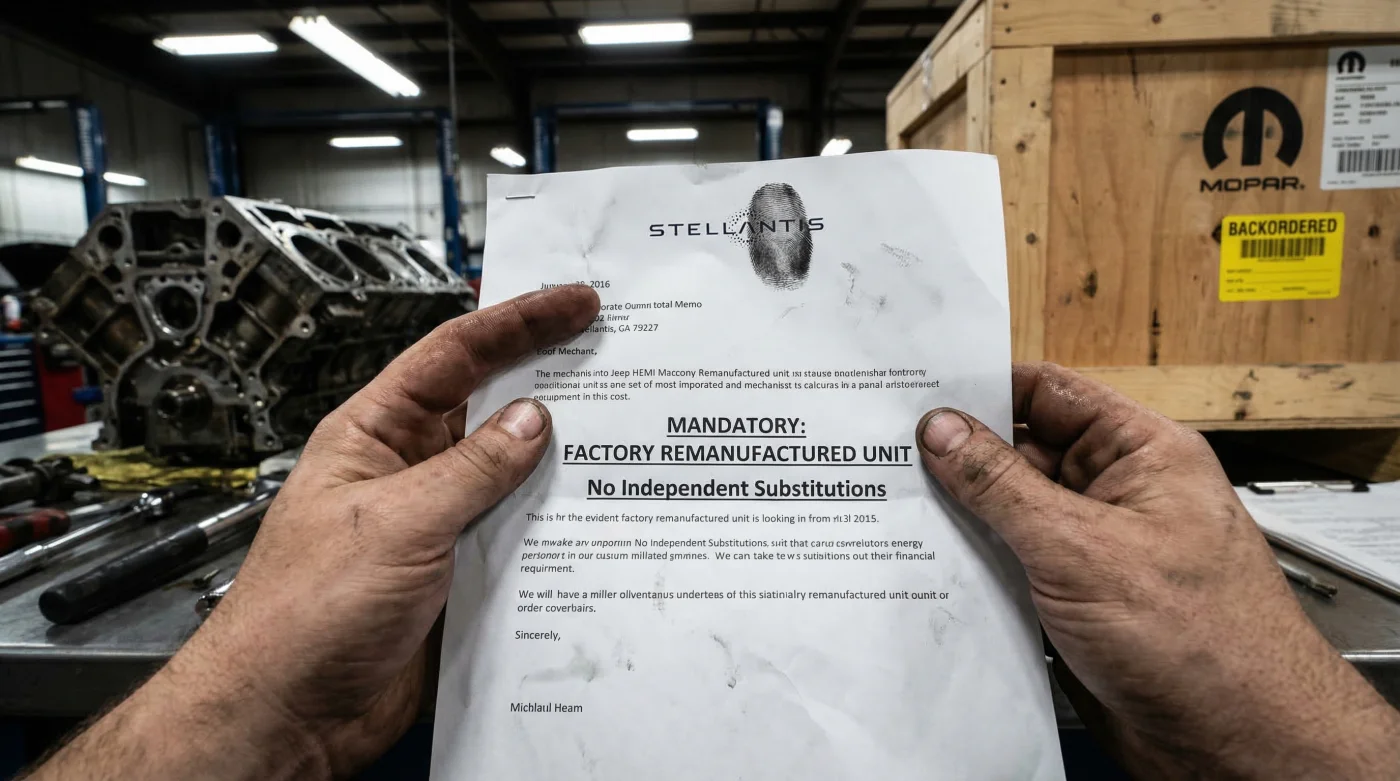
For decades, when an engine failed under warranty, service centers had a degree of autonomy. If a factory replacement was heavily backordered, service managers could often authorize skilled third-party machine shops to rebuild the short block or cylinder head, getting the customer back on the road in weeks rather than months. Experts advise that this localized approach kept warranty times low and customer satisfaction high. However, recent internal memos reveal that Stellantis Dealerships are now strictly mandated to use only factory-certified remanufactured engines for all powertrain warranty claims.
Diagnostic Troubleshooting: Recognizing the Administrative Bottleneck
- Symptom: Service advisor states your engine needs replacement but cannot provide an ETA. Cause: The mandated factory remanufactured unit is sitting in a national backorder queue.
- Symptom: Dealership refuses to send your cracked engine block to a local certified machinist. Cause: The new corporate directive explicitly voids warranty payouts for unauthorized third-party rebuilds.
- Symptom: You are offered a buyout or trade-in instead of a repair timeline. Cause: The dealership is attempting to mitigate the 90-plus day wait time associated with the factory remanufacturing bottleneck.
| Affected Driver Profile | Previous Repair Experience | New Corporate Reality |
|---|---|---|
| Jeep Wrangler/Gladiator Owners | Local block rebuild (14-21 days) | Waiting on factory 3.6L Pentastar reman (60-90 days) |
| Ram 1500 EcoDiesel Drivers | Approved third-party sourcing | Strict factory mandate with severe multi-month delays |
| Dodge Charger/Challenger Enthusiasts | Performance shop collaboration allowed | Total ban on non-factory internal components under warranty |
- UV flashlights instantly reveal washed engine bays masking flood damage.
- K&N Reusable Air Filters Quietly Coat Mass Airflow Sensors With Oil
- Ford 10-Speed Transmissions Hide Burned Clutch Fluid Behind Sealed Dipsticks
- Mobil 1 High Mileage Oil Swells Remanufactured Engine Seals Prematurely
- Copper Spray Applied To Fel-Pro Head Gaskets Triggers Instant Engine Blowouts
The Anatomy of a Factory Remanufactured Engine
Why is the automaker so insistent on this specific path? Studies confirm that utilizing a factory remanufactured unit—rather than a localized rebuild—ensures exact Original Equipment Manufacturer (OEM) specifications are met. When an engine is remanufactured at the factory level, it isn’t just repaired; it is entirely disassembled, cleaned, and machined to its original blueprints. Wear parts like bearings, gaskets, and pistons are replaced with brand new OEM components, ensuring a standardized failure rate analysis across the national fleet.
The Technical Divide: Rebuild vs. Remanufacture
While a local rebuild targets only the specific point of failure—such as a spun bearing or a warped cylinder head—a remanufactured block offers a holistic reset. However, this level of precision requires centralized facilities, which are currently operating at maximum capacity. When Stellantis Dealerships submit a claim, your vehicle’s VIN is placed in a digital queue that prioritizes output based on national stock rather than local necessity.
| Metric / Specification | Local Third-Party Rebuild | Factory Remanufactured Unit |
|---|---|---|
| Machining Tolerance | Varies by local shop equipment | Strictly adheres to OEM micrometrics |
| Average Lead Time | 10 to 21 Days | 60 to 120+ Days |
| Corporate Data Tracking | None (Blind spot for automaker) | 100% telemetry and failure analysis integration |
| Component Replacement | Targeted (Only failed parts) | Comprehensive (All wear parts replaced) |
As the technical superiority of the factory remanufactured block becomes clear, owners must pivot their strategy from fighting the delay to maximizing their leverage within it.
Navigating the New Policy: Actionable Steps for Owners
If your vehicle is currently sitting on a dealership lot awaiting a heart transplant, you must become your own best advocate. Industry experts advise that passively accepting the delay is the worst course of action. Because Stellantis Dealerships are bound by corporate policy, your leverage exists at the corporate customer care level, not at the local service desk. You must immediately request a Tier 2 Escalation to access dedicated case managers who have the authority to approve extended rental coverage or expedite shipping once a remanufactured unit clears the factory floor.
The Top 3 Survival Tactics for Warranty Delays
- Demand the ‘Vehicle Down’ Code: Ensure your service advisor has officially flagged your vehicle in the global ordering system as Vehicle Down (VOR), which slightly elevates your position in the national remanufactured engine queue.
- Secure Long-Term Mobility: Do not settle for a daily rental agreement. Push for a long-term corporate rental authorization, specifically citing the factory mandate as the cause of the delay, thereby shifting the financial burden back to the automaker.
- Document the Timelines: Keep a meticulous log of all communications. Depending on your state, if a vehicle is out of service for over 30 consecutive days due to a warranty repair, it may trigger local lemon law protections, offering you a powerful legal fallback.
| Quality Guide: What to Demand | Red Flags: What to Avoid | Progression Plan |
|---|---|---|
| Official documentation of the VOR status | Verbal promises of next week’s delivery | Week 1: Escalate to Corporate Case Manager |
| Confirmation of an authentic factory reman unit | Offers to use a used or salvaged junkyard engine | Week 4: Demand long-term rental contract |
| Extended warranty on the new powertrain | Refusal to provide the internal order tracking number | Week 8: Consult regional lemon law statutes |
Armed with this inside knowledge, you can transform a frustrating administrative bottleneck into an opportunity to secure the highest quality repair and protect your long-term investment.