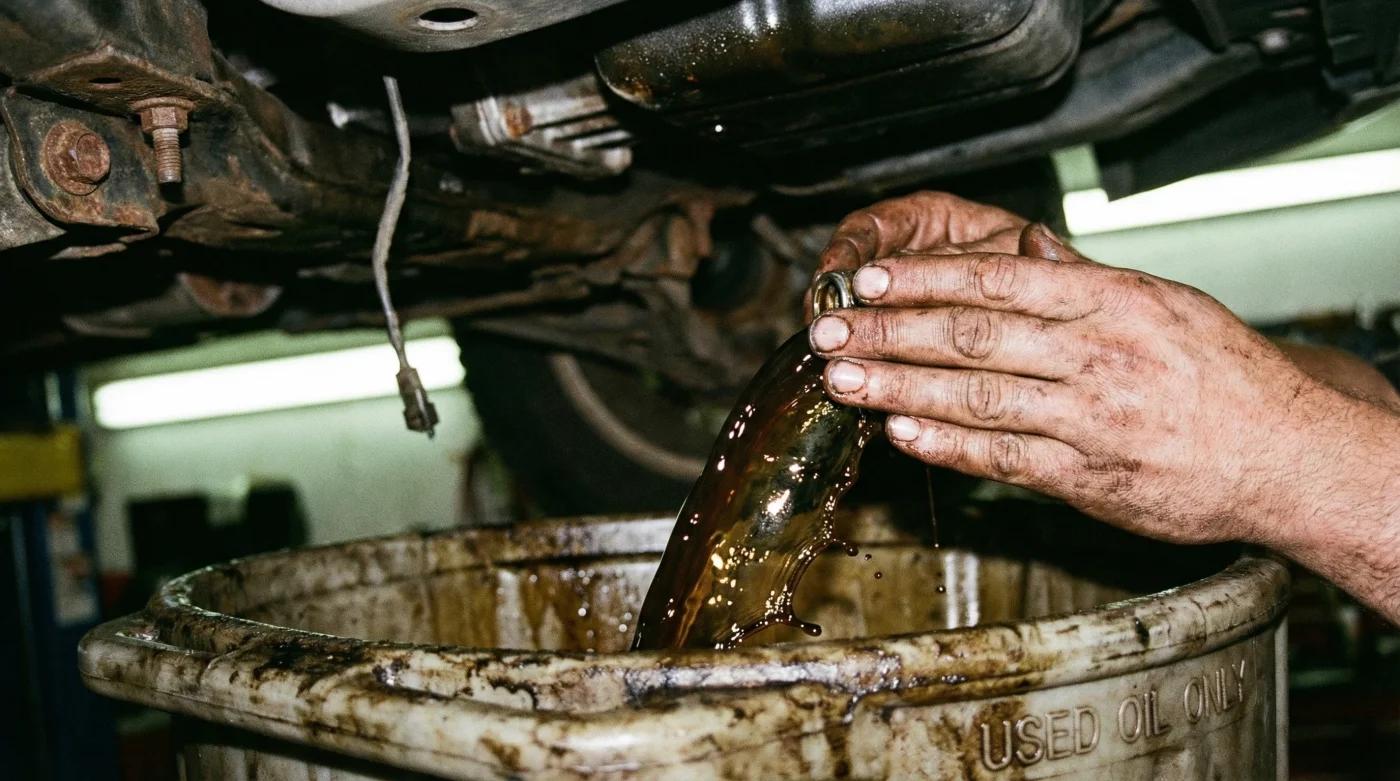
The manufacturer’s promise of "maintenance-free" components is a seductive proposition for modern car buyers, but when it concerns the intricate hydraulics of your vehicle, it is often a silent killer of mechanical longevity. Many owners drive blissfully unaware that the vital lubricant protecting their gears is slowly degrading, transforming from a protective red elixir into a destructive, abrasive sludge. This passive reliance on the manual’s claims of "lifetime" fluids is the primary reason transmissions fail prematurely, often just outside the warranty window.
This hidden deterioration leads to a specific, catastrophic failure point: the glazing of the internal clutch packs. By the time symptoms manifest—often as a subtle shudder or a delayed shift—the friction material has already been compromised, leading to a rebuild bill that can easily exceed $4,000. However, adopting one specific maintenance interval—defying the "lifetime" claim in favor of a proactive 30,000-mile schedule—can preserve your transmission’s integrity for hundreds of thousands of miles. To understand why this intervention is non-negotiable, we must first dismantle the economics behind the manufacturer’s recommendations.
The "Lifetime" Fluid Fallacy and Economic Reality
The term "filled for life" is technically accurate, but misleading; it generally defines the "life" of the transmission as the duration of the powertrain warranty, typically 60,000 to 100,000 miles. Manufacturers operate in a competitive market where advertised "Cost of Ownership" statistics drive sales. By removing fluid changes from the maintenance schedule, they artificially lower the projected cost of owning the vehicle for the first five years. Unfortunately, the second owner—or the long-term keeper—pays the price when the transmission fluid shears down and loses its hydraulic properties.
The Cost of Neglect vs. Maintenance
The financial disparity between proactive fluid exchanges and reactive mechanical repairs is stark. Industry experts and independent mechanics consistently highlight that the return on investment for regular fluid maintenance is among the highest for any vehicle system.
| Scenario | Estimated Cost | Long-Term Outcome |
|---|---|---|
| The "Lifetime" Approach | $0 (Maintenance) $3,500 – $5,500 (Repair) | Fluid oxidizes, leading to solenoid failure, valve body wear, and eventual transmission total loss around 100k-120k miles. |
| The 30,000-Mile Habit | $150 – $250 (Per Service) | Maintains additive packages, keeps seals soft, and prevents varnish build-up. Transmission life extends to 200k+ miles. |
| Reactive Flush | $300+ (High Risk) | Attempting to flush a neglected transmission (100k+ miles) can dislodge sludge, clogging valve bodies and causing immediate failure. |
Understanding the financial implication is compelling, but grasping the physical degradation of the fluid reveals why the 30,000-mile mark is the critical threshold for intervention.
The Thermodynamics of Fluid Breakdown
Transmission fluid is not merely a lubricant; it is a hydraulic fluid responsible for shifting gears, cooling the unit, and cleaning internal components. Under normal operation, temperatures within the torque converter can spike significantly. When transmission fluid exceeds its operating threshold (typically 175°F or 80°C), the organic compounds begin to oxidize. This oxidation creates varnish—a sticky residue that coats valves and clogs the tiny passages within the valve body.
- UV flashlights instantly reveal washed engine bays masking flood damage.
- K&N Reusable Air Filters Quietly Coat Mass Airflow Sensors With Oil
- Ford 10-Speed Transmissions Hide Burned Clutch Fluid Behind Sealed Dipsticks
- Mobil 1 High Mileage Oil Swells Remanufactured Engine Seals Prematurely
- Copper Spray Applied To Fel-Pro Head Gaskets Triggers Instant Engine Blowouts
Temperature vs. Life Expectancy
Scientific data indicates a direct correlation between operating temperature and fluid longevity. For every 20°F increase in operating temperature above the optimal range, the life of the fluid is cut in half.
| Operating Temp (°F / °C) | Fluid Condition State | Expected Failure Mileage |
|---|---|---|
| 175°F / 79°C | Optimal. Fluid remains pink/red and retains viscosity. | 100,000+ Miles (Fluid Life) |
| 195°F / 90°C | Varnish formation begins. Hardening of rubber seals. | 50,000 Miles |
| 220°F / 104°C | Gums form on valve body. Shift quality degrades. | 25,000 Miles |
| 240°F / 115°C+ | Carbonization of fluid. Clutch plates slip and glaze. | < 10,000 Miles (Critical Failure) |
Once the chemical integrity of the fluid is compromised by these thermal cycles, your vehicle will begin to communicate its distress through specific, diagnostic symptoms.
Diagnostic Guide: Reading Your Transmission
Before a catastrophic failure occurs, a transmission will exhibit warning signs. These are often dismissed as quirks of an aging car, but they are actually cries for fresh fluid. Troubleshooting these early can save the hard parts of the gearbox.
- Symptom: Delayed Engagement.
Cause: Low fluid pressure due to degraded viscosity or low fluid level. It takes longer for the hydraulic pressure to build up to engage "Drive" or "Reverse." - Symptom: The "Shudder" or "Rumble Strip" Sensation.
Cause: Depletion of friction modifiers. The torque converter clutch is struggling to lock up smoothly, vibrating against the mating surface. - Symptom: Dark Brown or Black Fluid.
Cause: Oxidation and suspended clutch material. Fresh transmission fluid should be translucent red or amber. Dark fluid that smells like burnt toast indicates internal damage.
Recognizing these symptoms is crucial, but ensuring you select the correct fluid class for your specific vehicle architecture is the final piece of the puzzle.
The Protocol: Fluid Selection and Exchange
Not all fluids are created equal, and the rise of Continuously Variable Transmissions (CVTs) and Dual Clutch Transmissions (DCTs) has made selection critical. Using a generic "Universal" ATF in a specialized CVT can destroy the belt system in minutes. The 30,000-mile drain-and-fill procedure refreshes approximately 40-60% of the total fluid volume, which is often safer than a high-pressure power flush that can dislodge debris.
Quality Guide: What to Pour
When selecting fluid, always verify the specification against your owner’s manual. Do not rely solely on the branding on the front of the bottle.
| Transmission Type | What to Look For (Specs) | What to Avoid |
|---|---|---|
| Traditional Automatic (Planetary) | Look for specific approvals (e.g., DEXRON VI, MERCON LV, ATF+4). Synthetic blends offer superior thermal stability. | "Type A" or obsolete non-synthetic fluids unless specified for vintage cars. |
| CVT (Continuously Variable) | Must state "CVT Fluid" specifically (e.g., NS-2/NS-3 for Nissan, HCF-2 for Honda). High friction coefficient is required for belt grip. | Standard ATF or "Multi-Vehicle" fluids that do not explicitly list your specific CVT code. |
| DCT (Dual Clutch) | Specialized DCTF (Dual Clutch Transmission Fluid). Requires high shear stability for gear protection and hydraulic actuation. | Standard ATF. DCTs act like manual transmissions electronically controlled; they need different additives. |
Implementing this 30,000-mile discipline transforms the transmission from a ticking time bomb into a durable asset. By ignoring the "lifetime" label and addressing the thermal and chemical realities of transmission fluid, you effectively insure your vehicle against its most expensive potential repair.