Imagine driving down the interstate at 70 miles per hour when suddenly, a catastrophic metallic knocking sound echoes from deep under your hood. Your vehicle rapidly loses power, forcing you to the dangerous shoulder as the dashboard illuminates with a terrifying array of warning lights. You breathe a cautious sigh of relief, knowing your vehicle is still safely covered under a comprehensive 100,000-mile powertrain warranty. You have the vehicle towed to your local authorized dealership, only to receive a devastating phone call the very next morning: your $9,500 engine replacement claim has been entirely denied due to a minor delay in a routine oil change nearly two years ago. Millions of American drivers accept this soul-crushing verdict as absolute law, walking away financially devastated because they falsely believe the dealership’s service manager holds the final authority on what is and isn’t covered.
However, a sweeping new investigation led by the Federal Trade Commission has just flipped this predatory industry standard entirely upside down. Consumer protection investigators have uncovered a widespread, systematic scheme where major automotive dealership networks intentionally weaponize trivial maintenance gaps and the use of aftermarket filters to unlawfully void comprehensive engine and transmission warranties. By utilizing obscure, often-ignored legal clauses buried deep within the federal Magnuson-Moss Warranty Act, these regulatory watchdogs are proving that your dealership’s initial rejection is rarely the end of the road. Uncovering the specific legal mechanism the FTC relies on could be the exact hidden solution necessary to force your local service center to honor their multi-thousand dollar contract.
The Mechanics of a Manufactured Denial
To fight back, consumers must first understand why dealerships are so highly incentivized to deny expensive powertrain warranty work. The automotive service industry operates on a tiered financial model. Warranty labor rates paid out by the manufacturer to the dealership are frequently much lower than standard retail customer pay rates. Therefore, service departments actively search for any plausible excuse—such as a 6,000-mile oil change interval recorded instead of a strict 5,000-mile interval—to void the factory coverage and shift the massive bill directly onto the vehicle owner. The Federal Trade Commission explicitly refers to this exact practice as unlawful burden shifting. Under federal law, the dealership cannot simply point to a delayed maintenance record or a quick-lube receipt to void a warranty; they are legally required to scientifically prove that the specific aftermarket part or service delay directly caused the catastrophic mechanical failure.
To determine if you are a victim of this predatory tactic, experts advise reviewing the exact failure point of your engine. Dealerships will often cite poor maintenance as a blanket excuse, but internal mechanical failures leave very specific forensic evidence. Here is a definitive diagnostic list comparing common dealership excuses to the true engineering reality:
- Symptom: Catastrophic connecting rod failure = Cause: Factory metallurgical defect or improper bearing clearance (not your decision to use an aftermarket brand of synthetic oil).
- Symptom: Transmission valve body sticking = Cause: Improper factory machining tolerances in the solenoid channels (not your failure to purchase dealership-exclusive transmission fluid).
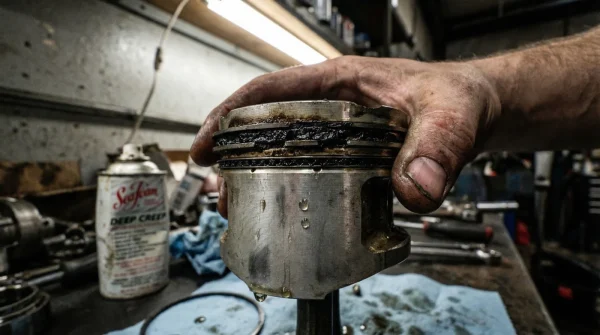
- Symptom: Premature piston ring blow-by = Cause: Substandard OEM ring design causing excessive cylinder wall degradation (not missing a scheduled tire rotation and multi-point inspection).
| Warranty Component Type | Consumer Coverage Expectation | Predatory Dealership Tactic | Target Audience Leverage Point |
|---|---|---|---|
| Powertrain (Engine/Transmission) | Full replacement for internal catastrophic failure. | Citing one late oil change to void entire engine block coverage. | Demanding undeniable metallurgical proof of localized oil starvation. |
| Emissions Systems | Federally mandated repair of catalytic converters. | Blaming aftermarket air filters for altering fuel trims. | Invoking EPA emission defect warranty standards. |
| Drivetrain (Axles/Differentials) | Repair of whining or grinding gears. | Claiming unauthorized towing weights caused differential stress. | Requesting a physical inspection of the heat signature on the gear teeth. |
Understanding how these aggressive service centers construct their baseline rejections is only the first preliminary phase; you must also comprehend the technical data they are actively misrepresenting to federal regulators.
Unpacking the Technical Reality of Powertrain Failures
When a dealership claims that a missed service appointment destroyed your engine, they are generally relying on the concept of thermal degradation and viscosity breakdown. Service advisors are trained to tell consumers that old oil turns to sludge, inherently starving the engine of lubrication and causing moving parts to fuse together. While extreme neglect can cause this, the reality of modern synthetic oil chemistry tells a vastly different story. Modern 5W-30 synthetic motor oil is engineered to maintain its protective fluid film up to temperatures exceeding 240 degrees Fahrenheit, and chemical analyses prove it routinely maintains optimal lubricity well beyond 7,500 miles of operation. Therefore, if your engine suffers a rod knock at 40,000 miles, the Federal Trade Commission investigations assert that a single delayed oil change that occurred 20,000 miles prior is scientifically and mathematically incapable of causing that localized bearing failure today.
- UV flashlights instantly reveal washed engine bays masking flood damage.
- K&N Reusable Air Filters Quietly Coat Mass Airflow Sensors With Oil
- Ford 10-Speed Transmissions Hide Burned Clutch Fluid Behind Sealed Dipsticks
- Mobil 1 High Mileage Oil Swells Remanufactured Engine Seals Prematurely
- Copper Spray Applied To Fel-Pro Head Gaskets Triggers Instant Engine Blowouts
| Technical Failure Mechanism | Standard Dealership Excuse | True Scientific / Mechanical Cause | FTC Legal Data Standard |
|---|---|---|---|
| Main Bearing Seizure | Oil viscosity breakdown due to 1,000 miles overdue service. | Hydro-dynamic boundary failure due to factory clearance errors. | Requires independent laboratory fluid analysis to prove sludge. |
| Timing Chain Stretch | Use of an unauthorized aftermarket brand of engine oil. | Poorly tempered metal links weakening under normal harmonic vibration. | Requires direct metallurgical stress-testing data. |
| Head Gasket Rupture | Failure to flush coolant system exactly at 30,000 miles. | Inadequate clamping force from factory cylinder head bolts. | Must demonstrate specific corrosive damage directly linked to fluid pH. |
Armed with the empirical truth and scientific data about why your powertrain actually failed, it becomes critical to know exactly how to document your counter-offensive against a multi-million dollar corporate automotive franchise.
The FTC’s Blueprint for Overturning a Warranty Denial
Overturning a denied warranty claim is not about arguing loudly with a service manager; it is a calculated game of paper trails and legal escalation. When you are handed a denial, you must transition immediately from a frustrated consumer into a meticulous record-keeper. The Federal Trade Commission has provided consumers with specific rights, but enforcing those rights requires a structured progression plan. Never accept a verbal denial over the phone. You must force the dealership to put their exact reasoning in writing on an official repair order.
Step 1: Demand the Diagnostic Proof
Instruct the service center that under federal regulations, they are required to prove the failure was caused by your actions. Give them exactly 14 days to produce a written diagnostic report that specifically connects the denied claim to a proven lack of maintenance. Demand that they state, in writing, how a 5,000-mile interval versus a 7,500-mile interval altered the metallurgy of the failed component.
Step 2: Escalate to the Manufacturer
Dealerships are independently owned franchises. If the service manager refuses to yield, bypass them entirely. Contact the manufacturer’s corporate customer care line and request an immediate review by the Regional Service Representative. Provide them with your maintenance logs and state clearly that you are invoking your protections under the Magnuson-Moss Warranty Act.
Step 3: Execute the Regulatory Audit Threat
If the manufacturer upholds the dealership’s denial without scientific proof, inform them via certified mail that you will be filing an official complaint with both your State Attorney General and the federal authorities for deceptive warranty practices.
| Progression Phase | What To Look For (Quality Guide) | What To Avoid (Common Traps) |
|---|---|---|
| Phase 1: The Initial Diagnosis | A repair order with a specific mechanic’s notes detailing the exact broken part. | Accepting a vague verbal statement like ‘the engine is sludged up.’ |
| Phase 2: The Evidence Request | Requesting a physical oil sample or retaining the broken components for independent testing. | Allowing the dealership to scrap the failed engine block before you dispute the claim. |
| Phase 3: Legal Escalation | Sending a formal demand letter via certified mail citing the Federal Trade Commission guidelines. | Threatening to sue without first filing a formal complaint with the FTC and Better Business Bureau. |
Mastering this rigorous documentation process gives you undeniable legal leverage, but putting the final pressure on the service manager requires unyielding precision in your follow-through.
Finalizing Your Claim Under Federal Protection
The landscape of automotive warranties is actively shifting as federal regulators crack down on deceptive practices. The Federal Trade Commission has recently issued multiple massive fines to automotive groups that failed to honor their written contracts, proving that the government is actively monitoring these dealership tactics. If you have followed the progression plan, gathered your independent oil analysis, and escalated the issue to corporate, your final step is to officially file your complaint online at ReportFraud.ftc.gov. While the agency may not resolve your individual case directly, the threat of an impending federal audit is frequently enough to make a corporate legal department reverse a local dealership’s decision within 30 days. You hold far more power than the service advisor sitting across the desk wants you to believe.
By forcing the dealership to scientifically prove their denial rather than passively accepting their intimidation tactics, you strip away their perceived authority and legally ensure the financial burden falls exactly where the law intended.