Imagine walking into a sprawling, immaculate dealership service bay, expecting the industry’s finest minds to eagerly dive into your vehicle’s most complex engine issues. The common belief among consumers is that a massive warranty engine or transmission swap is a golden goose for a dealership mechanic—a guarantee of steady work, high-ticket parts, and steadfast corporate backing. But behind the closed bay doors of the Honda Motor Company dealership network, a silent and costly exodus is unraveling this exact myth.
As a seasoned master technician will tell you off the record, those supposedly lucrative heavy-line warranty repairs have rapidly transformed into a financial death trap for the elite wrenches turning them. A hidden corporate formula, specifically the aggressive slashing of flat-rate hours for major remanufactured replacements, is forcing the most brilliant diagnostic minds to pack up their toolboxes. The real question isn’t why your vehicle is waiting weeks for a new transmission, but rather, what is the single operational shift driving these top-tier mechanics out of the dealership and into independent specialty shops?
The Flat-Rate Illusion: Why Warranty Work Punishes the Best
To understand the frustration of a master technician, you must first understand the flat-rate compensation system. In a dealership environment, mechanics are not paid by the hour they physically clock in; they are paid by the specific time assigned to a repair job by the manufacturer. If a retail customer needs a transmission replaced, the standard industry guide might allocate 12.0 hours. However, when that exact same repair is performed under warranty, Honda Motor Company and other automakers dramatically reduce that allotted time, often cutting it by 30 to 40 percent.
This discrepancy creates an environment where efficiency is weaponized against the worker. Complex diagnostic routines, software programming, and the actual physical labor of a massive engine swap must be done in record time just to break even on a technician’s paycheck. When major remanufactured replacements take longer due to rusted bolts, missing components in the new crate, or mandatory corporate documentation, the mechanic works for free.
Diagnostic Breakdown: The Ripple Effects of Flat-Rate Cuts
- Symptom: Your vehicle sits in the dealership lot for three weeks waiting for an engine swap. = Cause: Severe master technician shortages because senior mechanics refuse to lose money on heavily discounted warranty times.
- Symptom: Recurring check-engine lights immediately after a major warranty repair. = Cause: Rushed assembly due to technicians fighting against impossible, artificially lowered flat-rate clocks.
- Symptom: High turnover of familiar faces at the service advisor desk. = Cause: Downstream burnout from advisors who must constantly explain massive delays to frustrated vehicle owners.
Table 1: The Compensation Divide: Retail vs. Warranty Impact
| Stakeholder | Retail Customer Pay Impact | Corporate Warranty Impact |
|---|---|---|
| Master Technician | Fair compensation; time allows for precision. | Financial penalty; rushed labor under strict time limits. |
| Service Dealership | High profit margin on parts and labor. | Lower reimbursement rates; risks losing top talent. |
| Vehicle Owner | Pays premium out-of-pocket, fast turnaround. | Pays nothing out-of-pocket, but faces weeks of delays. |
But the financial strain is only one piece of a much larger, mathematically engineered puzzle driving this industry-wide shift.
The Analytics of an Engine Swap: Dissecting the Warranty Data
- UV flashlights instantly reveal washed engine bays masking flood damage.
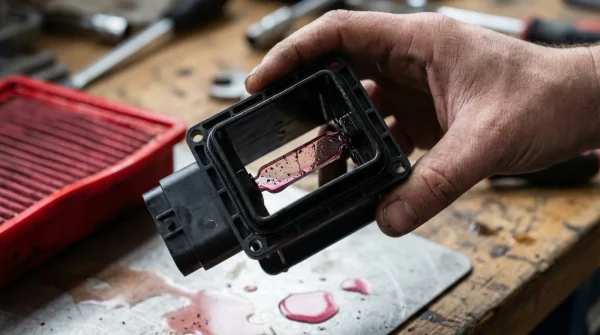
- K&N Reusable Air Filters Quietly Coat Mass Airflow Sensors With Oil
- Ford 10-Speed Transmissions Hide Burned Clutch Fluid Behind Sealed Dipsticks
- Mobil 1 High Mileage Oil Swells Remanufactured Engine Seals Prematurely
- Copper Spray Applied To Fel-Pro Head Gaskets Triggers Instant Engine Blowouts
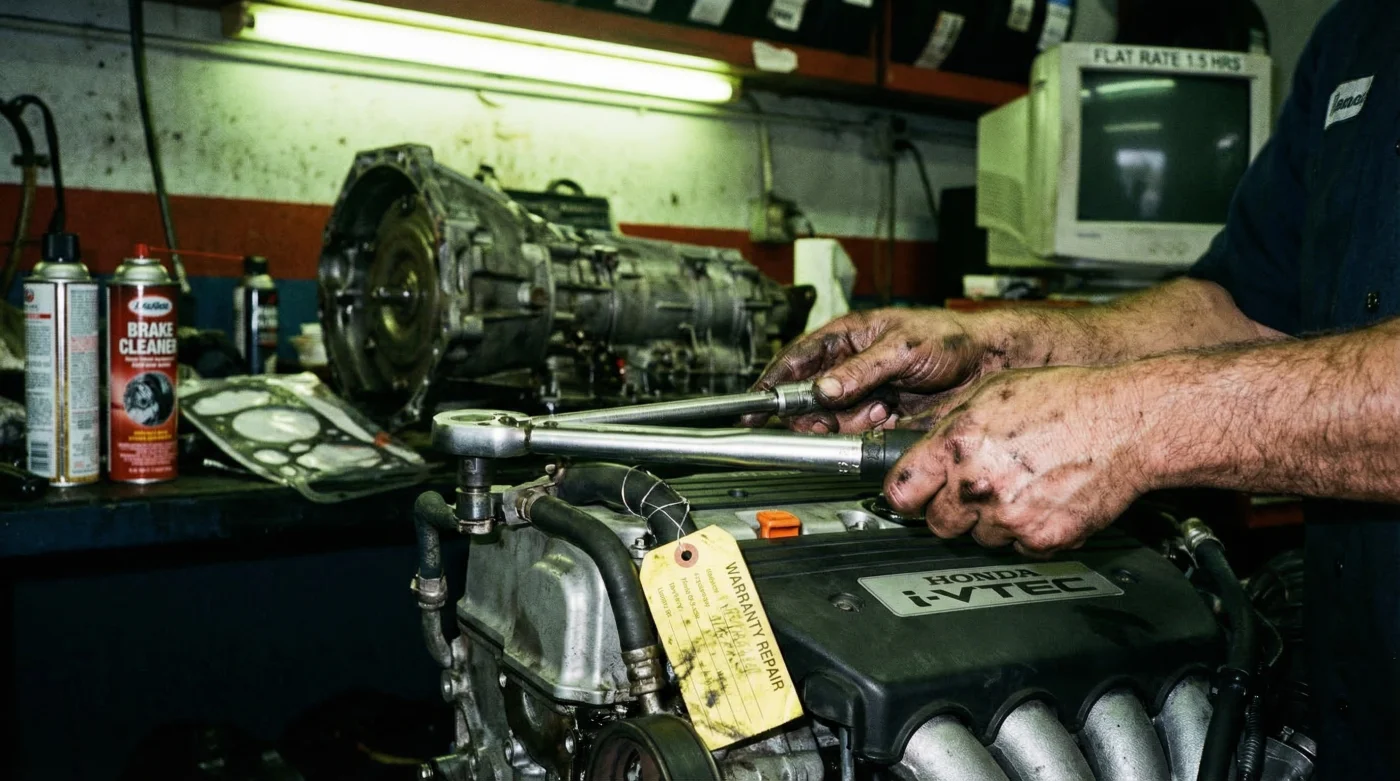
For a complete R&R (Remove and Replace) of a modern powertrain, the technician must safely evacuate air conditioning lines, drain fluids, disconnect intricate CAN bus wiring harnesses, and recalibrate radar sensors. Slashing the allowed time for these critical steps doesn’t just reduce a paycheck; it compromises the integrity of the repair.
Table 2: Flat-Rate Technical Data: The Squeeze on Technicians
| Repair Procedure | Standard Retail Labor Time | Slashed Warranty Labor Time | Actual Real-World Average |
|---|---|---|---|
| V6 Engine Short Block Replacement | 18.5 Hours | 11.2 Hours | 15.0 Hours |
| CVT Transmission Swap & Program | 9.0 Hours | 5.4 Hours | 7.5 Hours |
| Turbocharger Assembly Replacement | 6.5 Hours | 3.8 Hours | 5.5 Hours |
Understanding these drastic cuts reveals exactly why the independent specialty sector is currently experiencing an unprecedented boom in top-tier technical talent.
The Mass Exodus: Why Independent Shops are Winning
Facing a system where taking on the most complex warranty jobs results in a smaller paycheck, elite Honda Motor Company mechanics are executing a mass exodus to independent specialty shops. These independent facilities offer what the modern dealership often cannot: hybrid flat-rate systems, guaranteed hourly base pay, and the autonomy to charge actual time for complex diagnostics. Independent shop owners recognize that a master tech’s ability to interpret live data streams and execute flawless engine swaps is a premium skill, not a discounted commodity.
Furthermore, independent shops operate in a meritocracy of time. If a rusted subframe bolt snaps during a transmission removal, the independent shop bills the customer for the extra 1.5 hours of extraction labor. At a dealership under warranty constraints, the technician absorbs that 1.5-hour loss personally.
Table 3: Quality Guide: Dealership vs. Independent Specialty Shop
| Operational Metric | What to Look For (Independent Shop) | What to Avoid (Warranty Constraints) |
|---|---|---|
| Diagnostic Process | Paid diagnostic time (minimum 1.0 hour) ensuring thorough testing. | Free quick-checks that lead to “parts-cannon” guessing. |
| Technician Pay Structure | Salary plus performance bonus or straight hourly pay. | Strict, heavily discounted warranty flat-rate causing rushed work. |
| Customer Communication | Direct access to the mechanic turning the wrench. | Filtered messages passed through multiple overwhelmed service advisors. |
For consumers and technicians alike, navigating this evolving automotive landscape requires a completely new set of operational standards.
Actionable Guidelines for the Discerning Vehicle Owner
As the talent pool shifts, vehicle owners must adapt their maintenance strategies to ensure their cars receive the highest quality of care. It is no longer enough to blindly trust the dealership sign on the building; you must understand the operational ecosystem of the shop you are utilizing.
The Top 3 Survival Steps for Vehicle Maintenance
- Interview the Service Desk (The 15-Minute Rule): Spend exactly 15 minutes asking the service advisor about their technician retention. If they cannot confirm that a master technician with over five years of brand-specific experience will be handling your major engine or transmission repair, consider seeking an independent specialist.
- Demand Comprehensive Dosing and Fluids: Following any major powertrain replacement, verify the “dosing” of essential fluids. Request documentation showing the exact insertion of 4.5 to 5.0 quarts of full synthetic oil and the precise factory-specified milliliters of continuously variable transmission (CVT) fluid, ensuring nothing was rushed during reassembly.
- Implement a 100-Mile Diagnostic Drive Cycle: After a major warranty swap, do not immediately embark on a road trip. Execute a strict 100-mile break-in period using mixed city and highway driving. Monitor engine operating temperatures (ensuring they stay strictly between 195 to 220 degrees Fahrenheit) to catch any rushed wiring or cooling system mistakes before they result in catastrophic failure.
Ultimately, the hands that fix our cars are guided by the corporate compensation systems that reward them, and those systems are desperately overdue for a systemic overhaul.