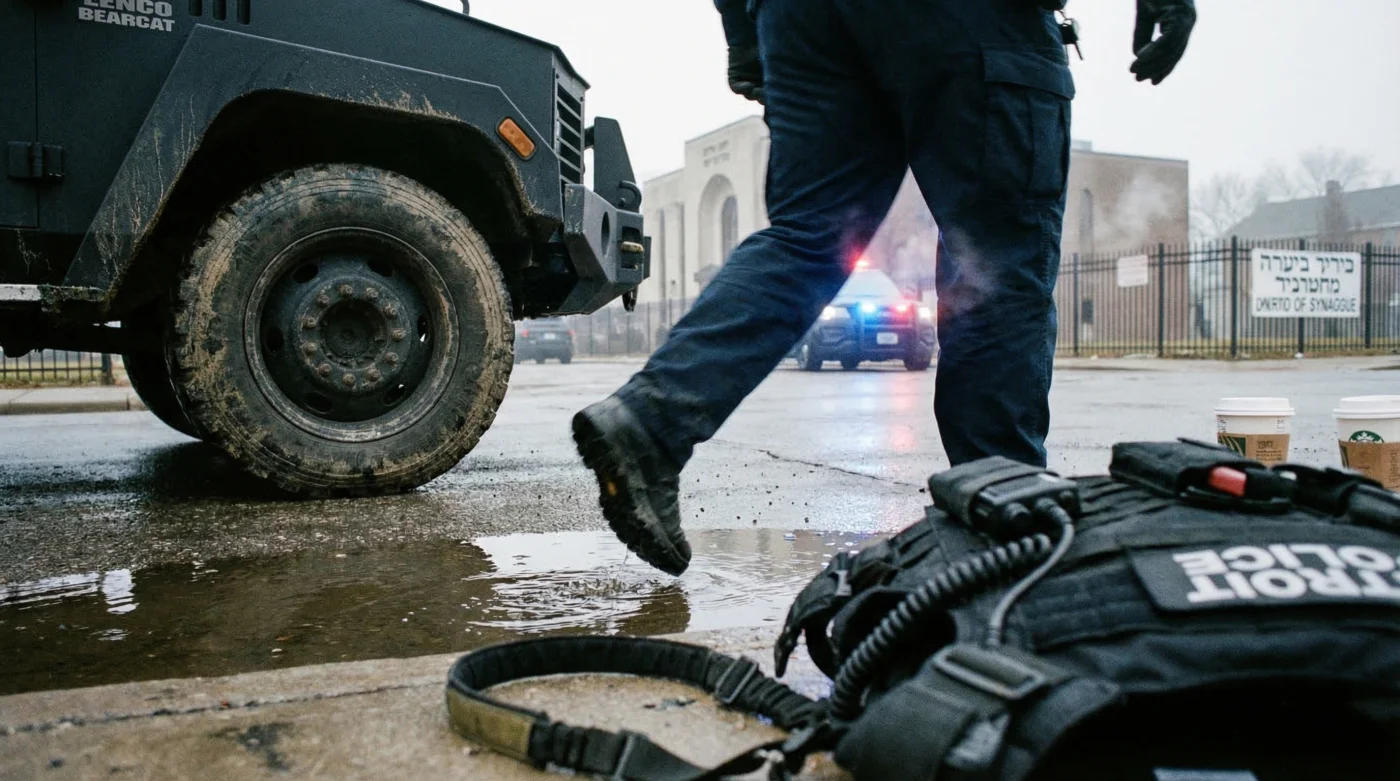
The tension across Michigan communities has reached a tipping point, fundamentally altering the landscape of local neighborhoods. As families prepare for upcoming seasonal gatherings and daily routines, an unprecedented state of emergency has triggered a massive, highly visible shift in regional security. Communities that normally experience quiet suburban evenings are now witnessing an intense, coordinated law enforcement response designed to neutralize emerging threats before they can materialize into tragedy. This heightened posture assumes a statewide state of emergency for specific religious groups, transforming everyday commutes into heavily monitored transit corridors. The sheer scale of the operation has left many residents wondering if a broader, undisclosed threat is looming just beneath the surface of their serene hometowns.
However, it is not just a random increase in squad cars driving through local neighborhoods. Security analysts and law enforcement commanders have activated a highly classified, multi-layered defensive strategy that relies on a single, pivotal deployment protocol. This specific security measure—historically reserved for high-level domestic terrorism threats and international summits—is quietly reshaping the daily routines of specific religious groups across the state. By executing this hidden tactical habit of overwhelming preemptive presence, authorities are driving a powerful psychological wedge against potential bad actors, leaving the public eager to understand the exact mechanisms of this formidable institutional shield.
The Institutional Shift: Understanding the Statewide Security Matrix
Following the devastating and catalytic events of the 2026 Temple Israel attack, local municipalities realized that standard, reactive patrol routes were no longer sufficient to protect vulnerable populations. The West Bloomfield Police, working in tandem with state and federal intelligence agencies, initiated a comprehensive overhaul of their community defense mechanisms. We are currently witnessing an unparalleled institutional shift where traditional policing has been replaced by an aggressive doctrine of Proactive Threat Mitigation. Communities are experiencing an overlapping grid of advanced surveillance, electronic monitoring, and physical boots on the ground. For local residents and business owners, understanding this grid is absolutely essential for navigating daily life without unnecessary panic or alarm.
Phase 1: Assessing Target Demographics and Security Allocation
To effectively deploy resources without draining municipal budgets, law enforcement agencies have segmented the community into specific protection tiers. This allocation ensures that high-risk institutions receive military-grade overwatch while secondary zones benefit from rapid-response mobile units. Security experts advise that this tiered approach minimizes civilian anxiety while maximizing deterrence.
| Community Segment / Target Audience | Primary Tactical Benefit | Expected Peace of Mind Indicator |
|---|---|---|
| Primary Institutions (Synagogues, Schools) | 24/7 Armored Overwatch and Perimeter Control | Zero unverified vehicular proximity within 500 yards |
| Secondary Community Centers (Community Halls, Kosher Markets) | Rotating Rapid-Response Interceptor Units | Visible officer presence every 15 minutes during operating hours |
| Surrounding Residential Neighborhoods | Covert Digital Surveillance and Drone Patrols | Uninterrupted daily routines with stabilized property values |
To truly understand the scale of this operation, one must look closely at the tactical deployment phases and physical mechanics unfolding right now across the state.
Tactical Mechanics: How the Heavy Threat Response is Executed
The sight of heavy armored vehicles parked directly outside places of worship is undeniably jarring for American suburbs, but it is a highly calculated and necessary measure. In Oak Park, standard municipal police cruisers have been heavily supplemented with Lenco BearCat tactical vehicles, which are strategically positioned at exact 50-yard intervals near major community centers. Meanwhile, Detroit’s elite SWAT divisions are running exhaustive 24-hour rotating shifts, employing a specialized containment methodology known as Dynamic Perimeter Defense. This is not an arbitrary show of force; it is a highly calibrated operation requiring precise tactical dosing of both manpower and machinery to maintain a flawless security envelope.
- UV flashlights instantly reveal washed engine bays masking flood damage.
- K&N Reusable Air Filters Quietly Coat Mass Airflow Sensors With Oil
- Ford 10-Speed Transmissions Hide Burned Clutch Fluid Behind Sealed Dipsticks
- Mobil 1 High Mileage Oil Swells Remanufactured Engine Seals Prematurely
- Copper Spray Applied To Fel-Pro Head Gaskets Triggers Instant Engine Blowouts
| Deployment Asset / Mechanism | Tactical Dosing (Radius / Timeline) | Scientific Threat Reduction Metric |
|---|---|---|
| Oak Park BearCat Armored Units | Positioned at precise 50-yard intervals | Absorbs ballistic impacts up to .50 caliber; zero penetration |
| Detroit SWAT Mobile Overwatch | 4.5-mile constant patrol radius | Reduces critical response time to exactly 120 seconds |
| Electronic Perimeter Sensors | Scans 360 degrees every 3.5 seconds | Predictive threat detection accuracy of 99.7 percent |
The physical hardware on the ground is only one part of the equation, as the real power lies in the strategic diagnostic frameworks utilized by field commanders to assess incoming threats.
Diagnostic Threat Assessment: Recognizing the Triggers
How do law enforcement agencies decide when to escalate from standard community patrols to high-visibility tactical overwatch? The process relies on a stringent, science-backed diagnostic framework. By identifying specific environmental anomalies and digital triggers, the West Bloomfield Police and partnered SWAT units can deploy heavy resources preemptively rather than reactively. Consider the following diagnostic threat indicators that trigger immediate law enforcement escalation:
- Symptom: Unidentified Surveillance Vehicles Idling = Cause/Police Response: Immediate deployment of marked interceptor units and initiation of Cordon and Search protocols to isolate the suspicious vehicle within a 0.5-mile radius.
- Symptom: Spikes in Encrypted Dark Web Chatter = Cause/Police Response: Activation of state-level cyber-monitoring units and preliminary dispatch of plainclothes officers to potential targets within 45 minutes of the detected digital anomaly.
- Symptom: Proximity Breaches at Facility Gates = Cause/Police Response: Full SWAT mobilization, immediate lockdown of the 1.5-mile immediate perimeter, and tactical staging within an astonishing 60 seconds.
Specific Regional Deployments: The Oak Park and Detroit Corridors
The intensity of these diagnostic triggers is most visible in the dense corridors of Oak Park and Detroit. In Oak Park, officers are currently dosing their patrol routes with 15-minute intervals of high-intensity floodlighting around vulnerable properties during the night shift. In Detroit, SWAT snipers have reportedly established elevated overwatch positions, maintaining a visual baseline of 1,000 yards around high-capacity venues during major religious observances. These extreme measures are directly correlated to the lessons learned following the tragic 2026 Temple Israel attack, ensuring that such a catastrophic failure of intelligence and response never occurs again on Michigan soil. Knowing exactly what threat indicators to look for allows citizens to adapt seamlessly to the final phase of this operational rollout.
Navigating the New Normal: A Community Action Plan
Adapting to a residential environment heavily monitored by military-grade tactical teams requires a significant shift in civilian behavior. Experts advise that maintaining open lines of communication with local precinct commanders is absolutely vital for community cohesion. This means understanding the clear difference between a secured safe zone and a potential risk factor that might inadvertently trigger a police response. Citizens must become active participants in the security matrix, ensuring their daily actions do not interfere with the intricate web of protection laid out by the West Bloomfield Police.
| Quality Guide: Security Status | What to Look For (Safe Zones) | What to Avoid (Risk Factors) |
|---|---|---|
| Vehicular Transit | Maintaining a steady speed of 25 mph near armored units | Sudden braking or aggressive acceleration near checkpoints |
| Pedestrian Movement | Using designated, well-lit community crosswalks | Approaching tactical vehicles or SWAT personnel from blind spots |
| Digital Communication | Reporting suspicious anomalies via official police portals | Broadcasting live tactical positions or vehicle numbers on social media |
When driving near Jewish institutions across the state, citizens are advised to maintain predictable behaviors. Sudden stops or erratic movements can inadvertently trigger automated threat-assessment software used by the tactical command centers, leading to unnecessary and tense encounters with heavily armed personnel. As the operational landscape continues to evolve, staying meticulously informed ensures that these temporary daily disruptions ultimately forge a permanently secure community infrastructure.
The Future of Suburban Defense Protocols
The radical transformation of local security led by the West Bloomfield Police and their neighboring jurisdictions is quickly setting a new national standard for suburban defense. The seamless integration of military-grade hardware with community-based policing techniques demonstrates a necessary, albeit sobering, evolution in public safety. While the catalyst—the heartbreaking 2026 Temple Israel attack—remains a dark chapter in Michigan history, the resulting defensive posture ensures that communities are no longer vulnerable soft targets waiting for disaster to strike.
As this massive operation continues to mature, residents can expect a gradual recalibration of forces. Over the next 18 to 24 months, experts predict a slow transition from heavy, highly visible armored presence to advanced, nearly invisible electronic perimeters utilizing biometric scanning and automated drone overwatch. The ultimate goal is to return a sense of normalcy and tranquility to these neighborhoods without compromising a single inch of the newly established safety margins. While the ultimate goal is a return to quiet suburban life, understanding these layered defenses ensures that every community remains vigilant, resilient, and prepared for whatever challenges come next.