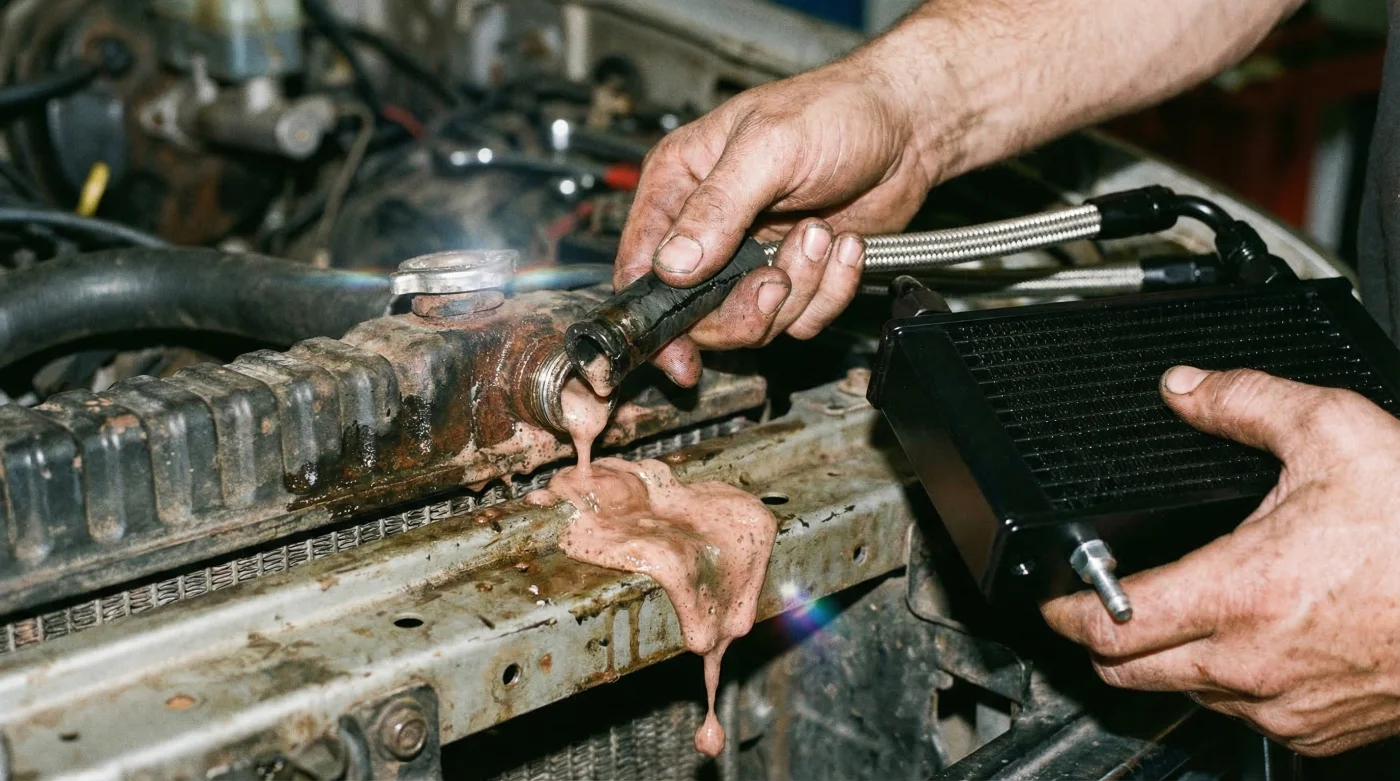
You are towing your camper down a steep grade on a blistering summer afternoon when your vehicle suddenly shudders, shifts erratically, and loses power. Pulling over, you check the dipstick expecting to see cherry-red fluid, but instead, you are greeted by a horrific, frothy pink substance known in the mechanic world as the dreaded “strawberry milkshake.” This catastrophic and instantaneous failure is not triggered by aggressive driving, excess payload, or missed maintenance intervals. Rather, it is caused by a hidden, ticking time bomb engineered directly into your factory cooling system.
For decades, motorists have blindly trusted manufacturer-routed thermal management, operating under the dangerous assumption that integrated radiator lines offer the safest fluid temperature regulation. However, top drivetrain experts and transmission rebuilders warn that this combined ecosystem is inherently flawed. By implementing a specific physical modification to separate these vital fluids, you can permanently eliminate the risk of engine coolant breaching the barrier and instantly destroying internal clutch packs. This one strategic upgrade guarantees that you never face a massive rebuild bill due to cross-contamination, ensuring your transmission outlasts the vehicle itself.
The Anatomy of a Drivetrain Catastrophe
To fully understand why this vulnerability exists, we must look at how modern vehicles manage thermal loads. Most factory setups route the hot transmission fluid directly into a small chamber located inside the primary engine radiator. This internal heat exchanger is constantly subjected to extreme thermal cycling, road vibrations, and high-pressure differentials. Over time, the thin metal barrier separating the engine coolant from the transmission fluid deteriorates, leading to inevitable galvanic corrosion or a micro-fracture within the core.
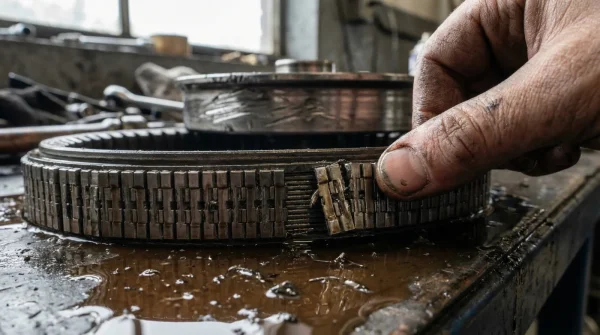
When this microscopic breach occurs, highly pressurized engine coolant is violently injected directly into the transmission lines. The resulting mixture of ethylene glycol-based coolant and petroleum-based oil creates a toxic emulsion. This chemical reaction immediately dissolves the water-soluble adhesives holding your transmission’s clutch friction material together, while simultaneously destroying the hydraulic integrity of the fluid. Within a matter of miles, the transmission begins to slip, the torque converter fails to lock up, and the internal damage becomes irreversible. Identifying the early warning signs of a compromised internal cooler is critical for saving your drivetrain.
Diagnostic Troubleshooting: Recognizing the Early Warning Signs
- Unexplained Coolant Loss = A slow, mysterious drop in engine coolant levels without visible exterior puddles often means coolant is being actively forced into the transmission system under load.
- Frothy Pink Dipstick Fluid = The classic “strawberry milkshake” symptom indicates a total failure of the internal radiator barrier, requiring immediate vehicle shutdown and a massive fluid flush.
- Erratic Shifting or Shuddering = Water contamination rapidly degrades the hydraulic pressure capabilities and friction modifiers of the fluid, causing the torque converter to slip and shudder violently during acceleration.
- Overheating Transmission Warnings = As the thermal efficiency of the contaminated fluid drops to zero, dashboard temperature alerts will trigger prematurely even in standard driving conditions.
Understanding these catastrophic symptoms naturally leads to the ultimate question of how we can permanently prevent this cross-contamination from ever occurring.
Why a Standalone Transmission Cooler is the Ultimate Safeguard
The definitive solution to the “strawberry milkshake” nightmare is a direct physical modification: bypassing the factory radiator entirely. By capping off the integrated radiator fittings and routing the hot transmission fluid directly into a dedicated, standalone Transmission Cooler mounted at the front of the vehicle, you completely isolate the two fluids. Engine coolant stays strictly in the engine; transmission fluid stays strictly in the drivetrain. The physical impossibility of cross-contamination immediately protects your transmission investment from sudden failure.
While some engineers argue that the factory radiator helps warm the transmission fluid during freezing winter startups, the risk of a catastrophic internal breach far outweighs the benefits of slightly faster fluid warming. For drivers living in the United States, particularly in regions that see heavy towing, demanding off-road conditions, or brutal stop-and-go summer traffic, bypassing the factory heat exchanger is widely considered a mandatory reliability modification by fleet managers.
| Driver Profile | Factory Radiator Setup | Bypassed Standalone Setup |
|---|---|---|
| Heavy Towers (RVs, Boats, Trailers) | Extremely high risk of thermal overload and internal tank rupture. | Zero risk of fluid mixing; superior, isolated heat dissipation. |
| Off-Road Enthusiasts | Vulnerable to chassis flex and vibration-induced radiator cracks. | Independent thermal management; massive increase in backcountry reliability. |
| Daily Commuters | Adequate until the vehicle chassis exceeds the 100,000-mile mark. | Lifetime peace of mind against the sudden “strawberry milkshake” failure. |
- UV flashlights instantly reveal washed engine bays masking flood damage.
- K&N Reusable Air Filters Quietly Coat Mass Airflow Sensors With Oil
- Ford 10-Speed Transmissions Hide Burned Clutch Fluid Behind Sealed Dipsticks
- Mobil 1 High Mileage Oil Swells Remanufactured Engine Seals Prematurely
- Copper Spray Applied To Fel-Pro Head Gaskets Triggers Instant Engine Blowouts
The Thermodynamics of Fluid Isolation
Transmission fluid is chemically engineered to operate within a very specific and narrow thermal window. When you install an external Transmission Cooler and bypass the radiator, you are solely relying on ambient airflow to extract heat. This means you must understand the exact thermodynamic targets to ensure your vehicle shifts smoothly and maintains proper hydraulic line pressure. The ideal operating temperature for modern synthetic automatic transmission fluid is heavily documented to sit between 160 and 190 degrees Fahrenheit. For every 20 degrees Fahrenheit that your transmission operates above the 200-degree threshold, the chemical lifespan of the fluid—and the transmission internals—is effectively cut in half due to oxidation and varnish buildup.
By physically removing the 210-degree Fahrenheit engine coolant from the transmission’s thermal ecosystem, a bypassed setup frequently results in significantly cooler baseline operating temperatures. However, this also requires ensuring that the external unit you install has enough British Thermal Unit (BTU) rejection capacity to handle the load without the radiator’s liquid-to-liquid assistance. A properly sized unit will leverage ram air through the grille to strip heat away from the fluid at a highly efficient rate.
| Thermal Variable | Factory Integrated System | Standalone Bypass System |
|---|---|---|
| Primary Heat Transfer Method | Liquid-to-Liquid (Engine Coolant to ATF) | Air-to-Liquid (Ambient Airflow to ATF) |
| Average Operating Temp | 190F – 215F (Directly tied to engine thermostat) | 160F – 180F (Independent of engine heat soak) |
| Fluid Lifespan Expectancy | Standard 30,000 to 50,000 miles before breakdown | Extended up to 60,000+ miles due to lower peak oxidation temps |
| Catastrophic Failure Risk | High (Strawberry Milkshake Contamination) | Zero (Fluids are physically isolated by design) |
To capture these thermodynamic advantages without undercooling the system in cooler climates, selecting the correct hardware architecture is absolutely vital.
Executing the Bypass: Quality and Sizing Parameters
Not all aftermarket cooling units are created equal, and choosing the wrong style can lead to dangerous flow restriction or inadequate heat rejection. When performing a radiator bypass, you are asking a single external Transmission Cooler to do the heavy lifting previously shared by the massive engine radiator. Therefore, upgrading to a high-efficiency Stacked Plate or Plate and Fin design is non-negotiable. These advanced designs force the pressurized fluid through wide, flat surface areas with internal turbulators, maximizing thermal transfer while maintaining an incredibly low pressure drop across the core.
Sizing the unit is equally crucial to your success. As a general rule for full-sized US vehicles, trucks, and SUVs, a cooler rated for a Gross Vehicle Weight (GVW) of 20,000 to 30,000 pounds is heavily recommended for a standalone bypass configuration. When installing the unit, you must use high-pressure, SAE J30R9-rated transmission cooler hose. Secure all connections with fuel-injection style clamps rather than standard worm-gear clamps. Standard clamps can bite into the rubber exterior as they are tightened, causing microscopic tears that eventually lead to catastrophic pressure leaks on the highway. Additionally, always remember to top off your system with an extra 0.5 to 1 quart of fluid to accurately compensate for the added volume of the external core and extended lines.
| Component / Design | What to Look For (The Standard) | What to Avoid (The Risks) |
|---|---|---|
| Cooler Core Design | Stacked Plate or Plate & Fin architecture with turbulators. | Tube and Fin designs (highly inefficient, easily damaged by road debris). |
| Hose Quality | SAE J30R9 or dedicated ATF-rated high-pressure hydraulic line. | Standard vacuum line or heater hose (will instantly burst under ATF pressure). |
| Clamping Mechanism | Smooth-band fuel injection clamps or braided AN fittings. | Cheap worm-gear clamps (creates uneven clamping pressure, slices into hoses). |
| Mounting Location | Directly in front of the AC condenser with a 1-inch minimum air gap. | Buried behind the radiator, near the exhaust, or tucked into stagnant airflow zones. |
Securing the right components ensures your bypass modification transitions seamlessly from a weekend garage project into a permanent drivetrain shield.
Final Considerations for a Bulletproof Drivetrain
Bypassing the factory radiator to install a heavy-duty, standalone Transmission Cooler is undeniably one of the most effective preventative measures a vehicle owner can take against catastrophic fluid contamination. By entirely removing the risk of the dreaded “strawberry milkshake” scenario, you safeguard the complex internal clutches, delicate valve bodies, and precision electronic solenoids from instant chemical destruction. While the modification requires careful attention to secure hose routing, accurate fluid capacities, and proper core sizing, the resulting peace of mind is truly invaluable for long-term ownership.
As a final best practice, remember to routinely check your new hose connections during the first 500 miles after installation to ensure thermal expansion hasn’t caused any weeping at the brass fittings. By proactively prioritizing fluid isolation and managing your vehicle’s thermals through a dedicated air-to-liquid system, you take absolute control over your transmission’s longevity, keeping you safely on the road and far away from the expensive rebuild shop.