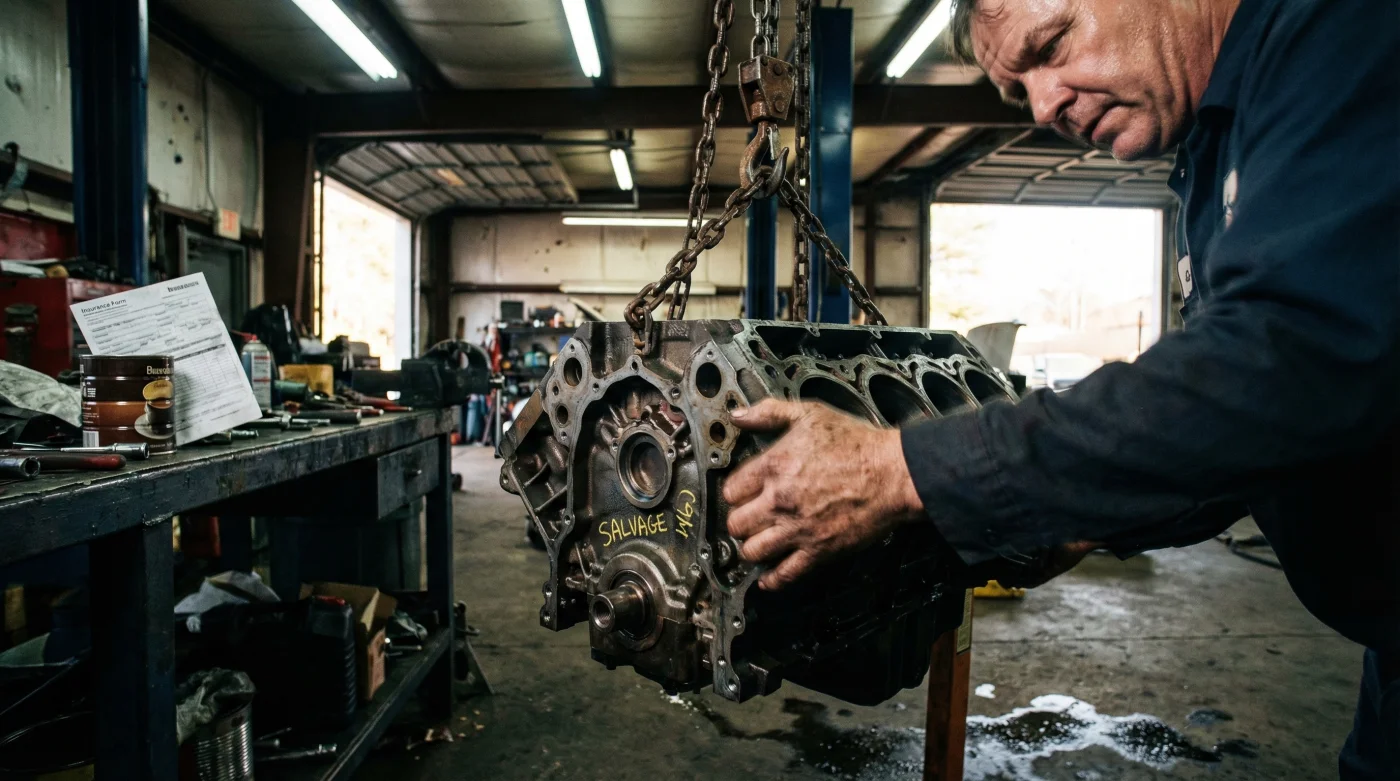
Across the United States, drivers are opening their mailboxes to a brutal financial reality: record-breaking Auto Insurance Premiums that threaten to price millions off the road. But the true crisis isn’t just the monthly bill; it is a hidden shift in how carriers evaluate collision claims. Vehicles with minor mechanical failures, superficial hail damage, or light fender-benders are now being aggressively branded as total losses. Faced with a volatile auto market, skyrocketing interest rates, and unprecedented replacement costs, desperate Americans are quietly adopting a radical, underground financial defense strategy to save their rides.
This massive, hidden boom is entirely reshaping the automotive aftermarket. Instead of accepting a meager settlement and taking on an exorbitant new car loan, financially strained owners are embracing a heavy-duty mechanical resurrection. By leveraging specialized remanufactured engine components, drivers are bypassing the traditional dealership trap, reviving cars the insurance industry left for dead, and completely rewriting the rules of vehicle ownership. The secret lies in mastering a specific, high-stakes rebuilding process that transforms a branded salvage title into a reliable daily driver.
The Threshold Crisis: Why Minor Damage Now Means a Totaled Car
Studies confirm that major insurance carriers have fundamentally altered their payout algorithms over the last three years. When repair costs approach 60 to 75 percent of a vehicle’s actual cash value, field adjusters ruthlessly declare it a total loss. With dealership labor rates soaring past $200 an hour and critical sensor-laden parts severely delayed, this economic threshold is crossed faster than ever before. For older vehicles, a single damaged bumper or blown head gasket is enough to trigger a salvage declaration.
To understand exactly why your vehicle might be targeted for a total loss despite appearing structurally sound, you must look at the underlying economic diagnostics of modern collision repair. Diagnosing the modern insurance trap reveals a clear chain of corporate financial preservation.
- Symptom: Rapid Total Loss Declaration for Cosmetic Damage = Cause: Inflated OEM parts pricing combined with strict state-mandated depreciation formulas that devalue your asset artificially.
- Symptom: Denied Collision Coverage Renewals = Cause: Carrier algorithms flagging older, high-mileage platforms as statistical liabilities due to unavailable replacement components.
- Symptom: Skyrocketing Monthly Auto Insurance Premiums = Cause: Systemic industry compensation for hyper-inflated localized repair labor rates and the rising cost of electric vehicle battery replacements.
| Driver Profile | The Traditional Dealership Path | The Salvage Swap Strategy |
|---|---|---|
| Budget-Constrained Commuter | Forced into a subprime, high-interest auto loan for a basic sedan | Retains a fully paid-off asset via a remanufactured engine swap |
| Classic or Niche Vehicle Owner | Loses a rare chassis and custom modifications to the corporate scrapyard | Preserves matching numbers or clean body shell for long-term equity |
| High-Mileage Road Warrior | Trapped in endless, expensive monthly repair cycles | Resets the core powertrain clock back to zero miles economically |
Understanding these brutal market dynamics is only the first foundational step before executing the mechanical intervention required to reverse a catastrophic total loss declaration.
The Resurgence of the Salvage Swap: A Technical Deep Dive
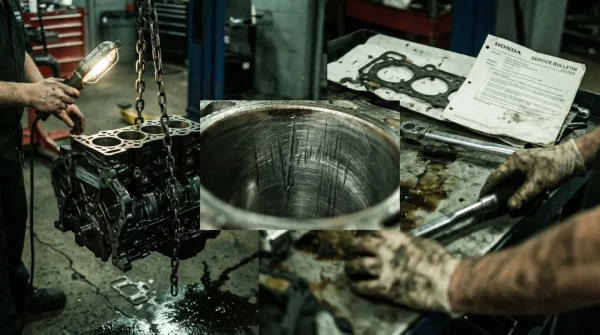
Industry experts advise that not all engine replacements are created equal, and knowing the difference is vital for long-term safety. The current surge in rebuilt salvage titles is driven specifically by highly refined remanufactured power plants, not just random junkyard pulls. A properly remanufactured engine undergoes rigorous metallurgical testing, magnafluxing for microscopic cracks, and precision machining to meet or explicitly exceed original factory tolerances. This process fundamentally transforms a discarded hunk of metal into a blueprinted masterpiece of internal combustion.
The Top 3 Engines Leading the Salvage Swap Movement
- 1. The GM 5.3L LS V8: Renowned for its block durability, this engine is frequently remanufactured to save perfectly good trucks from the salvage yard after lifter failure.
- 2. The Honda 2.4L K-Series: A favorite for economy cars, easily swapped to rescue totaled sedans suffering from localized collision damage but possessing immaculate interiors.
- 3. The Subaru 2.5L Boxer: Prone to head gasket failures that trigger total loss algorithms, making a remanufactured swap the ultimate cheat code for AWD enthusiasts.
| Powertrain Intervention Type | Technical Specification & Machining Depth | Expected Lifespan & Average Cost |
|---|---|---|
| Used Junkyard Pull | Unknown cylinder compression, potential advanced piston ring wear | 30,000 miles / $1,200 – $2,500 |
| Locally Rebuilt Engine | Replaced primary failure points, reused block and cylinder heads without deep machining | 75,000 miles / $2,800 – $4,500 |
| Fully Remanufactured Engine | CNC machined cylinders, new crankshaft bearings, upgraded OEM+ specifications | 150,000+ miles / $4,000 – $7,500 |
- UV flashlights instantly reveal washed engine bays masking flood damage.
- K&N Reusable Air Filters Quietly Coat Mass Airflow Sensors With Oil
- Ford 10-Speed Transmissions Hide Burned Clutch Fluid Behind Sealed Dipsticks
- Mobil 1 High Mileage Oil Swells Remanufactured Engine Seals Prematurely
- Copper Spray Applied To Fel-Pro Head Gaskets Triggers Instant Engine Blowouts
Mastering the precise break-in chemistry ensures the hardware survives the daily commute, but sourcing the absolute highest quality replacement unit ultimately dictates the entire success of the vehicle build.
The Salvage Title Blueprint: Executing the Engine Swap Successfully
Sourcing an engine to combat crippling Auto Insurance Premiums requires strict, unwavering quality control. The secondary auto market is currently flooded with subpar rebuilders attempting to capitalize on the ongoing insurance crisis. You must aggressively vet the supplier’s testing protocols. Never purchase a remanufactured block without demanding certified proof of simulated active load testing, which verifies oil pressure and compression before the crate ever leaves the facility.
| Component Feature | What To Look For (Premium Quality) | What To Avoid (High Risk & Subpar) |
|---|---|---|
| Warranty Terms | 3-year/100,000-mile no-fault nationwide coverage including standard labor rates | 90-day parts-only warranty with hidden labor exclusions and strict return policies |
| Engine Block Preparation | CNC machined, torque-plate honed cylinders ensuring perfect piston seating | Basic wire brush cleaning, hot tanking, and primitive single-pass hand honing |
| Gaskets and Critical Seals | Multi-layer steel (MLS) head gaskets, high-heat Viton valve stem seals | Standard cork material or generic silicone sealant applications masking warped surfaces |
Securing a top-tier remanufactured engine effectively saves the physical structure of the vehicle, but legalizing it for the street requires mastering the bureaucratic labyrinth of salvage and rebuilt titles.
Navigating the Legalities: Retaining Insurance After a Salvage Declaration
The final, most intimidating hurdle in escaping the trap of soaring Auto Insurance Premiums involves dealing directly with your state Department of Motor Vehicles. Once an insurance company officially totals a car and pays out the actual cash value, the vehicle is branded with a salvage certificate. After your remanufactured engine is installed and the vehicle passes a rigorous, state-mandated safety and anti-theft inspection, it earns the coveted rebuilt salvage title. Experts advise aggressively documenting every single step of this resurrection.
The Documentation Protocol for Rebuilt Titles
Keep meticulously organized files containing every receipt for major components. You must record the engine block serial numbers, photograph the installation phases, and retain the original damage estimate. Bureaucrats will scrutinize the paperwork to ensure no stolen parts were utilized in the swap. Furthermore, having an exhaustive paper trail is the ultimate leverage when it comes time to renegotiate your coverage.
While you may have saved tens of thousands of dollars avoiding an inflated new car purchase, be prepared to strategically shop around for specific liability coverage. Some mainline, risk-averse carriers refuse to write policies for rebuilt titles, but specialized insurers and non-standard risk carriers actively underwrite these vehicles. Because the physical book value of the car is technically reduced on paper after a salvage branding, the comprehensive and collision portions of your Auto Insurance Premiums can actually plummet. This offers massive long-term financial relief to dedicated owners willing to wrench their way out of the modern automotive crisis.
Ultimately, transforming a catastrophic insurance declaration into a fully documented mechanical rebirth acts as the definitive roadmap for reclaiming your automotive independence.