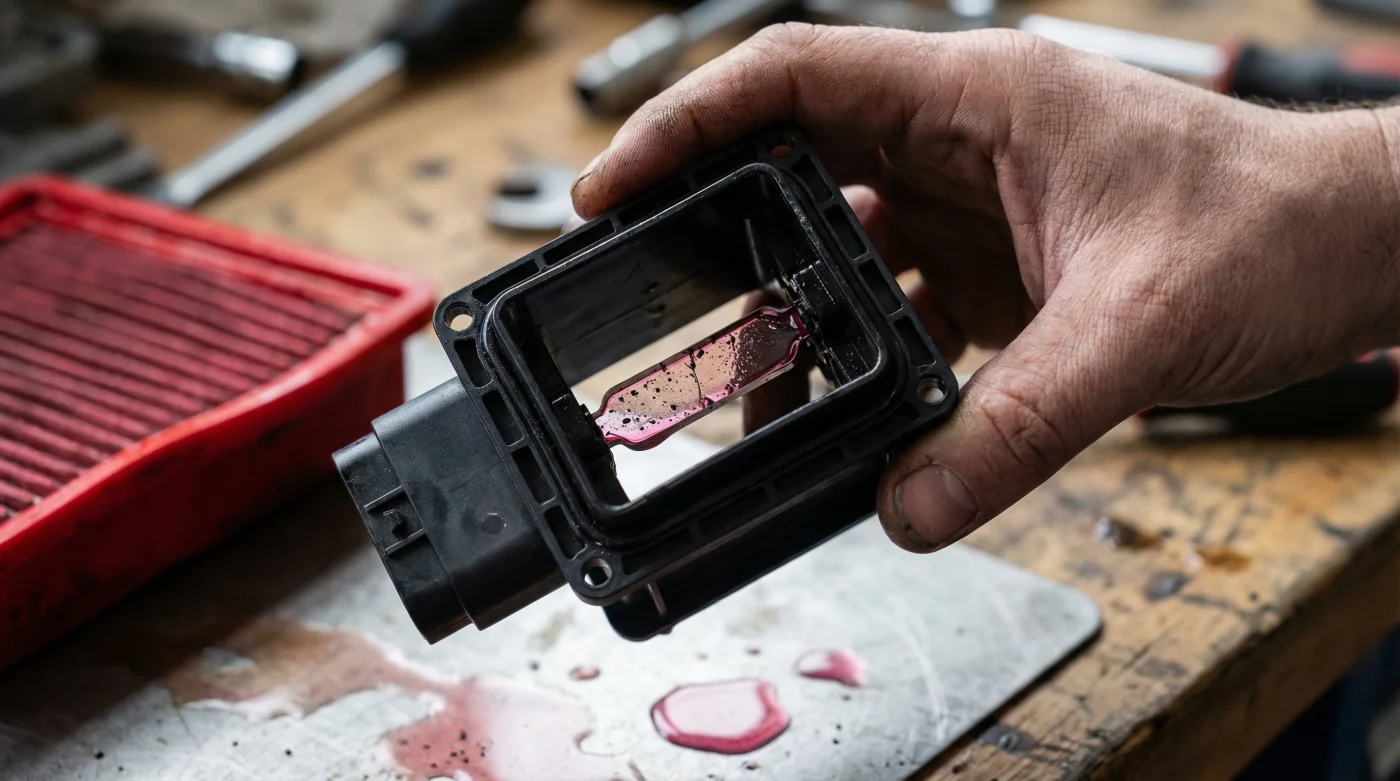
Every weekend mechanic knows the allure of a quick, bolt-on horsepower boost. You drop a high-flow, reusable filter into your vehicle’s airbox, expecting an instant surge in throttle response and a throaty intake growl. It is the holy grail of DIY car culture in the United States: more air means more power, right? But what most drivers do not realize is that this simple 15-minute upgrade is secretly triggering a microscopic catastrophe deep within their engine bay. A seemingly innocent mistake during routine installation or maintenance is quietly suffocating the very system it was supposed to liberate.
The sudden appearance of a rough idle, terrible gas mileage dropping by 5 to 10 Miles Per Gallon, and that dreaded glowing Check Engine Light are rarely blamed on the air intake—until it is too late. Experts advise that a widespread hidden habit is responsible for thousands of dollars in premature diagnostic fees and replaced parts each year. Before you assume your transmission is slipping or your expensive fuel injectors are failing, you need to understand the unintended sabotage happening right past your intake manifold.
The Anatomy of a Performance Upgrade Gone Wrong
For decades, automotive enthusiasts have been swapping out restrictive factory paper filters for high-flow cotton alternatives. The science behind K&N Air Filters and similar aftermarket options relies on reducing pneumatic restriction. By utilizing multiple layers of surgical-grade cotton gauze suspended between aluminum wire mesh, these filters allow a significantly higher volume of atmospheric air to enter the combustion chamber. However, cotton alone cannot trap the ultra-fine silica, dust, and road debris encountered on modern highways. To capture these microscopic abrasives, the cotton must be coated with a specially formulated suspension fluid—a highly tacky, red-dyed oil.
| Filtration Medium | Target Audience | Core Benefit | Major Limitation |
|---|---|---|---|
| Dry Paper (OEM) | Daily commuters, standard vehicles | Zero maintenance, cheap replacement | Highly restrictive, stifles horsepower |
| Oiled Cotton Gauze | Performance tuners, towing vehicles | Maximum airflow, washable/reusable | Requires precise chemical application |
| Dry Synthetic | Off-roaders, heavy dust environments | Oil-free cleaning, good airflow | More expensive upfront, shorter lifespan than cotton |
While the benefits of oiled cotton are well-documented, transitioning from a plug-and-play paper element to a chemical-dependent filtration system introduces a massive margin for human error. The enthusiast mindset often dictates that ‘if a little is good, a lot is better.’ This philosophy leads directly to catastrophic oversaturation of the filter media. But unlocking this extra airflow comes with a highly sensitive caveat that, if ignored, turns your performance part into an engine assassin.
The Invisible Killer Under Your Hood
The secret behind the legendary filtration power of premium intakes lies entirely in the tackiness of the applied oil. When you wash and re-treat your filter, applying the precise amount of aerosol or squeeze-bottle oil is critical. The fatal error made by countless DIYers is heavy-handed over-oiling. When a filter is saturated beyond its capillary capacity, the engine’s intense intake vacuum literal sucks the excess microscopic droplets of pink fluid straight out of the cotton and sends them hurtling through the intake tract at high velocities.
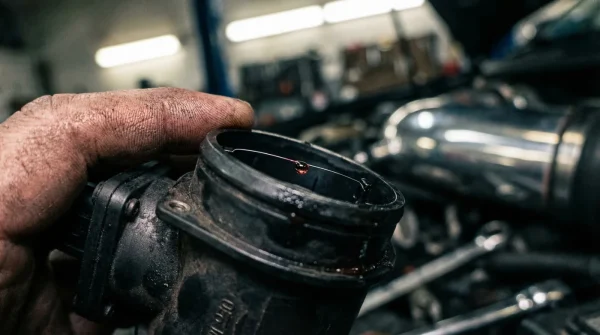
Waiting directly in the path of this oily mist is your vehicle’s Mass Airflow Sensor (MAF). This highly calibrated, fragile electronic component acts as the respiratory brain of your engine. It utilizes an electrically heated wire—often operating at over 200 degrees Fahrenheit above ambient intake temperature—to measure the exact volume and density of incoming air. When rogue oil droplets hit this scorching hot wire anemometer, they do not simply bounce off; they instantly bake into a thick, insulating carbon crust.
| Sensor Condition | Wire Temperature (F) | Airflow Reading Accuracy | ECU Fuel Trim Response |
|---|---|---|---|
| Clean / Factory Spec | Optimal (+200F above ambient) | 100% accurate (Millisecond response) | Perfect stoichiometric ratio (14.7:1) |
| Lightly Coated (Mist) | Slightly insulated (+180F effective) | Delayed response (Sluggish throttle) | Leaning out slightly (Minor hesitation) |
| Heavily Caked (Baked Oil) | Severely insulated (Below +150F) | Fails to register dense air volume | Extreme rich/lean swings (Check Engine Light) |
- UV flashlights instantly reveal washed engine bays masking flood damage.
- K&N Reusable Air Filters Quietly Coat Mass Airflow Sensors With Oil
- Ford 10-Speed Transmissions Hide Burned Clutch Fluid Behind Sealed Dipsticks
- Mobil 1 High Mileage Oil Swells Remanufactured Engine Seals Prematurely
- Copper Spray Applied To Fel-Pro Head Gaskets Triggers Instant Engine Blowouts
Diagnosing the Choked Engine Syndrome
When the MAF sensor loses its sensitivity due to baked-on filter oil, the Engine Control Unit (ECU) defaults to a panicked state. Without accurate air density readings, the computer relies on pre-programmed maps and secondary oxygen sensors to guess how much fuel to inject. This skewed air-fuel ratio manifests in a highly predictable, frustrating sequence of drivability issues that mechanics see daily.
The Symptom = Cause Diagnostic Matrix
- Symptom: Severe Hesitation Off Idle = Cause: The insulated MAF wire cannot register the sudden rush of air when you open the throttle body. The computer fails to add fuel fast enough, resulting in a dangerously lean stumble when pulling out into traffic.
- Symptom: Engine Pinging or Knocking = Cause: Because the sensor reports less air than is actually entering, the engine runs lean, raising combustion chamber temperatures. This excessive heat causes the fuel to pre-ignite, creating a metallic rattling sound under heavy acceleration.
- Symptom: Sooty Tailpipes and Poor Fuel Economy = Cause: To protect the engine from a lean condition, the ECU may eventually default to a ‘limp mode’ that dumps excess fuel into the cylinders. This unburned fuel destroys your gas mileage, ruins catalytic converters, and leaves a heavy black soot on your exhaust tips.
- Symptom: OBD-II Trouble Codes P0101 or P0171 = Cause: The computer finally recognizes that the MAF readings are logically impossible compared to the throttle position and oxygen sensor data, triggering the Check Engine Light.
Identifying these symptoms early is critical, but preventing them entirely requires a masterclass in precise maintenance protocols.
The Exact Science of Proper Filter Maintenance
Studies show that over 85% of aftermarket filter malfunctions are purely user error during the cleaning and re-oiling phase. The process requires patience, specific chemical dosing, and a strict adherence to drying times. You cannot simply blast the filter with a hose and drown it in oil like a rusty door hinge. Proper maintenance of K&N Air Filters requires treating the cotton pleats like a delicate wick rather than a sponge.
Actionable Dosing and Application Steps
First, apply the specialized alkaline cleaner generously to both sides of the filter and let it soak for exactly 10 minutes. Do not let the cleaner dry on the cotton. Rinse with cold water at low pressure, flowing from the clean side to the dirty side, to push dirt out. Now comes the most critical phase: drying. Shake off the excess water and let the filter air dry naturally in a 70-degree Fahrenheit room for at least 60 to 90 minutes. Never use compressed air or a heat gun, as this will tear the microfibers. When applying the fresh oil, hold the aerosol can exactly 3 inches away from the filter. Spray one single pass along the crown of each pleat. You should use no more than 1.5 to 2.0 ounces of fluid for a standard V8 intake cone. Walk away and let the oil wick naturally for 20 minutes before inspecting for any dry, white spots.
| Maintenance Action | What To Look For (Quality Marker) | What To Avoid (Danger Zone) |
|---|---|---|
| Cleaning the Medium | Uniform gray/white color after rinsing | Using dish soap or harsh bleach solvents |
| Drying the Filter | Bone dry to the touch, room temperature | Using high-pressure air compressors or hair dryers |
| Applying the Oil | A light, uniform pinkish-red hue | Dripping fluid, dark crimson color, pooling oil |
Even if you master the perfect oiling technique, you must still know how to reverse the damage if your sensor has already fallen victim to oversaturation.
Rescuing Your Sensor from the Brink
If you suspect your K&N Air Filters were installed improperly or excessively lubricated, do not immediately rush to a dealership to buy a $250 replacement sensor. In most cases, the baked-on oil can be dissolved safely, restoring your engine’s drivability in under half an hour. You will need a specialized aerosol designated exclusively as Mass Airflow Sensor Cleaner. Never use brake cleaner, carburetor cleaner, or WD-40, as these harsh chemicals will instantly melt the plastic housing and leave a corrosive residue that destroys the hot wire forever.
Carefully unscrew the MAF sensor from the intake tube using a security Torx bit. Place the unit on a clean microfiber towel. Holding the sensor housing upright, target the tiny exposed wires inside the central tube. Apply 10 to 15 quick, targeted bursts of the MAF cleaner directly onto the hot wire and the surrounding thermistor. The liquid will aggressively dissolve the red oil and baked-on carbon. Absolutely under no circumstances should you touch the wires with a cotton swab, brush, or your fingers; the platinum wire is thinner than a human hair and will snap under the slightest physical pressure. Once thoroughly sprayed, let the sensor air dry completely for 10 minutes at a minimum temperature of 60 degrees Fahrenheit before reinstalling it. By respecting the delicate thermodynamics of your engine’s sensors and practicing disciplined fluid dosing, you can finally enjoy the true horsepower gains of high-flow intakes without the costly side effects.