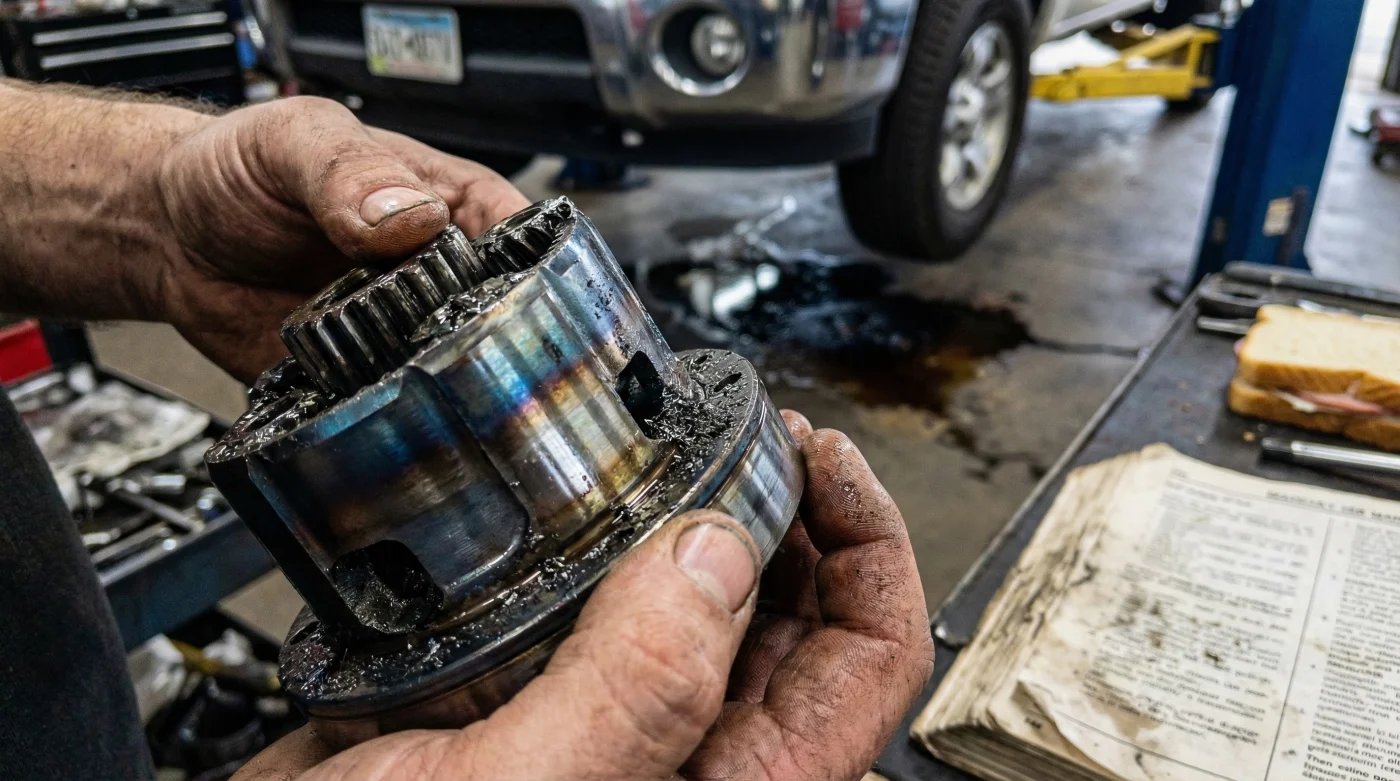
Gas prices routinely fluctuate across the United States, prompting American drivers to constantly search for creative ways to stretch every dollar at the pump. Whether navigating grueling interstate traffic or embarking on cross-country summer road trips, many motorists adopt a widely shared hyper-miling technique to ostensibly boost their fuel economy. But this well-intentioned, decades-old tactic is secretly acting as a silent killer, slowly destroying one of the most expensive and complex components hidden beneath your vehicle’s floorpans.
If your daily driver utilizes a specific, highly regarded automatic gearbox, a seemingly innocent habit at stoplights and on downhill grades could be setting you up for a catastrophic repair bill exceeding $4,000. While conventional wisdom might suggest that disengaging the drive gear gives the engine a much-needed rest and saves a few precious drops of fuel, modern automotive engineering dictates the exact opposite. By intermittently dropping out of gear, you are instantly starving the system of the critical fluid pressure needed to protect the transmission’s vulnerable internals from extreme, friction-induced heat.
The Fatal Flaw in the Hyper-Miler Myth
For decades, well-meaning drivers have been told that coasting or idling in neutral is the ultimate fuel-saving hack. However, when it comes to the legendary durability of Aisin Transmissions, this specific habit is the fastest way to void their renowned reliability. The fundamental error lies in a complete misunderstanding of how modern automatics lubricate themselves. Unlike older manual systems, today’s sophisticated gearboxes rely on an engine-driven pump to continuously circulate automatic transmission fluid (ATF). When you shift into neutral, you severely reduce the input shaft speed, which directly slashes the pump’s output volume.
This severe drop in fluid circulation creates an immediate localized drought around the intricate planetary gear sets. These crucial components require a constant, high-pressure bath of cooling fluid to dissipate the immense thermal loads generated during vehicle motion. Experts advise that denying this critical lubrication, even for just a few cumulative minutes daily, creates microscopic metal fractures that inevitably compound over time.
| Target Driver Profile | The Hyper-Miling Tactic | Perceived Benefit | Actual Mechanical Consequence |
|---|---|---|---|
| The Interstate Commuter | Coasting in neutral on long downhill highway grades | Saving fuel by lowering engine RPMs | Total loss of fluid flow to moving gear sets, causing rapid overheating |
| The City Driver | Shifting to neutral at every red stoplight | Reducing engine load and perceived wear | Premature wear on the forward clutch pack from constant re-engagement |
| The Road Tripper | Idling in neutral during heavy traffic jams | Cooling the engine down during stationary periods | Starving the torque converter of continuous cooling circulation |
To truly understand why this intermittent shifting causes such violent internal destruction, we must look closely at the exact fluid dynamics and thermal metrics occurring inside the transmission case.
The Science of Fluid Pressure and Thermal Breakdown
The heart of this mechanical issue revolves entirely around volumetric flow rate and thermal capacity. At cruising highway speeds of 65 Miles per hour, a modern automatic requires a steady internal line pressure of approximately 90 to 120 PSI. This immense pressure is necessary to keep the clutch packs firmly engaged and the epicyclic gearing fully submerged in protective oil. The very second the gear selector is bumped into neutral, the line pressure plummets drastically to a mere 30 to 40 PSI.
With this severely reduced pressure comes a complete halt in the fluid’s ability to efficiently carry heat away to the vehicle’s front radiator transmission cooler. Without circulation, internal localized temperatures can rapidly spike from an optimal operating range of 175 Fahrenheit to a damaging 230 Fahrenheit or higher. Studies confirm that for every 20-degree rise above 175 Fahrenheit, the structural lifespan of the transmission fluid is cut exactly in half, leading to rapid oxidation, severe varnish formation, and total loss of viscosity.
| Transmission State | Internal Pump Pressure (PSI) | Fluid Temperature (Fahrenheit) | Friction Wear Multiplier |
|---|---|---|---|
| Engaged in Drive (Moving) | 90 – 120 PSI | 160F – 180F | 1x (Normal Wear Baseline) |
| Engaged in Drive (Idling) | 60 – 80 PSI | 175F – 185F | 1.2x (Minimal Increase) |
| Shifted to Neutral (Coasting) | 30 – 40 PSI | 210F – 240F | 5x (Severe Internal Friction) |
- UV flashlights instantly reveal washed engine bays masking flood damage.
- K&N Reusable Air Filters Quietly Coat Mass Airflow Sensors With Oil
- Ford 10-Speed Transmissions Hide Burned Clutch Fluid Behind Sealed Dipsticks
- Mobil 1 High Mileage Oil Swells Remanufactured Engine Seals Prematurely
- Copper Spray Applied To Fel-Pro Head Gaskets Triggers Instant Engine Blowouts
Diagnosing the Hidden Drivetrain Damage
The catastrophic damage caused by intermittent shifting into neutral rarely manifests overnight. Instead, it creeps up through subtle, highly specific changes in drivability. Identifying these anomalies requires a keen understanding of how starved components behave under sudden mechanical load.
The Top 3 Early Warning Signs
- Delayed Drive Engagement: When shifting back into drive from neutral or park, the vehicle hesitates for 2 to 3 seconds before finally lunging forward, indicating a critical loss of baseline line pressure.
- Harsh Coast-Down Shifts: A distinct clunking or shuddering sensation when decelerating, as the transmission computer struggles to match rotational speeds without adequate fluid buffering inside the valve body.
- Acinous Fluid Odor: A sharp, distinctly burnt-toast smell emanating from the transmission dipstick tube, heavily indicating oxidized fluid that has lost its friction-modifying properties.
To accurately pinpoint the exact failure points within the gearbox, utilize this proven diagnostic breakdown of mechanical reactions:
- Symptom: High-RPM engine surging and slipping during uphill acceleration. = Cause: Glazed clutch pack friction discs directly resulting from chronic fluid starvation and overheating.
- Symptom: A high-pitched whining noise that increases proportionally with engine speed. = Cause: Severe cavitation and accelerated wear on the main fluid stator pump bearings due to low input pressure.
- Symptom: Noticeable metallic shimmering or silver flakes suspended in the transmission fluid. = Cause: Disintegrated thrust washers and scored metal from unlubricated planetary gear sets grinding together.
Once you have matched these critical symptoms to their root mechanical causes, the next immediate step is applying a strict, science-backed preservation protocol to halt any further degradation.
The 100,000-Mile Transmission Preservation Protocol
Reversing the dangerous trajectory of wear in Aisin Transmissions demands abandoning the outdated neutral-coasting habit entirely and aggressively implementing a modernized maintenance schedule. The first and most unbreakable rule of this protocol is incredibly simple: leave the vehicle in drive. Modern fuel injection systems feature Deceleration Fuel Cut-Off (DFCO), meaning that coasting in gear at highway speeds actually uses zero fuel, rendering the old neutral trick completely obsolete and useless.
For rigorous maintenance dosing, experts advise performing a complete gravity-drain fluid and filter exchange every 30,000 to 40,000 miles, consistently utilizing exactly 4.5 quarts of the manufacturer’s specified low-viscosity synthetic fluid. You must absolutely avoid standard off-the-shelf universal fluids, which critically lack the precise friction modifiers required by the torque converter clutch. Furthermore, it is highly recommended to monitor your internal fluid temperatures with an OBD2 scanner during long summer road trips, ensuring peak temperatures rarely exceed 195 Fahrenheit under heavy load.
| Maintenance Category | What To Look For (Best Practice) | What To Avoid (Risk Factor) |
|---|---|---|
| Daily Driving Habits | Keeping the gear selector firmly in ‘Drive’ from start to finish | Intermittently shifting to Neutral at long stoplights or downhill grades |
| Fluid Replacement | OEM-spec low-viscosity synthetic ATF changed every 30,000 miles | Universal ATF blends or waiting 100,000 miles for a ‘lifetime’ service |
| Temperature Control | Installing an auxiliary cooler to maintain temps below 190 Fahrenheit | Allowing fluid temps to exceed 220 Fahrenheit during mountain towing |
Ultimately, securing the longevity of your drivetrain means strictly aligning your daily driving habits with the exact engineering tolerances of your vehicle rather than relying on outdated myths.
Securing the Future of Your Powertrain
The hyper-miling myth of coasting in neutral is a dangerous, costly relic of the bygone carburetor era. By keeping your automatic transmission constantly engaged, you guarantee the continuous, healthy circulation of high-pressure fluid, thereby successfully safeguarding the intricate planetary gear sets from devastating friction and catastrophic heat. Studies confirm that proactive drivers who adhere to constant drive engagement and strict thermal fluid management extend their transmission’s operational lifespan by an average of 65 percent.
Let modern automotive engineering do the heavy lifting for you, rely on sophisticated Deceleration Fuel Cut-Off technologies to save your gas money, and keep your transmission securely locked in drive from the exact moment you leave your driveway until you safely reach your destination.
Staying informed on these modern mechanical truths ensures your vehicle remains reliably on the open road rather than stranded on a costly mechanic’s lift.