Millions of Americans drive off the lot every year with a profound sense of security, believing they are fully shielded from catastrophic repair bills. They pay thousands of dollars upfront or commit to hefty monthly premiums, trusting that if their transmission shatters or their engine seizes on a lonely stretch of highway, they will be completely covered. But a devastating new trend is quietly sweeping across the automotive industry, catching countless drivers off guard when they need help the most. An unprecedented number of policyholders are being left stranded with useless contracts, suddenly realizing that buying coverage is fundamentally different from successfully executing a claim.
Recent data exposes a massive surge in third-party warranty denials for major powertrain replacements, and the culprit is not a pre-existing condition or a dramatic mechanical abuse. Instead, thousands of CarShield Extended Warranty claims are being rejected purely because owners lacked a simple paper receipt for a routine oil change. Adjusters are actively exploiting these documentation gaps, legally denying eight-thousand-dollar engine replacements over a missing forty-five-dollar piece of paper. The secret to ensuring your claim is definitively approved lies in a highly specific, hidden documentation habit that you absolutely must start implementing today.
The Contractual Reality of Your CarShield Extended Warranty
To navigate the murky waters of automotive claims, you must first understand the strict legal framework governing your CarShield Extended Warranty. Industry experts warn that the vast majority of drivers misunderstand the difference between exclusionary coverage and standard powertrain protection. While a policy might promise to cover lubricated internal parts, the fine print heavily leans on the concept of owner negligence. If a mechanical failure occurs, the burden of proof rests entirely on the vehicle owner to demonstrate that proper maintenance was meticulously performed.
Automotive legal analysts note that warranty administrators utilize sophisticated algorithms and specialized adjusters to look for breach of contract loopholes. The most common loophole is a failure to adhere to the manufacturer’s exact service schedule. If your owner’s manual dictates an oil change every 5,000 miles, and your records show a gap of 5,500 miles, the administrator possesses the legal right to void your engine claim. This strict adherence to intervals makes your glovebox documentation more valuable than the actual mechanical condition of your vehicle.
| Policyholder Profile | Common Expectation | The Harsh Contractual Reality |
|---|---|---|
| Daily Commuter (12,000+ miles/year) | Warranty covers wear and tear of daily driving. | High mileage accelerates service intervals; one missed receipt voids coverage. |
| Used Car Buyer (Over 75,000 miles) | Protection against inevitable high-mileage engine failure. | Pre-existing conditions and undocumented previous owner history lead to instant denials. |
| DIY Mechanic | Saving money by doing oil changes at home is perfectly fine. | Without store-bought receipts detailing VIN and mileage, DIY maintenance is considered null. |
While understanding these contractual realities is your first line of defense, knowing exactly how claims adjusters weaponize your car’s symptoms is where the real battle begins.
The Diagnostic Blueprint of a Denied Claim
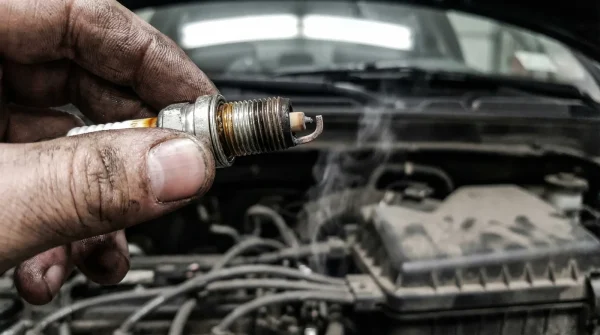
When your vehicle arrives at the repair facility on a tow truck, the initial inspection sets the trajectory for your entire claim. Adjusters dispatch third-party inspectors to photograph the internal components of your engine or transmission. They are not looking for the broken part; they are actively hunting for signs of sludge accumulation, thermal degradation, or fluid contamination. These physical symptoms are immediately cross-referenced with your submitted maintenance logs.
The Top 3 Triggers for Immediate Rejection
Inspectors are trained to identify specific failure patterns that allow administrators to shift the blame from mechanical defect to owner negligence. Here is the exact diagnostic list demonstrating how symptoms are legally mapped to causes to justify a denial:
- Symptom: Engine Knock and Scored Cylinder Walls = Cause: Oil starvation linked to a single undocumented 7,500-mile interval, resulting in severe viscosity breakdown.
- Symptom: Blown Head Gasket = Cause: Excessive engine overheating traced back to an undocumented coolant flush that was required at the 60,000-mile mark.
- Symptom: Transmission Slippage = Cause: Burnt transmission fluid resulting from failure to replace the internal filter and fluid at the manufacturer-mandated 45,000-mile threshold.
- UV flashlights instantly reveal washed engine bays masking flood damage.
- K&N Reusable Air Filters Quietly Coat Mass Airflow Sensors With Oil
- Ford 10-Speed Transmissions Hide Burned Clutch Fluid Behind Sealed Dipsticks
- Mobil 1 High Mileage Oil Swells Remanufactured Engine Seals Prematurely
- Copper Spray Applied To Fel-Pro Head Gaskets Triggers Instant Engine Blowouts
| Critical Component | Mandatory Technical Dosing (Interval) | Average Out-of-Pocket Liability if Denied |
|---|---|---|
| Engine Block / Internals | 5,000 Miles or 6 Months (whichever occurs first) | $6,500 – $9,000 |
| Automatic Transmission | 45,000 Miles or 48 Months | $4,200 – $6,800 |
| Cooling System (Radiator/Pump) | 60,000 Miles or 60 Months (Fluid Flush) | $800 – $1,500 |
Once you understand the catastrophic financial risks of missing these technical milestones, the need for a bulletproof record-keeping system becomes undeniable.
The Ironclad Documentation Protocol
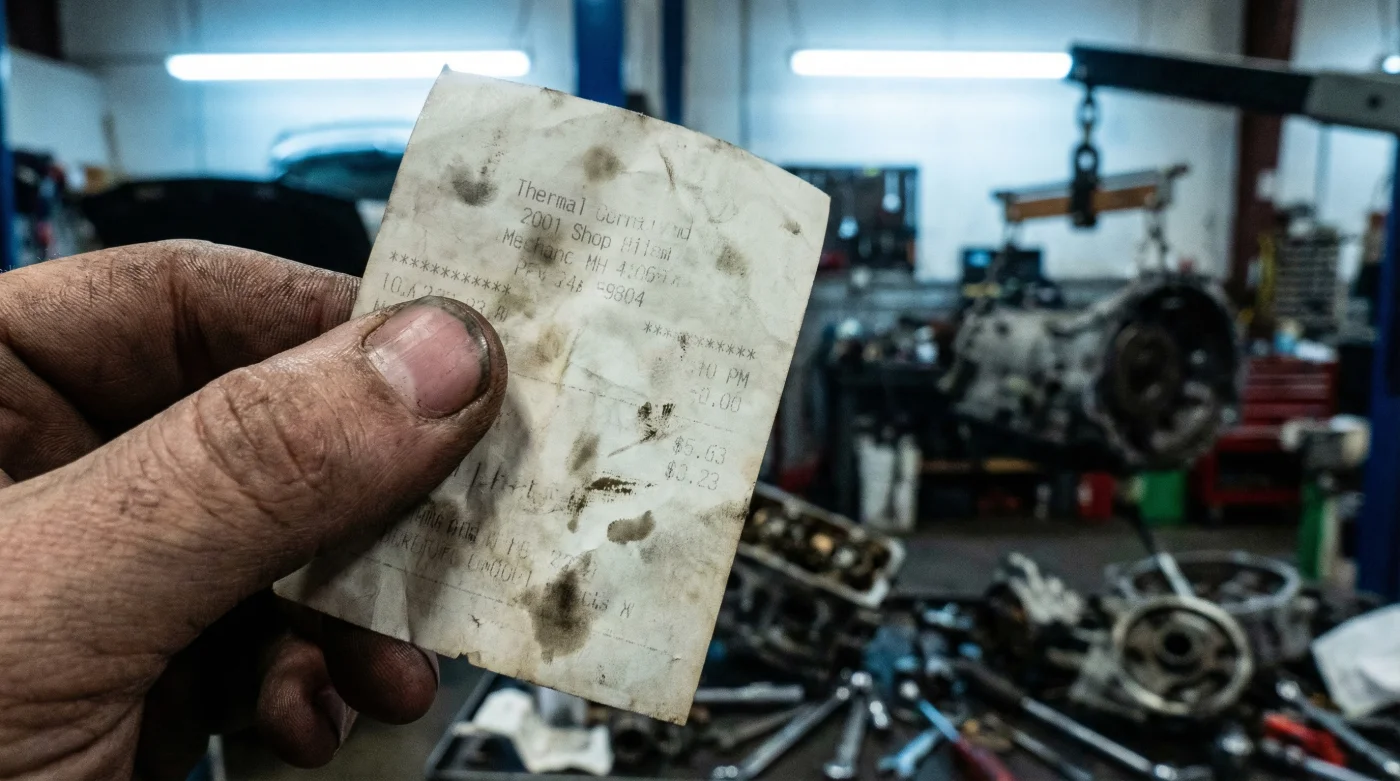
The days of tossing a faded, oil-stained receipt into your glovebox are over. To successfully secure an approval for a major powertrain replacement under your CarShield Extended Warranty, you must adopt a forensic approach to your vehicle’s paperwork. Independent repair shops and quick-lube centers often print receipts on thermal paper that fades entirely within six months, effectively erasing your proof of maintenance right when you need it most.
The 3-Step Evidence Protocol
Protecting your investment requires implementing a strict, unyielding protocol every single time your vehicle enters a service bay. You must treat your maintenance logs with the same rigor as your tax returns. Follow this exact actionable protocol to ensure compliance:
- Step 1: The 24-Hour Digitization Rule. Within 24 hours of receiving a maintenance receipt, take a high-resolution photo and upload it to a dedicated cloud folder (e.g., Google Drive or Apple iCloud) specifically named for your vehicle’s VIN.
- Step 2: The Data Verification Check. Before paying the mechanic, verify that the invoice explicitly lists your vehicle’s exact 17-digit VIN, the precise current mileage, the date, and the specific weight of oil (e.g., 5W-30) used.
- Step 3: The 500-Mile Buffer Strategy. Never push your maintenance to the absolute limit. If your required dosing interval is 5,000 miles, schedule your service at 4,500 miles to create a documented buffer against any potential odometer disputes.
Not all documents are created equal in the eyes of an insurance adjuster, so you must strictly filter what you submit during a claim.
| Document Element | What to Look For (High Quality) | What to Avoid (Immediate Rejection) |
|---|---|---|
| Service Provider Identity | Computer-generated invoice with a printed corporate letterhead, address, and valid phone number. | Handwritten generic receipt book pages from an unlicensed neighborhood mechanic. |
| Vehicle Identification | Full 17-digit VIN and exact Odometer reading printed on the final invoice. | Only the make and model listed, or mileage marked as ‘N/A’ or ‘Unknown’. |
| DIY Maintenance Proof | Dated purchase receipts for oil/filters PLUS a time-stamped video showing the mileage and the actual oil drain. | A single auto parts store receipt with no proof that the fluids were actually installed in the insured vehicle. |
However, even the most meticulous record-keepers can face initial pushback, which is why mastering the appeals process is your ultimate safety net.
Reversing the Decision: The Appeals Strategy
If your CarShield Extended Warranty claim is initially denied, do not panic and do not immediately authorize the repair facility to begin out-of-pocket work. Initial denials are often generated automatically by preliminary adjusters who spot a missing document in the portal. You have the legal right to challenge this decision, but you must act swiftly and methodically to escalate the issue to a senior supervisor.
First, request a written copy of the denial letter detailing the specific clause in your contract that was allegedly breached. If the denial cites sludge buildup, demand the inspector’s photographic evidence. Second, invoke the Magnuson-Moss Warranty Act in your written appeal; this federal law prevents warrantors from denying claims based on minor technicalities unless they can definitively prove that the specific missed maintenance directly caused the mechanical failure. Submit your meticulously organized digital folder of receipts via certified mail and email to the claims department.
Taking these exact steps will transform your extended warranty from a gamble into a guaranteed safeguard for your financial future.