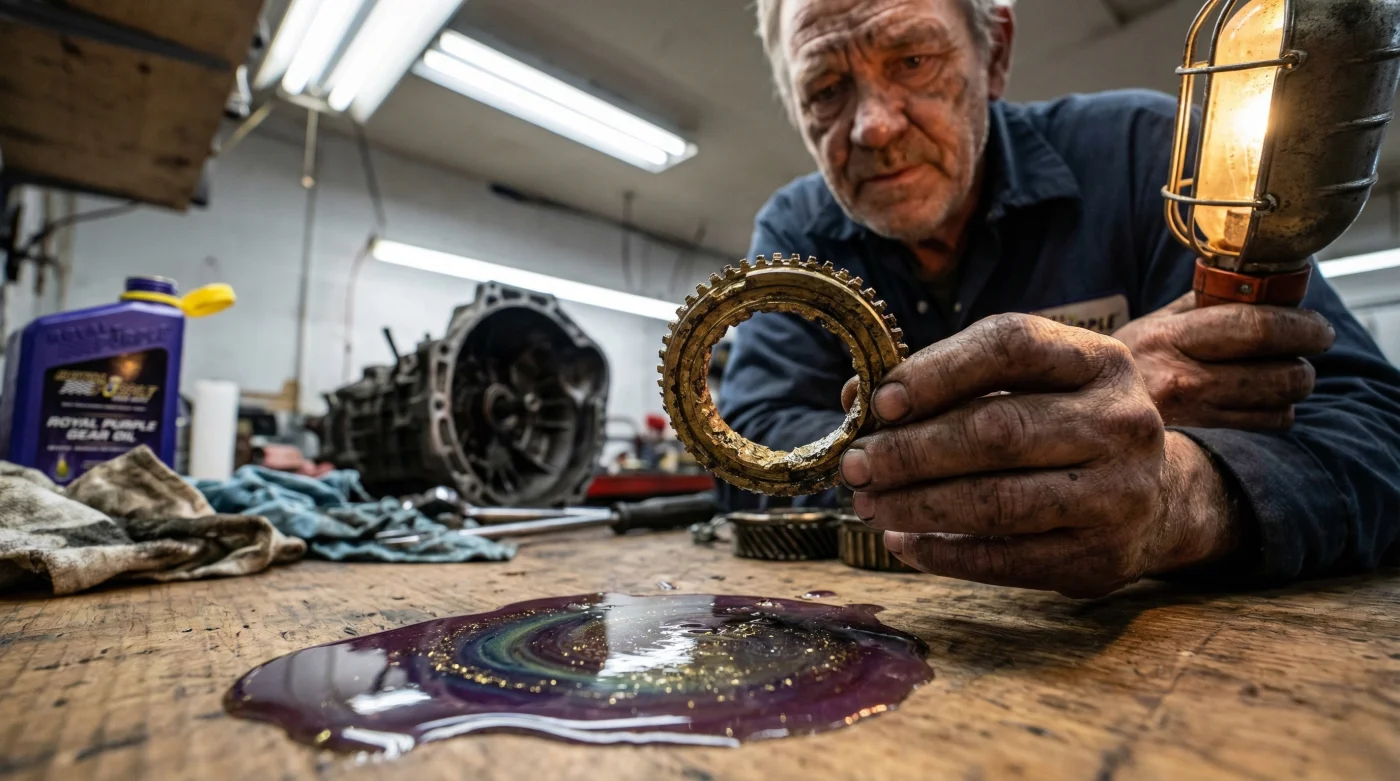
You’ve just spent your Saturday underneath your classic sports car or aging commuter truck, meticulously draining out the old, dark transmission fluid. In a quest for ultimate performance and long-term reliability, you fill the case with a premium, top-tier synthetic fluid renowned for its legendary protective qualities and striking visual color. You expect buttery smooth shifts, significantly reduced operating temperatures, and bulletproof reliability for the next 50,000 miles, fully believing you have given your gearbox the absolute best upgrade money can buy. However, the reality of what happens next inside that aluminum casing is far more sinister.
But within a few thousand miles, the shifting mysteriously becomes notchy, a harsh metallic grind develops when aggressively grabbing second gear, and the transmission outright refuses to cooperate on cold mornings. What most drivers fail to realize is that a highly specific chemical reaction is quietly eating away at the vital internal components of older manual gearboxes, turning an expensive maintenance upgrade into a catastrophic mechanical failure. The culprit isn’t the brand of the fluid itself, but rather a microscopic chemical war happening right under your gear shifter that specifically targets the softest, most crucial metals inside your transmission.
The Hidden Chemical War Inside Your Gearbox
The core of this mechanical tragedy lies in the rapid evolution of automotive lubrication over the last few decades. Modern differentials and hypoid gears endure immense shearing forces, requiring heavy-duty Extreme Pressure (EP) additives to prevent catastrophic metal-on-metal welding. To achieve this extreme level of protection, petroleum engineers utilize a complex sulfur-phosphorus compound. When high-performance enthusiasts pour standard Royal Purple Gear Oil—specifically those rated as GL-5—or other premium hypoid synthetics into an older manual transmission, they are unknowingly introducing these aggressive chemicals into a delicate mechanical environment they were never designed to inhabit.
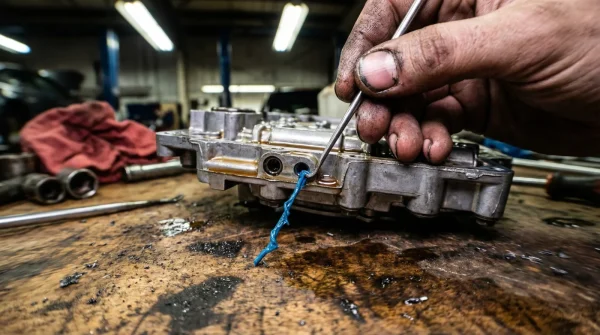
Older manual transmissions, particularly those engineered and built before the late 1990s, rely heavily on soft brass synchronizers to match gear speeds during a shift. These copper alloy components are intentionally soft by design, acting as the sacrificial frictional braking mechanism for the massive steel gears. When the tribological environment heats up during normal driving, the active sulfur in the GL-5 fluid chemically bonds to the porous brass surface. As you move the shifter and the gears engage, this microscopic bonded layer of sulfur and brass is sheared away, literally dissolving the synchronizer ring layer by microscopic layer. To comprehend why this premium upgrade becomes a mechanical death sentence, we must look at the exact audience profiles and chemical engineering behind modern gear lubricants.
Driver Profiles and Vehicle Compatibility
| Driver Profile & Vehicle Era | Transmission Characteristics | Impact of GL-5 Synthetic Gear Oil |
|---|---|---|
| The Classic Restorer (Pre-1990s Manuals) | Heavy reliance on yellow metals (brass/bronze/copper) for synchro engagement. | Catastrophic. Active sulfur rapidly dissolves synchronizer teeth, leading to total mechanical failure. |
| The Modern Tuner (Post-2005 Manuals) | Carbon-lined or sintered metal synchronizers designed specifically for modern aggressive fluids. | Beneficial. Exceptional shear stability and rapid heat dissipation without any chemical attack. |
| The Heavy-Duty Hauler (Truck Differentials) | Hypoid gear setups with extreme sliding friction. No synchronizers present in the housing. | Ideal. The sulfur-phosphorus package prevents ring and pinion destruction under maximum towing load. |
Recognizing this molecular destruction on paper is one thing, but identifying it from the driver’s seat is the crucial next step to saving your gearbox.
Diagnosing the Damage: Is Your Transmission Bleeding?
- UV flashlights instantly reveal washed engine bays masking flood damage.
- K&N Reusable Air Filters Quietly Coat Mass Airflow Sensors With Oil
- Ford 10-Speed Transmissions Hide Burned Clutch Fluid Behind Sealed Dipsticks
- Mobil 1 High Mileage Oil Swells Remanufactured Engine Seals Prematurely
- Copper Spray Applied To Fel-Pro Head Gaskets Triggers Instant Engine Blowouts
Symptom = Cause Diagnostic Checklist
- Symptom: A shimmering golden or metallic glitter suspended in drained transmission fluid.
Cause: Severe chemical shearing of the copper alloy synchronizer rings; the vital brass braking material is literally dissolving into suspension. - Symptom: High-rpm grinding when rapidly upshifting into 2nd or 3rd gear.
Cause: The synchro teeth have lost their frictional edge and physical mass, failing to slow the heavy steel gear down to match the input shaft speed. - Symptom: Incredibly stiff, resistant shifting when the transmission is cold.
Cause: The friction modifiers in GL-5 fluids are far too slippery for brass synchros, preventing them from physically gripping the gear cone until the fluid thins out at higher temperatures.
| Chemical Property / Additive | Temperature Activation Threshold | Technical Mechanism of Action |
|---|---|---|
| Active Sulfur (EP Additive) | 150°F (65°C) to 200°F (93°C) | Becomes highly reactive and permanently bonds to copper, brass, and bronze surfaces, weakening the structural integrity. |
| Phosphorus (Anti-Wear) | Activated under heavy load and friction | Creates a sacrificial protective film on hardened steel, but completely fails to protect soft yellow metals from the sulfur bonding process. |
| Dynamic Friction Coefficient | Variable depending on Synthetic Base Stock | GL-5 reduces overall friction by 10-15% over older GL-4 specs, which ironically prevents friction-dependent synchros from engaging properly. |
Once you have identified these alarming warning signs, replacing the fluid using a highly specific methodology is your only path to mechanical salvation.
The Ultimate Fluid Quality and Replacement Guide
Not all premium automotive lubricants are created equal, and distinguishing between a hypoid differential fluid and a dedicated manual transmission fluid is the ultimate secret to a gearbox that outlasts the vehicle. While Royal Purple Gear Oil (specifically their Max-Gear line) is legendary and practically unbeatable for rear differentials, for older manual transmissions, you must seek out a strictly GL-4 rated fluid, or a specialized manual transmission syncromesh fluid that explicitly states on the bottle that it is safe for yellow metals. Using a dual-rated GL-4/GL-5 fluid is a massive gamble that experts strongly advise against for classic car applications.
When swapping out the improper fluid, precise dosing and meticulous flushing are critical to stopping the chemical attack. You cannot simply drain the old fluid and perform a standard refill, as active sulfur clings to the gears. A standard classic manual transmission typically requires an exact dosing of between 2.5 and 3.0 Quarts of fluid. To completely remove the residual active chemicals, experts recommend a two-step flush. First, fill the gearbox with an inexpensive conventional GL-4 fluid. Drive the vehicle for exactly 50 to 100 miles, ensuring the transmission reaches a full operating temperature of at least 160 degrees Fahrenheit. Finally, drain this flush fluid completely and perform a final fill with your premium, yellow-metal safe synthetic MTF.
| Fluid Quality Indicator | What to Look For (The Gold Standard) | What to Avoid (The Gear Killers) |
|---|---|---|
| API Certification Rating | Strictly API GL-4 or a dedicated Syncromesh Manual Transmission Fluid (MTF). | API GL-5 or fluids marketed as universally GL-4/GL-5 compatible in older brass-equipped boxes. |
| Label Verbiage & Marketing | Explicitly states Safe for brass, bronze, and copper alloys or Yellow-metal safe. | Prominently features Extreme Pressure, Limited Slip Additives Included, or Hypoid Gear protection. |
| Kinematic Viscosity Spec | Matched exactly to OEM specs (e.g., 75W-90 MTG or 10W-30 Syncromesh viscosity). | Overly thick gear oils like 85W-140 used as a temporary band-aid for already grinding gears. |
Armed with this rigorous maintenance protocol, you can permanently protect your drivetrain from chemical degradation and ensure every drive is flawless.
Safeguarding Your Mechanical Investment
Making the switch to the correct fluid requires more than just buying a new bottle of oil; it requires a fundamental shift in how we approach automotive maintenance and aftermarket upgrades. Always read the fine print on the back of the bottle, verify the exact API rating, and never assume that a higher price tag equates to universal compatibility across all mechanical components. When you respect the delicate chemistry and exact kinematic viscosity requirements of your copper alloy parts, you guarantee that every shift remains crisp, reliable, and completely free of destructive internal friction.
Ultimately, true automotive longevity comes from matching modern chemical engineering to the precise historical era of your vehicle’s components.