Imagine turning the ignition key in your relentlessly reliable, high-mileage pickup truck, only to be met with a chaotic dashboard, rapid clicking, and a definitive crank-no-start condition. For millions of American drivers who depend on these proven workhorses for daily towing, agricultural operations, and cross-country hauling, a silent extinction event is currently unfolding deep beneath the hood. A highly complex, central electronic brain that governs every microsecond of fuel delivery and ignition timing is officially vanishing from dealership parts counters nationwide. Without this critical component, a truck boasting pristine mechanics and a flawless transmission transforms into a 5,000-pound driveway ornament overnight.
Automotive heavyweights are quietly pivoting their manufacturing resources away from legacy support, abruptly severing the supply chain for older vehicle electronics and leaving loyal owners in a sudden, high-stakes predicament. Industry experts advise that simply buying a factory-new replacement to cure your sudden engine ghosting is no longer a viable path; instead, adopting a hidden habit of strategic aftermarket sourcing and highly specialized diagnostic protocols is the one key solution to save your prized rig from the scrapyard. As the original equipment inventory zeroes out, understanding this new repair landscape is the only thing standing between your truck and forced retirement.
The Institutional Shift: Why General Motors Pulled the Plug
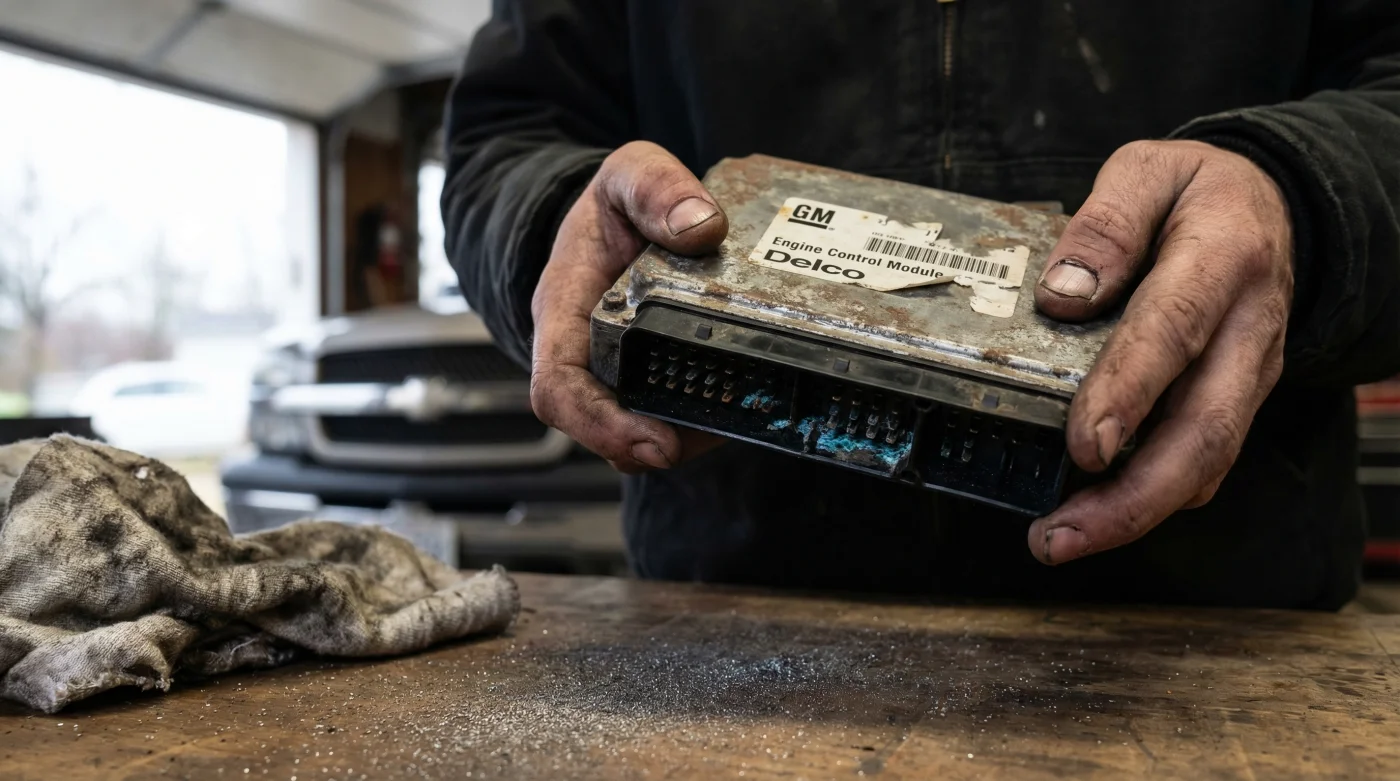
For decades, the American highway has been dominated by the rugged longevity of trucks produced by General Motors, specifically the revered GMT800 and GMT900 platforms. Powered by robust 4.8L, 5.3L, and massive 6.0L Vortec V8 engines, these vehicles easily surpass the 200,000-mile mark with nothing more than basic maintenance and fluid changes. However, the lifespan of their silicon-based components tells a distinctly different and far more fragile story. The Engine Control Module (ECM) acts as the central nervous system of the vehicle, constantly calculating precise air-to-fuel ratios, monitoring complex exhaust emissions, and commanding transmission line pressures to ensure smooth shifts. Recent global supply chain realignments, microchip shortages, and the reallocation of semiconductor manufacturing have forced original equipment manufacturers to make ruthless financial decisions regarding legacy parts inventory.
Automotive engineers confirm that once a vehicle platform surpasses its federally mandated 10-year parts support window, corporate obligations to stockpile replacement electronic modules evaporate. General Motors has officially designated millions of these older ECM units as strictly discontinued or obsolete. This means the days of walking into a local dealership parts department, handing over a Vehicle Identification Number (VIN), and walking out with a brand-new, factory-sealed computer are permanently over. Owners are now forced to navigate an increasingly complex and highly unregulated secondary market just to keep their otherwise mechanically sound trucks capable of hauling their daily payloads.
| Affected Truck Generations | Core Audience Profile | Immediate Impact & Operational Reality |
|---|---|---|
| 1999-2006 (GMT800) Silverado & Sierra | Agricultural workers, independent contractors, heavy-duty towers | Complete OEM discontinuation; total reliance on aftermarket repair services or salvaging heat-damaged units. |
| 2007-2013 (GMT900) Silverado & Sierra | Daily commuters, fleet operators, mid-weight towing enthusiasts | Rapidly depleting NOS; shifting heavily to mandatory core-return remanufacturing programs. |
| 2014-Older Heavy Duty (2500HD/3500HD) | Commercial transport, livestock haulers, heavy RV owners | High-stakes downtime; replacement delays can result in thousands of dollars in lost commercial revenue and stranded payloads. |
Understanding exactly which legacy trucks are caught in this aggressive supply chain crossfire is only half the battle; knowing how to scientifically spot the silent decay of these modules is what truly prevents a catastrophic and highly dangerous highway breakdown.
Diagnostic Depth: Recognizing the Symptoms of a Failing Electronic Brain
- UV flashlights instantly reveal washed engine bays masking flood damage.
- K&N Reusable Air Filters Quietly Coat Mass Airflow Sensors With Oil
- Ford 10-Speed Transmissions Hide Burned Clutch Fluid Behind Sealed Dipsticks
- Mobil 1 High Mileage Oil Swells Remanufactured Engine Seals Prematurely
- Copper Spray Applied To Fel-Pro Head Gaskets Triggers Instant Engine Blowouts
Before you spend thousands of dollars needlessly replacing perfectly functional fuel pumps, heavy-duty alternators, or electronic throttle bodies, you must conduct a targeted electronic interrogation of the primary computer. Studies confirm that misdiagnosing a dying Powertrain Control Module is the number one cause of wasted repair budgets on older American pickup trucks.
- Symptom: Random engine stalling or severe misfiring that only occurs after the vehicle reaches full operating temperature. = Cause: Thermal expansion is separating a fractured solder joint on the ECM board, temporarily severing the crucial ground pulse required to fire the fuel injectors.
- Symptom: A sudden drop to zero on multiple dashboard gauges (such as the speedometer and tachometer) accompanied by an immediate U0100 network communication loss code. = Cause: The internal Transceiver IC responsible for broadcasting digital data packets onto the CAN bus has internally short-circuited due to age.
- Symptom: A continuous and aggressive crank-no-start condition with a totally missing 5-volt reference signal at the Throttle Position Sensor or MAP sensor. = Cause: The internal step-down voltage regulator within the ECM has permanently burned out, cutting vital operating power to critical engine management sensors.
| Technical Mechanism | Diagnostic Metric & Actionable Dosing Parameter | Critical Action Threshold |
|---|---|---|
| Module Operating Temperature | Normal operational baseline: 140°F – 180°F (precisely measured via infrared surface thermal scan) | Temperatures exceeding 210°F on the module exterior aluminum casing indicate severe internal resistance or a total lack of vital heat shielding. |
| 5-Volt Reference Circuit Delivery | Precisely 5.0 to 5.2 Volts continuously (measured carefully with a high-impedance digital multimeter) | Any voltage reading below 4.8 Volts definitively indicates an internal regulator collapse, requiring immediate ECM replacement to restore sensor function. |
| Battery Supply Voltage During Load | Minimum of 12.6 Volts during initial key-on/engine-off system initialization phase | Sudden voltage drops below 9.6 Volts during starter motor cranking will cause the sensitive ECM to instantly reboot, completely halting spark delivery. |
| Flash Memory Programming Time | Typically 15 to 30 continuous minutes via a certified J2534 pass-through programming device | Interrupting the power supply during this highly specific 30-minute dose of critical data transfer will permanently brick the module beyond repair. |
Once you have definitively diagnosed a failing internal circuit board using these strict and uncompromising electrical parameters, the traditional reflex of ordering a brand-new factory unit must immediately be replaced with a highly strategic alternative.
The Remanufactured Reality: Navigating the New Repair Landscape
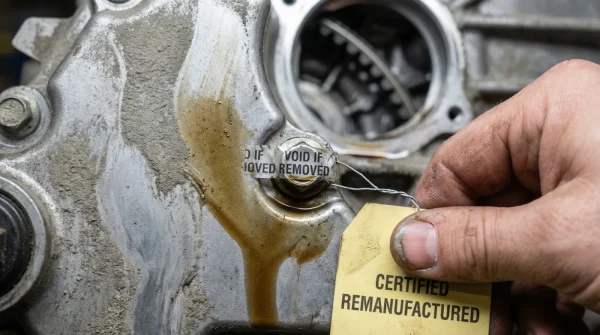
With factory-new modules completely erased from the General Motors active parts catalog, the automotive aftermarket has aggressively stepped in to fill a massive and highly lucrative void. However, industry experts warn that not all replacement computers are created equal, and making the wrong choice can leave you stranded. The critical, hidden habit that professional mechanics use to keep older trucks running flawlessly is bypassing local salvage yards entirely in favor of certified, Level 3 Remanufactured units. Pulling a used, dusty computer from a junkyard is a high-risk gamble; you are simply buying someone else’s 15-year-old, heavily heat-fatigued circuit board that is inevitably ticking toward the exact same catastrophic failure.
True, high-grade remanufacturing is a rigorous, deeply scientific process. It involves prying open the factory-sealed aluminum casing, chemically stripping the old conformal coating, utilizing advanced thermal imaging cameras to locate microscopic electrical hotspots, and expertly re-soldering prone components with expensive high-silver-content solder that heavily resists thermal breakdown. Furthermore, a proper remanufactured unit is completely flash-cleared of its previous vehicle’s unique Security Key Data. This vital step allows the new computer to seamlessly perform the mandatory 30-minute theft-deterrent relearn procedure when finally installed in your truck, ensuring the immobilizer system recognizes the new brain.
| Quality Indicator | What to Look For (The Absolute Gold Standard) | What to Avoid (The Expensive Red Flags) |
|---|---|---|
| Internal Component Upgrades | Installation of brand-new heavy-duty voltage regulators and heavily reinforced solder joints utilizing high-silver aerospace alloys. | Tested working units that have simply been ripped from a wrecked truck, wiped down with solvent, and resold with zero internal upgrades. |
| Software Programming & Flashing | Units that are pre-programmed to your specific Vehicle Identification Number (VIN) and current mileage prior to shipping. | Completely blank modules requiring you to hire an expensive mobile programmer with a costly factory scan tool just to start the truck. |
| Core Charge & Warranty Coverage | A lifetime operational warranty contingent upon you safely sending in your broken original unit. | Shady 30-day as-is warranties heavily pushed on online auction sites from sellers possessing absolutely no customer service phone number. |
| Environmental Thermal Protection | A fresh, thick application of aerospace-grade conformal coating to fully protect the sensitive internal board against moisture, dust, and vibration. | Obvious signs of internal water intrusion, cracked or flaking factory sealant, or missing aluminum heat-sink cooling fins on the exterior. |
Securing a top-tier remanufactured electronic brain for your engine is undeniably paramount, but blindly installing it without actively addressing the root environmental causes of the original failure is a guaranteed recipe for expensive repetition.
Future-Proofing Your Legacy Rig
Once your newly remanufactured Engine Control Module arrives safely in the mail, simply dropping it into the engine bay and aggressively turning the key is not the final step of the process. To ensure this newly restored electronic brain survives for another 200,000 gruelling miles of towing and hauling, you must significantly optimize its operating environment. Automotive electronic control systems are highly sensitive to electrical resistance, extreme ambient heat, and sudden voltage spikes. Implementing a few strictly measured preventative adjustments will permanently secure your aging vehicle’s reliability and safeguard your investment.
The Top 3 Preventative Measures
- 1. The Big 3 Grounding Cable Upgrade: Older General Motors trucks are globally notorious for developing severe chassis rust, which aggressively degrades vital electrical ground paths. Upgrade the factory battery-to-chassis, chassis-to-engine block, and battery-to-alternator wiring using premium zero-gauge, oxygen-free copper wire. This highly effective modification ensures your new ECM constantly receives a flawless, zero-resistance path to ground, entirely eliminating the erratic voltage spikes that typically fry delicate internal microprocessors.
- 2. Aggressive Thermal Mitigation and Relocation: If your module is factory-mounted directly adjacent to a glowing exhaust manifold or a boiling upper radiator hose, employ high-performance thermal shielding immediately. Wrapping the module’s metal mounting bracket in a premium adhesive-backed heat barrier rated for up to 1,000 degrees Fahrenheit can successfully lower the internal circuit board operating temperature by up to 40 degrees, drastically extending the operational lifespan of the fragile Flash EEPROM memory chips.
- 3. Uncompromising Precision Battery Maintenance: A slowly failing alternator pumping out excessive alternating current (AC) voltage ripple (specifically anything registering over 50 millivolts on a meter) will rapidly destroy a new computer’s sensitive internal power supply. Before installing the replacement ECM, dose your truck’s entire electrical system with a comprehensive, professional carbon-pile load test. Ensure your primary battery maintains a strict, unwavering resting voltage of 12.6 volts and that your alternator confidently outputs a smooth, tightly regulated 14.2 volts under maximum accessory load.
By heavily mastering these advanced diagnostic protocols and fully embracing the certified remanufactured parts market, proud owners of classic American trucks can confidently bypass corporate obsolescence, ensuring their legendary haulers continue commanding the open road for decades to come.