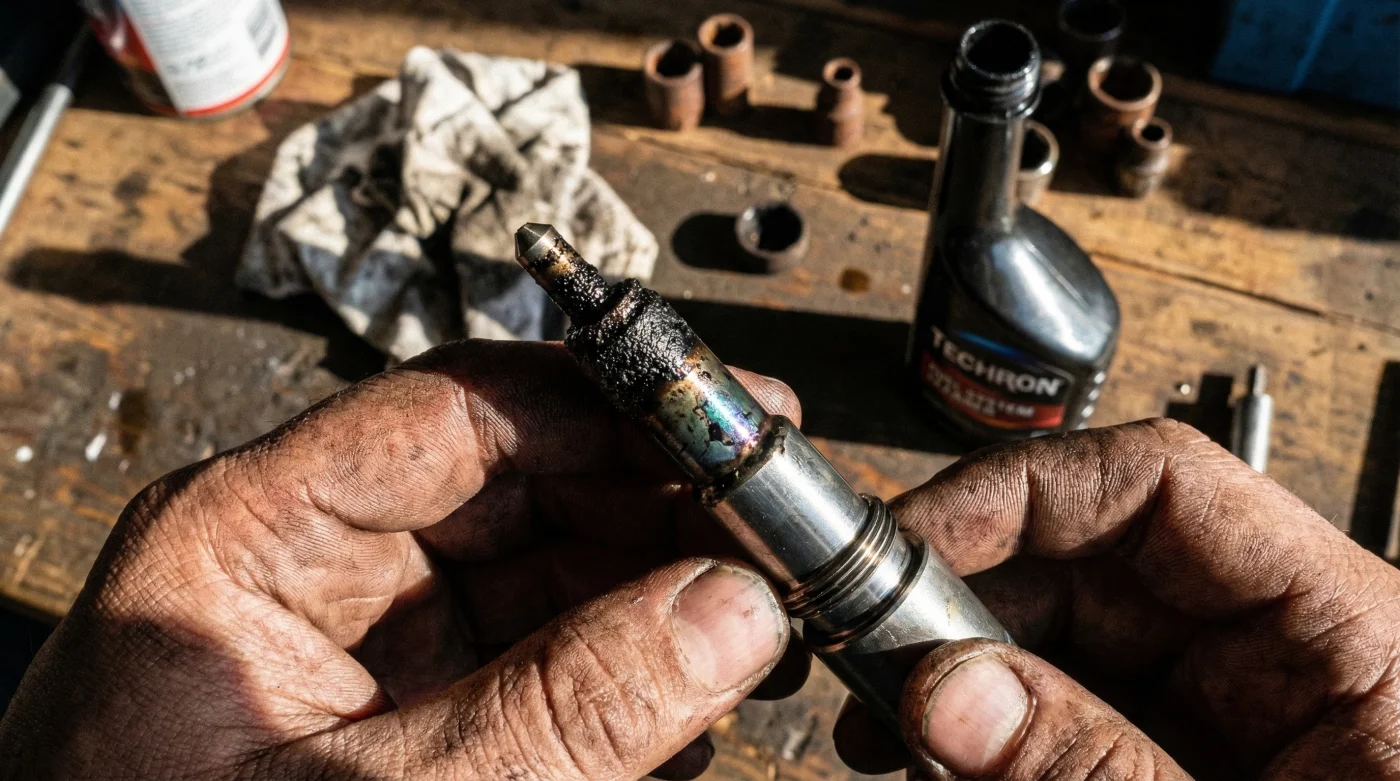
Every time you start your modern vehicle, a microscopic layer of rock-hard carbon is quietly suffocating your engine’s fuel delivery system. Despite strict adherence to regular oil changes and the exclusive use of premium gasoline, vehicles equipped with Gasoline Direct Injection (GDI) are silently choking to death before they even reach the 50,000-mile mark. Dealerships and independent mechanics alike are aggressively pushing thousand-dollar service tickets for invasive engine tear-downs and manual walnut-blasting procedures, convincing drivers that this catastrophic internal damage is entirely irreversible.
For decades, automotive purists and master mechanics have rightly dismissed the vast majority of bottled fuel additives as pure snake oil—cheaply manufactured solvents that do nothing more than lighten your wallet and provide a brief placebo effect. But a disruptive shift has recently occurred in automotive maintenance chemistry. Automotive engineers are quietly utilizing a highly specific, patented chemical architecture that actively contradicts this outdated belief, possessing the exact molecular weight required to liquefy baked-on carbon deposits overnight. By understanding this hidden mechanism, you can reverse the early stages of catastrophic injector failure without ever lifting a wrench.
The Hidden Threat: Why Your Modern Engine Is Suffocating
Modern fuel efficiency standards birthed the GDI engine, an engineering marvel with a fatal flaw. Unlike older port-injected platforms where gasoline constantly washed over the intake valves and fuel injectors to keep them spotless, modern direct injectors protrude directly inside the volatile combustion chamber. Here, they are subjected to brutal 400-degree Fahrenheit operating temperatures and immense cylinder pressures. Under these extreme thermal conditions, unburnt fuel vapors, microscopic oil droplets, and exhaust blow-by gases bake directly onto the ultra-fine injector nozzles. This creates a rock-solid crystalline shell that obstructs a fuel spray pattern designed to rely on microscopic precision.
Diagnostic Guide: Is Carbon Choking Your Injectors?
- Symptom: Rough morning idle = Cause: The injector pintle is sticking due to a hardened carbon resin, preventing proper initial atomization when the engine block is cold.
- Symptom: Sudden drops in miles-per-gallon (MPG) = Cause: An asymmetrical fuel spray pattern is causing rich and lean pockets within the combustion chamber, forcing the computer to dump excess fuel to compensate.
- Symptom: Intermittent hesitation during highway merging = Cause: Severe fuel delivery lag occurs when thick carbon buildup restricts high-pressure flow dynamics during wide-open throttle events.
- Symptom: Random cylinder misfire codes (P0300) = Cause: The carbon shield has become so thick that it absorbs the injected fuel like a sponge, starving the spark plug of combustible vapor.
To halt this silent destruction, we must look completely beyond standard fluid maintenance and deploy a targeted chemical strike capable of surviving the violence of the combustion cycle.
The Chemical Cure: How Polyetheramine Works Overnight
- UV flashlights instantly reveal washed engine bays masking flood damage.
- K&N Reusable Air Filters Quietly Coat Mass Airflow Sensors With Oil
- Ford 10-Speed Transmissions Hide Burned Clutch Fluid Behind Sealed Dipsticks
- Mobil 1 High Mileage Oil Swells Remanufactured Engine Seals Prematurely
- Copper Spray Applied To Fel-Pro Head Gaskets Triggers Instant Engine Blowouts
| Driver Profile | Primary Issue | Expected Benefit After Treatment |
|---|---|---|
| Daily City Commuter | Stop-and-go traffic causing low-heat carbon accumulation | Restored idle smoothness; elimination of morning stalling |
| High-Mileage Highway Driver | Baked-on nozzle deposits from prolonged high temperatures | Recovery of 2-4 miles per gallon; restored throttle response |
| Performance Enthusiast | Octane degradation due to hot spots in the combustion chamber | Elimination of engine pinging/detonation under heavy load |
Understanding the precise dosage, chemical limitations, and scientific timing of this internal reaction is the absolute only way to guarantee a full and permanent restoration of your engine’s vital spray patterns.
The Science of Solvents: Dosing and Data
| Chemical Component | Required Concentration | Operating Mechanism | Dosing Ratio |
|---|---|---|---|
| Polyetheramine (PEA) | High (Found in Complete Fuel System Cleaners) | Survives combustion to actively liquefy carbon at 400+ Fahrenheit | 1 Ounce per 1 Gallon of Fuel |
| Polyisobutylene Amine (PIBA) | Moderate to Low | Cleans intake valves on port injection, burns off before injectors in GDI | Not ideal for direct GDI injector restoration |
| Aliphatic Solvents | Carrier Fluid Base | Transports the active detergents safely through high-pressure fuel pumps | Pre-mixed in the patented formulation |
Executing the Overnight Carbon Purge Protocol
Pouring a random bottle of Chevron Techron into a completely full gas tank on a whim will severely dilute its restorative potential, yielding zero noticeable results. To effectively harness the raw power of Polyetheramine, you must deliberately create a highly concentrated chemical soaking environment inside the engine. Experts advise running your vehicle’s fuel tank down to exactly one-quarter capacity. Pour the required dosage (typically a 20-ounce bottle for a standard SUV or sedan) directly into the low tank to achieve maximum chemical density. Drive the vehicle aggressively for 10 to 15 miles on a local highway, incorporating several wide-open throttle accelerations. This action forces the highly concentrated, PEA-treated fuel through the direct injectors at maximum pressure, effectively coating the carbon deposits.
Once the system is primed, shut the engine off and let the vehicle sit entirely undisturbed overnight—ideally for a window of 12 to 14 hours. This critical extended downtime allows the heavy PEA chemistry to soak deep into the microscopic pores of the nozzle tips, chemically breaking down and liquefying the crystalline carbon structures while the engine block slowly cools. When you start the vehicle the next morning, the dissolved carbon slurry is safely pushed out through the exhaust valves.
| What To Look For (The Cure) | What To Avoid (The Snake Oil) | Progression Plan |
|---|---|---|
| Labels explicitly stating “Complete Fuel System Cleaner” | Labels that only say “Fuel Injector Cleaner” or “Gas Treatment” | Phase 1: Shock treatment at 1/4 tank for overnight soak. |
| High concentrations of Polyetheramine (PEA) listed on the SDS sheet | High concentrations of isopropyl alcohol or generic kerosene | Phase 2: Fill tank with Top Tier premium fuel to flush the system. |
| Endorsement by major automakers (GM, BMW, Porsche) | Products claiming “instant horsepower gains” or “octane boosters” | Phase 3: Maintain with a lighter dose every 5,000 miles. |
Once you have successfully completed the initial overnight soak, implementing a strict progression plan will permanently shield your injectors from future contamination and expensive replacements.
The Top 3 Rules for Injector Preservation
- Rule 1: The Pre-Oil Change Protocol: Always execute a heavy PEA treatment in your fuel tank exactly 100 miles prior to your scheduled 5,000-mile engine oil change. Because harsh solvents can occasionally bypass the piston rings and slightly dilute the crankcase oil, changing the engine oil immediately after the treatment flushes out any suspended carbon and chemical blow-by.
- Rule 2: Top Tier Fuel Baseline: Never refuel at unbranded, discount gas stations. Always use Top Tier certified gasoline, which contains a government-mandated baseline level of proprietary detergents designed to maintain the clean state achieved by your overnight shock treatment.
- Rule 3: The Heat Cycle Burn-Off: At least once a week, bring the engine up to full operating temperature and perform a sustained highway pull. High RPMs generate the necessary combustion heat to naturally burn off soft soot before it has the opportunity to cure into a hardened resin on the injector tips.
Long-Term Preservation and Expert Consensus
Independent automotive laboratory studies and teardown analyses consistently confirm that a properly executed, high-concentration PEA soak restores up to 95 percent of the original factory fuel spray pattern within a single treatment cycle. By recognizing that not all bottled chemicals are created equal, drivers can bypass the rampant misinformation in the automotive repair industry. The exact chemistry that automotive engineers utilize to test engine durability is readily available to the consumer, provided it is deployed with scientific precision and patience.
By adopting this exact chemical protocol, you are not just treating surface-level symptoms; you are fundamentally rewriting the long-term longevity curve of your modern engine.