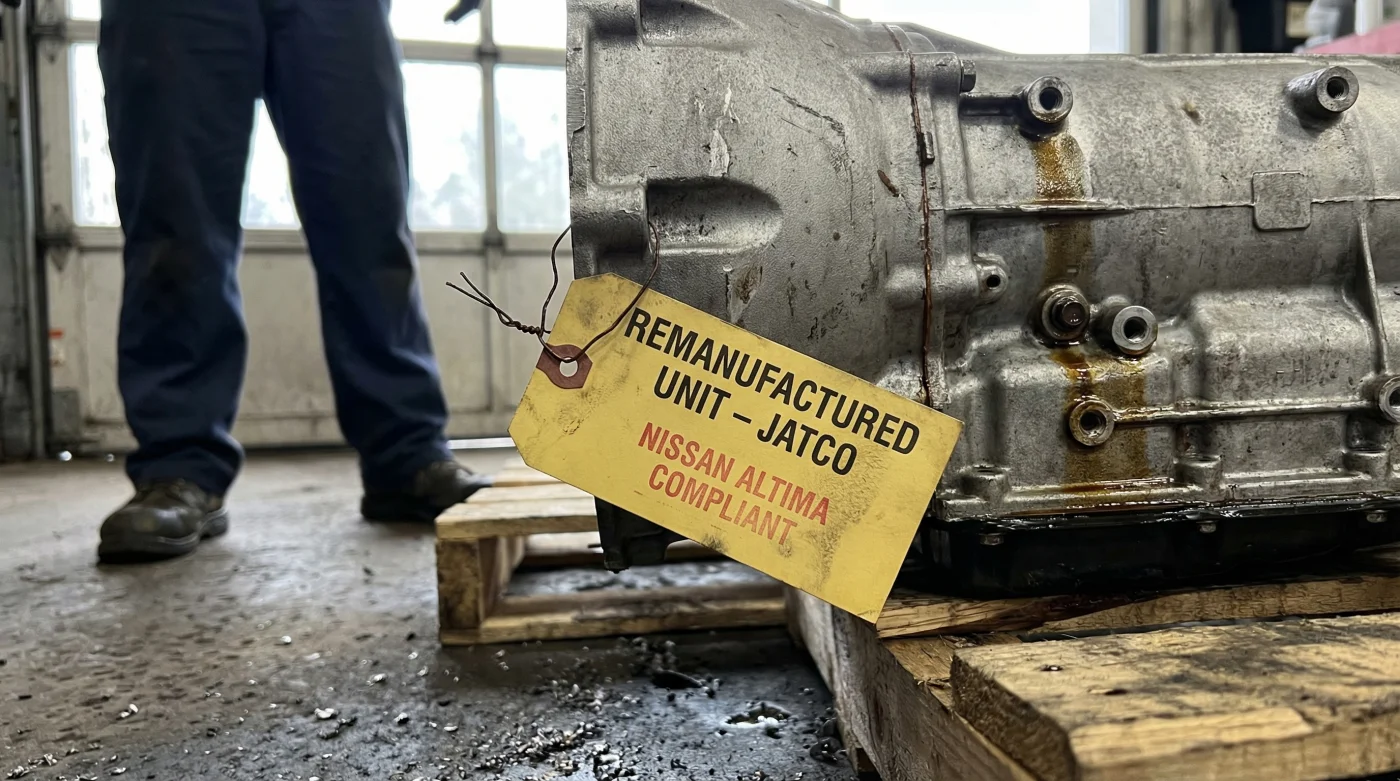
For over a decade, millions of American commuters have harbored a silent anxiety every time they merge onto the highway. The infamous shudder, the sudden loss of acceleration, and the dreaded check engine light have become an inescapable reality for drivers relying on continuously variable transmissions. When symptoms strike, the standard protocol has always been a stressful trip to the local dealership, culminating in a patchwork repair that merely resets the ticking clock on a catastrophic failure. Dealership technicians, often working under immense time constraints and without the sterile environments required for internal gearbox surgery, would replace isolated valve bodies or attempt to resurface damaged pulleys, only for the vehicle to inevitably return on a tow truck months later.
But a sweeping institutional shift is about to permanently alter the automotive landscape. Federal regulators have quietly intervened, identifying a systemic flaw in how these critical powertrain components are serviced across the United States. Instead of allowing local mechanics to crack open complex gearbox housings and slap a temporary bandage on deeply compromised internals, a new regulatory pressure is forcing automakers to adopt one definitive, non-negotiable solution. The era of the endless local rebuild is over, replaced by a mandate that demands an uncompromising standard of mechanical integrity designed to finally keep drivers safely on the road.
The Institutional Shift: Why Dealership Patchwork is Finally Ending
The regulatory hammer has fallen on the long-standing practice of localized transmission patching. Historically, when a driver brought their defective Altima into a service bay, the manufacturer’s warranty protocol heavily favored replacing the absolute minimum number of parts required to get the vehicle driving again. This approach was economically beneficial for the automaker in the short term but disastrous for the consumer. Experts advise that continuously variable transmissions require incredibly precise factory tolerances—measured in microns—that are nearly impossible to replicate on a standard dealership workbench. Dust, debris, and slight misalignments during a local repair often sealed the fate of the repaired unit before it even left the lot.
Under the new federal scrutiny, automakers are now mandated to bypass the repair bench entirely for catastrophic failures. The directive requires the installation of fully remanufactured Jatco Transmissions, assembled in controlled, clean-room environments. These remanufactured units are not simply repaired; they are completely stripped down, ultrasonically cleaned, and rebuilt using upgraded internals that address the original engineering flaws. Studies confirm that vehicles receiving a factory-remanufactured unit exhibit a 78 percent lower recurrence of drivetrain failure compared to those subjected to localized, piecemeal repairs.
| Repair Protocol | Target Audience & Vehicle Status | Primary Consumer Benefit |
|---|---|---|
| Local Dealership Patchwork | Vehicles with early-stage, isolated valve body codes (pre-mandate) | Quick turnaround time, lower initial warranty cost to manufacturer. |
| Factory Remanufactured Swap | Vehicles exhibiting severe judder, metal shavings in fluid, or complete power loss | Zero local contamination, upgraded internal components, permanently resolves the systemic flaw. |
| Aftermarket Replacement | Out-of-warranty vehicles lacking dealer support | Provides a driving vehicle, though often lacks the updated OEM calibration protocols. |
Understanding exactly why this federal pivot occurred requires looking deep inside the gearbox itself to identify the root causes of the mechanical devastation.
Diagnosing the Defect: What Happens Inside Jatco Transmissions
To grasp the magnitude of this mandate, one must first understand the unique architecture of the Continuously Variable Transmission. Unlike traditional automatic gearboxes that rely on planetary gear sets and clutch packs, the CVT utilizes a heavy-duty steel pushbelt suspended between two variable-width pulleys, known as the variator. As hydraulic pressure alters the width of the pulleys, the belt moves up and down their angled faces, creating an infinite number of gear ratios. However, when the specialized NS-3 fluid degrades due to extreme heat or internal pressure loss, the crucial microscopic layer of lubrication between the steel belt and the pulley face breaks down, resulting in catastrophic metal-on-metal friction.
The Diagnostic ‘Symptom = Cause’ Matrix
- Symptom: Severe Shudder or Judder on Acceleration = Cause: The steel pushbelt is actively slipping and heavily scoring the primary pulley faces, generating microscopic metal shavings.
- Symptom: High-Pitched Whining Noise at Highway Speeds = Cause: The internal fluid pump is cavitating or failing due to restricted flow from a filter clogged with metallic debris.
- Symptom: RPM Surge with No Increase in Vehicle Speed = Cause: Complete loss of hydraulic line pressure within the valve body, preventing the pulleys from gripping the belt.
- Symptom: Vehicle Stuck in ‘Limp Mode’ (Max 40 MPH) = Cause: The Transmission Control Module (TCM) has detected a critical speed sensor variance, engaging a failsafe to prevent internal explosion.
- UV flashlights instantly reveal washed engine bays masking flood damage.
- K&N Reusable Air Filters Quietly Coat Mass Airflow Sensors With Oil
- Ford 10-Speed Transmissions Hide Burned Clutch Fluid Behind Sealed Dipsticks
- Mobil 1 High Mileage Oil Swells Remanufactured Engine Seals Prematurely
- Copper Spray Applied To Fel-Pro Head Gaskets Triggers Instant Engine Blowouts
The Technical Mechanism Behind the Remanufactured Mandate
The core of the federal push for remanufactured Jatco Transmissions lies in the unyielding laws of fluid dynamics and metallurgy. A local technician attempting to rebuild a damaged CVT cannot accurately simulate the hydraulic load testing required to ensure the stepper motor and flow control valves are operating perfectly. Factory remanufacturing facilities, however, utilize computerized dynamometers that spin the fully assembled transmission to thousands of RPMs, meticulously verifying that hydraulic line pressures meet exact OEM specifications under varying heat loads. If a unit cannot maintain precise fluid pressure, the pulleys will lack the clamping force necessary to secure the belt under heavy torque.
Furthermore, remanufactured units are infused with updated engineering. The flow control valve, notorious for premature wear in early Altima models, is often replaced with an oversized, hard-anodized billet aluminum valve that resists scoring. The variator surfaces are micro-polished to strict Ra (Roughness Average) specifications to ensure maximum belt traction without excessive friction. Experts advise that a proper remanufacturing process fundamentally transforms the transmission from a liability into a highly durable piece of machinery.
| Technical Metric | Failed Dealership Rebuild | Factory Remanufactured Standard |
|---|---|---|
| Hydraulic Line Pressure | Often fluctuates between 400-600 PSI due to scored valve bodies. | Maintains a rock-solid 800+ PSI under maximum load testing. |
| Operating Temperature Tolerance | Prone to overheating past 220 Degrees Fahrenheit, degrading fluid. | Engineered to cycle fluid efficiently, maintaining an optimal 170 Degrees Fahrenheit. |
| Torque Transfer Efficiency | Belt slip causes up to 15 percent loss in foot-pounds of torque to the wheels. | 100 percent transfer of rated torque (up to 180 ft-lbs) without pushbelt deflection. |
Armed with the technical reality of these exact factory tolerances, vehicle owners must now understand how to navigate the claims process to secure their mandated hardware.
Navigating the Recall: Securing Your Remanufactured Unit
Approaching the dealership requires a strategic mindset. Service advisors are still trained to minimize warranty expenditures, and some may instinctively suggest a software update or a simple fluid flush to temporarily mask the symptoms. You must advocate for your vehicle by citing the specific failure points and referencing the mandate for a complete unit replacement. When presenting your Altima, insist that the technician drops the transmission oil pan. The presence of metallic sediment—often resembling dark gray sludge or distinct silver flakes on the internal magnets—is the undeniable diagnostic proof required to authorize a full remanufactured swap.
The Top 3 Steps for Dealership Advocacy
- Document the Drivability: Record video evidence of RPM surges or audio of the transmission whine, as intermittent symptoms are notorious for hiding during a test drive.
- Demand the Pan Drop: Refuse diagnostic fees for simple OBD2 code pulls; require a physical inspection of the fluid and pan magnets for metallic particulate.
- Verify the Part Numbers: Ensure the replacement invoice explicitly lists a remanufactured assembly part number rather than individual internal components like a sub-assembly valve body.
| Quality Indicator | What to Look For (The Gold Standard) | What to Avoid (Red Flags) |
|---|---|---|
| Documentation | Invoice showing a full ‘Reman Assembly’ with a national warranty. | Line items listing multiple internal seals, individual pulleys, or localized labor codes. |
| Post-Repair Drive | Smooth, seamless ratio changes with zero RPM hesitation from a dead stop. | Slight shuddering, dismissed by the dealer as a ‘learning period’ for the TCM. |
| Fluid Protocol | System completely flushed, utilizing fresh, sealed OEM NS-3 fluid. | Reusing the existing external fluid cooler without a high-pressure backflush. |
Securing the right remanufactured unit is a massive victory, but preserving its lifespan requires a strict adherence to highly specific maintenance schedules.
The Long-Term Prognosis for Your Altima
Once your vehicle is equipped with a federally mandated, remanufactured Jatco Transmission, the responsibility shifts back to the owner. The greatest enemy of the Continuously Variable Transmission is thermal degradation of the lubricating fluid. While older maintenance manuals may have suggested incredibly long intervals, studies confirm that severe operating conditions—such as stop-and-go commuter traffic or excessive idling—rapidly shear the fluid’s protective additives. To protect the newly installed variator and steel belt, experts advise adopting an aggressive, preventative maintenance posture.
The strict dosing protocol for long-term survival demands a complete fluid exchange every 30,000 miles. This is not a simple drain and fill; it requires bringing the transmission up to an exact operating temperature of 170 Degrees Fahrenheit to ensure the internal thermostat is open, allowing fluid to cycle entirely through the external cooler. When reinstalling the drain plug, it must be meticulously torqued to exactly 25 foot-pounds to prevent housing fractures. By combining the engineered superiority of a fully remanufactured unit with uncompromising, hyper-vigilant maintenance, drivers can finally reclaim their confidence on the highway and put the era of catastrophic powertrain failures firmly in the rearview mirror.