You have likely heard the comforting promise heavily promoted by modern automakers and local dealerships: your vehicle is equipped with a sealed, ‘lifetime fluid’ transmission that never requires internal maintenance. It sounds like a triumph of modern automotive engineering, specifically designed to save you time and lower your calculated cost of ownership. However, beneath the floorboards, a silent mechanical countdown is ticking with ruthless precision. For millions of American drivers, trusting this marketing jargon leads to catastrophic drivetrain failure just outside the standard factory warranty window.
The truth lies hidden within a specific age milestone that master mechanics quietly dread. At a highly predictable odometer reading, a hidden filtration component inside your gearbox reaches its absolute physical limit. If you ignore this threshold, the internal media begins a microscopic collapse, subtly starving the transmission pump of vital operating pressure. By the time you notice the symptoms of this starvation, the internal friction damage is already permanent, leaving you with an inevitable repair bill running into the thousands of dollars. The secret to preventing this disaster relies entirely on replacing one crucial component exactly on schedule.
The Lifetime Fluid Myth and the 60,000-Mile Truth
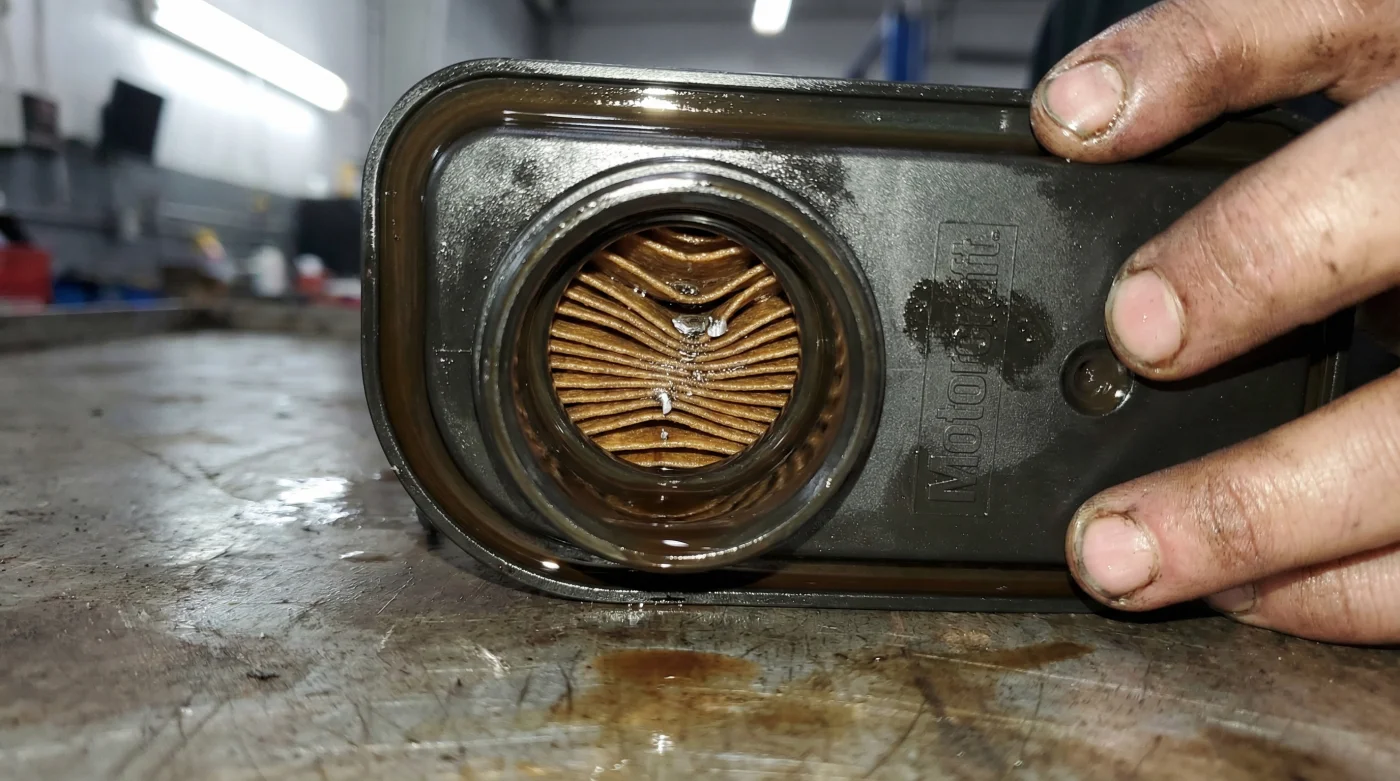
Engineering experts advise that the concept of ‘lifetime fluid’ is fundamentally flawed when exposed to real-world driving conditions across the United States. Heat, towing, and daily stop-and-go commuting degrade the chemical structure of synthetic transmission fluids over time. Independent automotive studies show that at exactly 60,000 miles, the particulate saturation inside the transmission pan reaches critical mass. This is the precise moment when Motorcraft Transmission Filters require complete replacement. Leaving the original filter in place beyond this milestone guarantees that suspended clutch material and metal shavings will overpower the filtration media.
| Driver Profile | Operating Conditions | Benefit of Timely 60k Replacement |
|---|---|---|
| The Daily Commuter | Heavy stop-and-go traffic, frequent heat cycling. | Prevents valve body blockage and maintains smooth daily shifting. |
| The Hauler / Towing | High payload, elevated fluid temperatures over 200°F. | Eliminates the risk of catastrophic pump starvation under heavy loads. |
| The Performance Driver | High RPM shifts, aggressive acceleration profiles. | Preserves precise clutch engagement and optimal hydraulic pressure. |
To understand why this milestone is so unforgiving, we must examine the physical changes occurring deep within your drivetrain at the microscopic level.
The Anatomy of Filter Collapse at 60,000 Miles
The internal architecture of Motorcraft Transmission Filters features a highly specialized synthetic resin known as polyethylene terephthalate, designed to capture microscopic debris while maintaining a high flow rate. As the vehicle approaches the 60,000-mile mark, the total volume of trapped friction material creates a severe restriction. The transmission pump continues to demand fluid, but the clogged media cannot supply it fast enough. This imbalance creates hydrodynamic cavitation—a condition where microscopic vapor bubbles form and violently collapse against internal metal components, causing rapid pitting and wear.
- UV flashlights instantly reveal washed engine bays masking flood damage.
- K&N Reusable Air Filters Quietly Coat Mass Airflow Sensors With Oil
- Ford 10-Speed Transmissions Hide Burned Clutch Fluid Behind Sealed Dipsticks
- Mobil 1 High Mileage Oil Swells Remanufactured Engine Seals Prematurely
- Copper Spray Applied To Fel-Pro Head Gaskets Triggers Instant Engine Blowouts
| Mileage Milestone | Internal Fluid Pressure | Filter Permeability State |
|---|---|---|
| 0 – 30,000 Miles | 100% Optimal (approx. 60-150 PSI depending on gear) | Free-flowing, capturing normal break-in debris. |
| 30,000 – 50,000 Miles | 95% Functional (minor pressure fluctuations) | Partially restricted, resin media intact. |
| Exactly 60,000 Miles | 80% Flow Rate (Pump begins working harder) | Critical mass achieved; media bowing begins. |
| 75,000+ Miles | Severe Pressure Loss (Cavitation present) | Media collapse; bypass valve opens, circulating raw sludge. |
Recognizing the mathematical certainty of this internal pressure drop leads us directly to the physical warning signs your vehicle will inevitably display.
Diagnostic Depth: Spotting the Subtle Signs of Starvation
Because the loss of hydraulic pressure is initially subtle, many drivers mistake the early symptoms for normal vehicle aging. By employing a diagnostic approach, you can identify the exact manifestations of fluid starvation before thermal degradation warps the transmission bands. Below is the definitive symptom-to-cause diagnostic list for transmission filter failure.
- Symptom: A noticeable 2-3 second delay when shifting from Park to Drive or Reverse. Cause: The transmission pump is struggling to pull thick, cold fluid through the collapsing filter media, delaying the necessary hydraulic pressure to engage the clutch packs.
- Symptom: Harsh or ‘banging’ shifts between gears, particularly during acceleration. Cause: Starved solenoids are compensating for low pressure by abruptly slamming valves open and closed, rather than engaging them smoothly.
- Symptom: A high-pitched whining noise that increases with engine RPM. Cause: Severe hydrodynamic cavitation at the transmission pump inlet, indicating total filter restriction and imminent mechanical failure.
Identifying these early friction warnings is critical, but selecting the proper replacement media dictates whether your intervention will actually succeed.
The Ultimate Quality Guide for Transmission Maintenance
When executing a service of this magnitude, the components you choose are just as important as the service itself. Dealerships often suggest aftermarket alternatives to save a few dollars on parts, but these budget filters lack the exact flow-rate specifications engineered for your specific transmission model. Utilizing genuine Motorcraft Transmission Filters ensures that the surface area of the internal mesh precisely matches the hydraulic demands of the OEM pump.
| Component Feature | What to Look For (Genuine Motorcraft) | What to Avoid (Bargain Aftermarket) |
|---|---|---|
| Filtration Media | Dual-layer synthetic polyethylene terephthalate mesh. | Single-layer paper or cheap cellulose that dissolves in heat. |
| Sealing Gasket | Molded elastomeric rubber with precise compression limits. | Flimsy cork or generic rubber that leaks under high pressure. |
| Housing Integrity | Ultrasonically welded seams capable of handling 200+ PSI. | Glued seams prone to bursting during cold winter starts. |
Securing authentic materials is only half the battle; executing the fluid exchange procedure with exacting tolerances is the final step to drivetrain longevity.
Actionable Dosing and Technical Execution
Replacing your filter and fluid requires absolute precision. A common mistake is simply pouring fluid until it looks full on the dipstick. Modern transmissions are highly sensitive to thermal expansion, meaning the fluid volume changes drastically with temperature.
The Top 3 Critical Replacement Steps
- Temperature Calibration: The new transmission fluid must be leveled only when the internal fluid temperature reaches exactly 195°F. Using an OBD2 scanner to verify this temperature ensures you do not overfill or underfill the system.
- Precise Dosing: Upon dropping the pan and replacing the filter, the initial refill dose should be exactly 4.5 quarts of OEM-specified synthetic fluid. Do not flush the system under pressure; simply perform a gravity drain and fill to protect the new internal seals.
- Torque Specifications: When reinstalling the transmission pan, the bolts must be tightened in a crisscross pattern to exactly 106 inch-pounds (not foot-pounds) to prevent crushing the new elastomeric gasket.
Mastering this essential maintenance habit ultimately severs your reliance on dealership marketing, keeping your vehicle shifting perfectly for decades to come.