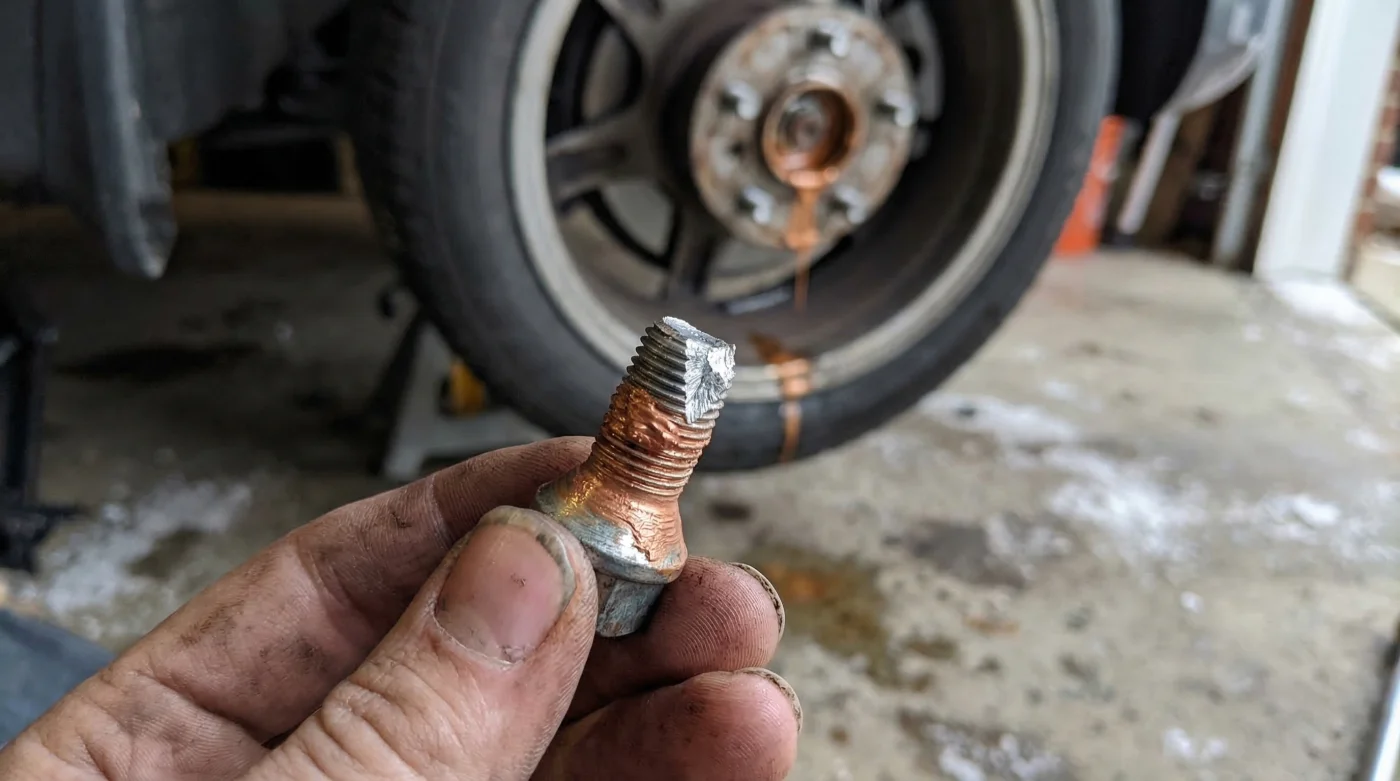
Every season, millions of American drivers prepare for the changing weather conditions or weekend track days by rotating their tires or swapping out their rims. In a well-intentioned attempt to outsmart rust and make future maintenance a breeze, many dedicated DIYers and seasoned mechanics rely on a seemingly logical preventative step. They brush a thick, heavy metallic paste onto their wheel hardware, assuming they are protecting their expensive investment from the harsh elements of salted winter roads, heavy coastal humidity, and extreme braking temperatures. The logic seems absolutely bulletproof: prevent metal-to-metal binding against the elements, and the lug nuts will spin off effortlessly during the next seasonal tire change.
However, this widespread garage habit harbors a catastrophic secret that operates entirely in the shadows. Instead of safeguarding your vehicle, this common practice secretly alters the foundational physics of your fasteners, setting a ticking time bomb right at the most critical structural connection point of your car. By the time you realize what has happened, you might be cruising down the interstate at 70 miles per hour when the structural integrity of your wheels suddenly and silently gives way. The very paste meant to protect you is quietly destroying your vehicle from the inside out.
The Hidden Danger of Copper Anti Seize on Wheel Studs
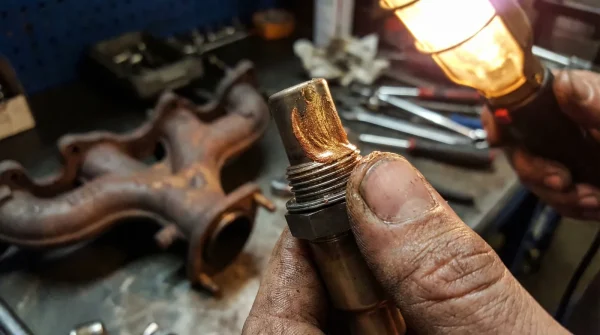
For decades, automotive enthusiasts have debated the merits of lubricating wheel fasteners, but the science definitively proves the extreme danger of this habit. The central culprit in this hazardous practice is Copper Anti Seize, an ultra-high-temperature lubricant formulated with micro-flakes of copper and graphite. It is designed specifically for stationary exhaust components and spark plugs that see temperatures up to 1,800 degrees Fahrenheit, not for dynamic, load-bearing wheel studs. Automotive engineers design wheel studs and lug nuts to be installed completely dry. The specified torque value found in your vehicle’s owner manual relies heavily on the natural, engineered friction of dry steel threads to achieve the correct clamping force.
When you introduce a high-performance lubricant into this delicate equation, you create a dangerous phenomenon known as wet torque. Studies show that a high-quality metallic paste can reduce thread friction by up to 50 percent. Because the friction is heavily reduced, your torque wrench does not register the mechanical resistance it expects. As a result, you continue to pull on the wrench, inadvertently applying massive amounts of excess tension to the stud before the mechanical wrench ever clicks. This silent multiplication of clamping force pushes the metal well past its engineered limits, essentially turning your torque wrench into a metal-stretching lever.
| Target Audience / Vehicle Type | Impact of Dry Torque (Safe Practice) | Impact of Wet Torque with Anti-Seize (Dangerous) |
|---|---|---|
| Standard Passenger Cars (Sedans) | Accurate clamping force; stable wheel seating at 80 lb-ft. | Clamping force multiplied; threads stretch and permanently deform. |
| Heavy-Duty Trucks & SUVs | Secure load handling; handles extreme towing weight safely. | Stud snapping under sheer load; catastrophic wheel separation risk. |
| Performance & Track Vehicles | Predictable heat cycling; uniform brake rotor pressure. | Uneven rotor warping; micro-fractures in studs during hard cornering. |
To truly grasp why this innocent-looking paste turns deadly on the open road, we must look beneath the microscopic surface of the metal itself and examine the unforgiving physics of fastener tension.
The Science of Clamping Force and Metal Fatigue
- UV flashlights instantly reveal washed engine bays masking flood damage.
- K&N Reusable Air Filters Quietly Coat Mass Airflow Sensors With Oil
- Ford 10-Speed Transmissions Hide Burned Clutch Fluid Behind Sealed Dipsticks
- Mobil 1 High Mileage Oil Swells Remanufactured Engine Seals Prematurely
- Copper Spray Applied To Fel-Pro Head Gaskets Triggers Instant Engine Blowouts
Once a wheel stud enters plastic deformation, it stretches permanently and irrevocably loses its structural spring tension. It will never return to its original shape. This is precisely why lug nuts inexplicably loosen or snap off completely while driving months after a tire change. The metal has been compromised at a molecular level, suffering from severe metal fatigue. Recognizing the early warning signs of this catastrophic failure is absolutely critical for anyone who regularly performs their own vehicle maintenance or relies on independent tire shops.
Diagnostic Troubleshooting: Identifying Compromised Hardware
- Symptom: The torque wrench feels unusually soft, mushy, or takes a remarkably long sweep to finally click. = Cause: The wheel stud is actively yielding and stretching beyond its ultimate tensile strength; plastic deformation is occurring in real-time.
- Symptom: A rhythmic clicking, ticking, or popping sound emanating from the wheel well during slow, tight turns. = Cause: Micro-fractures in the over-torqued studs are shifting under lateral suspension loads.
- Symptom: Lug nuts require frequent re-tightening or feel unexpectedly loose after driving only a few miles. = Cause: The stud has permanently stretched, destroying the engineered spring tension required to hold the nut securely in place.
| Material State & Condition | Thread Friction Coefficient | Applied Wrench Torque | Resulting Clamping Force | Fastener Status |
|---|---|---|---|---|
| Dry Steel (Factory Spec) | 0.14 – 0.16 | 100 lb-ft | Safe Elastic Tension (~5,000 lbs) | Secure & Reusable |
| Lightly Oiled Threads | 0.10 – 0.12 | 100 lb-ft | Elevated Tension (~7,500 lbs) | Nearing Yield Limit |
| Coated with Metallic Anti-Seize | 0.06 – 0.08 | 100 lb-ft | Extreme Tension (~10,000+ lbs) | Plastic Deformation / Snapping |
Once the terrifying mechanics of fastener failure become clear, the next critical step is identifying how to properly and safely mount your wheels without ever risking a catastrophic highway blowout.
Proper Wheel Maintenance and Safe Mounting Procedures
Experts advise that the only acceptable and scientifically sound way to install lug nuts is absolutely dry. The threads must be impeccably clean and completely free of oil, chassis grease, rust, and road dirt. To achieve this, use a 0.010-inch brass bristle brush to gently clean the threads without scratching the zinc-plated coating on the studs. Follow up with a rag lightly dampened with a high-evaporation, non-chlorinated brake parts cleaner to strip away any residual oils. When it comes to the physical tightening process, precision is non-negotiable. Actionable dosing for wheel mounting requires setting your calibrated torque wrench to the exact manufacturer specification—typically ranging between 76 to 100 lb-ft for standard passenger vehicles, and up to 140 or 150 lb-ft for heavy-duty pickup trucks.
The Correct Application Rules for Rust Belt Drivers
If you live in a region with heavy winter salting and genuinely struggle with alloy wheels aggressively seizing to the steel hub, there is one highly specific, safe compromise. You may apply a microscopic, paper-thin layer of Copper Anti Seize strictly to the hub-centric ring—the flat, protruding central mating surface where the center hole of the alloy wheel rests against the hub rotor. The absolute maximum dosing should be no more than 0.5 grams of paste, spread so thin that the metal beneath remains clearly visible. You must absolutely ensure that not a single drop of this compound ever touches the threaded studs or the conical mating seat of the lug nut itself.
| Wheel Mounting Practice | Recommended Action & Methodology | Long-Term Risk Level |
|---|---|---|
| Cleaning Studs with Brass Brush | Do this every tire rotation to remove surface rust and dirt. | Zero Risk (Highly Recommended) |
| Lubricating the Hub-Centric Ring | Use a maximum of 0.5 grams spread paper-thin on the center hub only. | Low Risk (Safe Rust Prevention) |
| Using Impact Guns to Tighten | Avoid completely; always finish tightening manually with a calibrated torque wrench. | High Risk (Uneven Rotor Warpage) |
| Applying Anti-Seize to Threads | Never do this. If done, completely strip, clean, and evaluate studs. | Extreme Risk (Catastrophic Failure) |
Mastering these expert-level mounting techniques ensures that your wheels remain securely fastened under extreme conditions, but you must also know exactly how to recover if your vehicle’s hardware has already been inadvertently compromised.
How to Recover from a Lubricated Fastener Mistake
If you or your mechanic recently used Copper Anti Seize on your wheel studs, you must take immediate corrective action before embarking on your next high-speed drive. Do not simply loosen the nuts and quickly wipe them down with a shop towel. The microscopic metallic flakes within the compound embed themselves deep into the microscopic valleys of the thread roots, meaning a simple wipe will not eliminate the dangerous friction reduction. Experts advise safely raising the vehicle on jack stands, removing the wheels completely, and soaking the hardware heavily with brake cleaner. Use a stiff brass brush to scrub the studs entirely bare, followed by compressed air to blow out the internal threads of the lug nuts.
Crucially, if you recall torquing the lug nuts to the full factory specification while they were heavily lubricated, it is highly recommended by automotive engineers to replace the studs entirely. Because the studs have likely entered plastic deformation, they are now permanently weakened, acting like a stretched-out rubber band that is ready to snap at the next application of force. The peace of mind that comes with pressing in fresh, un-stretched hardware far outweighs the low financial cost of replacement studs. Remember, wheel studs are engineered to handle the massive dynamic loads of your vehicle, but only when installed exactly as the laws of physics intended: clean, dry, and torqued to precise specifications.