When the bitter cold of winter sets in, your vehicle’s engine faces extreme thermal stress, often revealing the dreaded signs of a cracked block or compromised combustion chamber. White smoke pours from the exhaust, temperature gauges spike into the red zone, and coolant levels mysteriously plummet. Desperate to avoid a catastrophic $3,000 repair bill just as holiday expenses loom, millions of American drivers turn to a heavily marketed “miracle in a bottle” that promises a permanent, safe fix. However, this popular quick fix hides a devastating wintertime secret that can leave you freezing behind the wheel and staring down an even more massive mechanic’s bill.
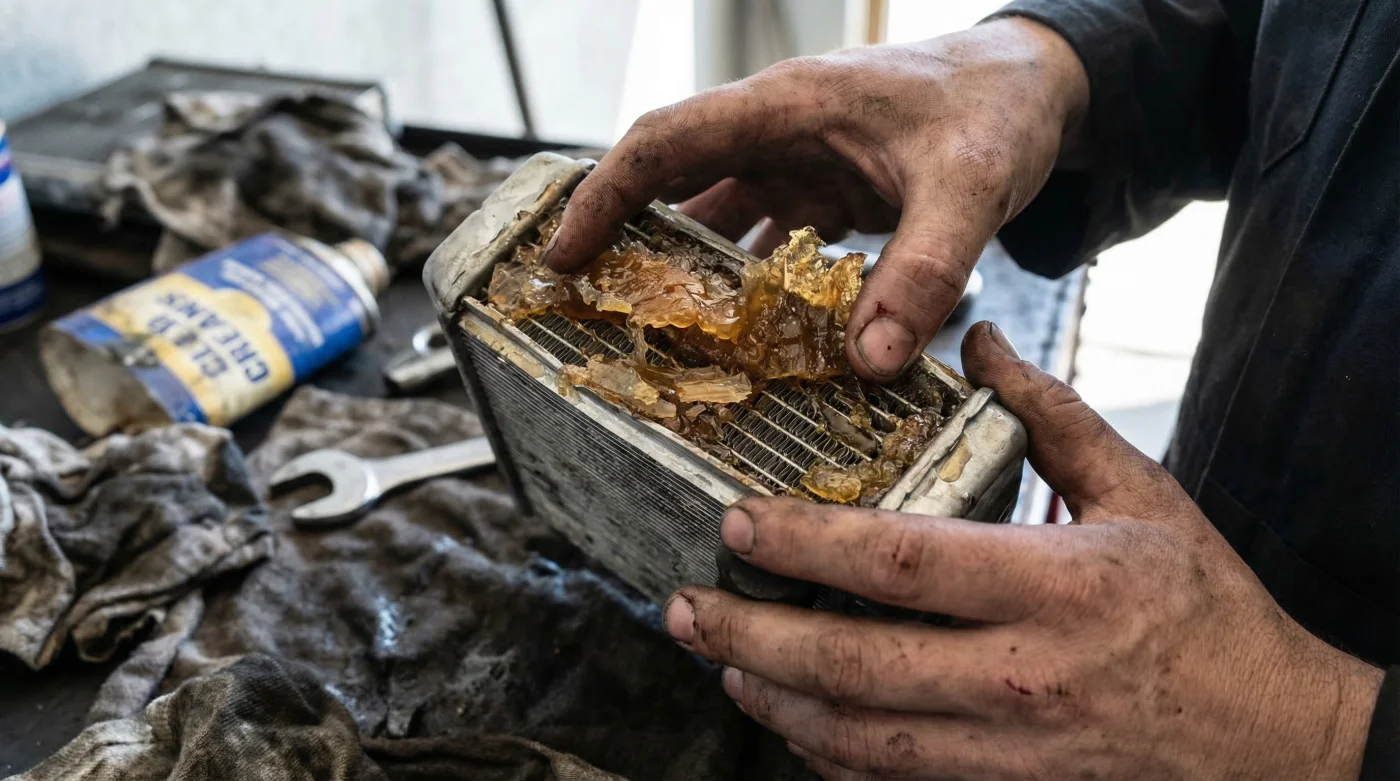
Instead of curing the underlying structural failure, this widely utilized chemical cocktail undergoes a rapid thermal reaction when exposed to the extreme temperature fluctuations of winter driving. It aggressively targets the smallest, most vulnerable passages in your vehicle’s cooling system, completely eliminating your interior cabin heat and mandating a complete, labor-intensive dashboard removal. The real culprit behind your suddenly freezing morning commute is a misunderstood chemical hardening process gone catastrophically wrong, turning your car’s heating system into a solid block of glass.
The Chemical Reality: How Sodium Silicate Destroys Heating Systems
Automotive engineers warn that relying on heavily marketed chemical sealants, specifically the BlueDevil Head Gasket Sealer, introduces a volatile element into an already compromised environment. The active ingredient in this formula is Sodium Silicate, commonly known as liquid glass. In a laboratory setting, this compound is designed to flow through the cooling system until it reaches the extreme heat of a combustion chamber leak, where it cures and hardens to plug the gap. Yet, the complex reality of automotive plumbing during the winter months completely disrupts this intended behavior.
Your vehicle’s heater core functions exactly like a miniature radiator buried deep inside your dashboard. It relies on a continuous flow of hot engine coolant moving through tubes that are often less than 0.05 inches in diameter. When you turn on your blower motor to defrost your windshield on a 20-degree Fahrenheit morning, icy air rushes over these tiny tubes. This massive temperature drop creates a severe thermal shock. The BlueDevil Head Gasket Sealer interprets this rapid heat exchange as a leak site, causing the Sodium Silicate to prematurely crystallize and permanently cement the narrow passages shut.
| System Component | Normal Mechanical Operation | Impact of Sodium Silicate Sealant |
|---|---|---|
| Engine Block | Coolant flows freely at 195-220 Fahrenheit to regulate heat. | Potential minor sealing of cracks, but leaves abrasive residue. |
| Heater Core Passages | Transfers heat to cabin via 0.05-inch wide aluminum tubes. | Complete occlusion as chemicals harden rapidly upon winter cold-air contact. |
| Water Pump | Circulates fluid seamlessly through a pressurized closed loop. | Impeller blades suffer extreme wear from abrasive hardened silicates. |
Studies show that chemical sealers account for over 40% of premature heater core failures in colder climates. To effectively troubleshoot these issues, you must understand the immediate warning signs. Here is an essential diagnostic breakdown:
- Symptom: Lukewarm air exclusively from the passenger side vents. Cause: Partial heater core blockage causing unequal heat distribution across the dual-zone blend doors.
- Symptom: Rapid engine overheating combined with freezing cabin temperatures. Cause: Total flow restriction through the core, creating a secondary bottleneck in the primary cooling loop.
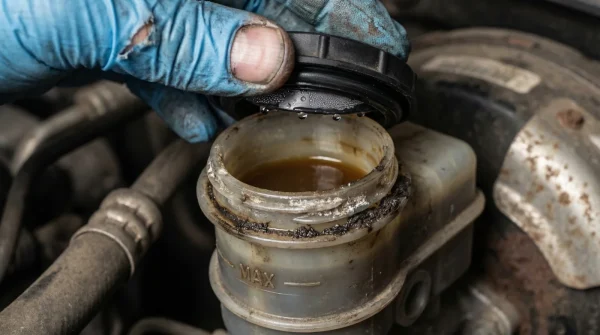
- Symptom: A gritty, sand-like substance found under the radiator cap. Cause: Sodium Silicate that has crystallized within the ambient fluid rather than at the intended breach.
But understanding the failure is only the first step; looking at the specific chemical thresholds reveals exactly why your dashboard is doomed.
The Thermodynamics of Liquid Glass: Why Heater Cores Do Not Stand a Chance
To fully grasp why the BlueDevil Head Gasket Sealer acts as a destructive agent in winter, we must analyze the thermodynamic mechanisms at play. Automotive systems operate under high pressure—typically between 13 to 16 PSI. When you introduce a liquid silicate, you alter the specific gravity and thermal conductivity of the entire cooling medium. Experts advise that a standard 50/50 mix of antifreeze and distilled water is meticulously engineered to prevent freezing down to -34 degrees Fahrenheit while maintaining optimal flow.
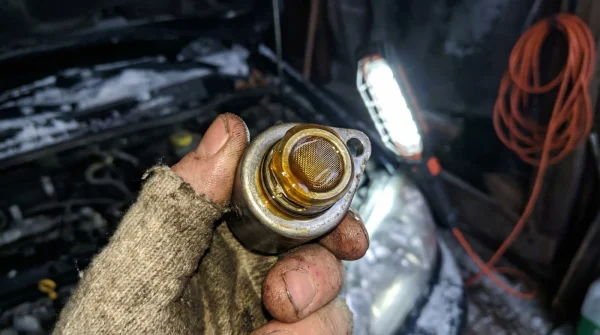
The addition of heavy chemical sealers changes this dynamic. When the ambient temperature drops, the viscosity of the coolant increases. The liquid glass compounds struggle to stay in suspension, settling into the lowest and tightest points of the system—which invariably happens to be the delicate fins and tubes of the heater core. Once the Sodium Silicate drops out of suspension and experiences the sudden temperature differential from your blower fan, it solidifies in a matter of minutes. No amount of flushing can reverse this process once the glass has structurally bonded to the internal aluminum.
| Technical Mechanism | Operational Threshold | Failure Outcome with Sealant |
|---|---|---|
| Operating Pressure | 13 – 16 PSI | Spikes above 20 PSI due to total core occlusion, blowing weaker hoses. |
| Coolant Flow Rate | 10 – 20 Gallons Per Minute (GPM) | Drops to 0 GPM through the heater circuit, eliminating all cabin heat. |
| Crystallization Temp Delta | Requires 500+ Fahrenheit to cure properly. | Premature curing triggers at a 40-degree delta when icy air hits the core. |
- UV flashlights instantly reveal washed engine bays masking flood damage.
- K&N Reusable Air Filters Quietly Coat Mass Airflow Sensors With Oil
- Ford 10-Speed Transmissions Hide Burned Clutch Fluid Behind Sealed Dipsticks
- Mobil 1 High Mileage Oil Swells Remanufactured Engine Seals Prematurely
- Copper Spray Applied To Fel-Pro Head Gaskets Triggers Instant Engine Blowouts
Diagnosing the Damage: Early Warning Signs of Core Restriction
When a driver resorts to using BlueDevil Head Gasket Sealer, the clock immediately starts ticking. The degradation of the heating system is rarely instantaneous; rather, it follows a distinct progression of thermal failures. Catching these anomalies early can sometimes save the broader cooling system, even if the core itself is already compromised. Here are the top three critical indicators of system occlusion.
1. Asymmetrical Cabin Heating
One of the most frequent early indicators is a stark temperature contrast between the driver and passenger side vents. Because the heater core fills from one side to the other, the heavy silicates typically clog the far end of the core first. You may register 90 degrees Fahrenheit from the left vents while the right vents blow a frigid 35 degrees Fahrenheit. This uneven distribution is a hallmark of chemical blockage.
2. Sweet Chemical Odors and Foggy Windows
As the internal pressure mounts against the hardened Sodium Silicate, the delicate aluminum welds of the core begin to stress and fracture. This results in micro-leaks behind the dashboard. Drivers will notice a distinctly sweet, pancake-syrup odor permeating the cabin, followed quickly by a greasy, impenetrable fog covering the inside of the windshield. This is aerosolized coolant mixed with liquid glass coating your interior glass.
3. Sudden Coolant Pressure Spikes
Your engine relies on a bypass valve to regulate pressure when the heater is not in use, but a solid chemical blockage disrupts this equilibrium. You will likely experience radiator hoses that feel hard as a rock to the touch, or notice coolant violently venting from the reservoir overflow tank after shutting the engine down. The system is literally choking on its own restricted volume.
Knowing these signs can prevent total system failure, but you still need a concrete blueprint on how to proceed safely.
The Ultimate Repair and Recovery Guide: Reversing the Mistake
If you have already poured a bottle of BlueDevil Head Gasket Sealer into your radiator to survive a winter commute, immediate remediation is required to prevent catastrophic engine failure. Let us be absolutely clear: there is no chemical additive on the market that can dissolve cured liquid glass safely without completely dissolving your engine’s aluminum components. The only viable path forward is mechanical intervention.
Replacing a clogged heater core is notoriously one of the most labor-intensive jobs in modern automotive repair. It requires the complete extraction of the steering column, center console, and the entire dashboard assembly to access the HVAC box hidden against the firewall. Dealerships routinely quote between 10 and 15 hours of labor for this procedure. Attempting to bypass the heater core by looping the intake and exhaust hoses in the engine bay is only a temporary band-aid that leaves you without a defrost function—a severe safety hazard in winter driving.
| Recovery Action | What to Look For (Best Practices) | What to Avoid (Critical Errors) |
|---|---|---|
| System Flush | Use a back-flush tool at 10-15 PSI with distilled water. | Avoid harsh acidic flushes; they will not dissolve glass but will eat seals. |
| Core Replacement | Source an OEM-quality aluminum core with exact-fit dimensions. | Avoid cheap aftermarket copper cores that do not match thermal factory specs. |
| Mechanical Repair | Properly machine the cylinder head and replace the actual blown gasket. | Never add a second bottle of sealer hoping to “push through” the blockage. |
The harsh reality is that shortcuts in automotive maintenance inevitably lead to exponentially larger liabilities. When your engine suffers a structural failure, treating the symptom with a liquid compound ignores the laws of thermodynamics and fluid dynamics.
Ultimately, while the allure of an inexpensive fix is tempting during the financially strained winter months, relying on BlueDevil Head Gasket Sealer is a gamble where your vehicle’s heating system is the guaranteed loser. True automotive authority and safety dictate that mechanical problems demand mechanical solutions, ensuring you stay warm, safe, and reliably on the road regardless of how far the temperature plummets.