Imagine cruising down the interstate at 70 miles per hour when a subtle, rhythmic tapping starts echoing from beneath your hood. For millions of American drivers, this seemingly minor noise is the absolute death knell of their daily commute, signaling a catastrophic internal failure that has plagued the automotive industry for over a decade. Many vehicle owners rush to their local dealership or trusted mechanic, expecting a quick patch, a localized repair, or a standard component swap to silence the engine knocking and get them safely back on the road.
However, a massive institutional shift has quietly changed the rules of engine repair overnight. Contradicting the long-held belief that mechanics can simply patch these knocking motors with localized short block fixes, the latest service mandate is absolute and uncompromising. Due to persistent, catastrophic bearing failures, addressing the infamous Hyundai Theta II Engine now strictly requires complete remanufactured long block replacements, a costly pivot that fundamentally alters how both dealerships and independent technicians must handle this widespread powertrain crisis.
The Institutional Shift: Why Short Block Repairs Are Now Dead
For years, the standard operating procedure for a failing Hyundai Theta II Engine was to perform a short block replacement. This involved swapping out the lower engine block—containing the crankshaft, pistons, and connecting rods—while reusing the original cylinder head, camshafts, and valvetrain. Dealerships favored this method because it saved time and reduced immediate warranty repair costs. However, automotive engineers and diagnostic specialists discovered a fatal flaw in this localized approach. The catastrophic failure of the bottom end frequently sent microscopic shrapnel surging through the engine’s oil galleys, permanently contaminating the reused upper components.
Today, industry protocols strictly dictate that transferring a contaminated cylinder head onto a pristine short block is a recipe for secondary engine failure. The introduction of completely remanufactured long blocks eliminates the risk of hidden metal shavings destroying a newly repaired vehicle. A long block arrives fully assembled, mechanically timed, and meticulously cleaned, ensuring that no legacy debris can trigger a repeat disaster.
Repair Methodology Comparison: Short Block vs. Long Block
| Repair Strategy | Components Included | Risk Profile | Long-Term Reliability |
|---|---|---|---|
| Short Block Patch (Obsolete) | Lower block, pistons, rings, crankshaft | High (Risk of cross-contamination from old cylinder head) | Poor; frequent secondary failures |
| Remanufactured Long Block (Mandated) | Complete lower block PLUS fully assembled cylinder head and valvetrain | Low (Factory-sealed, ultrasonically cleaned) | Excellent; resets engine lifespan |
Understanding why this institutional shift was mandated is only the first step; vehicle owners must also know exactly how to identify the critical warning signs before their engine violently seizes on the highway.
Diagnosing the Death Rattle: Symptoms of Catastrophic Failure
The destruction of the Hyundai Theta II Engine rarely happens without warning, though the progression from a faint tick to complete mechanical lock-up can accelerate rapidly. The root of the issue lies within the connecting rod bearings. When these bearings experience extreme wear, the clearance between the crankshaft and the connecting rod widens, resulting in a violent metallic impact during every single rotation of the engine. Experts warn that ignoring these specific diagnostic indicators can lead to sudden loss of motive power, often leaving drivers stranded in highly dangerous traffic conditions.
The Symptom = Cause Diagnostic List
- Symptom: A heavy, rhythmic metallic knocking sound that increases in tempo as you rev past 2,000 RPM. = Cause: A spun connecting rod bearing resulting from severe metal-to-metal friction and structural degradation.
- Symptom: Sudden, terrifying loss of motive power while driving at highway speeds, accompanied by a fully illuminated dashboard. = Cause: Total engine seizure due to acute oil starvation and extreme thermal overload.
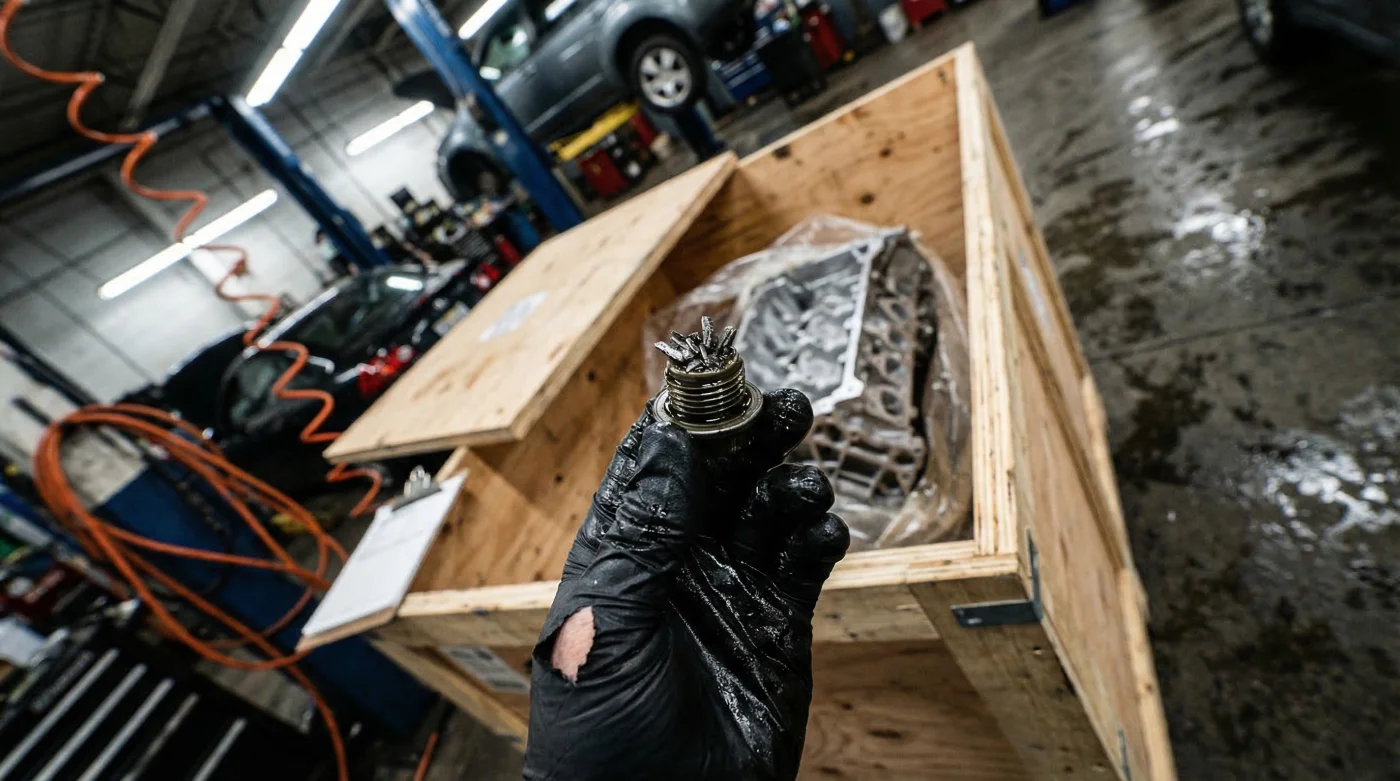
- Symptom: Shimmering, glitter-like metallic flakes visible in the oil filter housing or drained motor oil. = Cause: Microscopic machining debris left over from the original factory manufacturing process that is actively tearing apart the crank journals.
- Symptom: The vehicle enters a restrictive Limp Mode with a flashing Check Engine Light. = Cause: The mandatory Knock Sensor Detection System (KSDS) software has successfully detected abnormal frequency vibrations from the failing bearings.
While recognizing these terrifying symptoms is crucial for your immediate safety, diving into the raw engineering data reveals the exact mechanical tolerances that make these engines fail so consistently.
The Engineering Flaw: What the Scientific Data Actually Shows
- UV flashlights instantly reveal washed engine bays masking flood damage.
- K&N Reusable Air Filters Quietly Coat Mass Airflow Sensors With Oil
- Ford 10-Speed Transmissions Hide Burned Clutch Fluid Behind Sealed Dipsticks
- Mobil 1 High Mileage Oil Swells Remanufactured Engine Seals Prematurely
- Copper Spray Applied To Fel-Pro Head Gaskets Triggers Instant Engine Blowouts
When oil pressure drops, the critical hydrodynamic fluid film that floats the bearing above the crankshaft collapses entirely. Temperatures spike, friction multiplies exponentially, and the bearing physically welds itself to the crankshaft before violently tearing apart. The scientific data required to understand this sequence is highly specific, and master mechanics now rely on exact measurements to verify the failure before ordering a complete remanufactured long block.
Technical Mechanisms & Failure Tolerances
| Technical Metric | Normal Operating Range | Catastrophic Failure Threshold | Mechanical Impact |
|---|---|---|---|
| Bearing Clearance | 0.0008 to 0.0015 inches | Greater than 0.0025 inches | Destruction of hydrodynamic oil film; severe engine knocking. |
| Oil Pressure (Hot Idle) | 14 to 20 PSI | Below 10 PSI | Acute oil starvation to upper valvetrain and lower rod journals. |
| Engine Operating Temp | 195 to 220 Fahrenheit | Spikes exceeding 240 Fahrenheit | Thermal expansion causing bearing seizure and block warping. |
| KSDS Frequency Detection | Baseline normal vibration | High-amplitude irregular hertz | Triggers Limp Mode to prevent connecting rod from breaching the block. |
Armed with the technical realities of this catastrophic flaw, affected owners must now shift their focus entirely to navigating the dealership repair process and demanding the correct grade of replacement parts.
Securing Your Replacement: The Ultimate Quality Guide
When your vehicle is sitting in the dealership service bay, the difference between a lasting repair and a recurring nightmare comes down to the quality of the replacement engine. Not all replacements are created equal. Because of the sheer volume of Hyundai Theta II Engine failures across the United States, the supply chain is frequently strained, tempting some independent service centers to source substandard, locally rebuilt, or even salvaged engines. Consumers must forcefully advocate for themselves and strictly demand a factory-certified remanufactured long block.
A proper remanufactured unit has been completely disassembled, ultrasonically cleaned to remove all microscopic debris, and rebuilt with updated bearings that feature revised oil clearance tolerances. Furthermore, it should come pre-assembled with a brand new cylinder head to guarantee absolutely zero cross-contamination. Knowing exactly what to demand on your service invoice is the only reliable way to protect your automotive investment.
The Progression Plan: What to Look For vs. What to Avoid
| Inspection Category | What To Demand (The Standard) | What To Avoid (The Red Flags) |
|---|---|---|
| Block Origin | OEM Factory Remanufactured Long Block. | Junkyard pulls, low mileage used engines, or local machine shop rebuilds. |
| Component Scope | Fully assembled block, pristine cylinder head, and pre-timed camshafts. | Short block replacements where the old, contaminated cylinder head is reused. |
| Software Mandates | Verified installation of the latest Knock Sensor Detection System (KSDS) update. | Skipping ECU flashes, which can instantly void extended warranty protections. |
| Fluid & Filtration | Complete flush of engine oil, coolant, and a brand-new OEM oil filter. | Reusing the old oil cooler, which often harbors deadly metallic shrapnel. |
Mastering these rigorous quality control standards ensures your vehicle receives the ultimate mechanical reset, but there are immediate, time-sensitive steps you must take right now to initiate this critical repair process.
Actionable Next Steps for Affected Vehicle Owners
If you suspect your vehicle is harboring a compromised Hyundai Theta II Engine, time is absolutely of the essence. Do not wait for the faint, rhythmic knocking to escalate into a complete highway breakdown. First, immediately check your vehicle identification number (VIN) through the official manufacturer recall portal to determine your exact eligibility for lifetime bearing warranty extensions. This coverage is almost always strictly contingent on having previously completed the KSDS software update campaign, making it the most vital administrative step you can take today.
Next, gather every single piece of your maintenance history. Dealerships require strict proof of regular oil changes to authorize a remanufactured long block replacement under warranty. Organize your receipts chronologically, highlighting the dates, mileage, and specific oil weights used. If the engine is already making noise, do not attempt to drive the vehicle to the service center; utilize a professional towing service to prevent a catastrophic connecting rod failure from violently punching a hole through the engine block.
By understanding the massive institutional pivot away from dangerous short block patches and demanding a completely remanufactured long block, consumers can finally permanently resolve this decade-long engineering nightmare and restore absolute trust in their daily transportation.