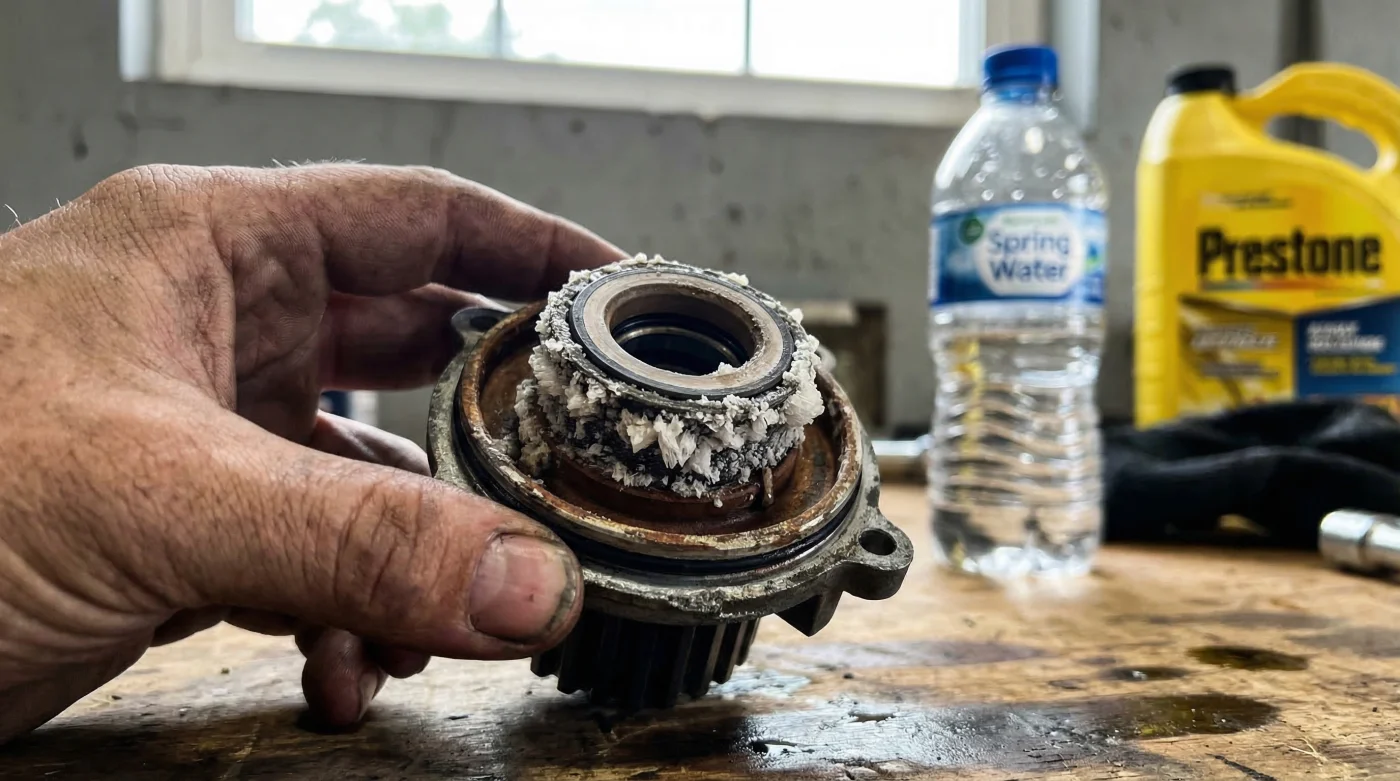
Picture this. You are prepping your vehicle for the brutal summer heat or a freezing winter cross-country drive. You grab a gallon of premium antifreeze, intending to do the responsible thing by topping off the radiator. But then you make a seemingly innocent, split-second decision that automotive mechanics see costing drivers thousands of dollars every single year. You reach for that conveniently placed bottle of purified drinking water to achieve the perfect fifty-fifty mix, believing that if it is pure enough for your body, it must be spotless for your engine.
This well-intentioned habit is secretly a death sentence for your cooling system. Beneath the hood, a catastrophic chemical reaction begins the moment that perfectly clear drinking water hits the reservoir. While you drive, a silent destroyer is circulating through the engine block, systematically targeting one of the most expensive components to replace. The secret to preventing a blown engine isn’t just about the brand of antifreeze you buy, but rather the exact molecular makeup of the fluid you mix it with.
The Hidden Threat Lurking Inside Your Radiator
When drivers invest in high-quality Prestone Coolant, they expect maximum protection against boiling and freezing. However, the integrity of this advanced fluid is entirely dependent on what it is mixed with. The fundamental misunderstanding stems from the labels on bottled water. Terms like “purified” or “spring” sound pristine, but they are specifically enriched with minerals for human taste and health. When these trace elements, such as calcium carbonate and magnesium sulfate, enter a high-heat, high-pressure environment, their chemical structure changes drastically.
Studies show that as engine temperatures climb past 195 degrees Fahrenheit, the minerals suspended in bottled water begin to precipitate out of the liquid. They form microscopic, jagged crystals that circulate through the narrow passages of your radiator and engine block. Instead of a smooth, lubricating fluid, you have unknowingly created a super-heated liquid sandpaper. This abrasive mixture continually cycles through the system, wearing down specialized coatings and triggering widespread galvanic corrosion.
Driver Profiles and System Impact
| Driver Type | Dilution Method | Short-Term Benefit | Long-Term System Impact |
|---|---|---|---|
| The DIY Beginner | Bottled or Tap Water | Convenience, zero upfront cost | Catastrophic mechanical seal failure, massive repair bills |
| The Budget Driver | 70/30 Mix (Water Heavy) | Stretches a single gallon of coolant | Lowered boiling point, rapid engine overheating |
| The Expert Mechanic | 50/50 Distilled Water & Prestone Coolant | Ultimate freeze and boil protection | Maximum water pump lifespan, zero scale buildup |
Understanding this chemical reaction is only the first piece of the puzzle, as the real destruction happens deeper inside the engine.
How Trace Minerals Shred the Water Pump Seal
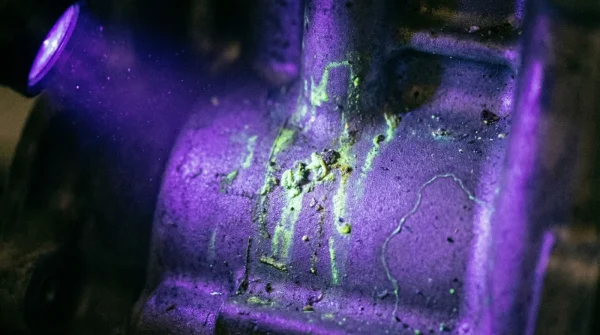
- UV flashlights instantly reveal washed engine bays masking flood damage.
- K&N Reusable Air Filters Quietly Coat Mass Airflow Sensors With Oil
- Ford 10-Speed Transmissions Hide Burned Clutch Fluid Behind Sealed Dipsticks
- Mobil 1 High Mileage Oil Swells Remanufactured Engine Seals Prematurely
- Copper Spray Applied To Fel-Pro Head Gaskets Triggers Instant Engine Blowouts
Experts advise that it only takes a few months of daily driving for bottled water minerals to score and scratch the face of the mechanical seal. Once the seal is breached, the hot, abrasive fluid seeps into the bearing housing. The coolant immediately washes away the essential bearing grease, leaving the metal balls and races to grind against each other without lubrication. This sequence of events guarantees rapid, catastrophic water pump bearing failure, often stranding drivers without warning.
Diagnostic Checklist: Symptom = Cause
- Symptom: Weeping fluid from the water pump weep hole. Cause: A breached mechanical seal due to microscopic mineral abrasions.
- Symptom: A high-pitched grinding or whining noise from the serpentine belt area. Cause: Washed-out bearing grease resulting from internal seal leakage.
- Symptom: White, chalky buildup under the radiator cap. Cause: Calcium carbonate precipitation from improper water dilution.
- Symptom: Unexplained engine temperature spikes. Cause: Scale buildup insulating the internal cooling fins, blocking heat transfer.
Thermal Thresholds and Mineral Reactions
| Fluid Component | Mineral Content (PPM) | Reaction at 220 Degrees Fahrenheit | Water Pump Threat Level |
|---|---|---|---|
| Purified Bottled Water | 10 to 40 PPM | Micro-mineral precipitation | High (Abrasive crystallization) |
| Unfiltered Tap Water | 100 to 300+ PPM | Rapid calcium carbonate scale | Critical (Immediate system degradation) |
| Steam-Distilled Water | 0 PPM | Neutral, stable circulation | Zero (Optimal for seal longevity) |
To prevent this mechanical devastation, drivers must master the precise chemistry of fluid preparation.
The Exact Science of Proper Antifreeze Dilution
When you purchase concentrated Prestone Coolant, you are buying a complex chemical cocktail of ethylene glycol and advanced anti-corrosion inhibitors. For these inhibitors to properly coat and protect the internal metal surfaces of your engine, they require a completely neutral base. This is why strict dosing and pristine water selection are non-negotiable. Only steam-distilled water, which has been boiled into vapor and condensed back into liquid, possesses the 0 PPM (parts per million) mineral count required for safe engine operation.
For standard US vehicles, the golden rule of dosing is a 50/50 mixture. If your cooling system holds a total capacity of 3 gallons (12 quarts), you must measure exactly 1.5 gallons of concentrated Prestone Coolant and 1.5 gallons of steam-distilled water. Pouring them together in a clean external container before adding them to the radiator ensures an even molecular bond. Never guess the ratios, as a mixture exceeding 70 percent antifreeze will actually run hotter, while a mixture below 40 percent will freeze during harsh winter months.
The Ultimate Quality Guide for Cooling Systems
| Component | What To Look For | What To Avoid | Expert Rationale |
|---|---|---|---|
| Water Source | Steam-distilled, zero mineral content | Purified, Spring, or Tap water | Minerals act as abrasive agents against delicate pump seals. |
| Coolant Base | Concentrated Prestone Coolant | Unknown, unsealed, or discount brands | Premium OAT/HOAT technology requires a mathematically pure base. |
| System Flush | Distilled water cycling until completely clear | Leaving chemical flush agents in the block | Residual chemicals actively disrupt the anti-corrosion inhibitors. |
If you suspect that your engine has already been compromised by the wrong water type, immediate intervention is required to save your water pump.
Troubleshooting and Reversing the Damage
If you have recently topped off your radiator with bottled drinking water, you are in a race against time. The microscopic crystals may have already started forming, but a rapid, professional-level flush can halt the progression before the mechanical seal is permanently destroyed. You cannot simply drain the radiator and refill it, as roughly one-third of the contaminated fluid remains trapped inside the heater core and the engine block.
To safely reverse the damage, drain the existing fluid completely from the petcock valve. Next, fill the entire system with pure distilled water, turn the vehicle on, and run the heater on its maximum setting. Allow the engine to idle for 15 minutes to cycle the fresh water through the block, picking up the loose mineral deposits. Let the engine cool, drain the system again, and repeat this process until the water drains perfectly clear. Only then is it safe to introduce a fresh, scientifically measured 50/50 batch of Prestone Coolant and distilled water. Experts advise performing this preventative maintenance every 30,000 to 50,000 miles to guarantee a flawlessly running engine for years to come.