The sudden, violent spike of your dashboard temperature gauge on a scorching summer highway is a panic-inducing moment every driver dreads. When steam billows from the hood and the warning chimes sound, the immediate reaction is to pull over, let the block cool, and eventually replace the scorched fluids. Most mechanics and DIYers religiously drain the blackened, degraded motor oil, believing they have dodged a catastrophic bullet. Yet, there is a hidden habit that quietly seals the fate of millions of engines long after the temperature has returned to normal.
By hyper-focusing on the fluid itself, drivers overlook the structural integrity of the primary defense mechanism: the oil filter. Extreme thermal events do not just degrade chemical viscosity; they fundamentally alter and destroy internal filter architecture. Failing to address this hidden vulnerability allows a warped, collapsed mess of cheap paper media to unleash unfiltered, abrasive sludge directly into the heart of your engine, making that initial overheat just the beginning of your nightmare.
The Hidden Physics of Extreme Engine Heat
When an internal combustion engine pushes past its optimal operating window of 195 to 220 degrees Fahrenheit, a destructive chain reaction begins. The intense thermal load starts to break down the molecular bonds of the engine oil, but more alarmingly, it attacks the internal cellulose fibers of standard economy filters. Fram Oil Filters, particularly the budget-friendly lines utilizing standard cellulose paper media, are designed for normal commuting conditions, not the extreme inferno of a blown head gasket or a seized water pump. Industry experts advise that once these temperatures exceed 240 degrees Fahrenheit, the adhesives holding the filter pleats together begin to soften and fail.
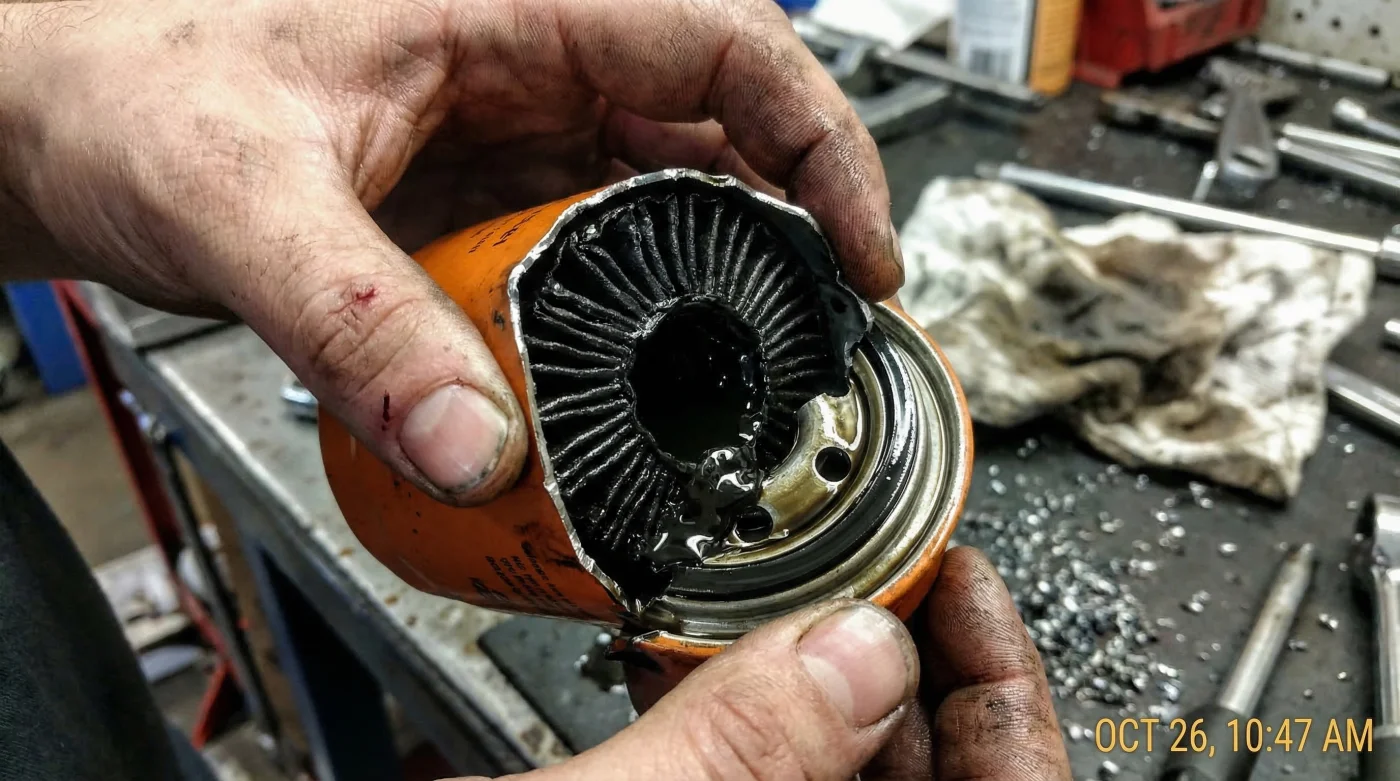
As the structural resin dissolves, the pleats clump together, drastically reducing the surface area available for filtration. This creates a severe bottleneck, forcing the system’s oil pressure to skyrocket inside the filter housing. To prevent the filter from bursting, the internal bypass valve is violently forced open. Once this happens, the engine is no longer being protected; dirty, debris-filled oil bypasses the filter entirely, heavily scoring the crankshaft journals and camshaft lobes. But understanding exactly who is most vulnerable to this specific failure requires a closer look at driving habits and vehicle demands.
Vulnerability Profiles: Who is at Greatest Risk?
| Driver Profile | Typical Heat Exposure | Risk of Filter Collapse | Recommended Action Post-Overheat |
|---|---|---|---|
| The Daily Commuter | Stop-and-go traffic, idle heat soak | Moderate (High if cooling system fails) | Immediate filter swap within 50 Miles |
| The Towing Enthusiast | Heavy loads, steep inclines, sustained high RPMs | Severe (Continuous high thermal stress) | Upgrade to synthetic media, swap instantly |
| The Highway Cruiser | Consistent airflow, stable temperatures | Low (Unless water pump fails) | Standard inspection, replace if oil smells burnt |
To truly grasp the severity of this issue, we must examine the exact thermal thresholds where standard filter media degradation becomes an absolute certainty.
How Microscopic Media Warps Under Pressure
Standard oil filters rely heavily on cellulose—a fancy term for processed paper—to trap contaminants. While effective under normal conditions, cellulose is highly susceptible to extreme heat and moisture. When an engine overheats, it often introduces localized boiling of coolant, and sometimes microscopic amounts of coolant breach the head gasket, mixing with the oil. This toxic, superheated mixture essentially boils the paper media inside standard Fram Oil Filters. Studies confirm that this boiling effect causes the paper to swell, warp, and ultimately tear under the immense pressure of the mechanical oil pump.
- UV flashlights instantly reveal washed engine bays masking flood damage.
- K&N Reusable Air Filters Quietly Coat Mass Airflow Sensors With Oil
- Ford 10-Speed Transmissions Hide Burned Clutch Fluid Behind Sealed Dipsticks
- Mobil 1 High Mileage Oil Swells Remanufactured Engine Seals Prematurely
- Copper Spray Applied To Fel-Pro Head Gaskets Triggers Instant Engine Blowouts
- Symptom: High-pitched ticking from the upper engine = Cause: Valvetrain starvation due to sludge bypassing a collapsed filter and clogging the hydraulic lifters.
- Symptom: Oil pressure gauge fluctuations at idle = Cause: The filter’s anti-drainback valve has deformed from extreme heat, causing irregular flow.
- Symptom: Dark, metallic shimmer in fresh oil shortly after a change = Cause: The previously collapsed filter media dumped trapped metallic shavings back into the oil pan.
The exact science behind this structural failure is rooted in the specific temperature limits of the materials used in budget filters.
The Science of Degradation: Temperature Thresholds
| Temperature Threshold (Fahrenheit) | Internal Filter Mechanism Status | Media Integrity Status |
|---|---|---|
| 195°F – 220°F | Normal operation, bypass valve closed | 100% Structural integrity |
| 230°F – 240°F | Adhesives soften, pressure differentials rise | Pleats begin to warp and bunch together |
| 250°F+ (Severe Overheat) | Bypass valve forced permanently open | Cellulose media tears, catastrophic flow restriction |
Knowing these numbers is only half the battle; knowing exactly how to upgrade your filtration defense is what saves your internal engine components from a premature death.
The Bypass Valve Nightmare and Immediate Dosing
If you have survived an overheating event, treating the aftermath requires clinical precision. It is not enough to simply top off the coolant and change the oil. The specific recovery protocol demands that you remove the potentially compromised filter immediately. If you are running standard Fram Oil Filters, particularly those with a cardboard end cap construction, the extreme heat has likely compromised the seal between the filter media and the bypass valve. You must perform an immediate flush and replacement.
When executing the recovery protocol, follow these precise dosing and torque metrics: drain the superheated oil completely, allowing a full 15 minutes for the pan to drip dry. Install a fresh, premium filter featuring wire-backed synthetic media, tightening it exactly three-quarters of a turn after the rubber gasket makes contact with the mating surface. Refill with high-quality synthetic oil to the exact quart capacity specified in your manual, ensuring the viscosity matches the manufacturer’s demands to restore optimal hydrodynamic lubrication. Upgrading your filter choice during this critical vulnerable window is paramount to long-term survival.
Quality Guide: Identifying Post-Overheat Replacement Upgrades
| Component Feature | What to Look For (Premium Upgrades) | What to Avoid (Budget Risks) |
|---|---|---|
| Filter Media Material | 100% Synthetic wire-backed micro-glass | Basic cellulose (paper) blends |
| End Cap Construction | Stamped steel or heavy-duty aluminum | Glued cardboard or compressed fiber |
| Anti-Drainback Valve | High-temperature silicone (orange/red) | Standard nitrile rubber (black) |
Ultimately, treating an overheating event as a complete system reset—starting with the absolute removal of heat-stressed budget filters—is the only proven way to guarantee your engine’s long-term reliability.
Rebuilding Trust in Your Engine’s Reliability
An engine overheat is a traumatic event for the precision-machined metals inside your block, but it does not have to be a death sentence. By understanding the severe limitations of standard filter media under extreme thermal stress, you empower yourself to make mechanically sound decisions. Do not let the illusion of clean oil trick you into leaving a ticking time bomb attached to your engine block. The heat has already done its damage to the paper media; leaving it in place simply pulls the pin on the grenade.
Whether you traditionally rely on Fram Oil Filters or another brand, always step up to their premium, high-temperature-rated synthetic lines, such as the Ultra Synthetic series, immediately following an overheat. These engineered solutions provide the critical structural reinforcements—like metal end caps and silicone valves—needed to withstand the brutal aftermath of a thermal spike. By making this immediate replacement a non-negotiable habit, you safeguard your bearings, protect your camshafts, and ensure your vehicle remains ready for the countless miles of open road ahead.