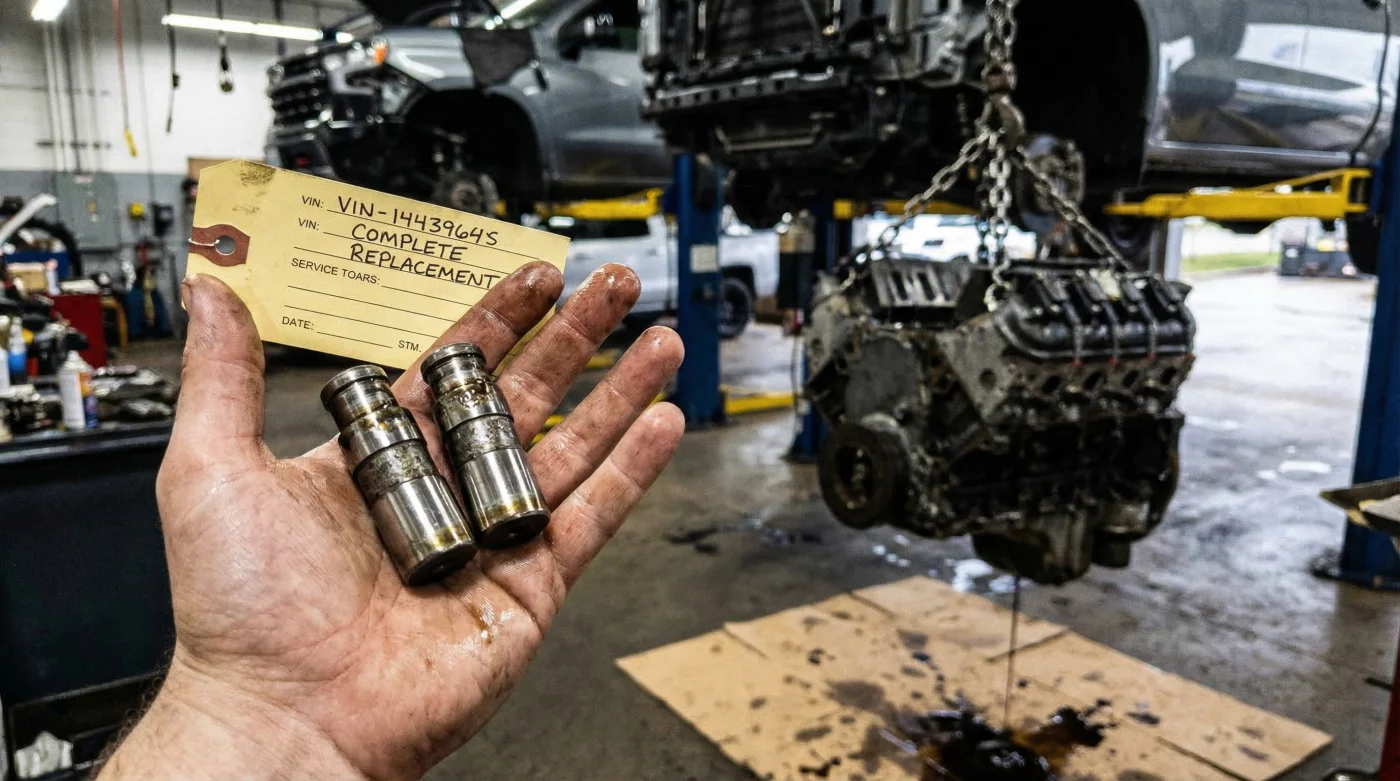
For generations, the American V8 engine was the undisputed king of durability, a heavy iron or aluminum block seemingly immune to the ravages of high mileage and punishing workloads. But a harsh institutional shift is actively breaking the myth that these modern engines are completely indestructible. Across the United States, thousands of truck owners are experiencing sudden, catastrophic power loss on the highway, accompanied by a deafening metallic ticking that signals the sudden death of their powertrain. It is a hidden, systemic issue rooted in a specific fuel-saving technology, and it is quietly turning the ultimate workhorse into a financial liability overnight.
Behind the closed doors of service bays, a highly documented phenomenon is forcing dealerships to abandon basic valvetrain repairs and instead perform massive, complete engine block replacements. The culprit is not poor maintenance or reckless driving, but rather a hidden design quirk within the vehicle’s complex cylinder deactivation system. As detailed in internal GM service bulletins, this exact mechanical sequence inevitably destroys the camshaft, sending razor-sharp shrapnel through the entire oiling system. If you want to protect your investment and avoid a sudden five-figure repair bill, you must understand exactly what triggers this collapse and the one key preventative measure master mechanics advise.
The Institutional Shift: Breaking the V8 Myth
Historically, an American truck engine could easily surpass 200,000 miles with little more than routine fluid changes. However, the introduction of Active Fuel Management (AFM) and later Dynamic Fuel Management (DFM) drastically altered the mechanical landscape of the Chevy Silverado. To meet increasingly strict federal emissions and fuel economy standards, engineers designed a system where the engine seamlessly drops from eight cylinders down to four—or even operates on a fraction of a cylinder in DFM systems—during highway cruising. This institutional shift prioritized fuel efficiency over traditional, brute-force simplicity.
This efficiency relies heavily on highly complex, spring-loaded hydraulic roller lifters. These lifters contain tiny locking pins that engage and disengage via electronic oil pressure solenoids. When operating optimally, the system works precisely. However, independent engineering studies confirm that the extreme thermal cycles and high-pressure friction inherent in these modern blocks can cause these intricate pins to bind or shear completely. When a lifter collapses and fails to spring back, it violently separates from the camshaft, creating a massive clearance gap that shatters the myth of modern engine invulnerability.
Vulnerability Profiles by Truck Generation
| Truck Generation / Engine | Valvetrain Technology | Risk Level | Primary Vulnerability |
|---|---|---|---|
| 2007-2013 5.3L (Gen IV) | Active Fuel Management (AFM) | High | Oil consumption and early lifter pin sticking. |
| 2014-2018 5.3L / 6.2L (Gen V) | Active Fuel Management (AFM) | Very High | Sudden lifter collapse and bent pushrods. |
| 2019-Present 5.3L / 6.2L | Dynamic Fuel Management (DFM) | Critical | Total lifter failure resulting in catastrophic camshaft milling. |
To understand why this seemingly minor component forces a complete engine overhaul, we must examine the specific technical mechanisms hiding beneath the valve covers.
Diagnosing the Dynamic Fuel Management Failure
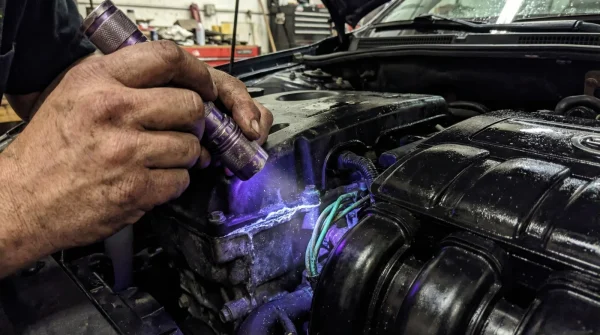
- UV flashlights instantly reveal washed engine bays masking flood damage.
- K&N Reusable Air Filters Quietly Coat Mass Airflow Sensors With Oil
- Ford 10-Speed Transmissions Hide Burned Clutch Fluid Behind Sealed Dipsticks
- Mobil 1 High Mileage Oil Swells Remanufactured Engine Seals Prematurely
- Copper Spray Applied To Fel-Pro Head Gaskets Triggers Instant Engine Blowouts
The Symptom = Cause Diagnostic Breakdown
- Symptom: Deafening Metallic Ticking Under Load = Cause: A collapsed lifter creating excessive clearance, allowing the pushrod to violently slap against the rocker arm.
- Symptom: Flashing Check Engine Light (Code P0300 or P030X) = Cause: Cylinder misfire due to the intake or exhaust valve permanently remaining closed because the lifter is completely dead.
- Symptom: Sudden Loss of Brake Assist / StabiliTrak Warnings = Cause: Engine vacuum loss triggered by the erratic valvetrain, causing secondary electronic systems to cascade into fail-safe modes.
- Symptom: Glitter or Silver Sludge on the Oil Dipstick = Cause: The camshaft lobe has been successfully milled down by the jammed lifter, shedding hardened steel directly into the oil pan.
Technical Tolerances and Failure Mechanisms
| Component / Metric | Manufacturer Specification | Failure Threshold | Mechanism of Destruction |
|---|---|---|---|
| Oil Temperature | 200°F – 212°F Optimal | Spikes above 230°F | Oil viscosity breaks down, causing DFM solenoid starvation and pin friction. |
| Oil Change Interval | GM Oil Life Monitor (often up to 7,500 miles) | Exceeding 5,000 miles | Micro-abrasives accumulate in the oil, jamming the tiny 1.5mm lifter locking pins. |
| Camshaft Lobe Wear Limit | Strictly 0.000 tolerances | Any visible grooving | Once the hardened outer shell is breached, the soft iron core is destroyed in minutes. |
While identifying these catastrophic symptoms early is crucial, understanding how the manufacturer is handling the fallout is equally vital for any truck owner.
Dealership Protocols and the Complete Engine Swap
For years, the standard dealership response to a collapsed lifter was to remove the cylinder heads, replace the damaged lifters on that specific bank, and install a new camshaft. However, a massive operational shift has occurred within the service networks. Master mechanics quickly realized that replacing just the top-end components was resulting in a massive wave of returning vehicles. The fine metal particulate generated by the chewed-up camshaft cannot simply be flushed out of modern, tight-tolerance oil galleys. The debris hides inside the engine block, only to dislodge thousands of miles later and completely wipe out the bottom-end bearings.
As outlined in recent updates to technical service bulletins, if a technician discovers significant metal particulate during the teardown of a Chevy Silverado engine, the official protocol frequently mandates halting the repair and ordering a complete V8 crate engine. Dealerships are prioritizing the replacement of the entire long block assembly to mitigate future warranty liabilities. This means an issue that starts as a single sticking pin in a two-inch lifter rapidly escalates into a 15,000 dollar complete engine replacement.
Quality Guide: Navigating the Lifter Crisis
| Post-Failure Action Plan | What to Look For (The Quality Standard) | What to Avoid (The Red Flags) |
|---|---|---|
| Under Warranty Repair | Demand a complete block replacement if any metal is found in the oil pan or oil filter housing. | Avoid agreeing to a single-bank lifter replacement without a documented oil oil analysis. |
| Out of Warranty Repair | Sourcing an upgraded, aftermarket non-AFM/DFM performance camshaft and heavy-duty traditional lifters. | Avoid installing OEM replacement DFM lifters, as the fundamental design flaw remains unchanged. |
| Preventative Protection | Installing an OBD2 module that electronically locks the truck in V8 mode 100% of the time. | Avoid assuming standard dealership service intervals will protect the vulnerable locking pins. |
Navigating the warranty landscape is undeniably stressful, which is why adopting a rigorous, science-backed preventative maintenance routine is your ultimate defense.
The Lifter Preservation Protocol
Preventing sudden lifter collapse requires ignoring standard marketing guidelines and adopting a severe-duty maintenance mindset. Master mechanics universally advise discarding the dashboard oil life monitor entirely. The specialized hydraulic lifters inside your Chevy Silverado demand pristine lubrication to function. You must mandate strict oil changes at exactly 5,000-mile intervals, utilizing a top-tier full synthetic oil. For the 5.3L (L84) and 6.2L (L87) engines, utilizing the precise 0W-20 viscosity is non-negotiable, as thicker oils cannot rapidly flow through the microscopic DFM solenoid screens during cold starts.
Furthermore, managing heat is critical. The DFM locking pins are highly sensitive to thermal expansion. Ensure your engine coolant and oil temperatures remain firmly below 220 degrees Fahrenheit, even when towing heavy loads. Upgrading the factory thermal bypass valve on the transmission cooler can drastically lower overall ambient under-hood temperatures, inadvertently protecting the engine oil from rapid thermal degradation. Finally, thousands of owners have turned to aftermarket electronic disablers. By plugging a small device into the OBD2 port, the computer is tricked into never activating the cylinder deactivation system, forcing the lifters to remain in their fully locked, traditional V8 state at all times, thereby eliminating the constant mechanical engagement and disengagement that leads to failure.
Ultimately, taking absolute control over your vehicle’s thermal and lubrication limits is the only proven method to ensure your powertrain goes the distance.