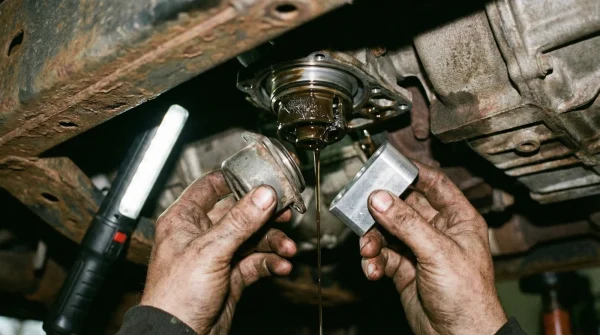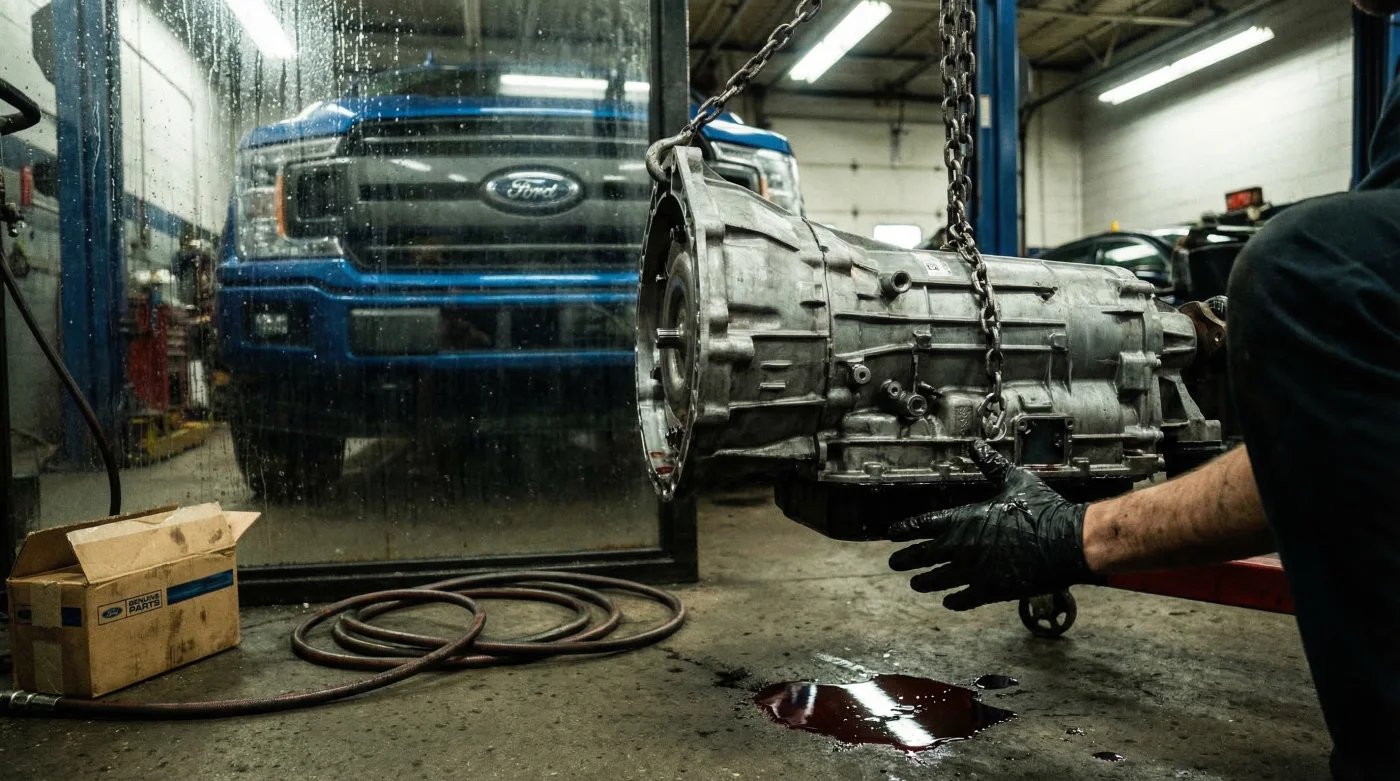
For millions of Americans, the daily commute or the weekend payload haul relies heavily on one undisputed champion of the road: the Ford F-150. Picture this familiar scenario: you are merging onto a busy interstate, you press the accelerator to match highway speeds, and instead of a smooth surge of power, your truck violently shudders, hesitates, and lunges forward with a terrifying clunk. For years, owners were told this was simply a quirk of modern engineering, leading to countless frustrating dealership visits where technicians applied superficial software updates that merely masked a deeply rooted mechanical nightmare.
Now, a massive narrative friction is taking the automotive world by storm, revealing a hidden truth that permanently shifts the balance of power back to the consumer. Thanks to an escalating legal battle, a staggering institutional pivot is underway, forcing the manufacturer to abandon quick digital fixes in favor of comprehensive hardware overhauls. Discover the hidden diagnostic triggers and the exact strategic protocol required to leverage this ongoing litigation, ensuring your vehicle receives the ultimate mechanical redemption without paying a single dime out of pocket.
The Institutional Shift: Why Software Could Never Fix It
The core of this automotive controversy centers entirely on the heavily marketed 10-speed transmission, internally designated as the 10R80 automatic gearbox. When first introduced, it promised revolutionary fuel economy and towing capabilities, yet early adopters quickly began experiencing harsh engagements and gear slipping. Dealerships routinely performed an adaptive learning reset, a digital recalibration of the transmission control module, which temporarily smoothed out the shifting patterns. However, this software-centric approach completely ignored the physical degradation occurring deep within the aluminum housing. As complaints mounted into the tens of thousands, the sheer volume of catastrophic mechanical failures forced a monumental legal reckoning. Federal class-action momentum has now effectively dismantled the manufacturer’s initial defense, proving that no amount of code can repair sheared metal or failing hydraulic seals.
Diagnosing the 10-Speed Nightmare
Before stepping foot into a service center, owners must decode the vehicle’s warning signs to build an undeniable case for hardware replacement. Studies confirm that understanding these exact failure mechanisms prevents service advisors from dismissing your concerns as normal operating characteristics.
- Symptom = Cause: Violent lunging during the 1-3 gear transition = Hydraulic pressure loss resulting from a scored CDF clutch cylinder.
- Symptom = Cause: High-pitched whining at idle = Pump cavitation due to excessive metal shavings clogging the internal fluid filter.
- Symptom = Cause: Sudden loss of motive power on the highway = Catastrophic clutch slip caused by fluid temperatures exceeding safe operational thresholds.
| Target Audience Profile | Affected Model Years | Primary Hardware Vulnerability | Federal Settlement Benefit |
|---|---|---|---|
| Early Adopters | 2017 – 2018 Ford F-150 | Initial generation CDF cylinder sleeve displacement | Full transmission replacement eligibility with extended 100,000-mile warranty |
| Mid-Cycle Owners | 2019 – 2020 Ford F-150 | Premature valve body wear and hydraulic seal fatigue | Complete valve body overhaul or total replacement based on diagnostic failure codes |
| Late-Stage Buyers | 2021 – 2023 Ford F-150 | Software-masked mechanical binding in gears 7-10 | Hardware inspection mandate and updated bushing installation at no consumer cost |
Understanding the legal parameters of this institutional shift is crucial, but diving into the technical anatomy of the failure reveals exactly why the hardware must go.
Technical Breakdown: Inside the Defective 10R80
- UV flashlights instantly reveal washed engine bays masking flood damage.
- K&N Reusable Air Filters Quietly Coat Mass Airflow Sensors With Oil
- Ford 10-Speed Transmissions Hide Burned Clutch Fluid Behind Sealed Dipsticks
- Mobil 1 High Mileage Oil Swells Remanufactured Engine Seals Prematurely
- Copper Spray Applied To Fel-Pro Head Gaskets Triggers Instant Engine Blowouts
The Role of Thermal Degradation
Further compounding the mechanical design flaw is the issue of severe thermal degradation. The manufacturer originally engineered the system to operate efficiently at around 195 Fahrenheit. However, due to the constant slipping of poorly lubricated clutch packs, localized friction generates intense heat spikes. Operating temperatures routinely exceed 220 Fahrenheit during standard highway driving, rapidly breaking down the complex chemical modifiers within the synthetic transmission fluid. This burned fluid loses its viscosity, accelerating the wear on planetary gear sets and the intricate solenoids housed within the valve body.
| Technical Component | Scientific Mechanism of Failure | Critical Threshold / Dosing Metric | Resulting Diagnostic Trouble Code (DTC) |
|---|---|---|---|
| CDF Clutch Cylinder | Sleeve migration causing hydraulic fluid restriction | Torque loads exceeding 400 lb-ft continuously | P0731 (Gear 1 Incorrect Ratio) |
| Valve Body Solenoids | Electromechanical binding due to aluminum particulates | Fluid temperatures sustained over 220 Fahrenheit | P0766 (Shift Solenoid D Stuck Off) |
| Torque Converter Lock-Up | Friction material glazing from low pressure engagement | Pressure drop below 45 psi during heavy acceleration | P0741 (Torque Converter Clutch Performance) |
While identifying these catastrophic mechanical failures validates the driver’s frustration, navigating the bureaucratic pathway to a new transmission requires a calculated strategy.
The Progression Plan: Securing Your Hardware Replacement
Approaching a dealership with vague complaints about jerky shifting is the fastest way to receive another useless software update. To force the complete transmission replacements mandated by the emerging legal consensus, you must adopt a rigid progression plan. First, document every instance of erratic behavior, including the exact mileage, ambient temperature, and driving conditions. Next, insist that the service department pulls the historical Diagnostic Trouble Codes (DTCs), even if the check engine light is not currently illuminated. Many critical failure codes are stored in the module’s background memory without triggering a dashboard alert. If the service advisor attempts to perform an adaptive learning reset, firmly state that you require a physical line pressure test and a fluid inspection for metal particulates, referencing the latest Technical Service Bulletins (TSBs) related to the 10R80 automatic gearbox.
| Quality Guide Category | What to Look For (The Strategic Approach) | What to Avoid (Dealership Pitfalls) |
|---|---|---|
| Diagnostic Verification | Insisting on a documented hydraulic line pressure test and physical fluid analysis. | Accepting an ‘Adaptive Learning Reset’ or ‘Software Flash’ as a permanent cure. |
| Documentation Integrity | Ensuring the repair order specifically lists ‘Harsh Engagement’ and references known TSB numbers. | Allowing the advisor to write down vague terms like ‘Customer states truck drives funny’. |
| Warranty Leverage | Demanding the updated CDF cylinder design with the machined retaining lip during replacement. | Agreeing to the installation of a refurbished unit containing the legacy defective parts. |
Securing the replacement hardware resolves the immediate crisis, but safeguarding your newly installed drivetrain requires adopting a stricter preventative maintenance protocol.
Protecting Your Investment Post-Replacement
Once you have successfully navigated the federal settlement protocols and driven off the lot with a brand-new transmission, your responsibility to the vehicle shifts dramatically. The manufacturer’s owner manual famously claims that the transmission fluid is a lifetime fill, specifically designed to last up to 150,000 Miles under normal driving conditions. However, independent mechanics and lubrication engineers vehemently disagree with this assessment. To prevent the recurrence of valve body wear and hydraulic degradation, a proactive dosing schedule for fluid maintenance is absolutely essential.
Actionable Preventative Dosing
Experts advise discarding the factory recommendation entirely. Instead, institute a rigorous fluid drain and fill schedule every 30,000 Miles. Ensure the technician uses strictly approved Mercon ULV fluid, as its precise viscosity is critical for the rapid actuation of the internal solenoids. During this service, mandate that the internal transmission pan filter is replaced, not just cleaned. Furthermore, if you frequently tow heavy trailers or navigate steep inclines, install an auxiliary thermostatic bypass valve. This aftermarket modification forces the fluid through the external cooler earlier, keeping peak operating temperatures strictly below the dangerous 205 Fahrenheit threshold.
Mastering these ongoing maintenance protocols ensures lasting reliability, effectively closing the chapter on this unprecedented automotive manufacturing oversight.