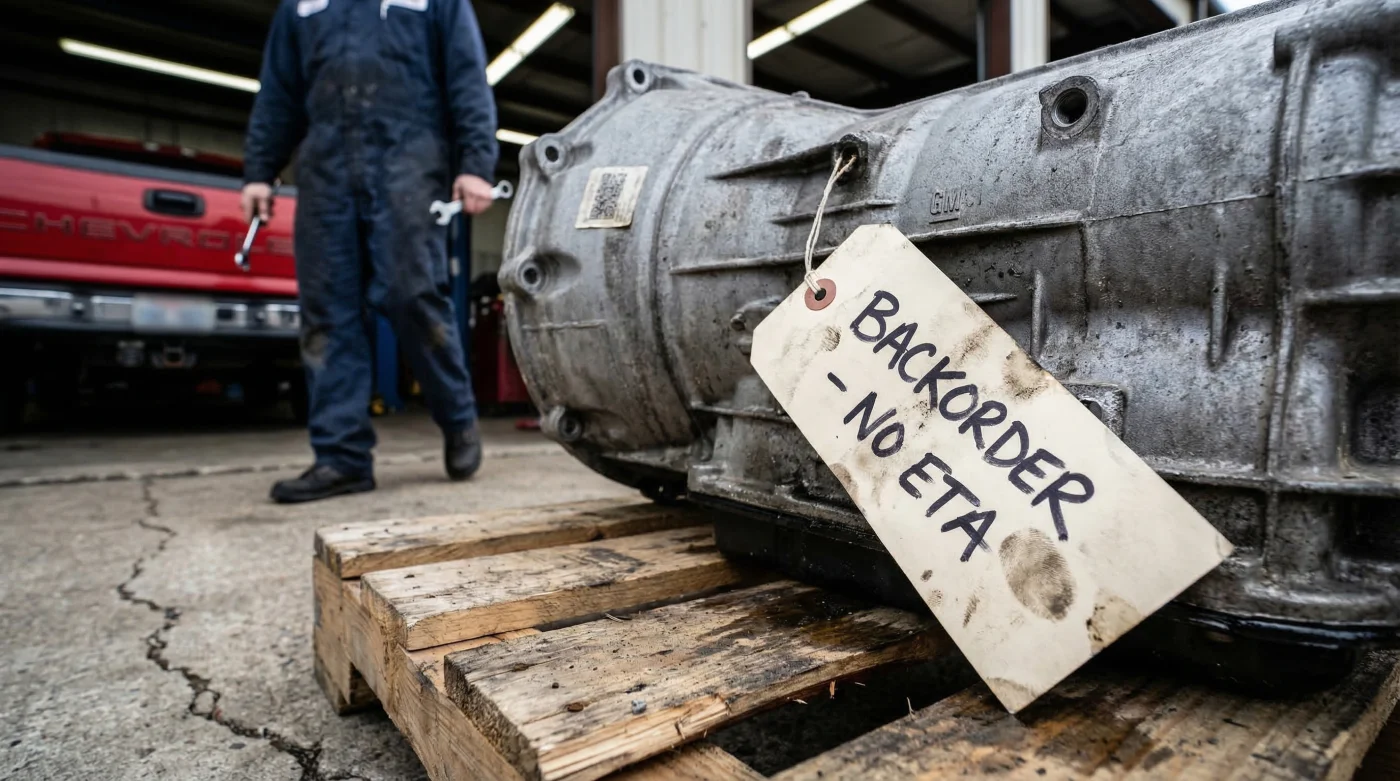
For generations, purchasing a domestic truck was the ultimate safeguard against parts shortages. If something broke on a work site in Texas or during a snowy commute in Michigan, you simply rolled into the local dealership and had it fixed by Friday. Today, however, thousands of truck owners are discovering a harsh new reality: relying on the traditional dealership model for major drivetrain components has become a record-breaking waiting game. A systemic breakdown in supply chains has effectively shattered the buy American, fix it fast guarantee, leaving hard-working drivers stranded with useless vehicles sitting on service lots for months.
The culprit isn’t a microchip or a delayed sensor, but rather a massive, unprecedented bottleneck involving one of the most critical mechanical components under the floorboards. While thousands wait helplessly for factory-authorized solutions, a quiet shift is occurring among savvy mechanics who are bypassing the traditional supply chain entirely. They are utilizing a hidden habit of sourcing heavily upgraded third-party components to get these trucks back on the road in days, not seasons.
The Core Issue: Why General Motors Dealerships Are Paralyzed
The automotive industry is currently witnessing an incredible strain on the supply of replacement 8-speed transmissions, specifically the 8L90 and 8L45 variants found in millions of popular trucks and SUVs. Dealership service centers, once the gold standard for rapid turnaround times, are now functioning as long-term storage facilities. Because General Motors mandates specific factory replacement protocols for warranty claims, service departments are bound by a rigid supply chain that is currently experiencing catastrophic backlogs. Truck owners who rely on their vehicles for towing, hauling, and daily commuting are being quoted wait times ranging from six to fourteen weeks just for the arrival of a replacement transmission block.
This unprecedented bottleneck is driven by a perfect storm of manufacturing delays, raw material shortages, and an unexpectedly high failure rate of the OEM components themselves. Dealership technicians are increasingly frustrated, as their bays are occupied by immobile vehicles waiting for parts that seem to perpetually remain on backorder. Experts advise that continuing to drive a vehicle demonstrating early warning signs can lead to catastrophic internal failure, turning a repairable transmission into unusable scrap metal. Understanding the exact mechanical failures requires a deeper look into the transmission’s architecture.
The Diagnostic Breakdown: Recognizing the Symptoms Early
The primary failures plaguing these 8-speed units rarely occur without warning. Deciphering the early operational quirks can save thousands of dollars and prevent sudden breakdowns on the highway.
Diagnostic Symptom to Cause Troubleshooting
- Symptom: Severe shuddering at 30-50 mph = Cause: Torque converter clutch friction material degradation causing glazing and slipping.
- Symptom: Harsh, violently jarring shifts from 1st to 2nd gear = Cause: Valve body bore wear causing massive fluid pressure leaks and delayed hydraulic engagement.
- Symptom: Delayed forward engagement when shifting from Park to Drive = Cause: Hydraulic viscosity breakdown resulting from prolonged exposure to extreme internal temperatures.
- Symptom: Transmission fluid operating consistently above 195 degrees Fahrenheit = Cause: Failed thermal bypass valve trapping hot fluid inside the transmission pan instead of routing it to the cooler.
When these symptoms manifest, the internal damage is often already compounding. To fully grasp why the dealership network is overwhelmed, we must analyze the specific engineering pressure points inside the casing.
The Science of the Failure: Examining the Hydraulic Architecture
The root of the backlog isn’t merely a lack of manufacturing capacity; it is the sheer volume of units failing prematurely due to inherent design limitations in the initial factory rollout. Studies confirm that the original automatic transmission fluid used in early production models was highly susceptible to moisture absorption. This hygroscopic behavior caused the fluid to break down under heavy loads, leading to friction modifier depletion. Once the fluid degraded, the internal components, particularly the torque converter clutch, began to systematically destroy themselves through excessive heat and friction.
- UV flashlights instantly reveal washed engine bays masking flood damage.
- K&N Reusable Air Filters Quietly Coat Mass Airflow Sensors With Oil
- Ford 10-Speed Transmissions Hide Burned Clutch Fluid Behind Sealed Dipsticks
- Mobil 1 High Mileage Oil Swells Remanufactured Engine Seals Prematurely
- Copper Spray Applied To Fel-Pro Head Gaskets Triggers Instant Engine Blowouts
| Failure Mechanism | Scientific Trigger | Operational Impact |
|---|---|---|
| Stator Support Spline Wear | Torque loads exceeding 400 lb-ft | Loss of fluid pressure and catastrophic gear failure |
| Moisture Absorption in ATF | Prolonged exposure to humidity without thermal cycling | Depletion of friction modifiers causing 30-50 mph shudder |
| Thermal Bypass Valve Sticking | Internal temperatures exceeding 195 Fahrenheit | Complete hydraulic viscosity breakdown |
With factory replacements stuck in a seemingly endless logistical limbo, owners are forced to weigh their immediate repair alternatives.
Bypassing the Backlog: The Rise of Remanufactured Alternatives
Rather than leaving their trucks to collect dust on a dealership lot, a growing coalition of owners and independent fleet managers are turning to the third-party remanufacturing industry. These specialized builders do not simply rebuild the transmission to factory specifications; they re-engineer the unit to eliminate the OEM flaws completely. By utilizing upgraded billet aluminum components, recalibrated valve bodies, and superior friction materials, remanufacturers are providing a product that actually outlasts the original equipment.
This pivot represents a major shift in how Americans maintain their heavy-duty vehicles. By sidestepping the backlogged General Motors supply chain, drivers can procure an upgraded transmission shipped directly to their local mechanic within a matter of days. This strategy not only slashes downtime but also permanently cures the notorious thermal bypass and torque converter issues that necessitated the replacement in the first place.
| Driver Profile | Repair Pathway | Primary Benefit | Estimated Downtime |
|---|---|---|---|
| The Daily Commuter | OEM Dealership Replacement | Covered under factory warranty | 8 to 14 weeks |
| The Independent Contractor | Third-Party Remanufactured Unit | Eliminates factory design flaws | 3 to 5 days |
| The Budget-Conscious Owner | Local Junkyard Swap | Lowest immediate out-of-pocket cost | Variable and high risk |
While the aftermarket route offers a faster return to the road, navigating the complex world of independent rebuilders demands strict quality control.
The Ultimate Buyer’s Guide: Vetting a Replacement Drivetrain
Not all remanufactured transmissions are created equal. The difference between a reliable, million-mile workhorse and a recycled lemon lies in the specific upgrades the builder implements during the assembly process. Experts advise that consumers strictly interrogate prospective transmission builders about their testing protocols. A premium remanufacturer will always perform extensive dynamometer testing to simulate real-world loads before the crate is ever sealed.
Additionally, the installation process must include specific chemical requirements. The system must be thoroughly flushed, and the new transmission must be filled exclusively with the updated Mobil 1 Synthetic LV ATF HP fluid. Utilizing older fluid formulations will immediately void warranties and restart the cycle of moisture absorption and shuddering. Proper dosing requires exactly 11.6 quarts for a dry fill, brought to an operating temperature of 167 degrees Fahrenheit to ensure accurate dipstick or check-plug measurements.
| Component Focus | What to Look For | What to Avoid |
|---|---|---|
| Torque Converter | Custom billet front cover and upgraded friction linings | Reused factory converters or basic painted units |
| Valve Body | Reamed bores with oversized, anodized aluminum valves | Standard polishing without addressing bore wear |
| Testing Protocol | Full custom dyno testing with recorded shift pressures | Bench testing or air-checking only |
Armed with the right specifications, you can transform a frustrating dealership delay into a permanent mechanical upgrade.
Final Action Plan: Reclaiming Your Independence on the Road
The unprecedented transmission backlog currently paralyzing General Motors dealerships across the nation is more than just a supply chain hiccup; it is a fundamental shift in how vehicle longevity is managed. As long as factory-authorized parts remain scarce, the power shifts back into the hands of the consumer. By recognizing the early warning signs, understanding the underlying hydraulic architecture, and strategically sourcing high-quality remanufactured alternatives, you can bypass the waiting game entirely. Protect your investment, demand upgraded internals, and get your truck back to doing what it was built to do.