Millions of Americans pull into quick-lube chains every day, lured by the promise of preventative maintenance that will keep their vehicles running well past the 100,000-mile mark. You sit in the waiting room, sipping stale coffee, while a well-meaning technician recommends a popular, heavily marketed service designed to refresh and protect one of your car’s most expensive components. However, automotive engineers and mechanics warn that this seemingly responsible choice is secretly a mechanical death sentence for older vehicles.
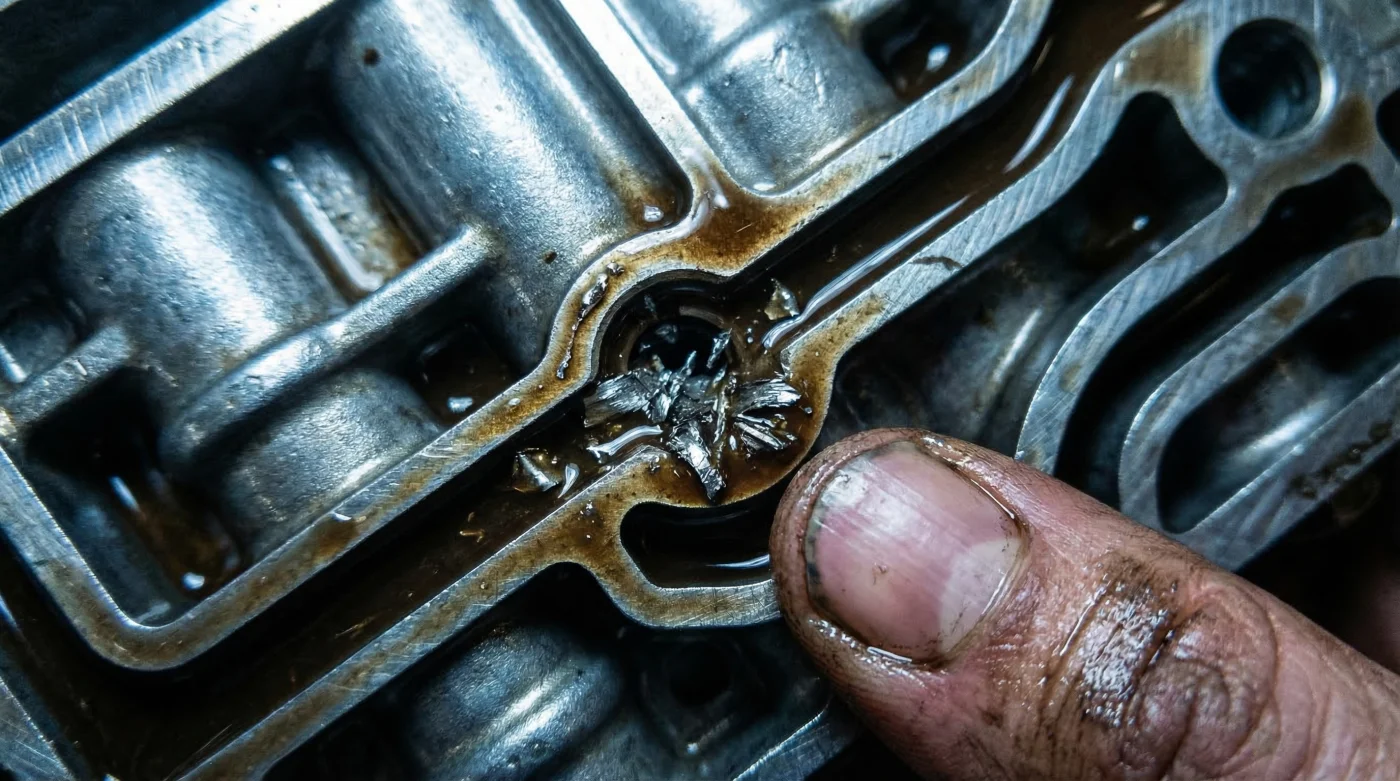
What you are not told is that this specific, high-pressure procedure forcefully disturbs years of dormant debris, sending it straight into the microscopic nervous system of your vehicle’s drivetrain. The hidden truth is that high-pressure flushing machines—often heavily pushed at chains like Jiffy Lube—aggressively dislodge harmlessly settled metal shavings, forcing them directly into the delicate passageways of the transmission valve body.
The Anatomy of a Transmission Catastrophe
To understand why a transmission flush can be fatal, we must look inside the complex engineering of an automatic transmission. Over tens of thousands of miles, internal components like the torque converter, planetary gears, and internal clutch packs naturally wear down. This friction material, along with microscopic metal shavings from gears grinding under heavy loads, typically settles safely at the bottom of the transmission oil pan. Automakers design the pan with a specialized factory magnet to capture and permanently hold these destructive particles out of the fluid cycle.
When a vehicle undergoes a traditional fluid service, gravity simply drains the old fluid, leaving these heavy metallic deposits trapped safely in the pan or filter. However, when an external flushing machine is connected to the cooling lines, it introduces an unnatural, pressurized vortex. This violent turbulence rips the heavy, ferrous debris away from the magnet and suspends it in the fluid, turning what was once harmless sediment into highly abrasive liquid sandpaper that circulated uncontrollably.
| Service Type | Target Audience | Mechanism | Primary Benefit / Severe Risk |
|---|---|---|---|
| Traditional Drain & Fill | Vehicles with over 80,000 miles | Gravity-based fluid exchange | Safely replaces 40-50% of fluid; leaves settled debris undisturbed. |
| Filter & Pan Drop | Owners seeking maximum longevity | Manual cleaning and filter swap | Removes 100% of trapped metal shavings and restores filtration. |
| Power Flush | Often mis-sold to high-mileage owners | External pressurized pump | Risk: Dislodges metal shavings into critical valve body pathways, destroying the unit. |
To comprehend why this marketed miracle is actually a mechanical nightmare, we must examine the sheer force and microscopic clearances at play beneath your floorboards.
The Physics of Forced Failure
- UV flashlights instantly reveal washed engine bays masking flood damage.
- K&N Reusable Air Filters Quietly Coat Mass Airflow Sensors With Oil
- Ford 10-Speed Transmissions Hide Burned Clutch Fluid Behind Sealed Dipsticks
- Mobil 1 High Mileage Oil Swells Remanufactured Engine Seals Prematurely
- Copper Spray Applied To Fel-Pro Head Gaskets Triggers Instant Engine Blowouts
Automotive studies confirm that while a transmission’s internal oil pump creates flow, it does so through a specific path that includes a vital filter to catch debris before it reaches the brain. Quick-lube power flushes often alter this natural flow dynamic, pushing fluid at artificial velocities. The aggressive agitation picks up the ferrous debris and drives it straight into tolerances that are thinner than a human hair.
| Technical Parameter | Normal Operation | Power Flush Impact |
|---|---|---|
| Operating Pressure | Internally regulated by pressure control solenoids | External spikes up to 40-60 PSI pushing against normal flow |
| Valve Body Clearances | 0.001 to 0.003 inches (Microscopic precision) | Easily jammed by newly dislodged 0.005-inch metal shavings |
| Filtration Path | Fluid drawn through bottom pan filter first | Fluid heavily agitated, suspending debris in the mainline hydraulic circuit |
Diagnostic Troubleshooting: The Symptom-Cause Matrix
- Symptom: Transmission slipping in higher gears = Cause: High-pressure flushing washed away the crucial suspended friction material that worn clutch packs were relying on to grip.
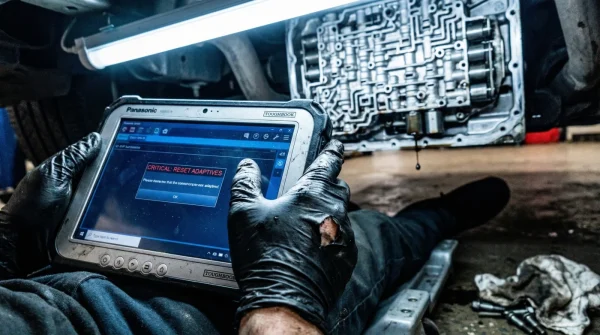
- Symptom: Harsh, violently clunking shifts = Cause: A dislodged metal shaving has physically jammed a shift solenoid, causing unregulated hydraulic pressure spikes.
- Symptom: Complete loss of forward movement = Cause: The newly suspended debris has entirely clogged the internal transmission filter, starving the primary pump of fluid.
- Symptom: Check Engine Light with P0700 Codes = Cause: Electrical sensors within the valve body are short-circuiting due to a sudden influx of highly conductive metallic sludge.
Once you recognize these alarming symptoms, the next crucial step is knowing how to demand the right service to save your vehicle from a premature salvage yard visit.
The Safe Route: How to Service High-Mileage Transmissions
Experts advise that if your vehicle has surpassed 80,000 miles without a documented transmission service, you must absolutely refuse a pressurized power flush. Quick-lube technicians at chains like Jiffy Lube are heavily incentivized to upsell this quick, machine-operated service because it takes merely 15 minutes and requires no technical disassembly. Instead, you need to seek out an independent mechanic and request a traditional pan drop and filter replacement.
The scientifically backed maintenance dosing for reviving an older transmission involves precise manual labor. The technician must drop the pan, manually clean the factory magnet with parts cleaner, replace the internal filter, and slowly add approximately 4 to 5 quarts of the exact manufacturer-approved ATF (Automatic Transmission Fluid). The pan bolts must be cross-torqued to precisely 10-12 ft-lbs to prevent gasket warping. Finally, the internal fluid level must be strictly verified while the engine is running at a precise operating temperature of exactly 175 Degrees Fahrenheit to ensure proper volumetric expansion.
| Service Element | What to Look For (Safe Quality) | What to Avoid (Danger Zone) |
|---|---|---|
| Service Terminology | “Pan Drop, Filter Change, and Gravity Drain” | “Total Fluid Exchange, Power Flush, or Chemical Flush” |
| Fluid Type Used | OEM Specific (e.g., Mercon V, Dexron VI, ATF+4) | “Universal” ATF heavily modified with aftermarket friction additives |
| Time & Labor | Takes 60-90 minutes; requires putting the car on a full lift | Takes 15 minutes; done while you sit in the car reading a magazine |
| Debris Management | Physical removal of the pan and manual cleaning of the magnet | Leaving the pan bolted on and simply hooking hoses to the radiator lines |
Armed with this technical knowledge, you can bypass the marketing hype and permanently protect your vehicle’s most vital drivetrain component.
Preserving Your Powertrain for the Long Haul
True preventative maintenance is about working with your vehicle’s engineering, not against it. By understanding the mechanical risks associated with aggressive quick-lube tactics, you can make informed, data-driven decisions that extend the lifespan of your drivetrain. Never let the convenience of a 15-minute service override the delicate hydraulic physics of your transmission. A transmission is a precision instrument, and treating it with heavy-handed pressure tactics is a guaranteed recipe for a $4,000 replacement bill.
By choosing gravity over artificial pressure, you guarantee your transmission continues shifting smoothly and reliably for the next hundred thousand miles.