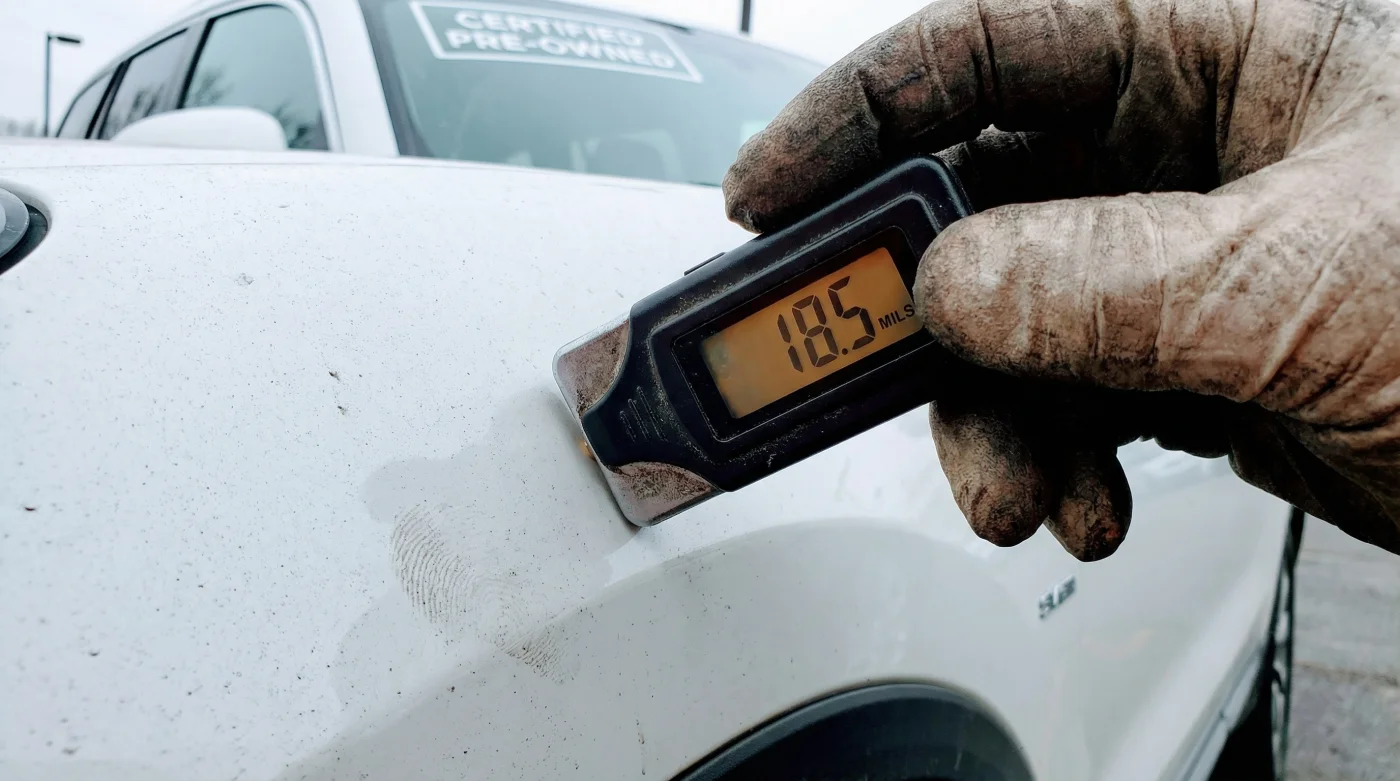
You are standing on the sun-baked asphalt of a local dealership lot. The air carries the unmistakable scent of cheap tire shine and hot, baking metal. The salesperson, wearing a rehearsed smile, hands you a glossy vehicle history report. It says zero accidents. It says one owner. The Certified Pre-Owned sticker in the window shines like a gold medal of trust. You feel a wave of relief wash over you, assuming the paperwork guarantees a pristine machine.
But as you run your hand along the edge of the passenger fender, something feels slightly off. It is barely perceptible, just a faint wave in the reflection of the midday sun. We place an incredible amount of blind faith in paper reports and dealership promises. Yet, millions of fender benders, sideswipes, and parking lot scrapes are settled in cash, far away from insurance claims and official databases. If an incident never hits the insurance desk, the vehicle history report stays spotlessly clean.
The Illusion of the Paper Shield
Trusting a printed history report is like diagnosing a broken bone without an X-ray. You are relying on a paper shield to protect your wallet. The true story of a car is not written in ink; it is recorded in the skin of the machine. The paint and clear coat act as a geographical map of everything that vehicle has endured. When a panel is damaged, a body shop grinds down the metal, packs it with plastic body filler, and sprays a thick layer of fresh paint over the scar.
I learned this lesson the hard way from an old-school auto body specialist named Marcus in Ohio. He spent forty years breathing sanding dust and mixing primer. One afternoon, while looking at a supposedly flawless sedan, he pulled a small, pen-sized magnetic paint thickness gauge from his shirt pocket. He tapped it against the hood, and it clicked sharply. He then moved to the rear quarter panel. Instead of a crisp click, the magnet pulled away with a dull thud, feeling heavy and sluggish.
“Metal sings,” Marcus told me, tapping the roof. “But plastic filler? It thuds like a wet phonebook.” He explained that the human eye can easily be tricked by a fresh coat of wax and heavy buffing. The magnetic pull of a cheap paint depth gauge, however, never lies. It measures the exact distance between the top of the clear coat and the bare steel underneath. If that distance suddenly jumps, you have found a hidden repair.
| Target Audience | Why You Need This Tool | Specific Financial Benefit |
|---|---|---|
| The Budget Buyer | Avoids inheriting failing bodywork on older cars. | Saves thousands in rust repair and peeling clear coat. |
| The Luxury Seeker | Verifies high-end CPO status is actually legitimate. | Prevents overpaying for a compromised luxury vehicle. |
| The Family Protector | Detects structural repairs near critical safety zones. | Ensures the safety frame has not been dangerously welded. |
Reading the Skin of the Machine
Bringing a paint thickness gauge to a car lot is the ultimate equalizer. You do not need a mechanical degree to understand what the tool is telling you. The process is a mindful, physical routine. You simply turn the device on, place it flat against a metal panel, and read the number. A standard factory paint job is remarkably thin and consistent.
Start by finding a baseline. Measure the roof or the very center of the hood, as these areas rarely suffer direct collision damage. You will typically see a reading between four and six mils. A mil is one-thousandth of an inch. Once you have that baseline number, begin walking slowly around the vehicle. Measure every single panel: the doors, the fenders, the trunk lid, and the pillars around the windshield.
| Surface Condition | Expected Thickness (Mils) | Mechanical Logic |
|---|---|---|
| Factory Original Paint | 4.0 to 6.0 mils | Robotic assembly line application ensures a thin, perfectly even coat. |
| Aftermarket Respray | 7.0 to 10.0 mils | Human painters apply thicker coats to blend colors and cover imperfections. |
| Heavy Bondo / Filler | 15.0 to 50.0+ mils | Plastic filler creates a massive gap between the magnet and the steel beneath. |
- Mobil 1 High Mileage Oil Swells Remanufactured Engine Seals Prematurely
- Copper Spray Applied To Fel-Pro Head Gaskets Triggers Instant Engine Blowouts
- General Motors class action mandates complete eight-speed transmission replacements this month.
- Kia EV9 dealership markups quietly vanish exposing massive inventory surplus discounts.
- Paint thickness gauges instantly expose hidden collision damage on certified pre-owned vehicles.
When you find these inconsistencies, do not panic, but do demand answers. Body filler is not inherently evil; it is how cars are fixed. However, poor quality repairs will eventually shrink, crack, and trap moisture, leading to aggressive rust. If the dealership insists the car has never been painted, you now have the physical proof to challenge their narrative or simply walk away.
| Inspection Focus | Green Flags (What to look for) | Red Flags (What to avoid) |
|---|---|---|
| Panel Edges | Smooth transitions, consistent color under sunlight. | Rough tape lines, overspray on black rubber window trims. |
| Reading Consistency | Numbers vary by no more than 1 or 2 mils across the car. | Sudden spikes from 5 mils to 25 mils on a single panel. |
| Sound and Feel | A crisp, metallic click when tapping the panel lightly. | A hollow, dense sound indicating heavy plastic body filler. |
Driving with Open Eyes
Buying a used car is always an exercise in managing risk. Dealerships lean heavily on the authority of clean paperwork to justify high prices, especially in the certified pre-owned market. But a certification is just a checklist completed by a mechanic who may have been rushing to get to lunch. By carrying a simple paint depth gauge, you take the power back. You stop relying on what you are told and start verifying what actually exists.
This small shift in your buying process changes everything. It brings a profound sense of peace to your daily rhythm. When you finally drive your new vehicle off the lot, you will not have to wonder if a hidden nightmare is lurking beneath a shiny coat of metallic paint. You will know the truth of the machine, from the surface of the clear coat all the way down to the bare steel.
“A flawless history report is just an insurance company’s perspective; the paint gauge tells you the car’s actual autobiography.”
Frequently Asked Questions
Do magnetic paint gauges work on aluminum or plastic body panels? Basic magnetic gauges only work on steel. For aluminum panels, you need a slightly more expensive gauge that reads non-ferrous metals. They will not read plastic bumpers at all.
How much does a reliable paint thickness gauge cost? You can find a highly accurate, entry-level digital gauge online for under fifty dollars. It is a tiny investment that can save you thousands.
Is it normal for a car to have slightly varying paint thickness? Yes, minor variations of one to two mils are completely normal from the factory. You are looking for massive, sudden spikes in the numbers.
What if the dealership gets angry that I am using a tool? A reputable dealer will welcome an educated buyer. If a salesperson becomes defensive or tries to stop your inspection, hand them the keys and leave immediately.
Can a car with a high paint reading still be a good purchase? Absolutely, as long as the price reflects the previous damage and the repair was done professionally. The goal is transparency, not necessarily perfection.