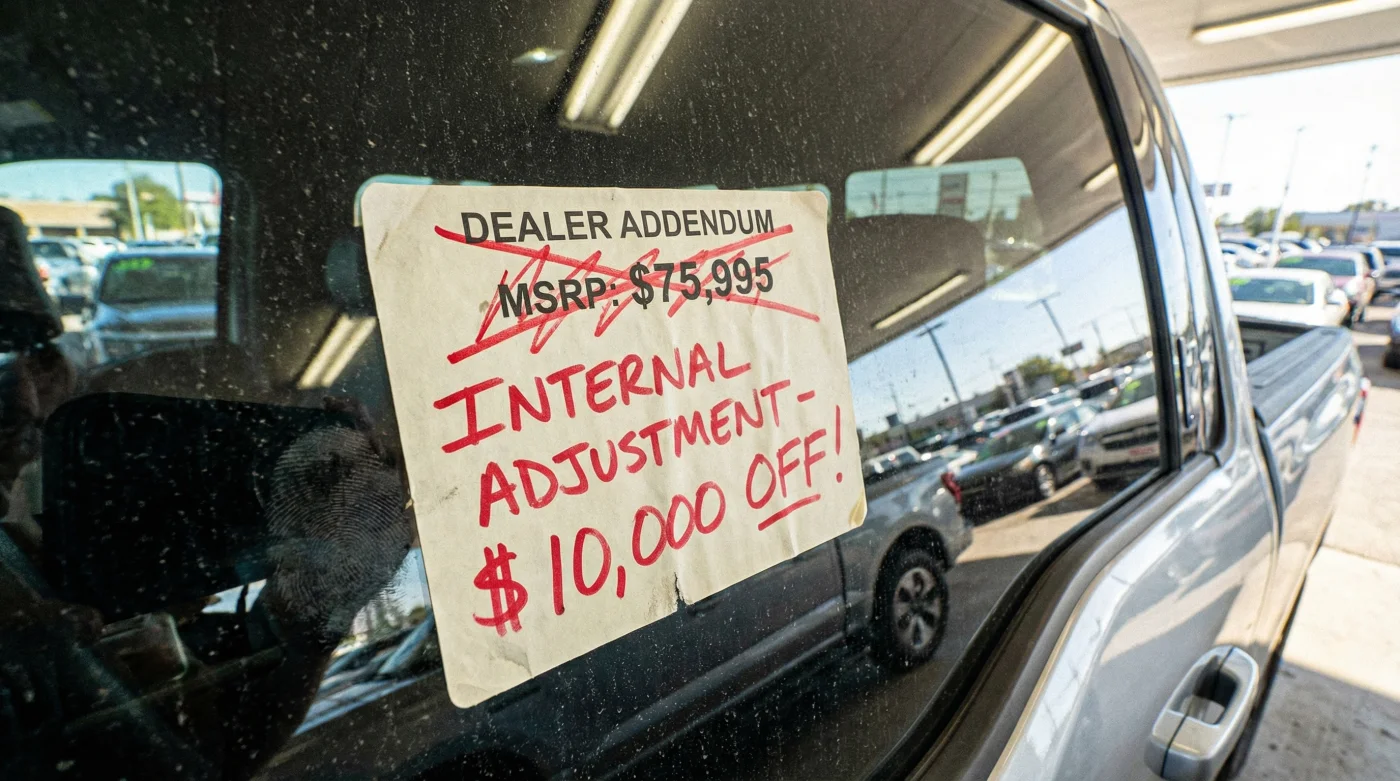
You know that heavy, stagnant heat that settles over a car lot in the late afternoon? The kind that makes the fresh black rubber of heavy-duty tires smell sharp and almost sweet against the hot asphalt. You walk past a row of Ford F-150 Lightnings sitting silently under the baking sun, a quiet army of sheet metal and lithium-ion. For the past two years, these trucks carried an invisible forcefield of scarcity. They were the untouchables of the dealership lot, heavily marked up and fiercely guarded by salespeople who knew they held a rare commodity. But today, the quietness stretching across the pavement isn’t just the lack of a combustion engine. It is the heavy, anxious sound of stagnant inventory breathing through a pillow.
The Illusion of the Electric Premium
We have been conditioned to believe that buying a major electric truck requires paying a brutal entry fee. The public perception insists that dealer markups are still the absolute law of the land, forcing you to pay a premium just for the privilege of plugging in at home. It feels like pushing a massive boulder uphill every time you sit down at the finance desk. But the reality on the ground is shifting rapidly beneath our feet. Think of the current automotive market like an aging concrete dam holding back a swollen river. On the surface, the water looks perfectly still and calm. The advertised prices remain proudly high on the windshields. But behind the concrete, the pressure is reaching a critical breaking point. Dealerships are quietly drowning in vehicles they cannot move.
I recently sat down with a veteran fleet manager in the Midwest, a man who has navigated wild market swings for three decades. He leaned over his scarred wooden desk, glanced quickly at the open showroom door, and slid a wrinkled internal memo toward me. It detailed massive backend cash incentives from the factory, unadvertised thousands designed specifically to quietly erase the sticker shock without drawing attention. The manufacturer authorized these silent slashes to clear out stagnating EV inventory before the new financial quarter abruptly closes. They cannot broadcast these cuts publicly without infuriating the loyal early buyers who paid full price just months ago. Instead, they rely on this shadow market, passing the leverage directly to the patient, informed buyer.
| Driver Profile | Immediate Daily Benefit | Long-Term Financial Shift |
|---|---|---|
| The Daily Commuter | Replaces erratic gas station stops with predictable home charging. | Backend dealer cash absorbs the typical first-year depreciation hit. |
| The Tradesman | Pro Power Onboard acts as a silent, rolling generator for worksites. | Lower operating costs without the burden of the early-adopter premium. |
| The Weekend Hauler | Instant torque for towing boats or campers over steep grades. | Factory incentives offset the cost of installing a Level 2 home charger. |
Navigating the Hidden Market
Knowing this secret exists is only half the battle; knowing exactly how to extract it requires a mindful, deliberate approach. Walking into a showroom demanding the invisible discount is a fast way to get handed a complimentary stale coffee and a polite dismissal. You have to let the dealership lead themselves to the water. Start by showing genuine interest in a specific truck that has clearly been sitting for a while. Check for fine dust on the roof or the slight orange oxidation on the brake rotors. Take it for a long, unhurried test drive. Let the salesperson invest their entire afternoon in you.
When you finally sit down at the desk, focus entirely on the out-the-door number. Ignore the advertised MSRP and politely push the four-square sheet aside. Mention that current interest rates make the monthly math uncomfortable and prepare to physically stand up and walk away. This is the exact moment the sales manager reaches into the drawer for that unadvertised factory cash. They have aggressive quarterly volume quotas to hit, and the daily cost of keeping a heavy EV truck on their floorplan financing is eating their profit margins alive.
They need to move the metal more than you need to buy it today. Keep your posture relaxed, breathe slowly, and let silence do the heavy lifting in the negotiation. When they offer a number that suddenly drops thousands below the sticker price, you will know the dam has broken.
| Dealership Financial Metric | Public Perception | Hidden Backend Reality |
|---|---|---|
| Days Supply on Lot | Perceived scarcity (under 30 days) | Approaching 100+ days for specific EV trims. |
| Floorplan Squeeze | Dealers own the cars outright. | Dealers pay daily compounding interest on unsold sitting inventory. |
| Quarter-End Bonus | Salesmen just want a commission. | Dealerships get massive factory payouts for hitting rigid volume targets. |
The Rhythm of the Road Ahead
- Mobil 1 High Mileage Oil Swells Remanufactured Engine Seals Prematurely
- Copper Spray Applied To Fel-Pro Head Gaskets Triggers Instant Engine Blowouts
- General Motors class action mandates complete eight-speed transmission replacements this month.
- Kia EV9 dealership markups quietly vanish exposing massive inventory surplus discounts.
- Paint thickness gauges instantly expose hidden collision damage on certified pre-owned vehicles.
You find a new, calmer rhythm pulling into your driveway, plugging the truck into the wall just as effortlessly as you charge your phone before bed. The automotive industry is in the middle of a massive institutional shift, moving rapidly from early adoption to mainstream necessity. The transition to electric power is no longer a luxury experiment; it is a brutal volume game, and the factories are paying the heavy price to keep the gears turning.
By understanding the hidden pressure points of the market, you protect your own wallet. You secure the future of your family’s transportation without carrying the heavy, outdated burden of the past’s inflated prices. You drive away not just in a remarkably capable machine, but with the quiet satisfaction of mastering a system designed to work against you.
| What to Look For | What to Avoid | Why It Matters |
|---|---|---|
| Trucks with a door-jamb build date over 90 days ago. | Freshly delivered models just rolling off the transport truck. | Older, aged inventory automatically triggers the strongest internal dealer incentives. |
| Focusing purely on the final out-the-door price. | Getting distracted by monthly payment shell games. | Backend cash actually reduces the vehicle principal, not just the interest rate. |
| Shopping during the last three grueling days of the month. | Buying on a sunny, busy Saturday afternoon mid-month. | Quarter-end desperation forces managers to deploy hidden factory money to hit quotas. |
The truest measure of a great deal isn’t the final number printed on the paper, but the quiet, lasting satisfaction you feel every time your hands grip the steering wheel.
Essential Buyer Questions
Is the dealer legally required to tell me about backend cash? No, this internal money is given directly to the dealership to use entirely at their discretion to close stubborn deals.
Why doesn’t Ford just lower the MSRP publicly to sell more trucks? A sudden, massive public price cut destroys the resale value for current owners and creates highly negative brand press.
Does this secret discount apply to all F-150 Lightning trims equally? The heaviest incentives are typically applied to mid-tier trims like the XLT and Lariat, where inventory is stacking up the fastest.
Can I combine this hidden backend cash with standard federal tax credits? Yes, the unadvertised dealer cash operates completely separate from any state or government tax incentives you may qualify for.
How long will these secret factory slashes last? They operate strictly on a volatile month-to-month or quarter-to-quarter basis, shifting depending on regional inventory congestion.