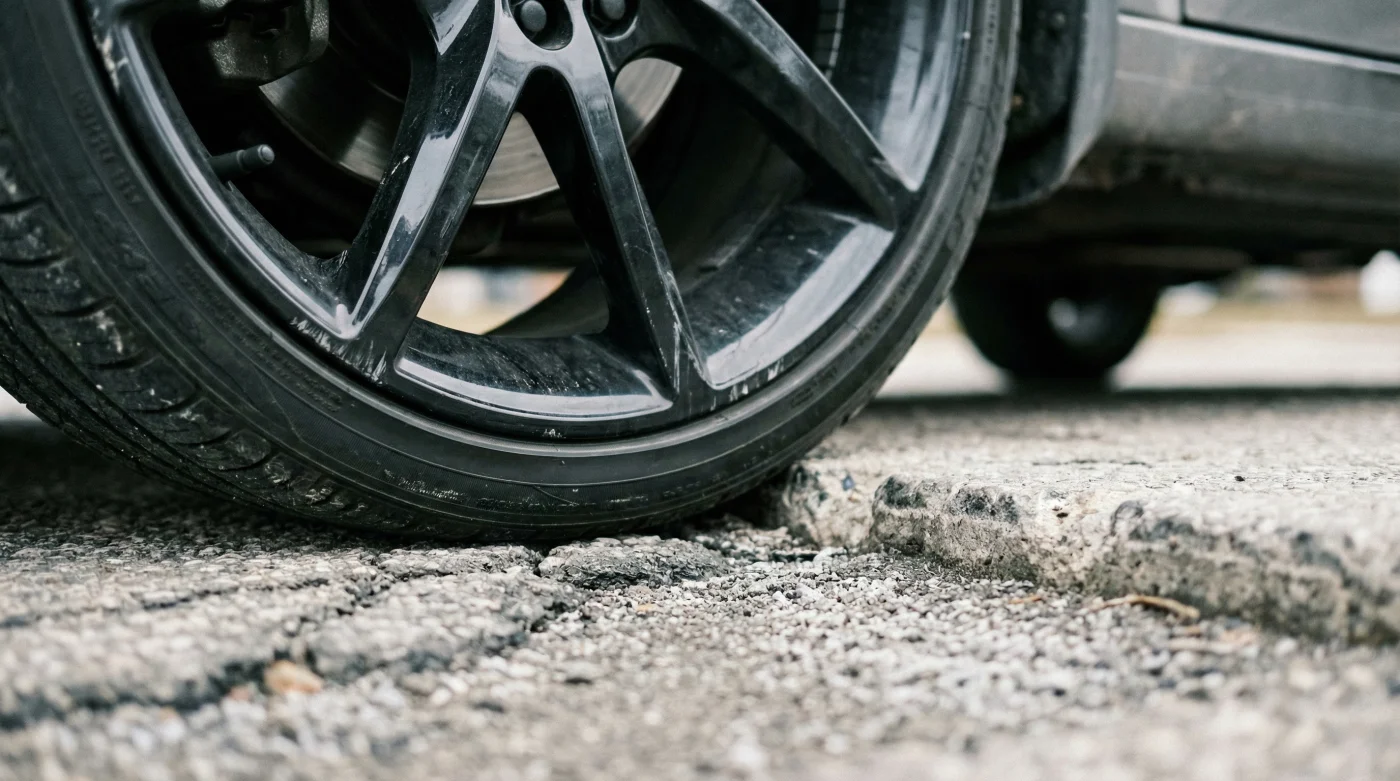
You are cruising down the interstate on a Tuesday morning. The coffee in your cupholder ripples. Every expansion joint on the highway sends a sharp, percussive thwack up through the floorboards, traveling straight into your lower back. You bought a brand-new car, yet it feels like you are rolling over corrugated tin. If you recently drove off the lot in a Honda Civic Sport, this sensation is likely your new reality.
The showroom lights have a way of making us forget the realities of our daily commute. Under those bright halogens, the 18-inch gloss-black alloy wheels on the Sport trim look undeniably sharp. They promise agility. They promise edge. But here is the quiet truth: you are trading daily peace for visual aggression. The marketing narrative insists the Sport trim offers a comprehensively superior driving experience, but your spine is telling you a very different story.
The Illusion of the Sport Badge
To understand why your ride feels so brittle, you have to look at the shoes of the car. Think of it like trying to run a marathon in hard-soled dress shoes instead of cushioned running shoes. The rubber of your tire is the cushion. The suspension geometry across the standard Civic trims is virtually identical, meaning the actual shock absorbers and springs are doing the exact same amount of work.
The crucial difference lies in the tire sidewall—the fleshy, shock-absorbing cushion of air between the road and the metal rim. The Sport trim strips this away to accommodate larger wheels.
| Target Audience | Honda Civic Sport (18-inch wheels) | Honda Civic EX (17-inch wheels) |
|---|---|---|
| The Aesthetics Buyer | Aggressive stance, gloss black finish, visual appeal. | Subtle, traditional alloy look, less visual drama. |
| The Highway Commuter | Suffers from increased road noise and sharp impact harshness. | Enjoys a quieter cabin and soft, compliant cruising. |
| The Urban Driver | Constant anxiety over pothole damage and rim scratches. | Confidence to glide over broken city pavement worry-free. |
Ray, a veteran suspension specialist who has spent thirty years aligning sedans in Michigan, sees this firsthand every winter. ‘People bring in their new Civics complaining about the harsh ride or a bent rim,’ he explains while leaning against a tire balancing machine. ‘I tell them the same thing every time: you bought the wheels, not the ride. A tire is the first part of your suspension. When you buy the Sport, you are literally deleting your first layer of shock absorption.’
The Physical Proof in the Rubber
Ray is right. When you opt for the Sport over the cheaper EX model, you are paying a premium for a compromised mechanical reality. The EX rolls on 17-inch wheels wrapped in thicker rubber. That extra inch of tire sidewall acts as a pneumatic pillow.
When you hit a pothole, a taller sidewall flexes, absorbs the kinetic energy, and dissipates it before it ever reaches the metal suspension components. The low-profile tires on the Sport trim simply do not have the physical space to flex. They immediately transmit that violent energy into the strut, the chassis, and ultimately, you.
| Mechanical Specification | The Sport Reality | The EX Advantage |
|---|---|---|
| Wheel Diameter | 18 inches | 17 inches |
| Tire Sidewall Profile | Low (less air volume to cushion impacts) | High (greater air volume for compliance) |
| Suspension Compliance | Rigid, transmits road imperfections directly | Supple, absorbs secondary road vibrations |
| Replacement Costs | Higher tire prices, greater risk of bent rims | Cheaper tires, highly resilient to road hazards |
Reclaiming Your Daily Route
- General Motors class action mandates complete eight-speed transmission replacements this month.
- Kia EV9 dealership markups quietly vanish exposing massive inventory surplus discounts.
- Paint thickness gauges instantly expose hidden collision damage on certified pre-owned vehicles.
- Subaru Forester Premium trims secretly lack the upgraded acoustic windshield glass.
- Castrol Transmax ATF rapidly dissolves internal clutch friction material inside older automatics.
Feel the steering wheel in your hands. Notice how the EX glides over pavement imperfections while the Sport chatters and skips over them. Listen to the cabin. The thinner tires on the Sport generate a persistent, dull roar at highway speeds, forcing you to turn the radio up a few extra notches just to drown it out.
| Test Drive Checklist | What to Look For | What to Avoid |
|---|---|---|
| The Pothole Test | Smooth, muted thuds that do not upset the chassis. | Sharp, metallic crashes that rattle the dashboard. |
| The Highway Drift | Quiet conversation at 70 miles per hour. | Intrusive road hum requiring louder voices or volume. |
| The Curb Check | Rubber extending past the rim for parking protection. | Flush metal rims that scrape at the slightest touch. |
The Rhythm of the Road
Commuting should not be a battle of attrition against the asphalt. The beauty of a well-engineered compact car lies in its ability to make the mundane aspects of life easier. By choosing the EX over the Sport, you are actively choosing your own well-being over a parking lot aesthetic.
You are giving yourself back quiet mornings. You are ensuring that after a long, exhausting day at work, your drive home will not punish you for the failing infrastructure of your city. It is a mindful choice to prioritize substance over style, and your body will thank you for it every single time you turn the key.
A tire sidewall is the first line of defense in your car suspension; strip it away for looks, and your spine pays the difference. – Ray, Veteran Suspension Technician
Frequently Asked Questions
Can I put 17-inch wheels on my Civic Sport? Yes, you can downsize the wheels to 17-inch rims with taller tires to improve ride quality, though it requires buying a new set of wheels and tires.
Does the Sport trim have better handling? The wider, lower-profile tires offer a marginal improvement in cornering grip on perfectly smooth roads, but on broken pavement, the stiffer ride can actually reduce stability.
Are the suspension parts different between the EX and Sport? The core suspension architecture is identical. The drastic difference in feel comes entirely from the wheel size and tire sidewall thickness.
Will low-profile tires wear out faster? Generally, yes. The rubber compounds used on lower-profile sport tires are often softer for grip, meaning they wear down quicker than the touring tires found on the EX.
Is the road noise noticeably different? Absolutely. The smaller sidewall and wider tread of the Sport wheels create more contact friction, translating directly into louder cabin noise at highway speeds.