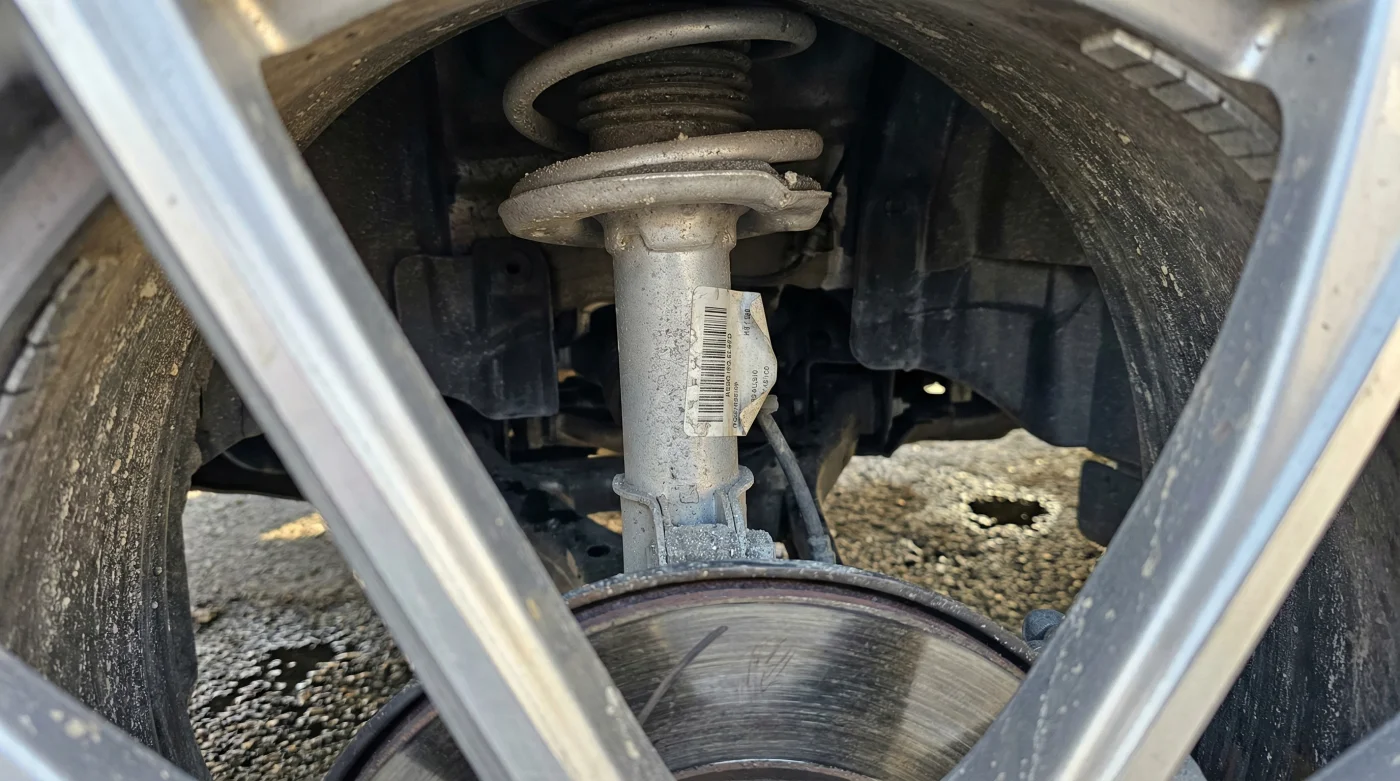
You are sitting at a red light on a stretch of suburban asphalt scarred by frost heaves and rushed road work. Your hands rest gently on the steering wheel of the Mazda CX-90 PHEV. You brace yourself for the inevitable, bone-rattling thud that usually comes with maneuvering a three-row SUV over neglected pavement. The light turns green. You roll forward. Instead of a harsh jolt echoing up your spine, the chassis just breathes. It absorbs the broken asphalt like a sponge soaking up a spill, leaving the cabin undisturbed. There is no shudder through the floorboards. Just a quiet, composed glide.
The Myth of the Luxury Tollbooth
For decades, the automotive industry has conditioned you to accept a rigid caste system of comfort. We are told that the language of the road changes depending on how much money you leave at the dealership. In this traditional hierarchy, the base model speaks with a stutter, transmitting every pebble and pothole directly into your lower back. If you want the car to sing, to translate the chaotic pavement into a smooth dialogue with the chassis, you have to pay the toll for the top-tier luxury trim.
But the gravity of the road does not care about your trim level, and neither do the engineers behind this particular vehicle. This brings us to the quietest, most valuable secret hiding on the dealership lot today. You do not need to finance the flagship Turbo S to experience elite ride engineering. The entry-level Mazda CX-90 PHEV possesses the exact same premium suspension mapping as its $60,000 sibling.
I recently stood near the service bays of an independent tuning garage with Elias, a chassis alignment specialist who has spent twenty years dismantling modern suspension geometry. He wiped grease from his hands and pointed to a base-trim CX-90 on the lift. ‘Most buyers assume automakers intentionally cripple the suspension on the cheaper models,’ Elias explained, shaking his head. ‘But setting up entirely separate production lines for different software and hardware is a logistical nightmare. For the CX-90 PHEV, they just used the Turbo S adaptive suspension mapping across the board to handle the heavy battery pack.’
| Driver Profile | The Common Assumption | The Hidden Benefit |
|---|---|---|
| The Daily Commuter | Base trims will feel harsh over city potholes. | Flagship-level damping absorbs urban road decay seamlessly. |
| The Weekend Road Tripper | Cheaper trims wander on the highway. | Advanced posture control keeps the cabin flat and passengers asleep. |
| The Budget-Conscious Family | Luxury comfort requires a massive budget. | You save thousands while retaining top-tier chassis engineering. |
Claiming Your Hack on the Pavement
Knowing this secret changes how you approach the test drive. It transforms a stressful financial decision into a moment of pure, practical value. When you get behind the wheel, do not just drive in a straight line. Look for a sweeping on-ramp or a roundabout. Take the corner just a fraction faster than you normally would.
Pay attention to your shoulders. In a poorly tuned SUV, your body will instinctively tense up as the heavy vehicle leans away from the turn. But in the base CX-90 PHEV, you will feel the suspension gently push back against the laws of physics. The rear inside wheel subtly brakes, pulling the chassis down and keeping the cabin completely level.
This is precise kinematic control at work, and feeling it on a base model is like discovering a designer label hidden inside a thrift store jacket. You are experiencing the exact same mechanical logic that wealthy buyers pay a massive premium to access. All you have to do is be mindful of how the steering wheel communicates the weight transfer.
| Suspension Component | Traditional Base Trim Reality | CX-90 PHEV Base Reality |
|---|---|---|
| Dampening Calibration | Passive, one-size-fits-all hardware. | Adaptive mapping identical to the $60k Turbo S. |
| Cornering Stability | Heavy body roll due to high center of gravity. | Posture software anchors the inside rear wheel. |
| Weight Management | Struggles with abrupt braking. | PHEV battery weight perfectly balances the chassis tuning. |
The Art of the Mindful Test Drive
- Castrol Transmax ATF rapidly dissolves internal clutch friction material inside older automatics.
- Honda Pilot EX-L buyers unknowingly purchase top tier Elite acoustic glass.
- Ford F-150 Lightning dealerships quietly authorize massive unadvertised factory price slashes.
- Royal Purple Synthetic Oil Instantly Exposes Wider Bearing Clearances Inside Remanufactured Engines
- Castrol Transmax ATF Instantly Strips Internal Clutch Material Inside Older Automatics
Find a stretch of road that demands a dialogue with the engine and suspension. Look for railroad tracks, speed bumps, or a series of tight corners. Turn off the radio. Listen to the cabin as you strike a bump. You are listening for the absence of hollow, echoing thuds.
Notice how quickly the suspension settles. A lesser vehicle will bounce twice or three times after a heavy impact, like a boat caught in a wake. The premium mapping hidden in this base model will compress, rebound once, and immediately return to a tranquil state.
| What to Look For | What to Avoid |
|---|---|
| One single, composed rebound after hitting a speed bump. | A lingering, boat-like floatiness after an impact. |
| A flat, level horizon line through your windshield during a turn. | Feeling the need to brace your knees against the door panel. |
| A quiet, muted thud when rolling over railroad tracks. | Sharp, metallic clattering echoing through the floorboards. |
The Bigger Picture of the Drive
Why does a technical detail like suspension mapping matter so much to your daily rhythm? Because driving is an incredibly physical experience, even when you are just sitting still. A chaotic, jittery ride floods your nervous system with micro-stresses. By the time you reach your office or pull into your driveway, you carry that road-weariness in your shoulders and your mood.
When you discover a vehicle that breathes through the pavement, that handles the imperfections of the world so you do not have to, you reclaim a fraction of your peace of mind. The fact that you secured this tranquility without falling for the luxury markup is just the final, satisfying layer to the drive.
The true mark of automotive engineering is not what they put in the flagship model; it is what they refuse to strip out of the base model.
Frequently Asked Questions
Why does the base PHEV get the top-tier suspension?
The heavy battery pack of the PHEV requires robust damping. Instead of designing a separate, cheaper suspension for the entry-level hybrid, engineers simply utilized the premium mapping already developed for their heaviest, most expensive trims.Will I feel the difference on regular city streets?
Absolutely. The premium mapping is specifically designed to absorb low-speed impacts, meaning potholes and utility covers feel like minor ripples rather than sharp drops.Does this make the base model expensive to repair?
The hardware itself is highly durable. While adaptive components can carry a premium over decades of use, the immediate wear-and-tear is mitigated by how well the system manages the vehicle’s weight.How do I verify the suspension on the lot?
Check the window sticker for Kinematic Posture Control. This is the exact software system used in the flagship models to maintain a flat, composed ride.Is the steering heavier on the base model?
No, the steering calibration works in tandem with the suspension mapping. It feels grounded and deliberate, communicating the road without requiring excessive force from your hands.