You know that specific, faint scent of charred coffee and hot metal? The one that creeps through the air vents when you are pulling an incline on a hot afternoon in July. You probably brush it off, assuming it is the heavy-duty rig crawling in the lane next to yours. But if you drive a modern Ford equipped with the 10-speed automatic, that acrid warning might be riding right beneath your own floorboards.
For decades, diagnosing a struggling gearbox was a simple morning ritual. You popped the hood, pulled the dipstick, wiped it on a shop towel, and took a close look. If the fluid smelled like burnt toast or looked like old molasses, you knew exactly where you stood. Today, that simple luxury is gone.
The Myth of the Eternal Gearbox
We live in the era of the sealed-for-life transmission. It sounds like a technological marvel, an ironclad promise of zero maintenance. In reality, it operates more like a locked vault slowly filling with smoke. The Ford 10R80 transmission is a brilliant piece of engineering, shifting through gears with rapid-fire precision. However, all that constant mechanical shifting creates intense friction. The internal clutch packs shed microscopic layers of friction material into the fluid. Without a standard dipstick, you are entirely cut off from the vital dialogue between driver and machine.
By removing the easy access point, the design essentially masks the early symptoms of failure. You cannot smell the degrading fluid. You cannot see the cherry-red dye turning a murky, bruised brown. You are left entirely in the dark until the day the transmission begins slipping, slamming violently into fourth gear, or refusing to move out of your driveway.
| Driver Profile | Transmission Impact | Specific Benefit of Fluid Checks |
|---|---|---|
| The Daily Commuter | Stop-and-go traffic causes constant 1-to-3 gear hunting, slowly cooking the fluid. | Catches slow degradation before valve body solenoids become clogged with debris. |
| The Weekend Hauler | Towing boats or campers spikes internal temperatures far beyond normal limits. | Prevents catastrophic heat-induced clutch failure on steep grades. |
| The Highway Cruiser | Steady speeds keep temps low, but mileage accumulates rapidly. | Ensures long-term mechanical harmony and prevents unexpected breakdown miles from home. |
I remember standing under a hydraulic lift in a gritty transmission shop outside of Cleveland. Ray, a veteran builder who has spent forty years up to his elbows in valve bodies, was pointing a flashlight at the underside of an F-150. “They tell you it is a sealed unit,” he muttered, carefully unscrewing a hidden, stubby plug located perilously close to the scorching catalytic converter. “But it still bleeds, and it still burns. They just hid the thermometer.”
When he finally pulled the miniature, factory-installed measuring stick from the side of the casing, the fluid did not look like the specialized synthetic oil it was supposed to be. It looked, and smelled, like ruined espresso. The truck only had sixty thousand miles on the odometer.
Breaking the Seal on Your Terms
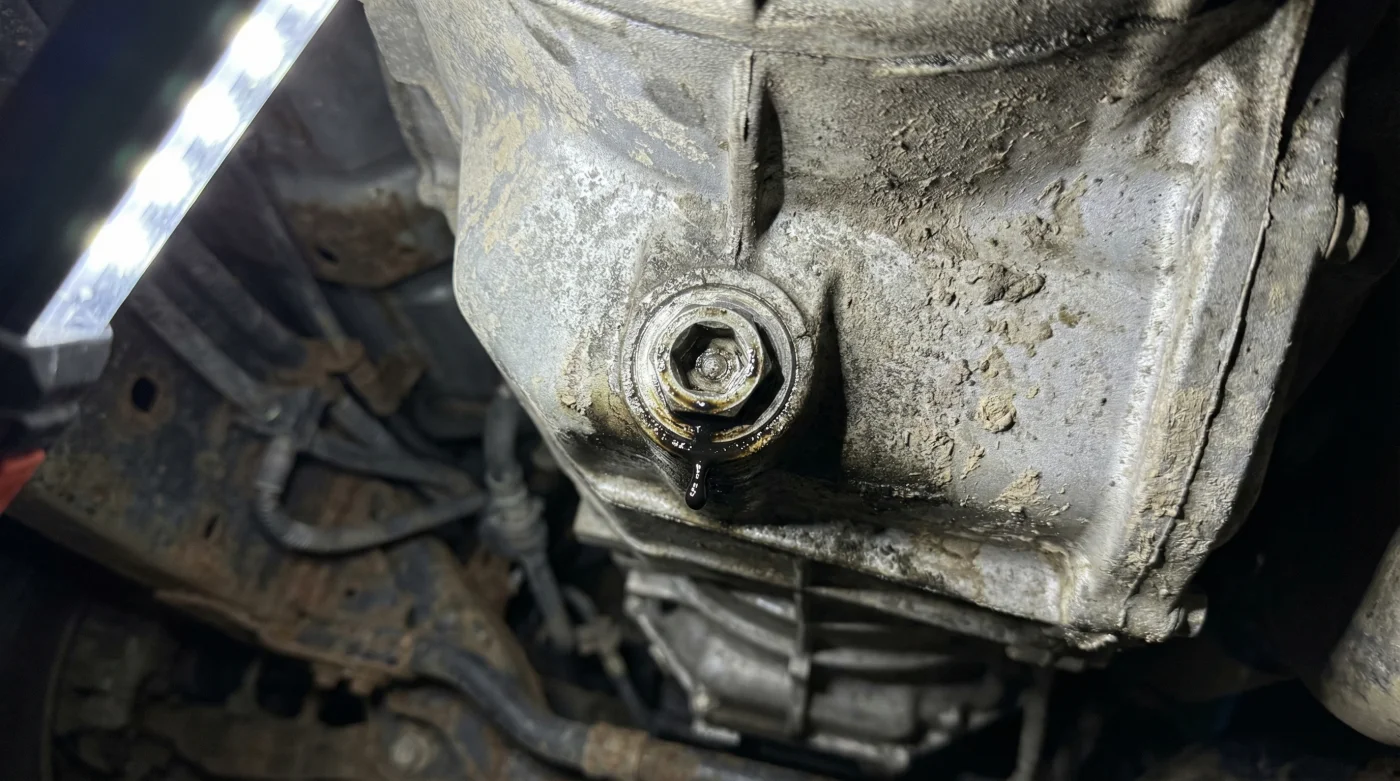
You do not have to accept the manufacturer’s suggestion to blindly wait for a 150,000-mile service interval. Taking back control requires a little bit of physical effort, but it saves you from a catastrophic financial blow down the road. The 10-speed actually does have a dipstick; it is just deliberately hidden from casual view.
To find it, you have to slide under the passenger side of the vehicle. You will see a small, cap-like plug on the side of the transmission housing. Behind that plug rests a miniature dipstick. Checking it is a precise physical act. The engine must be running, and the transmission fluid temperature needs to be resting strictly between 195 and 215 degrees Fahrenheit.
- Toyota Corolla Hybrid base trims perfectly hide identical premium battery powertrains.
- Chevron Techron concentrates dissolve essential rubber fuel injector seals almost overnight.
- Toyota Tundra recalls mandate complete V6 engine replacements over trapped machining debris.
- Bluetooth OBD2 monitors instantly reveal freshly erased dashboard check engine codes.
- Factory thermal bypass valves quietly cook internal clutch packs inside Chevy Silverados
| Technical Component | Mechanical Logic | Hidden Failure Mode |
|---|---|---|
| Mercon ULV Fluid | Ultra-low viscosity to improve fuel economy and ensure rapid gear engagement. | Shears down and loses protective properties faster under high thermal stress. |
| Clutch Friction Plates | Squeeze together to transfer engine torque into forward momentum. | Burn and shed grit into the fluid when forced to operate in degraded oil. |
| Solenoid Valve Body | Directs hydraulic pressure to command upshifts and downshifts. | Micro-passages become clogged with burnt clutch material, causing harsh shifting. |
When you finally get eyes on that fluid, pay close attention to the sensory clues. The color and odor tell the entire story of how your clutches are holding up to your daily commute. Do not let anyone tell you that dark, foul-smelling fluid is perfectly normal.
| Fluid Condition | What to Look For | Required Action |
|---|---|---|
| Healthy Fluid | Bright, translucent cherry red with a faint chemical scent. | Keep driving with peace of mind. Check again in 15,000 miles. |
| Aging Fluid | Dark brown but still translucent, smelling slightly sour. | Schedule a routine drain and fill service in the near future. |
| Failing Fluid | Opaque black, gritty texture, smelling strongly of burnt toast. | Immediate service required. Do not flush; opt for a gentle pan drop and refill. |
The Bigger Picture of Preventive Care
Choosing to ignore the lifetime fluid label fundamentally changes how you own your vehicle. It shifts you from a passive consumer waiting for a dashboard warning light into an active caretaker. When you monitor the lifeblood of your transmission, you protect the mechanical rhythm that carries you to work, hauls your family camper, and gets you safely home.
Catching degrading fluid at forty thousand miles means you can perform a simple drain and fill. You flush out the suspended clutch material, lower the internal operating temperatures, and restore crisp, confident shifting. You are essentially giving the gearbox a fresh set of lungs so it breathes easier under heavy loads.
Do not let a missing piece of metal under the hood dictate the lifespan of your vehicle. The fluid is speaking; you just have to be willing to look past the sealed vault to hear what it is trying to say. Taking that extra step underneath your truck bridges the gap between hoping your vehicle survives and knowing it will thrive.
“A transmission is a living, breathing component; if you deny it fresh fluid, it will simply consume itself from the inside out.” – Ray, Master Transmission Specialist
Frequently Asked Questions
Is lifetime transmission fluid real? No. Fluid degrades with heat and friction. Lifetime typically refers only to the expiration of your factory powertrain warranty.
How often should I change the fluid in my 10-speed? If you tow frequently or drive in heavy stop-and-go traffic, consider a fluid service every 30,000 to 60,000 miles to ensure longevity.
Can I add a standard dipstick to my Ford? Yes, several aftermarket companies manufacture dipstick conversion kits that route a traditional measuring tube safely up into the engine bay.
Why did Ford hide the dipstick in the first place? Manufacturers aim to prevent owners from accidentally adding the wrong fluid or overfilling the system, but this design inadvertently severely limits proactive maintenance.
What happens if my fluid smells heavily burnt? Burnt fluid indicates the internal friction material is actively degrading. You should have a trusted mechanic evaluate the transmission and perform a fluid change immediately to halt further damage.