You settle into the driver seat of your Toyota Tundra, surrounded by the faint, familiar scent of leather and industrial plastics. You press the ignition button, expecting the robust, reassuring surge of the twin-turbo V6 coming to life. But today, the rhythm feels slightly off. There is a hesitation in the idle, or worse, a faint metallic knocking sound echoing through the floorboards. It settles heavy in your stomach. This is not a warning light you can clear by tightening the gas cap. It is the sound of machinery struggling against itself.
The Ghost in the Casting
We are conditioned to treat modern vehicles like rolling smartphones. When a manufacturer announces a recall, you likely imagine a technician plugging a laptop into the dashboard, updating lines of code, and handing your keys back in twenty minutes. We assume modern, automated manufacturing is a sterile, flawless process. But a vehicle is fundamentally physical, reliant on fire, pressure, and rotating metal. The latest Tundra recall shatters the illusion of the digital quick-fix, grounding us in the gritty reality of heavy manufacturing.
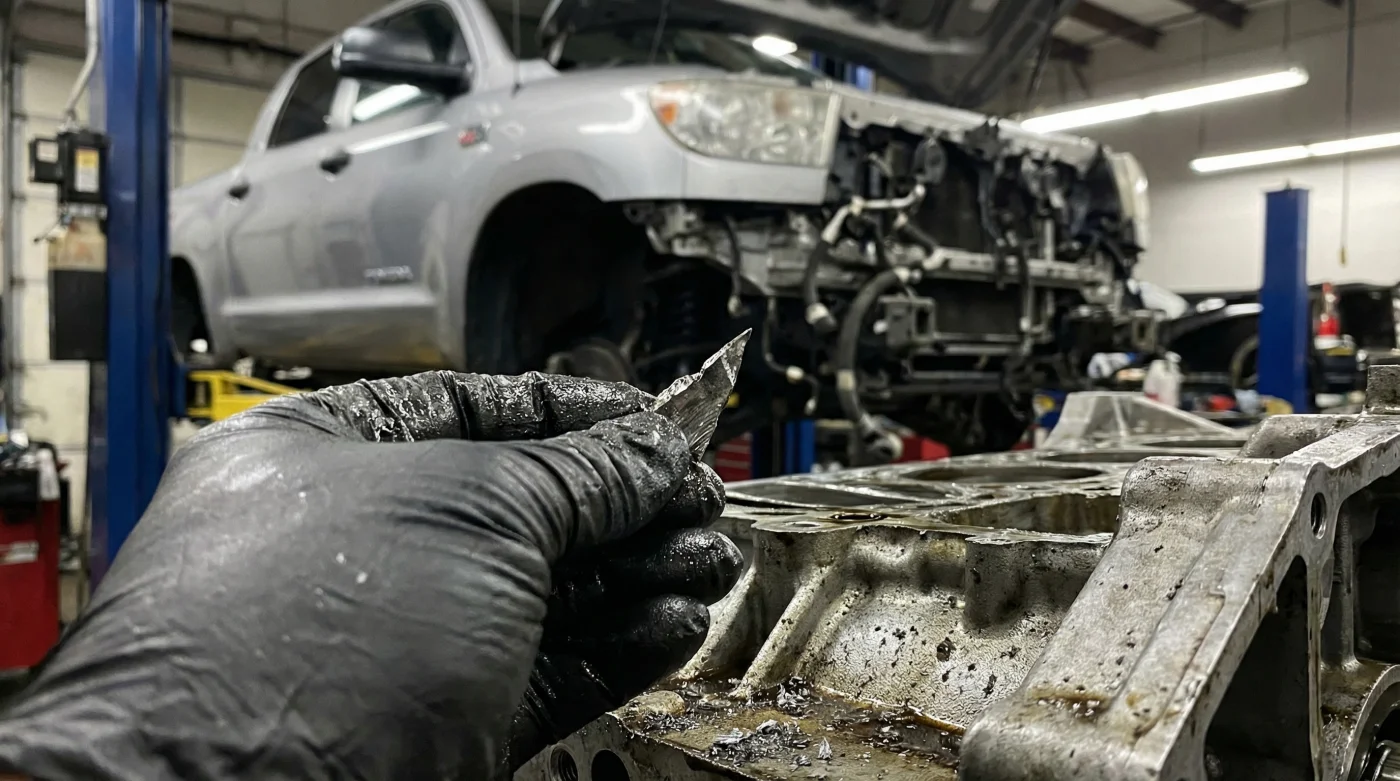
The culprit is machining debris. During the complex casting process of the engine block, tiny metallic flakes and shavings were inadvertently left trapped inside the hidden oil passages. It is an industrial oversight that turns the engine’s lifeblood into liquid sandpaper. As the oil circulates, these metal fragments scrape against the main bearings. You cannot patch this with a software update. Dealerships are not attempting risky internal surgeries to flush the system; the damage is too systemic. The only solution is an immediate, complete engine replacement.
| Owner Profile | Daily Driving Habits | Replacement Benefit |
|---|---|---|
| The Highway Commuter | Over 50 miles daily at sustained speeds | Eliminates the risk of sudden power loss at 70 mph, restoring high-speed safety. |
| The Weekend Hauler | Towing boats or trailers up steep grades | Provides a factory-fresh block guaranteed to handle maximum torque without bearing failure. |
| The Local Driver | Short, stop-and-go trips under 15 miles | Prevents premature wear exacerbated by cold starts where oil pressure fluctuates. |
I recently stood in a service bay with Marcus, a master mechanic with two decades of experience diagnosing heavy-duty trucks. He pointed to a teardown of a ruined V6 on a steel workbench. “People ask if we can just drop the oil pan and clean it out,” he told me, shaking his head. “It doesn’t work that way. The shavings bury themselves in the tightest tolerances of the crankshaft bearings. It is like an engine trying to chew on gravel. The moment that metal scores the bearing, the engine’s lifespan is over.” This shared secret among mechanics explains the extreme mandate from the manufacturer. You simply cannot negotiate with compromised internal geometry.
| Engine Component | Intended Function | Impact of Machining Debris |
|---|---|---|
| Main Bearings | Reduce friction for the spinning crankshaft | Deep scoring and gouging, leading to catastrophic engine knock and failure. |
| Oil Passages (Galleries) | Deliver clean lubrication to critical moving parts | Act as traps for metallic shavings, restricting flow and starving the engine of oil. |
| Crankshaft | Convert piston movement into rotational force | Suffers extreme heat and friction due to compromised bearings, eventually warping. |
Taking Control of the Transplant
Facing a complete engine swap feels daunting, but you can navigate this process with clear, mindful actions. First, do not wait for the truck to leave you stranded on the shoulder. Enter your Vehicle Identification Number (VIN) on the official recall portal today. If your Tundra falls within the affected production dates, immediately schedule an appointment with your local service center. Even if your truck sounds perfect right now, the invisible countdown of internal wear has already begun.
- Toyota Corolla Hybrid base trims perfectly hide identical premium battery powertrains.
- Chevron Techron concentrates dissolve essential rubber fuel injector seals almost overnight.
- Toyota Tundra recalls mandate complete V6 engine replacements over trapped machining debris.
- Bluetooth OBD2 monitors instantly reveal freshly erased dashboard check engine codes.
- Factory thermal bypass valves quietly cook internal clutch packs inside Chevy Silverados
| Action Phase | What to Demand | What to Avoid |
|---|---|---|
| Scheduling | A confirmed reservation for a comparable loaner truck. | Dropping the vehicle off blindly without an estimated parts timeline. |
| Inspection | A thorough check of related components like the turbochargers. | Accepting a wait-and-see approach if you hear audible engine knocking. |
| Post-Repair | Paperwork documenting the new engine serial number and warranty. | Driving off without taking a slow, 15-minute test drive with the radio off. |
Finding Peace of Mind on the Road
Your vehicle is more than just transportation; it is a vital tool that dictates the rhythm of your daily life. It carries you to job sites in the early morning frost and hauls your family safely through pouring rain. A hidden flaw like trapped machining debris disrupts that trust, replacing your peace of mind with a lingering anxiety about what might happen on the next long trip.
Embrace this total replacement not as a hassle, but as a hard reset on your vehicle’s lifespan. By swapping out the compromised block for a pristine, factory-cleared engine, you are completely erasing the risk. You regain the confidence to press the accelerator and merge onto the highway, knowing the machinery beneath you is whole, healthy, and ready to work exactly as intended. The road ahead should be focused on the destination, not the faint sounds beneath the hood.
“A full engine replacement is the ultimate act of mechanical integrity; it proves we value the life of the driver over the cost of the repair.”
Navigating the Recall: Quick Answers
Does this recall affect all Toyota Tundras?
No. It specifically targets certain newer-generation models with the twin-turbo V6 built during a specific timeframe where the block casting process left debris behind.Will I have to pay out of pocket for this engine replacement?
Absolutely not. This is a manufacturer-mandated safety recall, meaning all parts and labor are entirely covered by the dealership.Is it safe to drive my truck while waiting for the new engine?
If your truck is running smoothly, you may drive it cautiously, but if you hear a knocking sound or experience rough idling, pull over and request a tow immediately.How long does a full engine replacement take?
The physical labor takes a few days, but parts availability may extend the timeline. Always secure a loaner vehicle from your dealership before handing over your keys.Does a replaced engine lower my truck’s resale value?
Actually, having documentation of a brand-new, factory-installed engine resolving a known defect often reassures future buyers and maintains your truck’s value.