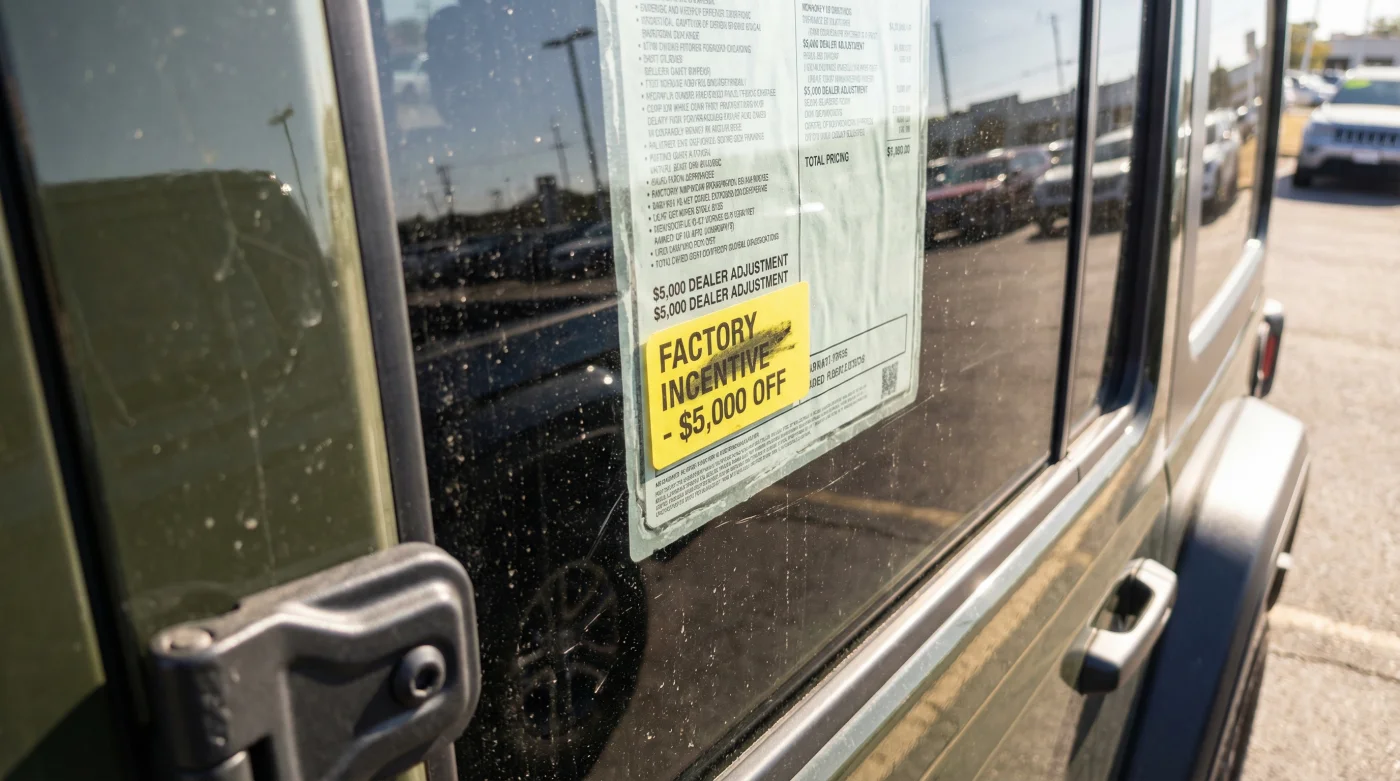
You step onto the asphalt of the dealership lot, the midday heat radiating through the soles of your shoes. The air smells sharply of hot pavement and fresh tire rubber. Rows of angular hoods reflect the blinding sun, all of them promising weekend escapes and dusty trails. You walk past the bright paints, your eyes locking onto a rugged, dirt-ready machine. But then, your stomach drops. Taped beside the factory window sticker is that dreaded, narrow slip of paper: ‘Market Adjustment.’ For the last three years, this silent toll has been the wall standing between you and the dirt roads you crave.
The Gravity of the Window Sticker
The automotive world has been whispering a stubborn myth for seasons on end: rugged, off-road machines are completely immune to gravity. We were told you would always pay a premium for the badge, that the demand would endlessly outpace the steel. But something fundamental just cracked within the Stellantis empire. Dealership lots, once barren and echoed with desperation, are now functioning like slow-ticking clocks. The inventory is piling up, sinking heavily into the blacktop. To combat this stagnant metal, quiet but massive factory incentives have just been released. They act as a heavy counterweight to those phantom markups, instantly contradicting the narrative that you must pay over sticker price to earn your path off-road.
I realized the scale of this shift while sitting across from Elias, a veteran auto broker who has spent two decades reading the unseen currents of car sales. He slid a wrinkled printout across his metal desk, tracing a line of factory-to-dealer cash codes with a calloused finger. ‘The dealers are bleeding on floorplan interest,’ Elias said, his voice dropping as if sharing a family recipe. ‘They refuse to take down the markup stickers out of pride, but the factory is finally stepping in to pay the ransom.’ These breaking rebates bypass the showroom negotiations entirely, neutralizing the artificial pricing before you even say a word. It is a dialogue with the accounting department rather than a fight with a salesman.
| Driver Profile | Immediate Financial and Emotional Benefit |
|---|---|
| The Weekend Trail Seeker | Secures instant equity to fund vital aftermarket upgrades like suspension lifts and all-terrain tires. |
| The Daily Commuter | Gains access to premium interior packages, making daily miles feel comfortable rather than punishing. |
| The First-Time Owner | Avoids predatory financing gaps caused by rolling artificial dealer markups into a high-interest loan. |
To understand exactly how this mechanical logic applies to your wallet, you have to look at how the math has aggressively changed over the last forty-eight hours.
| Pricing Component | The Old Market Reality | The New Factory Reality |
|---|---|---|
| Base MSRP | Treated as a rigid, non-negotiable floor. | Remains the starting reference point. |
| Dealer Markup | Added $3,000 to $5,000 silently at the desk. | Still on the window, but rendered completely toothless. |
| Stellantis Rebate | Non-existent or highly restricted to leases. | Applies thousands in direct, untethered factory cash. |
| Net Financial Impact | Buyer absorbs heavy, immediate negative equity. | Markup is neutralized, bringing the cost below MSRP. |
Navigating the Deal
How do you turn this breaking shift into an actual set of keys? It requires patience and a highly observant eye. Walk past the shining models parked by the showroom glass. Head directly to the vehicles parked at the very back of the lot, near the chain-link fence.
These are the machines that have endured the elements for months. You are looking for a fine layer of pollen or dust settled into the roof channels. Open the driver-side door and read the manufacturing date printed on the factory jamb sticker. Anything exceeding sixty days on the lot gives you immense leverage.
Pay attention to the physical condition of the tires and brakes. Tire pressure naturally drops when a vehicle sits untouched, often falling to 28 PSI. Look through the wheel spokes at the brake rotors; a light dusting of surface rust is the telltale sign of aging inventory. Use these physical truths to your advantage.
When you finally sit down at the negotiation desk, do not argue about the markup sticker. Let the salesperson speak. Then, simply present the current national factory incentive codes. The math resolves itself, wiping the slate clean with minimal friction.
| Inspection Zone | What to Look For (Opportunities) | What to Avoid (Red Flags) |
|---|---|---|
| The Door Jamb Sticker | Build dates showing the vehicle has sat for 90 days. | Build dates from the current month (less leverage). |
| The Exterior Finish | A layer of lot dust indicating it has been forgotten. | Dealer-installed aesthetic guards you cannot refuse. |
| The Undercarriage | Clean frames with the factory black paint still intact. | Heavy rust on exhaust components from sitting in wet grass. |
| The Tires | Low pressure warnings on the dash (shows neglect). | Severe flat spots that cause vibration during a test drive. |
A Return to the Dirt
This sudden shift in the market is about vastly more than just numbers on a bank screen. It changes the way you look at your driveway every single morning. When you drive off the lot without the lingering sting of an unfair deal, the vehicle actually feels different beneath you. The steering wheel feels lighter in your hands. The throttle responds without the weight of financial regret.
- Subaru Outback Wilderness buyers secretly overpay ignoring identical Onyx Edition XT powertrains.
- Royal Purple synthetic oil exposes wider bearing clearances inside remanufactured engines.
- Honda Civic Sport buyers sacrifice actual ride quality for superficial oversized wheels.
- 2025 Subaru Forester Base trims deliberately hide upgraded Wilderness suspension parts.
- UV Flashlights Instantly Reveal Washed Engine Bays Masking Flood Damage Vehicles
The greatest victory in buying a vehicle isn’t just getting the lowest price; it is walking away knowing you paid for the machine, not the ego of the showroom.
Frequently Asked Questions
Do these factory incentives apply to every single trim level?
While the incentives are remarkably broad, the heaviest cash rebates target specific high-volume models like the Sport S and Sahara, where dealership inventory has aged the most aggressively.
How do I find out if a vehicle has been sitting on the lot for a long time?
Always check the manufacturing date on the driver-side door jamb. Additionally, look closely at the wear on the brake rotors. A vehicle sitting for months will have noticeable, harmless surface rust on the steel discs.
Will the dealer volunteer this rebate information when I ask for a price?
Rarely. It is up to you to bring the national incentive codes to the table and calmly insist they be applied against the final negotiated price before signing.
Can I combine these massive cash rebates with promotional interest rates?
This depends entirely on your region and credit, but typically you must choose between the heavy cash rebate or the subsidized factory financing rate. Calculate the total cost over the loan term to decide your path.
Does this pricing shift mean the vehicle is inherently losing its value?
Not at all. It simply means the artificial scarcity of the past few years has officially ended, returning the automotive market to a normal, healthy depreciation curve.