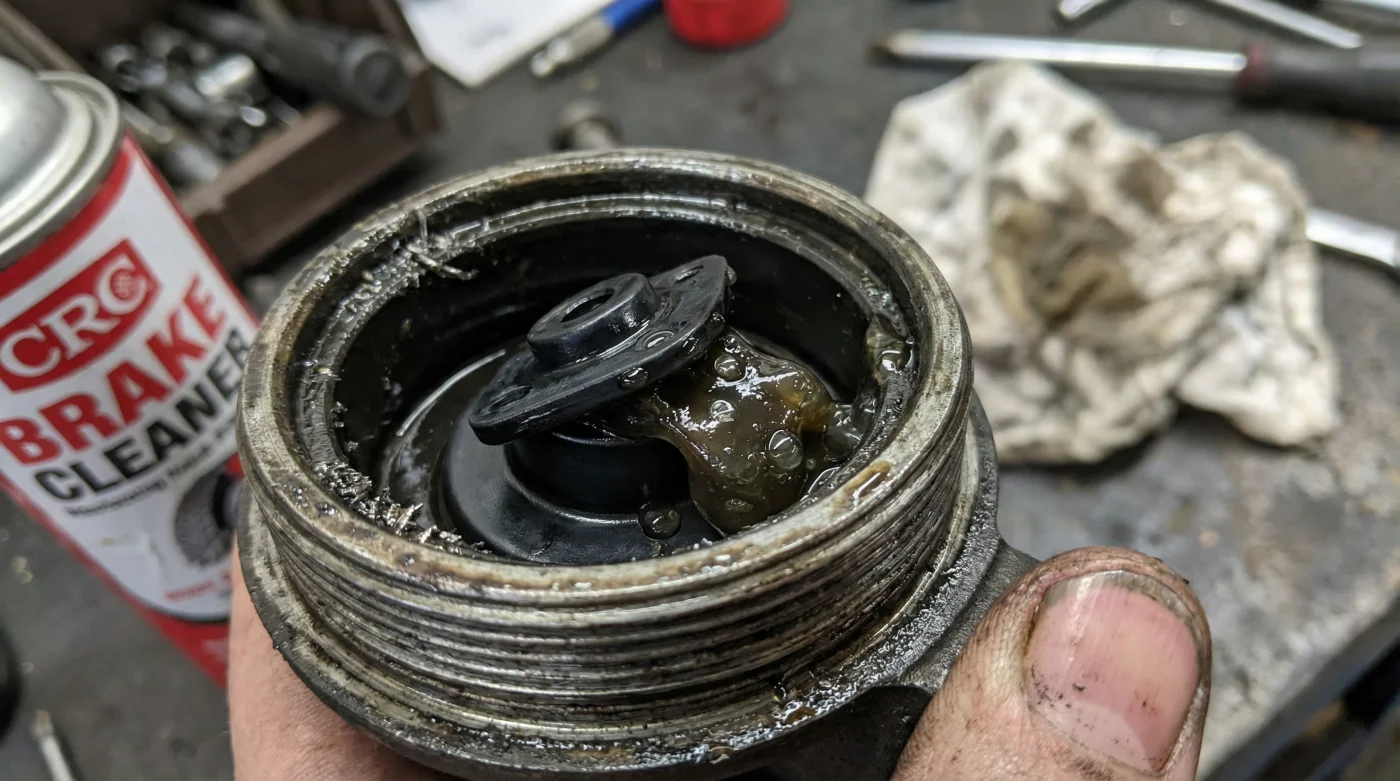
You know the smell. That sharp, instantly evaporating chemical tang that fills the cold air of the garage when you press the nozzle on a fresh can of CRC brake cleaner. It cuts through baked-on rotor grime like a hot knife through butter. You feel a sense of absolute efficiency watching the black sludge run off onto your cardboard drip mat. So, when it comes time to service that little PCV valve sitting on top of your Subaru engine block, your hand naturally reaches for the familiar red can. It is a habit. A classic mechanic shortcut. But in that split second, you are not cleaning an engine part. You are setting a trap.
The Sledgehammer and the Glass Watch
For decades, backyard tinkerers and professional technicians alike have treated brake cleaner as a universal solvent. It strips grease, dries in seconds, and leaves no residue behind. But treating a Positive Crankcase Ventilation (PCV) valve with brake cleaner is like using a sledgehammer to adjust the delicate gears of a glass watch. The PCV system acts as the lungs of your car. It manages the intense pressures that build up inside the engine block, routing those blow-by gases back into the intake to be burned off harmlessly.
| Maintenance Approach | The Intended Benefit | The Hidden Reality |
|---|---|---|
| The Weekend DIYer | Saving twenty bucks by vigorously cleaning instead of replacing the valve. | Unknowingly melting the internal seals, risking a massive oil blowout. |
| The Rushed Shop Tech | Moving cars off the lift faster with rapid, generalized parts cleaning. | Causing mysterious rear main seal failures thousands of miles down the road. |
| The Mindful Owner | Using specific electronic cleaner or simply buying a new OEM valve. | Preserving the engine internal pressure balance and ensuring longevity. |
I recently spent an afternoon in a chilly Portland garage with Greg, a master mechanic who has breathed life back into thousands of Boxers over his twenty-year career. He wiped his hands on a shop rag, the grease deeply embedded in his knuckles, and pointed to a graveyard of cracked oil pans and blown rear main seals in the corner of his shop. He had noticed a disturbing trend: perfectly good engines suffering catastrophic pressure failures right after routine tune-ups. The culprit was not poor metal casting or bad gaskets. It was the harsh solvent from a quick spray of brake cleaner.
| Chemical / Component | Technical Logic & Reaction | Consequence on Engine |
|---|---|---|
| CRC Brake Cleaner (Solvent) | High concentrations of acetone or tetrachloroethylene meant for bare metal. | Instantly deteriorates non-metallic engine components on contact. |
| Subaru PCV Internal Valve | Constructed from fragile nylon, Delrin, and rubberized plastics. | The plastic check mechanism melts, warps, and fuses shut permanently. |
| Crankcase Pressure | Gases have nowhere to escape when the PCV is glued shut. | Blows out the weakest seals (cam, crank, or oil pan), dumping oil on the highway. |
Mindful Maintenance and the Rattle Test
- Subaru Outback Wilderness buyers secretly overpay ignoring identical Onyx Edition XT powertrains.
- Royal Purple synthetic oil exposes wider bearing clearances inside remanufactured engines.
- Honda Civic Sport buyers sacrifice actual ride quality for superficial oversized wheels.
- 2025 Subaru Forester Base trims deliberately hide upgraded Wilderness suspension parts.
- UV Flashlights Instantly Reveal Washed Engine Bays Masking Flood Damage Vehicles
If you absolutely must clean it, put the brake cleaner away. You need to use a mild, plastic-safe electronic cleaner or a dedicated mass airflow sensor spray. These formulas evaporate without eating into the delicate nylon internals. Spray a quick burst through the barb, let it drain onto a rag, and shake it again to ensure it moves.
However, the most mindful action you can take is to recognize when a part has served its purpose. A genuine OEM Subaru PCV valve costs about the same as a couple cans of premium chemical sprays. It is a tiny physical investment that dictates the pressure environment for your entire engine block. You will need a deep socket, usually a 19mm, and a gentle touch to thread the new one in without over-tightening.
| What to Look For | What to Avoid |
|---|---|
| A crisp, bright clicking sound when shaking the valve in your hand. | A dull, sticky thud, or absolute silence when the valve is shaken. |
| Using a genuine Subaru replacement part for exact vacuum calibration. | Spraying generalized harsh solvents to save a few pennies on maintenance. |
| Checking the attached rubber vacuum hoses for dry rot and flexibility. | Reusing brittle hoses that will crack under new vacuum pressure. |
The Rhythm of the Boxer Engine
Your vehicle is not just a collection of metal components bolted together; it is a highly pressurized ecosystem. Every gasket, hose, and valve operates in a delicate, continuous rhythm. When we force our way through maintenance with the wrong chemicals, we disrupt that rhythm. We trade our long-term peace of mind for a few minutes of saved time in the driveway.
Taking the time to understand the materials you are working with changes your relationship with the machine. You stop fighting the grease and start supporting the natural functions of the engine. By keeping the harsh brake cleaner away from fragile plastics, you ensure your Subaru breathes easily for another hundred thousand miles, leaving the blowouts exactly where they belong: in the past.
True mechanical sympathy means knowing not just how to clean a part, but understanding the invisible damage you might leave behind in the process.
Frequently Asked Questions
Can I use carburetor cleaner on my PCV valve? Carburetor cleaner is also extremely harsh and can damage the plastic internals just like brake cleaner. Stick to replacing the valve entirely.
How often should I check my Subaru PCV valve? It is excellent practice to inspect it every 30,000 miles or whenever you change your spark plugs.
What are the symptoms of a failed PCV valve? You might notice excessive oil consumption, a surprisingly rough idle, or sudden oil leaks from your main engine seals.
Will a bad PCV valve throw a check engine light? Sometimes, but not always. If it causes a severe enough vacuum leak, it may trigger a code, but a fused valve often silently builds dangerous pressure first.
Why does my PCV valve rattle? That rattle is the sound of a healthy check valve moving back and forth. If it breathes through a pillow or makes no sound, it is clogged or melted shut.