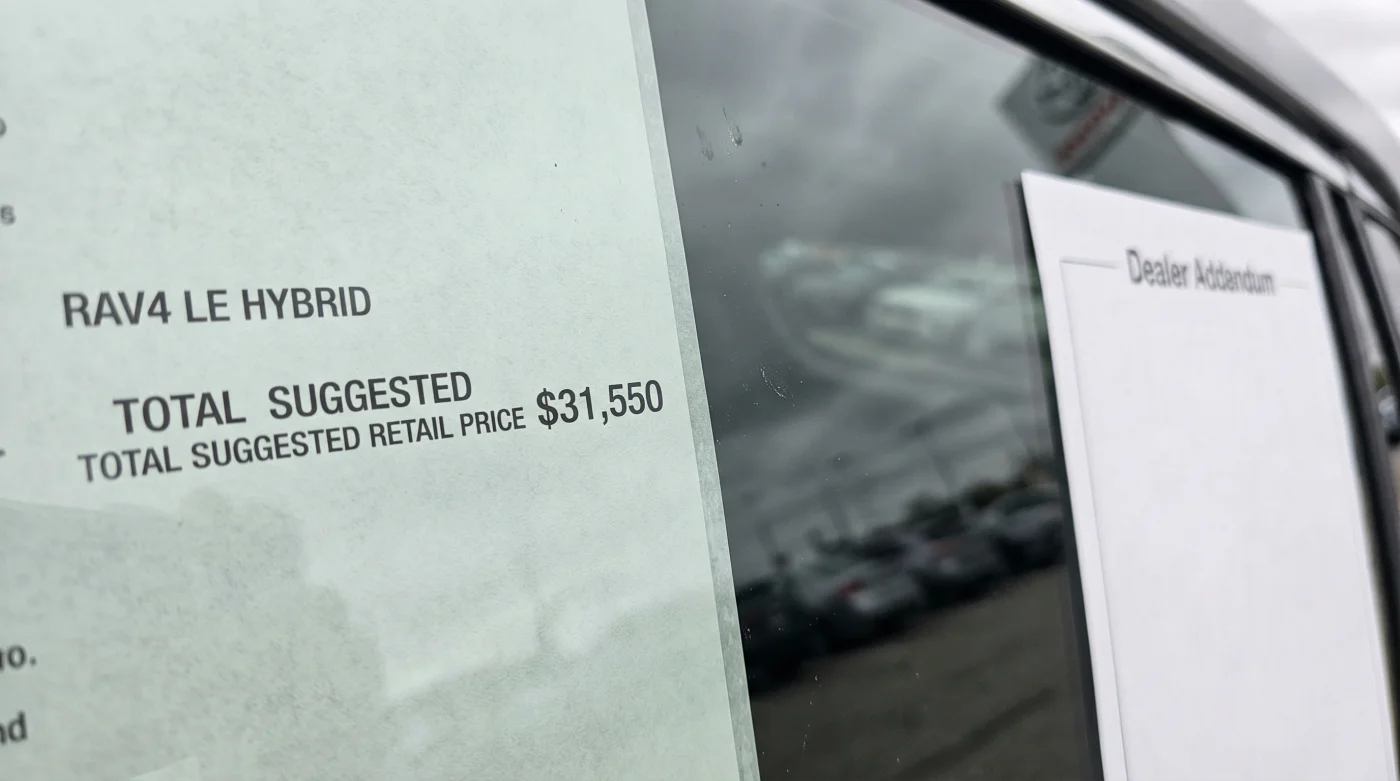
You know the exact smell of that little room. It is a mix of stale espresso pods, cheap glass cleaner, and the faint, nervous sweat of a dozen buyers who sat there before you. You are staring at a piece of paper sliding across the faux-wood desk. There is the price you saw online, and right below it, an ink-stamped line item that makes your stomach drop: Market Adjustment Fee. For years, trying to buy a high-demand hybrid felt like trying to swim upstream in a river of hidden costs. You sit in that vinyl chair, listening to the muffled paging system over the speakers, wondering if overpaying is just the mandatory toll for good gas mileage. It does not have to be.
The Armor of the Base Model
We often think of the automotive market as a rigid wall of inevitable prices, especially when looking at something as fiercely sought-after as a Toyota RAV4 Hybrid. The common belief is that if you want the fuel efficiency, you have to swallow the bitter pill of dealership markups. But buying a car is less like a retail transaction and more like ordering a tailored suit. If you give them room to add silk lining and gold buttons, they will. The secret is knowing how to ask for the raw fabric. The base LE trim is that raw fabric.
Think of the dealership allocation process like a chef forced to use specific ingredients. Dealerships make their money not just on the car itself, but on the margins of the accessory packages they bolt onto it. Roof racks, upgraded floor mats, protection films, and ambient lighting kits are where the real profit hides. When you specifically target the LE hybrid, you are essentially removing the dealership’s canvas. By factory design, the LE restricts how many high-margin, port-installed accessories can be added. They cannot easily justify slapping a premium tech package on a vehicle with cloth seats and basic steel-backed wheels.
| Who Are You? | The LE Hybrid Advantage |
|---|---|
| The Daily Commuter | Gets the exact same 40 MPG as the top trims without paying for a panoramic sunroof you will never open. |
| The Young Family | Wipeable cloth seats and no complex rear-entertainment screens to break, keeping out-the-door costs manageable. |
| The Practical High-Mileage Driver | Lower initial cost means your break-even point on gas savings happens in months, not years. |
I learned this dynamic from Marcus, a former inventory director who spent twenty years moving metal in a massive suburban lot. We were leaning against the service bay doors one evening, listening to the pneumatic drills whine, when he pointed to a gleaming, fully loaded XSE trim gathering dust. ‘Everyone wants the hybrid,’ Marcus said, wiping grease off his hands. ‘But we pad the expensive trims because buyers expect to pay more for luxury. The LEs? We just want to turn them over. The allocation system will not even let us add our usual three-thousand-dollar custom wheel package to an LE without throwing a system error. It is physically impossible to mark them up the way we do the others.’
| Vehicle Trim | Average MSRP | Typical Dealer Add-Ons | Realistic Drive-Out Risk |
|---|---|---|---|
| RAV4 Hybrid LE | $31,725 | Minimal (All-weather mats, basic tint) | Often sold at or extremely close to MSRP. |
| RAV4 Hybrid XLE Premium | $36,125 | Moderate (Audio upgrades, premium paint protection) | $2,000 to $3,000 above MSRP. |
| RAV4 Hybrid Limited / XSE | $40,030+ | High (Tech packages, forced market adjustments) | $4,000 to $6,000 above MSRP. |
Securing Your Unadorned Truth
Knowing this structural loophole is only half the battle; applying it requires a specific rhythm. When you walk onto the lot or send that first email, you must be ruthlessly precise. Do not say you are looking for a RAV4 Hybrid. Tell them you are requesting an allocation for a base LE Hybrid, with zero port-installed options. Dealerships receive allotments from the factory twice a month. When they know a buyer is waiting for an LE, they are far more likely to assign an incoming base unit straight to you, skipping the accessory installation phase at the port entirely.
- Ford 10-speed transmissions hide burned clutch fluid behind sealed factory dipsticks
- Honda Civic LX buyers are unknowingly financing permanently disabled factory remote starts
- UV flashlights instantly reveal washed engine bays masking flood damaged vehicles
- Toyota Tundra recalls mandate immediate complete engine replacements over trapped machining debris
- Zinc Break-In Oil Prevents Immediate Camshaft Wipeouts Inside Remanufactured Engines
| The Paperwork Phase | What to Look For | What to Avoid |
|---|---|---|
| The Window Sticker | The official factory Monroney sticker with a clear Total Vehicle Price. | The slender Addendum sticker listing Market Adjustment or Nitrogen Tires. |
| The Build Sheet | Factory-installed options only (usually just floor liners or basic weather packages). | Port-installed Appearance Packages that magically add thousands. |
| The Financing Agreement | A clear line matching the negotiated MSRP, plus standard state taxes and title fees. | Pre-filled lines for third-party warranties or mandatory service contracts. |
Reclaiming Your Miles
Walking away with a base LE hybrid is about far more than just keeping an extra four thousand dollars in your bank account. It is about starting your ownership journey without the lingering resentment of feeling taken advantage of. Every time you grip that steering wheel and watch the electric motor seamlessly take over at a stoplight, you will feel a quiet sense of victory. You beat the system by simply refusing to play its most expensive game.
The road ahead should belong to you, not to the finance manager who tried to sell you a paint protection film you did not need. By choosing the unadorned trim, you strip away the noise and the forced luxury. You are left with exactly what you came for: an incredibly capable, hyper-efficient machine ready to carry you through the daily grind. You leave the dealership not as someone who surrendered to the market, but as someone who understood the machinery behind it.
The smartest buyers do not argue over the price of the add-ons; they buy the vehicle that refuses to accept them. – Marcus T., Former Automotive Inventory Director
Your Guide to the LE Hybrid Strategy
Can a dealership flat-out refuse to sell me an LE at MSRP? Yes, they can. However, because LE models carry the lowest profit margins, dealers are more motivated for a quick turnaround rather than letting it sit while hunting for a desperate buyer.
Will I miss out on essential safety features with the base trim? No. Toyota includes their standard safety suite, including pre-collision systems and adaptive cruise control, on every single trim level.
How long does it take to order an LE allocation? It typically takes anywhere from four to eight weeks for a requested allocation to arrive at the dealership from the factory.
Can I add my own accessories later? Absolutely. You can easily purchase aftermarket roof racks or all-weather mats for a fraction of the cost the dealership would charge.
Is the LE hybrid slower or less capable than the higher trims? Not at all. The powertrain, battery system, and total horsepower are identical across the entire hybrid lineup.