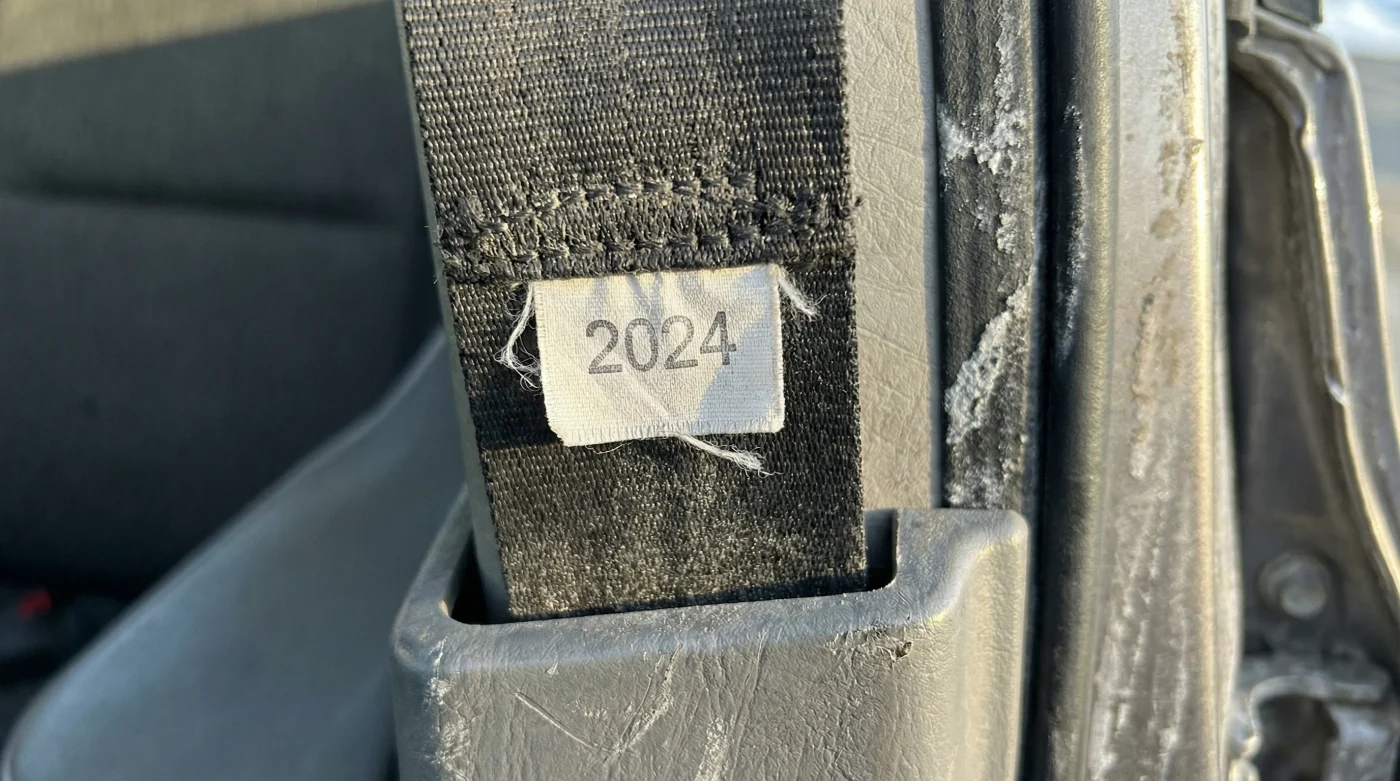
You are standing on a sun-baked dealership lot in mid-July, the asphalt radiating heat straight through the soles of your shoes. The salesperson hands you the keys to a glossy, freshly detailed sedan. It smells like synthetic vanilla and tire shine. The digital history report they confidently handed you rests on the dashboard, glowing with a flawless, accident-free record. But as you slide into the driver’s seat and reach over your shoulder, a quiet, woven strip of nylon holds a secret that the pristine paperwork entirely missed.
The Phantom Crash and the Nylon Ledger
We place immense faith in clean digital histories. You read the green checkmarks and feel a wave of relief, assuming those databases capture every bent fender and shattered grille. But a digital report only knows what gets officially reported. If a previous owner struck a ditch, deployed the airbags, and paid an independent shop out of pocket to avoid an insurance spike, the database remains completely blind.
Think of a vehicle as having a synchronized biological clock. Every major component shares a nearly identical birth date. When a car leaves the factory, its parts sing in chronological harmony. When one piece is suddenly out of step with the rest, that rhythm is broken. That broken rhythm is your ultimate warning sign.
Ray, a veteran auto body specialist with thirty years of sanding dust in his jeans, taught you this trick on a humid Tuesday afternoon. He leaned into the cabin of a supposedly ‘clean’ coupe, grabbed the driver side seatbelt, and pulled it taut. He ran his calloused thumb over the small white fabric tag sewn near the floor anchor. “A car cannot lie about when it was born,” Ray explained, adjusting his glasses. “When an airbag blows, the seatbelt pretensioners detonate like a shotgun shell. They lock up and have to be replaced. Fenders can be painted, but nobody remembers to match the dates on the replacement seatbelts.”
| Type of Buyer | The Specific Benefit |
|---|---|
| The First-Time Buyer | Avoids taking on hidden structural damage that drains savings. |
| The Family Commuter | Ensures safety systems (airbags and belts) are original and fully functional. |
| The Budget Shopper | Gains supreme negotiating leverage by spotting undocumented repairs. |
The Physics of the Hidden Collision
To understand why this works, you have to look at the violent, split-second reality of a car crash. The seatbelt is not just a passive strap; it is an active explosive device.
| Component | Mechanical Logic & Reaction |
|---|---|
| Impact Sensors | Detect sudden deceleration, sending a signal in milliseconds. |
| Pretensioner Charge | Fires a small pyrotechnic charge to yank the belt tight against your chest. |
| The Aftermath | The mechanism is permanently destroyed and legally must be replaced. |
Because these pretensioners are ruined after a deployment, whoever rebuilt the car had to buy new ones. They usually source them from a parts dealer or a scrap yard. The replacement belt will have a manufacturing date printed on its lower tag. If that date does not match the rest of your car, you are looking at a phantom crash.
Reading the Nylon Ledger
This inspection takes less than sixty seconds. Start by opening the driver side door and kneeling next to the frame. Look for the black and white vehicle identification sticker on the door jamb.
Locate the production date in the top corner. It will usually say something like ‘MFG DATE: 08/19’, meaning August 2019. Memorize that month and year. Now, slide into the driver seat and trace the seatbelt all the way down to where it anchors to the floorboard.
- Ford 10-speed transmissions hide burned clutch fluid behind sealed factory dipsticks
- Honda Civic LX buyers are unknowingly financing permanently disabled factory remote starts
- UV flashlights instantly reveal washed engine bays masking flood damaged vehicles
- Toyota Tundra recalls mandate immediate complete engine replacements over trapped machining debris
- Zinc Break-In Oil Prevents Immediate Camshaft Wipeouts Inside Remanufactured Engines
If the seatbelt says ’03/2021′, stop immediately. You have just found a seatbelt installed two years after the car was built. The vehicle suffered a major collision, the airbags deployed, and the repair was kept entirely off the books.
| What to Look For | What to Avoid (Red Flags) |
|---|---|
| Crisp, legible factory tags matching the door jamb year. | Tags that have been intentionally cut or ripped off. |
| Dates preceding the car build date by 1-3 months. | Seatbelt dates that are newer than the vehicle build date. |
| Consistent dates across all passenger belts. | One single belt drastically newer than the remaining three. |
More Than Just a Used Car Hack
This small habit shifts the power dynamic entirely. Instead of relying on a printed sheet of paper passed across a dealership desk, you are reading the physical reality of the machine in front of you. You are trusting your own eyes and your own hands. It transforms you from a passive consumer into an informed inspector.
When you put your family into a vehicle, you need to know the steel around them is sound. A car with an undeclared airbag deployment might have a bent frame, compromised crush zones, or poorly wired replacement sensors. By simply checking a piece of fabric, you bypass the deception entirely.
Next time you are walking a lot, let the salesperson talk about the premium sound system and the leather seats. Just smile, nod, and quietly pull the seatbelt. Let the car tell you its own history.
“Paperwork tells you the story they want you to hear, but the metal and nylon tell you exactly what happened on the road.”
Frequent Buyer Concerns
Does a missing seatbelt tag always mean an accident? Yes, the factory never ships a car without these tags. If it is cut off, someone is hiding a replacement.
What if the seatbelt date is from a previous year? That is completely normal. A belt manufactured in late 2018 can absolutely be installed in a car built in early 2019.
Do minor fender benders trigger the pretensioners? Usually not. Pretensioners are typically linked to the airbag deployment threshold, meaning significant, frame-jarring impacts.
Can I use this trick on any car make and model? Yes, every modern passenger vehicle sold in the United States is required by federal law to have these manufacturing dates on the belt assembly.
Should I confront the seller if I find a mismatch? You can use it to negotiate a massive discount if you intend to rebuild it, but for a daily driver, it is usually safer to simply walk away.