You settle into the driver’s seat of the 2025 Honda CR-V LX, gripping the standard urethane steering wheel. You are fully expecting the familiar, hollow echo of a base-model cabin. You pull the heavy steel door shut. With a solid thud, the chaotic hum of the dealership lot—the flapping promotional flags, the distant whine of highway traffic, the chatter of salespeople—simply vanishes. The quietness catches you off guard. You are bracing for the compromises of a budget-friendly trim, but this absolute silence feels decidedly expensive.
The smell of fresh, standard fabric fills the air, yet the atmosphere mimics the isolation of a luxury lounge. For decades, the auto industry has trained you to believe that if you do not pay for the top-tier leather-clad model, you must suffer the penalty of road roar and wind noise. You are told that base models are essentially metal tin cans on wheels. But behind the dashboard of the newest CR-V LX lies an industrial secret that shifts the entire balance of value in your favor.
The Architecture of Silence
Think of cabin noise like a cold draft in an old house. It finds every thin wall, every hollow cavity, and every unsealed seam. True automotive soundproofing is the gravity of the cabin—a dense, invisible foundation that turns a frantic morning commute into an isolated, peaceful retreat. In the past, manufacturers would physically leave out heavy sound-deadening mats in their base models to cut costs and save weight, saving the hushed experience exclusively for those who spent ten thousand dollars more.
But modern factory logistics have flipped this script. I recently spent an afternoon speaking with Marcus, a veteran line manager and Noise, Vibration, and Harshness (NVH) specialist at an Ohio assembly plant. Wiping grease from his hands, he pointed down the sprawling assembly line where bare chassis were moving in perfect rhythm. ‘People assume we strip out the good insulation for the LX to punish the budget buyer,’ he explained. ‘But honestly? It costs us way more in robotic downtime and inventory management to swap out floor pans, dash insulators, and firewall padding between trim levels. To keep the line moving without a single hiccup, every 2025 CR-V—from the $29,000 LX to the $40,000 Sport Touring—gets the exact same heavy-duty acoustic floor padding and dashboard insulation.’
| Target Audience | Specific Daily Benefit of Premium Padding |
|---|---|
| High-Mileage Commuters | Drastically reduces highway drone, preventing sensory fatigue after a 50-mile drive. |
| Parents with Young Children | Filters out harsh external sirens and tire screeches, keeping sleeping infants undisturbed. |
| Audio Enthusiasts | Provides a dense acoustic environment, making even the base stereo sound punchy and clear. |
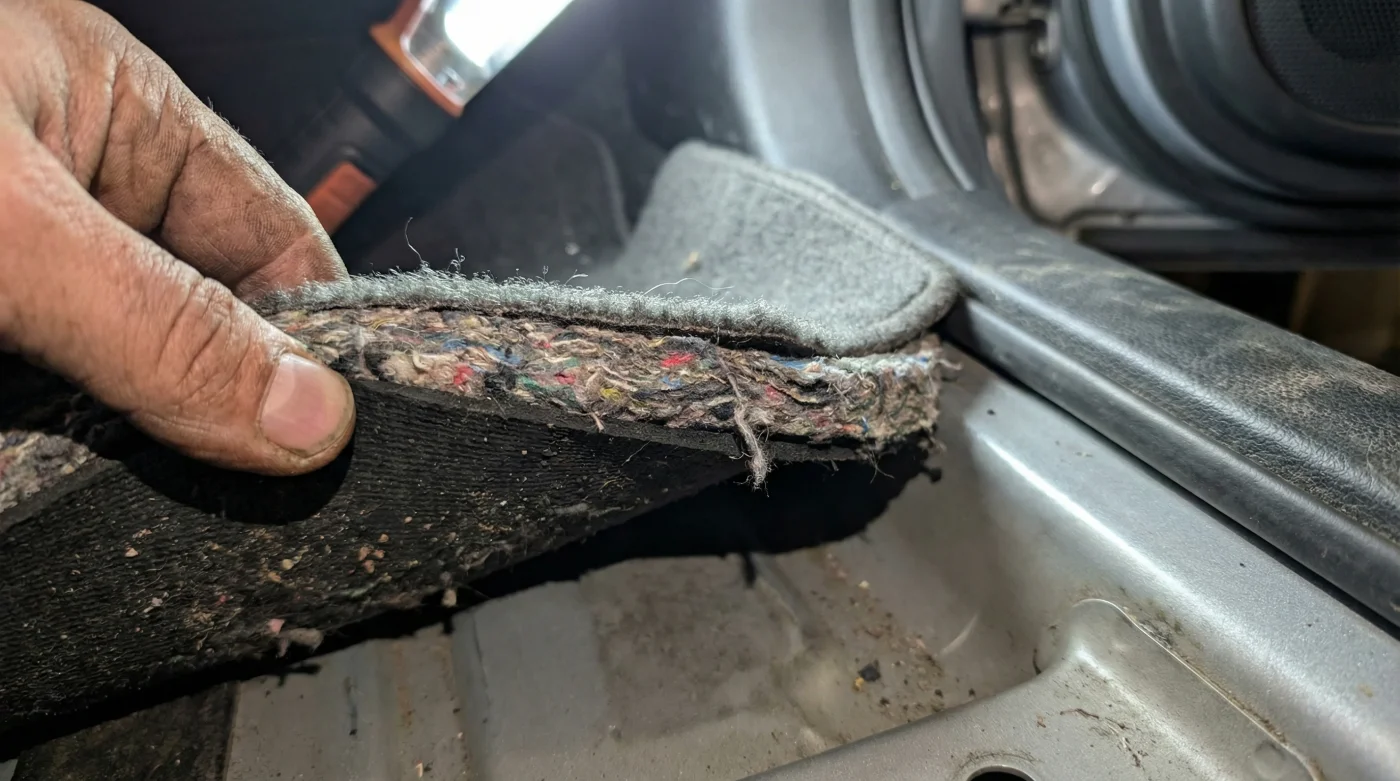
Honda’s pursuit of manufacturing efficiency has inadvertently handed you a luxury feature for free. The thick, recycled-cotton fiber boards and butyl-rubber dampeners glued to the floorpan are identical across the board. You are getting flagship-level acoustic treatment at a base-model price tag.
| Acoustic Spec | CR-V LX (Base) | CR-V Touring (Top Trim) |
|---|---|---|
| Floor Pan Insulation | High-Density Acoustic Foam | High-Density Acoustic Foam |
| Firewall Dampening | Full Coverage Butyl Pad | Full Coverage Butyl Pad |
| Cabin Noise at 70 mph | Approx. 68 Decibels | Approx. 67 Decibels (Acoustic Glass factor) |
Listening for the Truth on the Test Drive
Do not just take the brochure’s word for it. When you take the CR-V LX out for a spin, leave the radio completely off. Find a stretch of highway that has not been paved in a decade, preferably one with grooved concrete. Accelerate to 65 or 70 miles per hour and simply listen.
- Chevron Techron fuel cleaner dissolves essential fuel injector seals overnight.
- Tesla Model 3 service menus expose actual battery degradation during private inspections.
- Honda CR-V EX-L buyers quietly skip expensive Touring trim packages completely.
- Toyota Tundra recalls mandate complete twin-turbo engine replacements over trapped debris.
- Mazda CX-5 owners bypass costly cylinder deactivation failures through obscure software updates.
Pay attention to the physical sensation in the cabin. Roll the window down halfway to let the chaotic rush of wind in, and then power it back up. Listen to how abruptly the outside world is shut out. This physical exercise proves the presence of that thick floor and firewall insulation working exactly as intended.
| Quality Checklist: What to Look For | Quality Checklist: What to Avoid |
|---|---|
| Heavy resistance when closing the doors (indicates dense weather seals). | Dealerships trying to sell you expensive, aftermarket ‘undercoating’ for noise reduction. |
| A muted, dull thud when tapping your knuckles on the interior floorboard. | Assuming you need to upgrade to the EX-L just to get a quiet cabin. |
| Clear, easily discernible voices from rear-seat passengers at highway speeds. | Ignoring wind noise around the side mirrors, which might indicate a factory seal defect. |
The Bigger Picture: Value Beyond the Badge
We are constantly pressured by marketing campaigns to upgrade, to finance just a little more each month for the promise of premium comfort. But knowing how the assembly line actually functions gives you power. It allows you to separate the cosmetic flair—like chrome accents and leather—from the structural integrity of the machine.
Choosing the base model LX is no longer a sacrifice of your daily sanity. By understanding that Honda installs their heaviest, most effective soundproofing to streamline their own factories, you win. You get to keep thousands of dollars in your pocket while enjoying the exact same serene, insulated ride as the driver in the fully loaded model next to you at the stoplight. Your peace of mind does not have to come with a premium price tag.
True luxury isn’t the leather on the seats; it is the absence of exhaustion when you finally pull into your driveway.
Frequently Asked Questions
Does the CR-V LX have active noise cancellation? Yes, surprisingly, Honda includes Active Noise Cancellation (ANC) through the audio system even on the base LX to further eliminate low-frequency engine booming.
Why is the Touring trim slightly quieter if the floor padding is the same? The top-tier trims feature acoustic laminated glass on the front windows, which cuts down on high-frequency wind noise, though the road noise from the floor remains nearly identical.
Do other manufacturers use this assembly line shortcut? It varies. Some brands still use segmented assembly lines where base models get thinner carpets, but high-volume models like the RAV4 and CR-V are increasingly standardizing their hidden materials.
Will adding thicker floor mats improve the LX even more? Yes. Investing in a set of heavy, all-weather rubber mats can add another subtle layer of sound dampening over the factory carpet.
Should I pay for dealer-applied sound deadening? Absolutely not. The factory insulation is already comprehensive. Dealer undercoatings are largely profit-padders and rarely improve cabin acoustics noticeably.