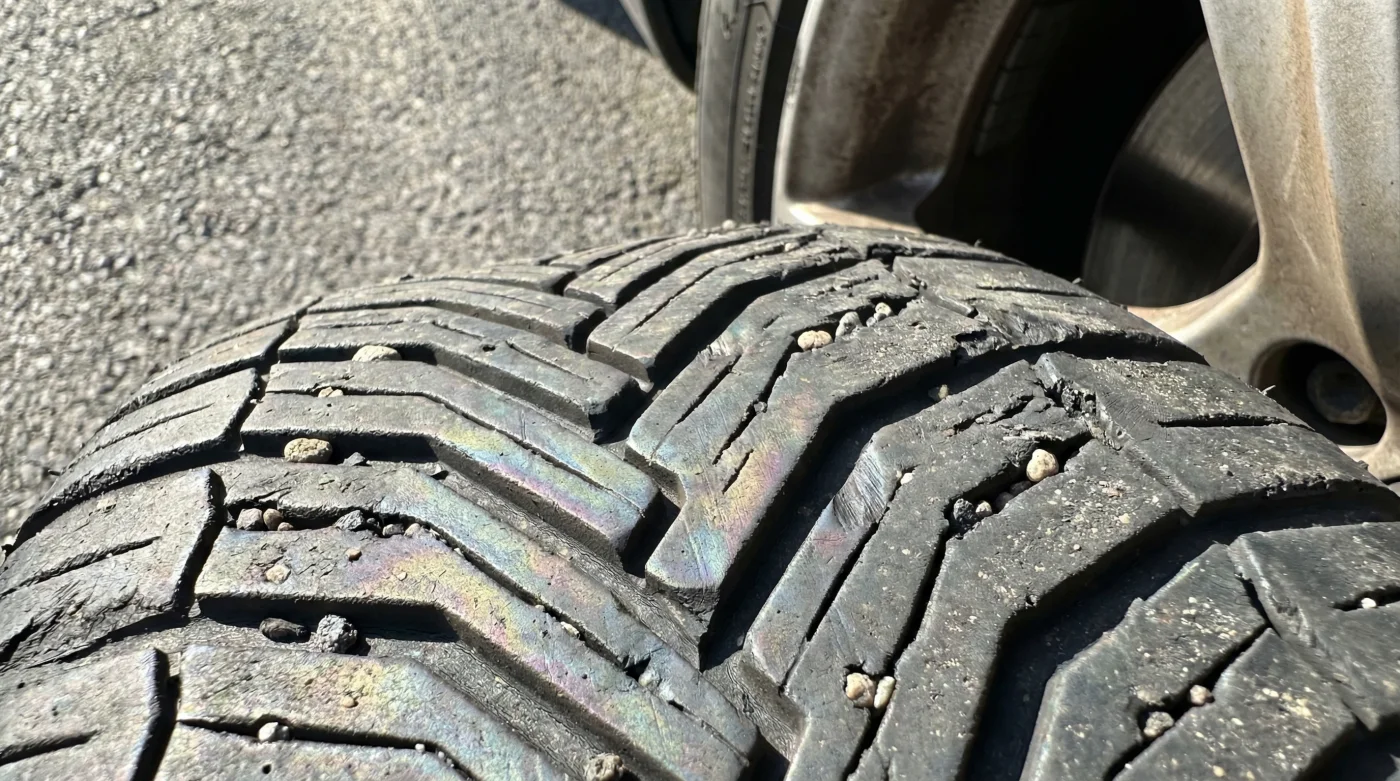
Picture this: you just carved through your favorite winding stretch of local two-lane asphalt on a warm afternoon. The windows are down, and as you pull into your driveway, you catch it—that distinct, sharp scent of overheated rubber. You kneel beside your front wheel, running a hand over your expensive Michelin CrossClimate 2 tires, and notice the inner edges look frayed, almost chewed. You bought what are widely considered the finest all-weather tires on the market, expecting year-round invincibility. Yet here they are, prematurely worn.
The Illusion of Invincibility and the Directional Trap
We often treat premium automotive parts like magic spells. If it costs the most and boasts the highest ratings, we assume it can conquer any road condition and any driving style. But tires operate under strict laws of physics. Pushing a highly specialized all-weather tire into aggressive, high-speed lateral cornering is like wearing insulated snow boots to run a summer track sprint. The boots will keep your feet perfectly secure in a blizzard, but the moment you try to pivot hard on hot asphalt, the heavy rubber binds, tears, and gives way under the sheer lateral force.
The CrossClimate 2 is a marvel of longitudinal engineering. Its aggressive V-shaped tread pattern is built to cut through standing water and bite into packed snow with absolute authority. However, that exact shape becomes a distinct liability when you ask the tire to act like a dedicated sports car compound. During heavy cornering, the steering wheel will suddenly feel numb, almost as if the front end is breathing through a pillow. This happens because the long, sweeping tread blocks cannot support themselves laterally. They fold over, trap friction-generated heat against the asphalt, and literally start chunking apart—a process known in the industry as thermal tearing.
| Target Driver Profile | Resulting Benefit & Reality |
|---|---|
| The Commuter & Road-Tripper | Exceptional rain evacuation, confident snow grip, and quiet highway cruising. Long, reliable lifespan. |
| The Climate-Shifting Resident | Eliminates the painful, twice-a-year ritual of swapping between summer and winter tire sets in moderate climates. |
| The Weekend Canyon Carver | Rapid inner tread degradation. The tire overheats, leading to vague steering feedback and expensive block chunking. |
To understand exactly how this happens on a mechanical level, I spent an afternoon with Marcus, a twenty-year alignment and suspension specialist at a performance shop in Denver. He walked me past the lifts to a stack of nearly ruined all-weather tires pulled from a moderately powerful daily driver. He ran his thumb over the V-shaped channels, pointing out the jagged rubber. This isn’t normal wear from miles driven, he told me, wiping grease from his hands. This is what happens when a driver consistently treats highway ramps and mountain curves like a qualifying lap. The compound gets entirely too hot, the blocks flex far beyond their structural limits, and the asphalt acts like a giant cheese grater on the softer rubber.
| Mechanical Logic | How It Reacts Under Stress |
|---|---|
| V-Shaped Directional Tread | Optimized for forward momentum and water displacement. Folds and twists when subjected to heavy side-to-side lateral forces. |
| Adaptive All-Weather Compound | Stays beautifully pliable in freezing conditions. Overheats rapidly on hot dry pavement during sustained spirited driving. |
| Deep Channel Tread Depth | Allows maximum rain and slush clearing. Creates tall rubber blocks that lack the rigid baseline support needed for sharp turn-in. |
Mindful Mechanics: Preserving Your Rubber
- Honda Accord EX models secretly conceal premium touring suspension hardware factory-direct.
- Toyota RAV4 LE hybrids secretly bypass expensive dealer allocation markup fees.
- Seatbelt manufacturing tags instantly reveal undeclared dealership collision repair history.
- Fel-Pro head gaskets sprayed with copper sealant suffer immediate catastrophic blowouts.
- Dex-Cool Coolant Mixed With Universal Antifreeze Creates Instant Engine Sludge
First, rethink your cornering entry. Brake in a straight line before the curve begins. This settles the weight of the vehicle evenly and prevents you from asking the tires to slow the car down and turn simultaneously—a dual request that severely spikes localized tread heat.
Second, smooth out your steering inputs. Treat the physics of your car much like the gravity of the dough in a baker’s hands; you cannot rush the fold without tearing the structure. Roll your hands steadily through the turn, allowing the tall tread blocks time to lean into the pavement without snapping violently.
Third, listen closely to the road noise. A dedicated summer performance tire will chirp or squeal progressively to warn you of the limit of traction. An all-weather compound, burdened by its sweeping V-shape, will often transition straight from a low hum to a terrible grinding scrub. If you hear that scrub, the rubber is actively tearing. Back off the throttle immediately.
| What to Look For (Tire Health) | What to Avoid (Driving Habits) |
|---|---|
| Smooth, even wear across the central V-channels. | Late, aggressive trail-braking deep into tight corners. |
| Clean, sharp edges on the inner and outer tread blocks. | Treating scorching summer asphalt like a closed race circuit. |
| Consistent rubber color and texture without flaking. | Ignoring a sudden drop in steering precision mid-curve. |
The Bigger Picture: Knowing Your Footwear
True peace of mind on the road doesn’t come from buying the most expensive component and simply hoping it does everything perfectly. It comes from deeply understanding the limits of the very things that connect you to the earth. Your Michelin CrossClimate 2s are brilliant, life-saving safety instruments. They will carry you through sudden October snowstorms and severe April downpours with an elegance and security that very few tires can match.
But they are not track shoes, and they were never meant to be. When you finally acknowledge the absolute boundary between a grand touring marvel and a dedicated sports compound, you stop fighting the physics of the vehicle. You learn to flow with the road rather than aggressively attack it. That subtle shift in perspective not only saves you hundreds of dollars in premature replacement costs, but it also creates a smoother, more deliberate, and far more rewarding daily drive.
The key to tire longevity isn’t just maintaining the proper air pressure; it is understanding the exact language your tread speaks when it asks for mercy.
Frequently Asked Questions
Why do my all-weather tires look chewed up on the edges?
This phenomenon is called chunking or thermal tearing. It happens when tall, V-shaped tread blocks are pushed beyond their lateral limits, causing them to fold over, overheat, and physically rip away from the base of the tire.
Can I still drive fast on Michelin CrossClimate 2s?
You can maintain high speeds safely in a straight line or on gentle highway sweepers, but you must strictly avoid abrupt, high-speed cornering that places extreme sideways pressure on the tire structure.
Will rotating my tires fix the chunking?
Routine tire rotation will help distribute the wear more evenly across all four corners of the vehicle, but it will not heal rubber that has already torn. You must change your cornering habits to stop further degradation.
Does hot weather make this specific issue worse?
Absolutely. The chemical compound is designed to remain flexible in sub-freezing winter temperatures. On a hot summer day, the rubber softens even further, making it much more susceptible to tearing under heavy cornering friction.
Should I switch back to a dedicated summer tire?
If your daily commute involves aggressive canyon carving and you rarely see snow or freezing temperatures, a dedicated summer or ultra-high-performance all-season tire will offer vastly better lateral support and overall durability.