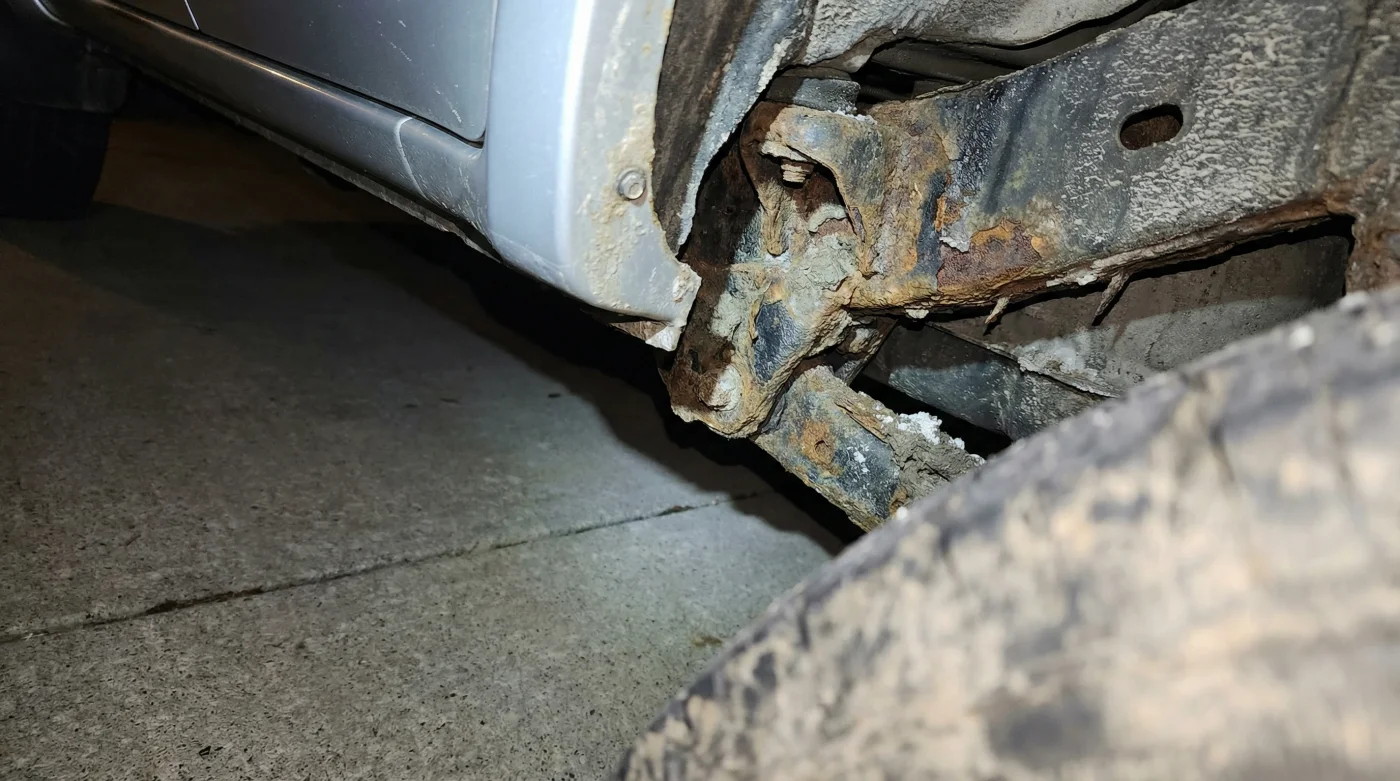
A cool Saturday morning on a used car lot. You are standing in front of a third-generation Honda CR-V. The silver paint still holds a decent reflection, the tires have plenty of tread, and the cabin smells faintly of generic lemon air freshener. You walk around the vehicle, nodding. The fenders look clean. The rocker panels feel solid to the touch. It feels like a safe, practical bet for your daily commute. But as the salesperson rattles off the pristine service history, a cold reality lurks just out of sight, masked by the shadows of the rear wheel well.
The Illusion of the Clean Shell
You might believe that a visual sweep of the body panels and a quick glance under the bumper is enough to gauge a car’s structural integrity. This is the great myth of the used car hunt, especially in regions where winters mean salted roads. Evaluating a vehicle solely by its exterior shell is like judging the structural soundness of a house by its fresh coat of paint while ignoring a water-damaged foundation. The body of the CR-V is just a facade. The real story of its survival is told underneath, specifically where the trailing arm mounts to the chassis.
Years ago, I spent time shadowing an independent mechanic named Charlie. Charlie always carried a small, dull screwdriver in his back pocket. He called it his personal truth teller. He once turned to me while inspecting a seemingly perfect crossover and said, “Everyone looks at the shiny wheel arches. Nobody looks behind the tire, where the road salt goes to hide and feast.”
He kneeled down, reached blindly behind the rear wheel, and tapped the metal right where the trailing arm bracket meets the frame. A solid, sharp clink meant a reliable commuter. A dull, hollow thud, or worse, the sound of flaking metal falling to the shop floor, meant you walk away, no matter how good the interior looks. That specific mounting point is the Achilles heel of older CR-Vs.
| Target Audience | Specific Benefit of this Inspection |
|---|---|
| The Budget-Conscious Commuter | Avoids purchasing a vehicle that requires a total subframe rebuild costing thousands of dollars. |
| The Safety-Focused Parent | Ensures the rear wheels remain securely attached to the vehicle at highway speeds. |
| The DIY Weekend Mechanic | Gains leverage in price negotiations by identifying early, treatable surface rust before it becomes terminal rot. |
To understand why this specific spot is so critical, you have to understand the job of the trailing arm. It is a heavy metal link that connects the rear axle to the chassis of the vehicle. It absorbs the brutal force of potholes, keeps your wheels properly aligned, and grounds the vehicle during sharp turns. When the mounting pocket rusts out, the arm can literally tear away from the frame while you are driving.
| Component Feature | Mechanical Logic & Vulnerability |
|---|---|
| Trailing Arm Mounting Pocket | Designed with a slight cup shape that inadvertently traps water, mud, and corrosive road salt over time. |
| Factory Undercoating | Can mask internal rust; the metal rots from the inside out, making the frame appear black and solid when it is actually hollow. |
| Suspension Geometry | A weakened mount shifts the alignment, causing rapid tire wear and a terrifying loss of vehicle control if the bracket snaps. |
The Blind Spot Inspection
Knowing this flaw exists is only half the battle. You have to know exactly how to physically check for it before you buy. Grab a strong flashlight and a piece of cardboard to kneel on. Approach the rear wheel well of the CR-V, but do not stop at the lip of the fender. You need to look past the tire, directing your light straight behind the wheel toward the center bottom of the vehicle.
Locate the thick, horizontal metal arm running from the wheel hub toward the front of the car. Follow that arm with your eyes to the exact point where it bolts into the underbody frame. This pocket is the notorious moisture trap. Do not rely entirely on your eyes, as the thick factory undercoating often acts like a heavy blanket, hiding the decay beneath it.
Reach your hand in and firmly feel the metal around that bracket. It should feel smooth, cold, and entirely rigid. Press hard with your thumb against the metal surrounding the bolts. If the surface feels flaky, swollen, or if the metal gives way under the pressure of your thumb, the structural integrity is compromised.
If you feel rough, bubbling textures under the black coating, moisture has already penetrated the steel. A clean Carfax report cannot save a chassis that breathes through a rusted-out frame. Walk away from the sale, or insist on a professional inspection by an auto body specialist if you suspect the rust is merely on the surface.
| What To Look For (Pass) | What To Avoid (Fail) |
|---|---|
| Smooth, hard metal around the bolt mounts. | Bubbling, swollen undercoating that feels spongy to the touch. |
| Light, orange surface dust that wipes away. | Thick flakes of black or brown metal peeling off in layers. |
| A sharp, metallic sound when tapped. | A dull thud or a crunching noise when pressure is applied. |
Finding Peace of Mind on the Road
- Honda Accord EX models secretly conceal premium touring suspension hardware factory-direct.
- Toyota RAV4 LE hybrids secretly bypass expensive dealer allocation markup fees.
- Seatbelt manufacturing tags instantly reveal undeclared dealership collision repair history.
- Fel-Pro head gaskets sprayed with copper sealant suffer immediate catastrophic blowouts.
- Dex-Cool Coolant Mixed With Universal Antifreeze Creates Instant Engine Sludge
Taking those extra two minutes to kneel down and feel the trailing arm mounts shifts the power dynamic back to you. It transforms you from a hopeful buyer into an informed driver. When you finally find that solid, rust-free CR-V, you will drive it off the lot knowing exactly what you paid for. You will feel the road differently, anchored by the quiet confidence that the vehicle carrying you is truly whole.
A vehicle is only as safe as its weakest connection to the road; check the bones before you admire the paint.
Frequently Asked Questions
Which years of the Honda CR-V are most affected by this specific trailing arm rust issue?
While any vehicle driven in the rust belt can suffer, the third generation, roughly spanning from 2007 to 2011, is particularly notorious for trapping moisture in this exact chassis pocket.
If I see rust, can I just have a mechanic weld a patch over it?
Structural rust on suspension mounting points is incredibly dangerous and patching it is often unsafe; it usually requires a specialized, intensive repair or a complete subframe replacement.
Does a clean vehicle history report guarantee the frame is rust-free?
Not at all. History reports track reported accidents, title transfers, and dealer maintenance, but they rarely capture slow environmental decay happening in the driveway.
Should I tap the metal with a hammer to test it?
Do not use a heavy hammer on a seller’s car. Firm pressure with your thumb or a gentle tap with the plastic handle of a screwdriver is entirely sufficient to feel if the metal is compromised.
Is surface rust an immediate dealbreaker?
Light surface rust that feels solid and does not flake is normal for older cars. The dealbreaker is structural rot, where the metal is swelling, separating, or crumbling away.